
What is calibration gas, and how to choose the right cylinder
Calibration gas is a cylinder of air with a known amount of a test gas in it, made for one job: proving that a gas monitor reads correctly. A bump test squirts the gas at the sensors to see that they respond and alarm. A calibration adjusts the monitor so its reading matches the number printed on the cylinder. The right cylinder has the same gases as the monitor’s sensors, at the concentrations the monitor’s manual calls for, in a size that suits how many tests you run, with a regulator that matches the monitor: fixed flow for a diffusion unit, demand flow for a pumped one.
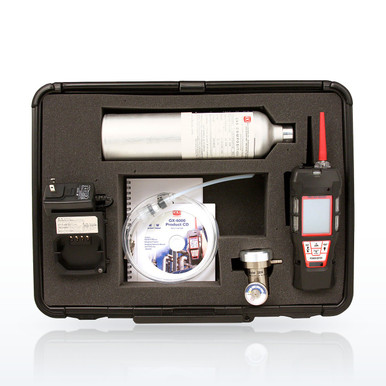
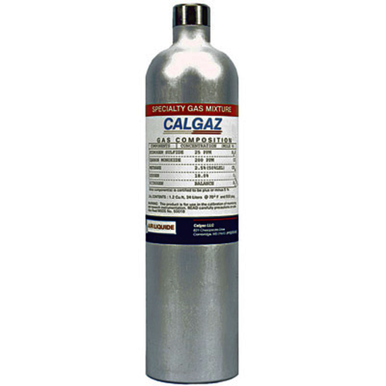 Honeywell BW CG-Q34-4 quad calibration gas2.5% CH4, 18% O2, 25 ppm H2S, 100 ppm CO; 34 L
Why does a gas monitor need calibration gas? A gas monitor is the only thing standing between a worker and an atmosphere that cannot be seen or, often, smelled. Its sensors drift with age, dry out, get poisoned by silicones and solvents, and can be blocked by dirt or water. A monitor with a dead sensor looks exactly like a monitor in clean air: it reads zero. The only way to know the sensors still respond is to expose them to a known concentration of gas and watch the reading. That is what calibration gas is for, and it is why OSHA requires confined-space testing to be done with a calibrated direct-reading instrument.
Bump test or calibration: what is the difference?
Both use the same cylinder. They answer different questions.
How do you match a cylinder to a monitor?
- Gases. The cylinder must contain every gas the monitor has a sensor for. A four-gas monitor (LEL, O2, H2S, CO) uses a four-gas, or quad, mix. A five-gas unit with SO2 or CO2 needs a five-gas mix with that gas in it. A single-gas ammonia or chlorine monitor needs a cylinder of that gas alone.
- Concentrations. Each manufacturer builds its monitors to calibrate on specific values, and the mixes differ: one quad mix is 2.5 percent methane (50 percent LEL), 18 percent oxygen, 25 ppm H2S and 100 ppm CO; another is 1.45 percent methane, 15 percent oxygen, 20 ppm H2S and 60 ppm CO. The monitor’s manual names its values. A cylinder with the wrong concentrations can be used for a bump test but not for a calibration unless the monitor lets you enter the cylinder values.
- Balance gas. The rest of the cylinder is air or nitrogen. Mixes with an oxygen value in them are balanced in nitrogen; a methane-in-nitrogen cylinder with no oxygen is for LEL sensors only. Check the label.
- Cylinder size. Sizes in the catalog are 34, 58, 103 and 116 liters. At a fixed flow of 0.5 liters per minute, a 34 L cylinder gives roughly 68 minutes of gas; a bump test takes well under a minute and a calibration a few minutes, so a 34 L cylinder covers a crew for weeks and a 116 L cylinder suits a docking station.
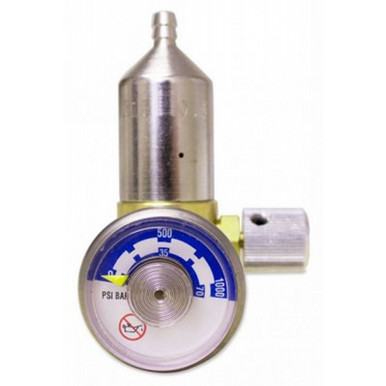
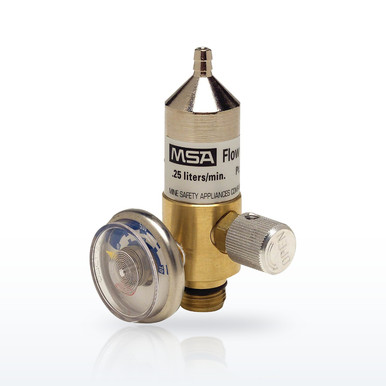
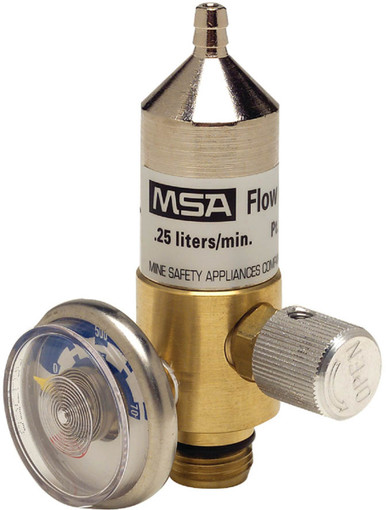
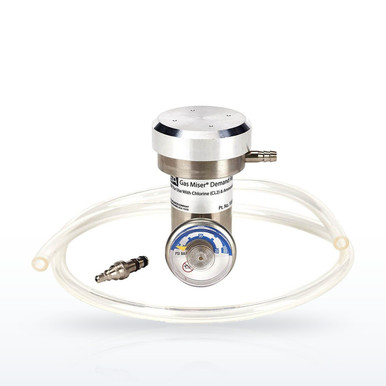
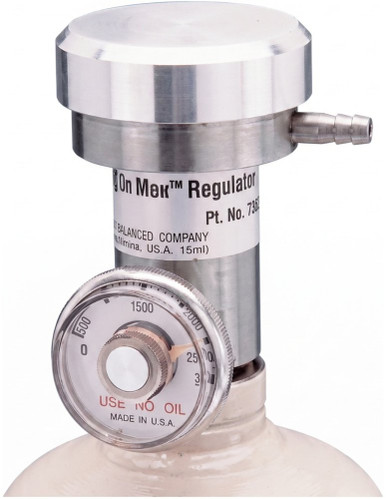
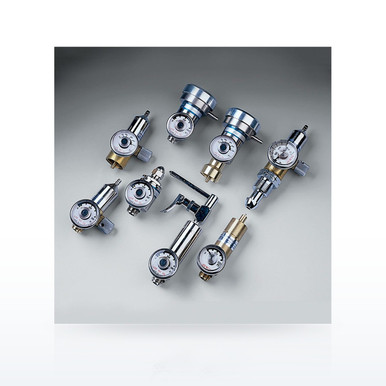
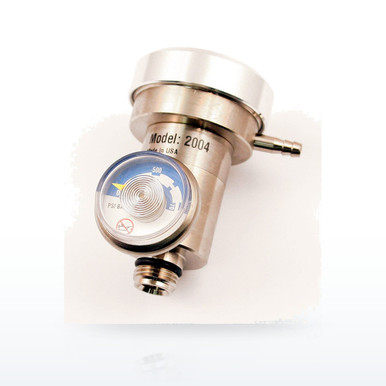
- Regulator. Fixed-flow regulators (0.25, 0.5 or 1.0 liters per minute) feed a diffusion monitor through a calibration cap. Demand-flow regulators open only when a pumped monitor or a docking station draws on them, so the gas is not wasted. Use the type the monitor manual calls for, and the thread the cylinder has.
How long does calibration gas last?
Two clocks run on a cylinder. The first is the gas itself: reactive gases such as hydrogen sulfide, chlorine and ammonia slowly react with the cylinder walls, so the concentration falls over time. The manufacturer prints an expiration date on the cylinder, and the shelf life for an ammonia cylinder in our catalog is listed as approximately 18 months. Gas past its date cannot be trusted for calibration because the number on the label no longer describes what is inside. The second clock is the gauge: a cylinder reads pressure, not liters, and a demand-flow regulator will keep drawing from a near-empty cylinder until the sensors get too little gas and the calibration fails. Replace the cylinder when the gauge nears the regulator’s minimum.
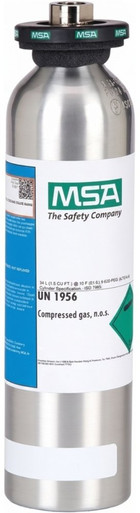
MSA published data for the 711078 ammonia cylinder (approximately 18-month shelf life); expiration dates are printed on each cylinder by its manufacturer. Reactive-gas stability statements are the manufacturers’.How often should a monitor be bump tested?
The standard does not set a number of days. It requires that the instrument used for confined-space testing be calibrated, and it requires continuous monitoring during entry. Manufacturers fill in the interval in their manuals, and the common practice in their instructions is a bump test before each day’s use and a full calibration on a fixed schedule or whenever a bump test fails. Newer monitors track this themselves: a compliance indicator flashes when a bump test has not been done or a calibration is due. The employer’s written program sets the interval the crew follows; the manual sets the floor.
29 CFR 1910.146(c)(5)(ii)(C); RKI Instruments published data for the GX-3R (non-compliance indicator flashes if the instrument has not been bump tested or calibration is due); the manufacturer’s manual for each monitor.Calibration gas cylinders and regulators by mix
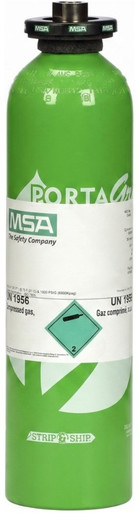
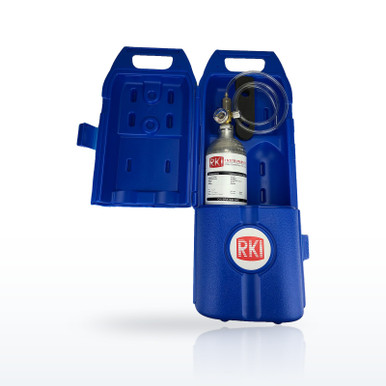
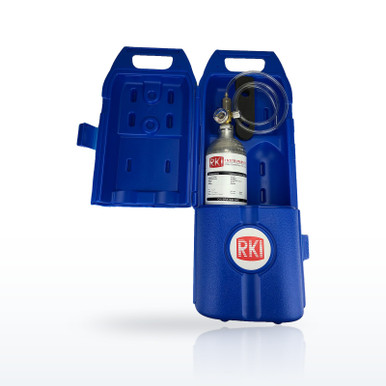
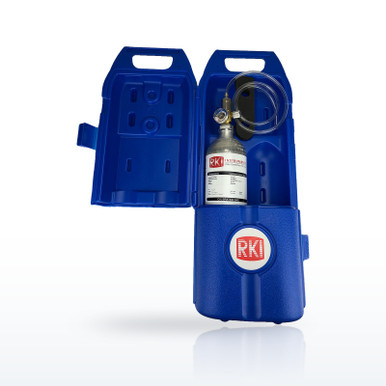
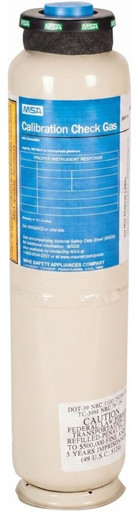
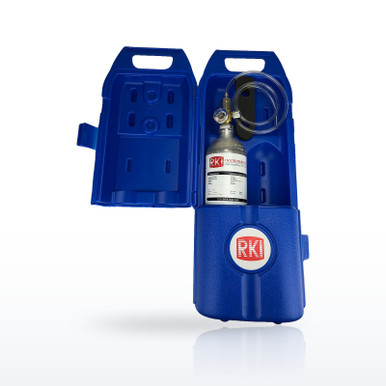
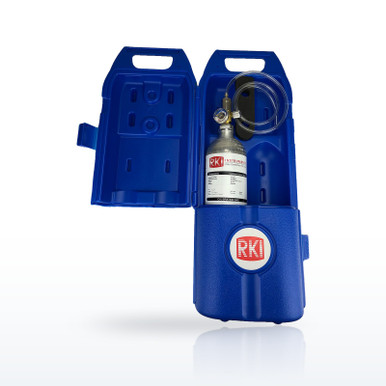
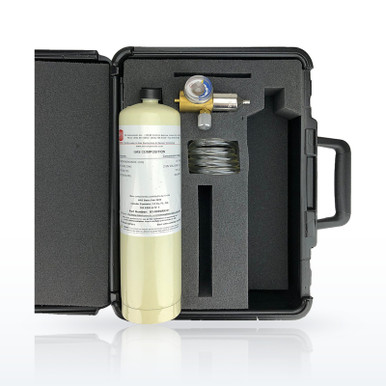
29 items · prices liveMix, concentration and cylinder size are as published by the manufacturer on each product page. Match the mix to the monitor’s manual before ordering. Contractor Direct orders ship free.
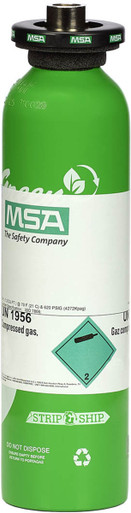
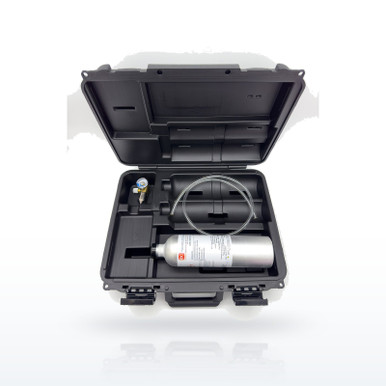
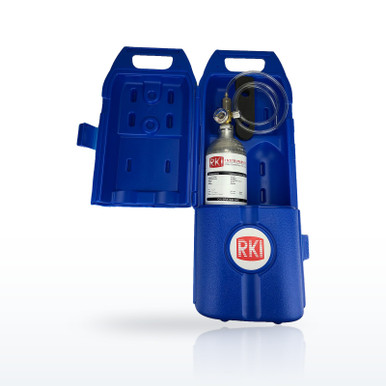
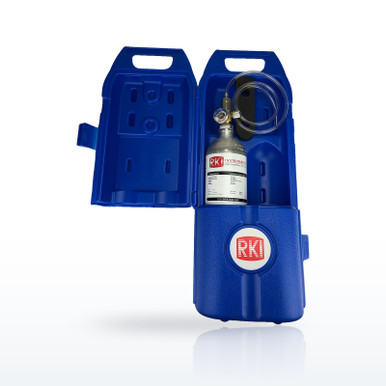
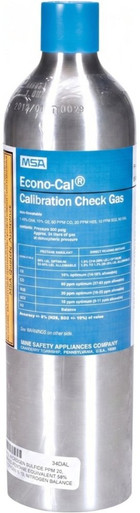
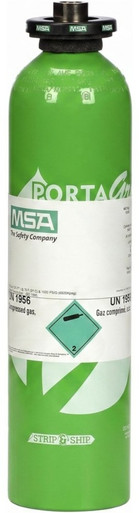
Docking stations and calibration caps for each monitor family are in the gas detection finder.
Questions people ask
What is calibration gas?
A cylinder of gas at a certified concentration, used to check and adjust a gas monitor. The label states each gas and its concentration; the monitor is set to read those numbers.
What is the difference between a bump test and a calibration?
A bump test checks that the sensors respond and alarm; it changes nothing. A calibration adjusts the sensors to read the cylinder’s values. A failed bump test is followed by a calibration.
What is quad gas?
A four-gas mix of methane (as percent LEL), oxygen, hydrogen sulfide and carbon monoxide, made for the standard four-gas confined-space monitor. Concentrations vary by manufacturer; match the monitor’s manual.
Can I use one brand’s calibration gas on another brand’s monitor?
For a bump test, yes, if the gases match. For a calibration, only if the concentrations match the values the monitor expects or the monitor lets you enter the cylinder values. Check the manual.
Does OSHA require bump testing?
OSHA requires that confined-space testing be done with a calibrated direct-reading instrument (1910.146(c)(5)(ii)(C)). The bump and calibration schedule comes from the manufacturer’s manual and the employer’s program.
What size cylinder should I buy?
34 L for a small crew doing hand bump tests; 58 to 116 L for docking stations or many monitors. A 34 L cylinder at 0.5 liters per minute holds about 68 minutes of gas.
What regulator do I need?
Fixed flow (0.25 to 1.0 liters per minute) for diffusion monitors with a calibration cap; demand flow for pumped monitors and docking stations. The monitor manual names the type and rate.
Does calibration gas expire?
Yes. An expiration date is printed on the cylinder. Reactive gases such as H2S, chlorine and ammonia have shorter shelf lives than methane or CO mixes; an ammonia cylinder in our catalog lists approximately 18 months.
Standards and ratings on this page are as published in the documents named and by the manufacturers named. The employer’s hazard assessment and written program decide what applies at a given workplace. Verify a rating on the product and its spec sheet before use.