
RKI Instruments Replacement Sensors
15 replacement sensors from RKI Instruments, listed with what RKI Instruments publishes.
Pick a gas, number of gases, sampling or battery; the list below narrows as you choose.
15 products
Ratings and specifications are as published by each manufacturer. Tap a group to open it.
 RKI Instruments15 products
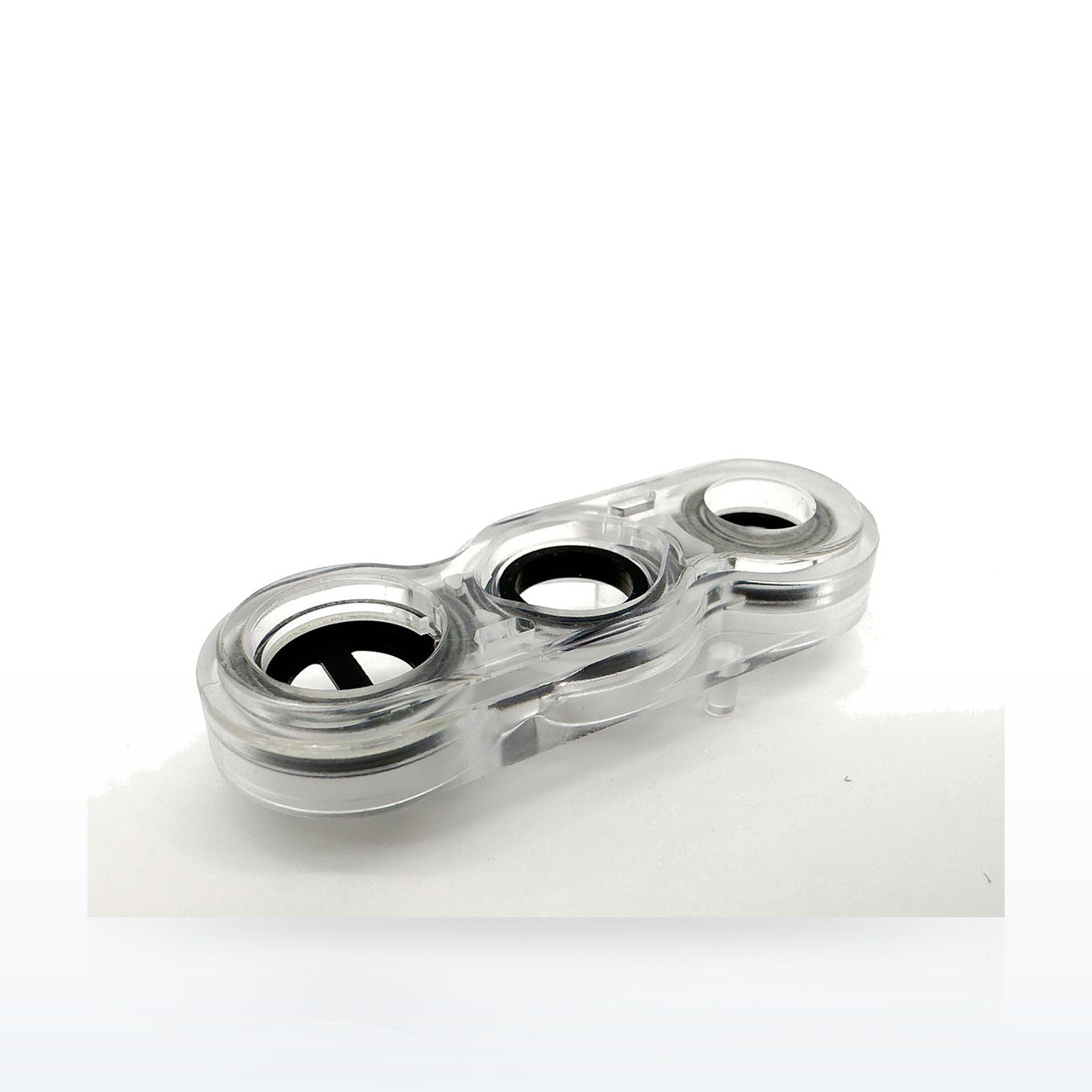
- RKI Instruments 21-1983 Sensor Retainer, for GX-Force — RKI Instruments
- RKI Instruments ES-1821 Carbon Monoxide Sensor, 0-500 ppm, for GX-2009 — RKI Instruments · Gases detected: CO · Sensor ranges: CO 0-500 ppm
- RKI Instruments ESR-A13D-HCN Hydrogen Cyanide Sensor, 0-30 ppm, for GX-3R Pro — RKI Instruments · Gases detected: HCN · Sensor ranges: HCN 0-30 ppm
- RKI Instruments ESR-A13D-NO2 Nitrogen Dioxide Sensor, 0-20 ppm, for GX-3R Pro — RKI Instruments · Gases detected: NO2 · Sensor ranges: NO2 0-20 ppm
- RKI Instruments ESR-A13I-H2S Hydrogen Sulfide Sensor, 0-200 ppm, for GX-3R Pro — RKI Instruments · Gases detected: H2S · Sensor ranges: H2S 0-200 ppm
- RKI Instruments ESR-A13P-CO Carbon Monoxide Sensor, 0-2,000 ppm, for GX-3R Pro — RKI Instruments · Gases detected: CO · Sensor ranges: CO 0-2,000 ppm
- RKI Instruments ESR-A1CP-CO-H H2-Compensated CO Sensor, 0-2,000 ppm — RKI Instruments · Gases detected: CO · Sensor ranges: CO 0-2,000 ppm
- RKI Instruments ESR-A1DP-COHS H2S/CO Combination Sensor, CO 0-2,000 ppm — RKI Instruments · Gases detected: H2S; CO · Sensor ranges: H2S 0-200 ppm; CO 0-2,000 ppm
- RKI Instruments ESR-B134-NH3 Ammonia Sensor, 0-400 ppm, for GX-3R Pro and SC-04 — RKI Instruments · Gases detected: NH3 · Sensor ranges: NH3 0-400 ppm
- RKI Instruments ESR-X13P-OXY Oxygen Sensor, 0-25% vol, for GX-3R Pro and GX-3R — RKI Instruments · Gases detected: O2 · Sensor ranges: O2 0-25% vol
- RKI Instruments IRR-0409 CO2 Infrared Sensor, 0-10% vol, for GX-3R Pro — RKI Instruments · Gases detected: CO2 · Sensor ranges: CO2 0-10% vol
- RKI Instruments IRR-0433 CO2 Infrared Sensor, 0-10,000 ppm, for GX-3R Pro — RKI Instruments · Gases detected: CO2 · Sensor ranges: CO2 0-10,000 ppm
- RKI Instruments NC-6264A Combustible Gas (LEL) Sensor, 0-100% LEL, for GX-2009 — RKI Instruments · Gases detected: LEL · Sensor ranges: LEL 0-100% LEL
- RKI Instruments NCR-6309 Combustible Gas (LEL) Sensor, 0-100% LEL, for GX-3R Pro — RKI Instruments · Gases detected: LEL · Sensor ranges: LEL 0-100% LEL
- RKI Instruments PID-002LA PID Sensor, 10.6 eV, 0-4,000 ppm VOC, for GX-6000 — RKI Instruments · Gases detected: VOC (PID) · Sensor ranges: VOC 0-4,000 ppm, 10.6 eV lamp
Do not see what you need? Browse the category or call (925) 215-7337.
A gas monitor is described by the gases it detects (LEL for combustibles, O2 for oxygen, H2S, CO, and so on), how many it detects at once, whether it samples by diffusion (air reaches the sensors on its own) or with a pump (sample draw, for checking a space before entry), how it is powered, and the approvals that let it be used in a classified area. All of these are the manufacturer's published specifications; alarm points and calibration intervals follow the manufacturer's manual.
Technical. Intrinsic-safety approvals are listed as the manufacturer prints them (UL or CSA Class I Division 1 Groups A–D, ATEX and IECEx Ex ia IIC T4 marks). Sensor ranges are quoted per gas (for example 0–100% LEL, 0–30% volume O2, 0–100 ppm H2S, 0–500 ppm CO; PID sensors for VOCs in ppm or ppb with the lamp energy in eV; IR sensors for CO2 or methane). Calibration gas is matched to the monitor's sensors and listed by concentration. Draeger detector tubes have their own selector page.
The ratings, test results and standards shown here are the manufacturers' published values, reproduced as published. Nothing on this page is a recommendation by Bayshore Safety that any product is suitable for a particular task, hazard or workplace. Selecting safety products and protective equipment is the responsibility of the end user and the employer, based on their own hazard assessment and the regulations that apply to their work. Confirm every value on the manufacturer's own documentation before use.
The standard at a glance
Copied from the named standard or regulation and shown with its source; nothing in these tables is Bayshore's recommendation.
OSHA confined-space atmosphere limits
| Condition (29 CFR 1910.146) | Limit |
|---|---|
| Oxygen deficient | Below 19.5% oxygen |
| Oxygen enriched | Above 23.5% oxygen |
| Flammable | Above 10% of the lower flammable limit (LFL) |
| Toxic | Above the substance's permissible exposure limit (29 CFR 1910 Subpart Z) |
| Approval mark (as printed by the manufacturer) | Meaning |
|---|---|
| UL or CSA Class I, Division 1, Groups A–D | Intrinsically safe for flammable gas and vapour atmospheres (North America) |
| ATEX / IECEx Ex ia IIC T4 | Intrinsically safe, gas group IIC, temperature class T4 (Europe / international) |
Source: OSHA 29 CFR 1910.146 (permit-required confined spaces). Alarm set points and calibration intervals follow each manufacturer's manual. Draeger detector tubes have their own selector.