
Bayshore Safety & Industrial Supplies Guide
Antibiotic ointment, first aid cream and hydrocortisone packets in a first aid kit: what the Drug Facts labels say each is for, what is in triple antibiotic ointment, when the label says not to use it, sting relief, and the Z308.1 antibiotic count
Four creams live in a workplace first aid kit, and each is an over-the-counter drug with a Drug Facts label that states what it is for. Antibiotic ointment (First Aid Only’s packets: "helps prevent infection in minor cuts, scrapes and burns"; triple antibiotic ointment is bacitracin zinc, neomycin sulfate and polymyxin B sulfate, the three in Neosporin, and a single-antibiotic ointment is bacitracin alone); first aid burn cream ("lidocaine HCl 0.5 percent, benzalkonium chloride 0.13 percent; helps prevent infection, relieves pain"); hydrocortisone cream ("helps relieve minor skin irritations, itching and rashes"); and sting relief wipes ("temporarily relieves pain and itching associated with minor burns, scrapes, insect bites and stings"). ANSI/ISEA Z308.1-2021 requires 10 antibiotic applications in a Class A kit and 25 in Class B, and 10 or 25 burn treatments. The Red Cross wound page names no ointment; it names cleaning, a dressing and pressure, and the clinician for anything that is infected or more than minor.
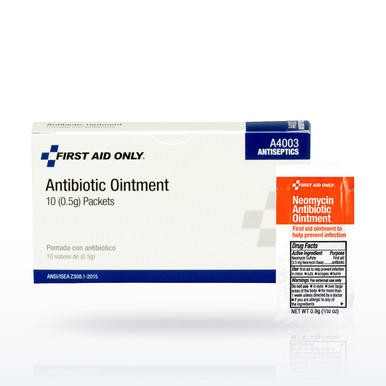 First Aid Only A4003 Antibiotic Ointment, 10 per Box, 5 VersionsFirst Aid Only prints single-use antibiotic ointment packets that help prevent infection in minor cuts, scrapes and burns, 10 per box
Why the label is the whole answer. The ointment questions are brand questions in disguise (does Neosporin work, is Polysporin better, what is in triple antibiotic, which ointment heals fastest) and medical questions (skin infections, allergic reactions, surgical wounds, cold sores). A first aid page can answer the first kind from the Drug Facts label, which is the same on the brand and the kit packet, and must send the second kind to a clinician. This page does both: it gives what First Aid Only prints on each packet, the three antibiotics in a triple ointment and the one in a single, the Z308.1 counts, the Red Cross frame the cream fits into, and the reasons the label itself gives for not using it.
The four creams and what their labels say
The use lines are First Aid Only’s; the active ingredients are the Drug Facts on the packet.
The questions, one by one
What are the ingredients in triple antibiotic ointment, and in Neosporin?
The same three: bacitracin zinc (400 units per gram), neomycin sulfate (3.5 mg per gram) and polymyxin B sulfate (5,000 units per gram) in a petrolatum base; that is the USP triple antibiotic formula and Neosporin Original is the Johnson and Johnson brand of it. First Aid Only’s triple antibiotic ointment packets and tube print the same three. A "single antibiotic" or "double antibiotic" ointment drops neomycin (bacitracin alone, or bacitracin and polymyxin B, which is Polysporin), which is what people who react to neomycin use.
Does Neosporin work, does it help heal, and is Polysporin better?
The label claim for every triple or double antibiotic ointment is the same: first aid to help prevent infection in minor cuts, scrapes and burns. It is not labeled to heal faster, and whether an antibiotic ointment does anything a clean covered wound would not do on its own is a clinician’s debate; what the kit packet does is keep a minor wound moist and covered and put an antibiotic on it, which is what the label says. Polysporin is the same product without neomycin; "better" is only true for the person whose skin reacts to neomycin.
Can Neosporin cause allergic reactions, and when should I not use antibiotic ointment?
Neomycin is a common cause of contact dermatitis, which is why the Drug Facts label on every triple antibiotic ointment says to stop use and ask a doctor if a rash or other allergic reaction develops. The label’s other limits: external use only, not in the eyes, not over large areas, not for deep or puncture wounds, animal bites or serious burns, not for more than a week unless a doctor says so, and ask a doctor if the condition persists or gets worse. A kit packet is for a minor cut; the rest is the clinician’s.
What ointment is effective for a skin infection, and what is mupirocin?
A skin infection is a clinician’s diagnosis and prescription; mupirocin (Bactroban) is a prescription antibiotic ointment for infected skin, and no over-the-counter ointment is labeled for an established infection. The kit packet is labeled to help prevent infection in a minor wound, not to treat one. Redness that spreads, warmth, pus, red streaks or fever are the signs that send a wound to a clinician.
Which ointment helps a wound heal faster, and is antibiotic ointment good for healing wounds?
None is labeled to. The Red Cross wound page gives cleaning, a dressing and pressure; a moist covered wound heals as it will, and petrolatum alone keeps it moist. The antibiotic packet’s claim is infection prevention; the burn cream’s claims are pain relief and infection prevention. "Heals faster" is a marketing line, not a Drug Facts line.
What does wound spray do, and how do you use it?
First Aid Only’s first aid burn spray (13-040, 4 oz pump) is the same kind of product as the burn cream in a spray: an antiseptic and pain reliever for minor burns, cuts and scrapes, sprayed on the cleaned injury before the dressing. The Drug Facts label on the bottle states the actives and the limits; it is not a wound cleaner and not for deep wounds.
What is the first aid cream in a kit, and what is antiseptic cream used for?
First Aid Only’s "first aid/burn cream" is the kit’s antiseptic and anesthetic cream: lidocaine HCl 0.5 percent for pain and benzalkonium chloride 0.13 percent as the antiseptic, labeled for minor cuts, burns and abrasions. It is the Z308.1 "burn treatment" and doubles as the antiseptic cream people ask about; the limits on its label are the same as any first aid cream: minor injuries, external use, stop if a reaction develops.
What is hydrocortisone cream for, and what is an allergy ointment for the skin?
1 percent hydrocortisone is the over-the-counter corticosteroid for itching and rashes: poison ivy and oak, insect bites, mild contact dermatitis from a glove or a solvent, as First Aid Only prints, "helps relieve minor skin irritations, itching and rashes". It is the skin "allergy ointment" a kit carries; it is not for infected skin, not on broken skin, and not for more than a week without a clinician.
What is sting relief for, and what is in it?
A single-use wipe or swab of an anesthetic and antiseptic solution for the pain and itching of insect bites and stings and minor burns and scrapes; First Aid Only prints "wipes easily cleanse the area around point of insect puncture" and sells 10, 25, 50 and 100-count boxes and the SmartCompliance refill. The Red Cross insect bites and stings page is the first aid frame: remove the stinger by scraping, wash, cold pack, watch for an allergic reaction and call 911 for breathing trouble or swelling of the face or throat.
Can you put too much antibiotic ointment on, and can I use it in my mouth or nose?
A thin layer is the label direction; more does nothing. Triple antibiotic ointment is external use only: not in the mouth, not in the eyes, and inside the nose only on a clinician’s instruction. The single-use packet holds the right amount for one minor wound.
Is antibiotic ointment required in an ANSI first aid kit?
Yes, as "antibiotic application, 1/57 oz": 10 in Class A, 25 in Class B. First Aid Only fills that line with 0.5 gram triple antibiotic ointment packets; the burn treatment line (10 and 25) is the burn cream. Hydrocortisone and sting relief are supplementary items the standard leaves to the employer.
What about A and D ointment, vitamin ointments and healing creams for burns?
Vitamin A and D ointment is a skin protectant for chafing and diaper rash, not a first aid kit item; the burn creams and healing creams a pharmacy sells are labeled for minor burns the same way the kit packet is. The burn dressings guide linked below has the Red Cross burn steps and what never goes on a burn.
In plain words
- Antibiotic ointment: helps prevent infection in minor cuts, scrapes and burns. Triple = bacitracin, neomycin, polymyxin B; single = bacitracin.
- First aid burn cream: lidocaine 0.5 percent and benzalkonium chloride 0.13 percent; pain and infection prevention on minor burns and cuts.
- Hydrocortisone 1 percent: itching and rashes. Sting relief: bites and stings.
- None is labeled to heal faster or treat an infection; those are the clinician’s.
- Label limits: external use, thin layer, not in eyes, not for deep wounds or serious burns, stop on a rash, a week at most without a doctor.
- Z308.1-2021: 10 antibiotic and 10 burn treatment applications in Class A, 25 each in Class B.
Questions people ask
What is in triple antibiotic ointment?
Bacitracin zinc, neomycin sulfate and polymyxin B sulfate in petrolatum; the same three as Neosporin Original.
Does Neosporin work?
Its label claim, like every antibiotic ointment, is to help prevent infection in minor cuts, scrapes and burns; it is not labeled to speed healing.
Can Neosporin cause an allergic reaction?
Neomycin can cause contact dermatitis; the label says stop use and ask a doctor if a rash develops. Bacitracin-only ointment is the alternative.
Is Polysporin better than Neosporin?
It is the same without neomycin; better only for a person who reacts to neomycin.
What ointment treats a skin infection?
An established infection is a clinician’s diagnosis; mupirocin is prescription-only; kit packets are for preventing infection in minor wounds.
What is in First Aid Only burn cream?
Lidocaine HCl 0.5 percent and benzalkonium chloride 0.13 percent, for minor cuts, burns and abrasions.
What is hydrocortisone cream used for?
Minor skin irritations, itching and rashes such as poison ivy and insect bites, per the label.
What does wound spray do?
An antiseptic and pain reliever for minor burns, cuts and scrapes, sprayed on before the dressing; read the bottle’s Drug Facts.
When should I not use antibiotic ointment?
Deep or puncture wounds, animal bites, serious burns, in the eyes, over large areas, more than a week, or when a rash develops.
How much antibiotic ointment does an ANSI kit need?
10 applications in Class A, 25 in Class B; burn treatment the same counts.
Is antibiotic ointment good for healing wounds?
It is labeled for infection prevention; healing comes from a clean, covered wound, as the Red Cross steps state.
What is sting relief?
An anesthetic and antiseptic wipe or swab for insect bites and stings and minor burns and scrapes.
The ratings, test results and standards shown here are the manufacturers' published values, reproduced as published. Nothing on this page is a recommendation by Bayshore Safety that any product is suitable for a particular task, hazard or workplace. Selecting safety products and protective equipment is the responsibility of the end user and the employer, based on their own hazard assessment and the regulations that apply to their work. Confirm every value on the manufacturer's own documentation before use.
© 2026 Bayshore Safety & Industrial Supplies, Inc. All rights reserved. This guide may not be copied or republished without written permission.