Home › Guides › Roofing tools › Caulking guns
Guide · Caulking and sealing · Cartridge, quart, sausage and bulk guns

Are caulking guns hard to use? Thrust ratio, dripless and smooth-rod guns, sausage and bulk guns, pneumatic guns, why a gun is hard to squeeze, caulking without a gun, opening and sealing a tube, and what size gun fits which cartridge

A caulking gun is only hard to use when it is the wrong gun for the material. The number that matters is the thrust ratio: a 3:1 ratchet gun is fine for latex caulk, a 10:1 to 18:1 smooth-rod dripless gun pushes polyurethane and roofing sealant without a fight, and a 26:1 gun or a pneumatic gun handles cold, thick material and all-day production. A gun is hard to squeeze when the material is cold or thick, the tip is cut too small or the inner seal of the tube was never punctured. Most caulk needs a gun; squeeze tubes exist for small jobs, but roofing sealants, polyurethanes and butyl come in cartridges and sausages that a gun is built to push.
Bayshore Safety. Industrial safety, roofing tools and jobsite supplies since 2017. · Current as of November 2026 · the C&R caulking gun product data on this site (CG-300HD, CKDP-5, CKR-10, CKS-5, CGA-108, QCHDS-837 and the bulk / cartridge sausage gun with three cones); the capacities printed on standard cartridges (10 oz / 300 ml and 28–30 oz quart tubes) and sausage packs (20 oz / 600 ml); thrust ratios as the trade states them on gun packaging (ratchet 3:1 to 6:1, smooth rod 10:1 to 26:1)
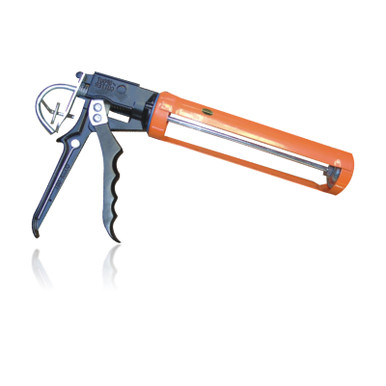
C&R CG-300HD Caulking Gun, 9 oz, DriplessC&R CG-300HD Caulking Gun, 9 oz, DriplessThe product data lists the CG-300HD as a premium heavy-duty dripless gun with power thrust for 9 oz cartridges

What a caulking gun is doing. A standard cartridge holds 10 fluid ounces (300 ml) of sealant behind a plastic plunger; the gun pushes that plunger with a rod driven by a trigger. The trigger moves a short distance and the rod moves a shorter one, and the ratio between them is the thrust ratio: the higher it is, the less hand force the job takes and the more pulls it takes to empty the tube. Everything people ask about caulking guns — why they are hard, which one professionals use, whether a powered gun is worth it, what to do without one — comes back to matching that ratio to the material and the hours. The cards below answer the questions in the order they are asked, from the first squeeze to sealing the tube at the end of the day.

The caulking gun questions, one by one

Capacities and ratios are the figures printed on the cartridges and guns; our product data lists each C&R gun’s capacity and style.

Are caulking guns hard to use, and why is mine so hard to squeeze?Four things make a gun hard. Material: polyurethane, butyl and roofing sealants are far thicker than painter’s caulk, and all of them thicken in the cold. Tip: a hole cut too small means the whole tube has to push through a pinhole; cut it at 45 degrees to about 1/4 inch for exterior joints. Seal: every cartridge has an inner foil seal behind the nozzle that must be punctured with the rod or a long nail; if it is not, nothing moves. Gun: a 3:1 ratchet gun was built for latex, so pushing polyurethane through it is hard by design. Warm the tube, cut the tip right, break the seal and use a 10:1 or higher gun and the work becomes easy.
What is a good caulking gun, and what do professionals use?For roofing, siding and exterior sealing the trade uses a smooth-rod dripless gun with a thrust ratio of 10:1 to 18:1: the rod releases when the trigger is let go, so the bead stops instead of oozing, and the ratio moves thick material with one hand. Our CG-300HD and CKDP-5 are that gun. A ratchet gun (CKR-10) is the low-cost gun for latex caulk and occasional use; a skeleton frame (CKS-5) is lighter, a cradle frame (CGA-108) supports a soft tube. For quart tubes of roofing cement the QCHDS-837 is a 30 oz dripless skeleton gun, and for sausage packs and bulk-loaded sealant the bulk/cartridge gun takes both with the three cones included.
What are the different types of caulk guns?By drive: ratchet (a notched rod advanced by a pawl; the rod must be turned to release) and smooth rod, also called dripless (a friction plate grips a smooth rod and releases instantly). By frame: skeleton (open wire frame, lighter) and cradle or half-barrel (a trough that supports the cartridge). By size: 10 oz standard, 20 oz sausage, 28–30 oz quart, and bulk guns that load loose sealant into the barrel. By power: manual, battery powered and pneumatic (air). Dripless, skeleton, 10 oz is the standard trade gun.
What is a sausage gun, a bulk gun and a pneumatic caulking gun?A sausage gun has a closed barrel that takes a 20 oz (600 ml) foil-wrapped sausage of sealant; the end of the sausage is snipped off, a cone nozzle screws on the barrel and the plunger pushes the whole pack. A bulk gun is the same barrel loaded directly from a pail with a follower plate. Both cut cartridge waste on large single-ply and metal-roof jobs and are why roofing sealants are sold in sausages. A pneumatic gun uses shop air (typically 50–100 psi) to drive the plunger so the operator only aims; it is the production tool for long seam runs and for cold-weather polyurethane.
Does caulking gun size matter, and what sizes do they come in?Yes: the barrel or frame must match the cartridge. Standard guns take the 10 oz / 300 ml cartridge (often sold as 9 oz or 10.1 oz; the same tube). Quart guns take 28–32 oz tubes of roofing cement and construction adhesive. Sausage guns take 20 oz packs. A 10 oz cartridge will not seat in a quart frame and a quart tube will not fit a standard gun, so the gun is bought for the tube the job uses.
Are automatic, battery or powered caulk guns worth it?For a few tubes a week, no; a 12:1 manual dripless gun does the same bead. For a crew sealing fasteners and seams all day, or for polyurethane in winter, a battery gun pays for itself in hand fatigue and bead consistency, and a pneumatic gun does the same where air is already on the roof for the nailers. The trade-off is weight, charging and a tool that is one more thing to drop; see the dropped-object guide linked below for tethering on a roof.
Can you apply caulking without a gun, and what can you use instead?Small jobs can: squeeze tubes (3–6 oz) of acrylic, silicone and roof sealant are sold for exactly that and are applied by hand. Cartridges cannot be squeezed by hand in any useful way; a cartridge with the plunger end pushed by a clamp, a rod or a C-clamp works in an emergency and makes a mess. For a roofing sealant, polyurethane or butyl caulk the answer is a gun; a 9 oz ratchet gun costs less than two tubes.
Is it better to caulk with a tool or a finger?Tool the bead either way: a sealant that is not pressed into the joint only bridges it. A gloved finger wetted with water (for latex) or a solvent the sealant manufacturer names (for polyurethane) is the traditional tool; a plastic caulk finishing tool gives a repeatable profile and keeps polyurethane off skin, which matters because cured urethane does not wash off. On a roof the bead is usually hidden and tooling is about contact, not looks.
Why is it so hard to get caulk out of the gun, and how do you get it to release?Hard to start: the inner seal was not punctured, the tip is cut too small or the material is cold. Will not stop: a ratchet gun keeps pressure on the plunger until the rod is turned a quarter turn to release the pawl; a dripless gun releases the moment the trigger does, which is the whole point of buying one. To release a ratchet gun, turn the rod so the teeth face up, pull it back a half inch and the drip stops.
What tool opens a caulk tube, and how do you seal it afterward?Cut the nozzle with a utility knife at 45 degrees; many guns carry a spout cutter in the handle and a seal-puncture rod on the frame. To store a part tube, push a long nail or screw into the nozzle, cap it with a nozzle cap or wrap the tip in tape, and stand it nozzle up. Latex keeps for weeks that way; polyurethane and silicone skin over in the nozzle and the plug has to be dug out next time, so buy the tube size the job will finish.
How long does caulk take to dry, and will a caulk gun work for silicone?A gun pushes anything in a cartridge, silicone included; silicone is thin enough for any gun. Drying is set by the chemistry: acrylic latex skins in about an hour and cures in 24; silicone skins in 30 minutes and cures in 24 hours; polyurethane skins in a few hours and takes a day per 1/8 inch to cure through; butyl stays soft for days. The sealant manufacturer’s data sheet gives the figure for its product, and it changes with temperature and humidity.
Where should you not use silicone caulk?Anywhere that will be painted (paint does not stick to it), on surfaces that will later get another sealant (nothing sticks to cured silicone, including fresh silicone), and on asphalt roofing where the manufacturer names a polyurethane or butyl product instead. Silicone is for glass, glazed tile and metal-to-metal joints that stay unpainted. The roof-cement guide linked below covers the asphalt products.

Caulking guns in plain words

  • Thrust ratio is trigger travel to rod travel: 3:1 ratchet for latex, 10:1 to 18:1 dripless for polyurethane and roofing sealant, 26:1 or air for thick and cold.
  • Dripless means a smooth rod that releases when the trigger does; a ratchet rod must be turned to stop the bead.
  • Standard cartridge 10 oz (300 ml); quart tube 28–30 oz; sausage 20 oz (600 ml). The gun is bought for the tube.
  • Hard to squeeze: cold material, tip cut too small, inner seal not punctured, or a latex gun on polyurethane.
  • Cut the tip at 45 degrees to about 1/4 inch; puncture the foil seal with the frame rod before loading.
  • Tool every bead, with a wet finger on latex or a finishing tool on urethane.
  • Plug a part tube with a nail and cap it nozzle up; latex keeps, urethane and silicone skin over.
  • Squeeze tubes exist for small jobs; cartridges, sausages and bulk need a gun.

Questions people ask

Are caulking guns hard to use?

Only with the wrong gun or the wrong setup. Warm the tube, cut the tip to about 1/4 inch, puncture the inner seal and use a 10:1 or higher dripless gun for anything thicker than latex.

What is a good caulking gun?

For exterior and roofing work, a smooth-rod dripless gun with a 10:1 to 18:1 thrust ratio and a skeleton frame; a ratchet gun is the low-cost choice for latex caulk.

What can you use instead of a caulk gun?

A squeeze tube of sealant for a small repair. A cartridge needs a gun; a clamp on the plunger works once and makes a mess.

How do you make a caulk gun easier to squeeze?

Warm the cartridge, cut a bigger tip, make sure the inner seal is broken, and move to a higher thrust ratio gun for thick material.

Is it better to caulk with a tool or a finger?

Either, as long as the bead is pressed into the joint. A wet gloved finger suits latex; a finishing tool keeps polyurethane off skin.

Are automatic caulk guns worth it?

For daily production or cold-weather polyurethane, yes; for occasional tubes a manual dripless gun does the same bead.

Why is it so hard to get caulk out of a gun?

The inner foil seal is still intact, the tip is too small, or the material is cold. A ratchet gun also keeps pushing until the rod is turned to release.

What caulk gun do professionals use?

A dripless skeleton gun around 12:1 for cartridges, a sausage gun for 20 oz packs on large roofs, and pneumatic guns where air is on the roof.

Can you apply caulking without a gun?

From a squeeze tube, yes. Cartridge sealants are made to be pushed by a gun.

What is a pneumatic caulking gun?

A gun driven by compressed air, usually 50 to 100 psi, so the plunger advances at a set rate and the operator only guides the bead.

What are the different types of caulk guns?

Ratchet or smooth-rod (dripless) drive; skeleton or cradle frame; 10 oz, quart and sausage sizes; manual, battery and pneumatic power.

Will a heat gun remove silicone caulk?

Heat softens cured silicone enough to peel it with a scraper, but the residue still has to be cut and solvent-wiped before anything new will stick.

Will a caulk gun work for silicone?

Yes; silicone cartridges fit every standard gun and are thinner than polyurethane.

How long does caulk take to dry?

Acrylic latex about an hour to skin and a day to cure; silicone 30 minutes to skin and a day to cure; polyurethane a day per 1/8 inch. The data sheet for the product has the figure.

The ratings, test results and standards shown here are the manufacturers' published values, reproduced as published. Nothing on this page is a recommendation by Bayshore Safety that any product is suitable for a particular task, hazard or workplace. Selecting safety products and protective equipment is the responsibility of the end user and the employer, based on their own hazard assessment and the regulations that apply to their work. Confirm every value on the manufacturer's own documentation before use.

Setting up a roofing crew or a shop?Call (925) 215-7337 or email us the trades, the crew size and the quantities and we will quote tools and supplies by the case, with the part numbers listed. We sell nationwide.
All roofing tools
How to buyCard, purchase order or invoice terms; quotes on request; agencies and institutions welcome.
Live Service & SupportReal people who know the products, Monday to Friday 7:30am to 4pm Pacific. 925-215-7337
We DeliverWe ship nationwide. Parcel and LTL freight to job sites and businesses across the U.S.