
Bayshore Safety & Industrial Supplies Guide
Compression bandage vs elastic bandage: what each does, when to wear a compression bandage and for how many hours, when not to use an ACE bandage, pressure bandages for bleeding, how tight to wrap, self-adhering wraps, and the sizes
"Compression bandage" means two different things. In first aid it is a pressure bandage: a dressing with a roller bandage wound firmly over it to control bleeding, which the Red Cross external-bleeding page describes as direct pressure held by a bandage. In sports and clinics it is an elastic bandage (ACE is the brand name) or a cohesive wrap used to compress a sprain or swelling. The elastic bandage is the product; compression is one thing you do with it. How long to wear one for a sprain, and whether to wear one at all, is the clinician’s instruction; the first aid rule that applies to every wrap is the Red Cross circulation check: a bandage is never tight enough to leave the limb beyond it cold, pale, numb or tingling, and one that does is loosened at once.
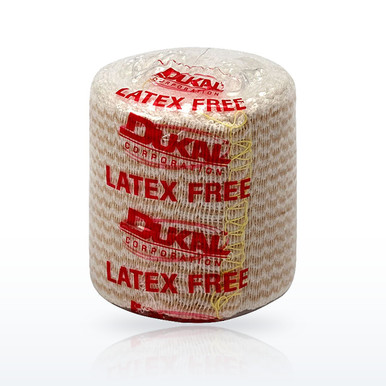 First Aid Only 5-922 Elastic Bandage, 2 in x 5 yd. Elastic Wrap, Velcro ClosureFirst Aid Only prints 2 inch x 5 yard elastic wrap with Velcro closure, high compression treatment, no clips or tape needed
Why the two names confuse buyers. A cabinet buyer sees "elastic bandage" on the refill list and "compression bandage" in the first aid course and wonders whether they are the same item. They are, when the compression is for a sprain; they are not, when the compression is for bleeding, because then the item is a dressing plus any roller bandage, and the Class B kit’s 4 inch roller or the Hema-Seal trauma dressing is what you reach for. This page separates the two, gives the Red Cross steps for each, the sizes and closures First Aid Only prints, and the honest answer to the "how many hours" and "when not to use an ACE bandage" questions, which is that the hours are a clinician’s instruction and the not-to-use list is the circulation check plus the injuries a wrap can hide.
The two meanings, side by side
The questions, one by one
What is the difference between a compression bandage and an elastic bandage?
An elastic bandage is a thing; a compression bandage is a use. The elastic bandage is the stretch cloth roll with clips or hook-and-loop. Used to limit swelling on a sprained ankle it is a compression bandage; used over a dressing to hold pressure on a bleeding cut it is a pressure bandage; a cohesive wrap or a conforming gauze roll can do either job, the elastic bandage compresses hardest. Nothing in the Red Cross first aid pages requires an elastic bandage for bleeding; they require pressure and a dressing.
When should you wear a compression bandage, and for how many hours?
For first aid the Red Cross muscle, bone and joint injury page gives rest, immobilize, cold and elevate, with a cold pack for no more than 20 minutes and a wrap only as part of immobilizing; it does not set hours for a compression wrap. How long a sprain is wrapped, and whether overnight, is what the clinician who looked at the joint tells you. The rule that is first aid is the circulation check: take the wrap off to look at the skin, rewrap it looser if the toes or fingers are cold, pale, swollen, numb or tingling, and do not sleep in a wrap unless told to.
When should you not use an ACE bandage?
When the limb beyond it is already cold, pale, numb or tingling, because the wrap will make it worse; over a wound that is bleeding, where the job is a dressing and direct pressure, not an elastic wrap alone; on an injury that may be a fracture or dislocation until it has been immobilized and seen, because the wrap hides the swelling and deformity the Red Cross fractures page says to look for; over a burn; and on a limb with poor circulation or a clot unless a clinician said to. A wrap that is comfortable for ten minutes and painful after an hour has been put on too tight.
What do pressure bandages do, and what is a pressure bandage?
They keep direct pressure on a bleeding wound after your hands come off it. The Red Cross external-bleeding page: find the source, place a dressing (hemostatic if available), apply steady firm pressure with the limb on a firm surface, and hold until the bleeding stops or a tourniquet is on. A pressure bandage is the roller bandage wound over that dressing tightly enough to keep the pressure; First Aid Only’s Hema-Flex compress and Hema-Seal trauma dressing pack the pad and the bandage together, with two nitrile gloves.
How tight should an ACE bandage be, and how tight do you wrap a compression bandage?
Snug enough to stay put and support, loose enough that you can slide a finger under the edge and the skin beyond it stays warm and pink. Stretch the bandage to about half its reach as you wrap, keep the tension the same on every turn, and never stretch it fully. Then do the Red Cross circulation check: temperature, color and feeling in the hand or foot, and ask about numbness or tingling. Pain, throbbing, swelling below the wrap or a blue tinge means take it off and rewrap looser.
How do you wrap an ACE bandage with velcro, and how do you wrap a foot?
Start at the far end (the toes or fingers), two anchoring turns, then spiral up overlapping by half; for an ankle or wrist, cross in a figure-eight around the joint; finish above the joint and press the hook-and-loop tab onto the bandage. Leave the toes showing. First Aid Only’s 2, 4 and 6 inch hook-and-loop wraps (5-922, 5-924, 5-926) are described as "eliminates need for clips or tape, high compression treatment, secure hold"; the 2 inch is for a hand or wrist, the 4 inch for an ankle or knee, the 6 inch for a thigh or chest.
What are the different types of elastic and compression bandages?
By closure: metal clips, hook-and-loop (Velcro) tab, and self-closing (cohesive) wrap. By width: 1, 2, 3, 4 and 6 inches, all 5 yards long in the First Aid Only line. By weight: the light cohesive wrap for holding and gentle compression, the woven elastic bandage for support. Clinical two-layer and four-layer compression systems for venous ulcers and lymphedema are prescribed products and are not first aid.
Are elastic bandages washable and reusable, and what are they made of?
An elastic bandage is a woven cotton and polyester with rubber or spandex threads for the stretch; First Aid Only prints "rubber elastic bandage" on its hook-and-loop wraps and "not made with natural rubber latex" on its cohesive wraps. A clean elastic bandage that has only supported a joint can be hand washed in mild soap, air dried flat and reused until it has lost its stretch; one that has been on a wound is contaminated and single use, and a cohesive wrap is single use because it loses its grip once unwound.
What is a good compression bandage for the hands?
A 2 inch elastic bandage or a 1 or 2 inch cohesive wrap, wrapped in a figure-eight around the wrist and across the palm leaving the fingers free, is the first aid size; the hook-and-loop 2 inch wrap closes one-handed. What a hand injury needs beyond a wrap (a splint, a sling, a clinician) is on the splints guide linked below.
What is a compression sleeve vs an ACE bandage, and what are leg compression wraps used for?
A sleeve is a knitted tube with a fixed compression; it cannot be adjusted and it is worn for sport or mild swelling. A bandage is adjusted turn by turn and comes off for the circulation check, which is why first aid uses the bandage. Leg compression wraps and the lymphedema wraps people ask about are clinical products fitted by a clinician; a first aid kit does not carry them.
What is another name for an elastic bandage, and do ACE bandages still exist?
ACE bandage (the brand), elastic wrap, stretch bandage, crepe bandage (the British word), and tensor bandage (the Canadian word). ACE is still a brand sold by 3M; the generic item in a kit is the elastic bandage, and in First Aid Only’s line it is the 5-90x elastic bandages and the 5-92x hook-and-loop wraps.
What bandage do you use for swelling, and when do you stop wearing it?
An elastic or cohesive wrap as part of rest, cold and elevation is the first aid answer for a sprain; when it comes off for good is the clinician’s answer, and it comes off at once whenever the circulation check fails. Swelling that keeps growing under a wrap, or a joint that cannot bear weight, is on the Red Cross list of signs to be seen.
In plain words
- Elastic bandage: the roll. Compression bandage: what you do with it, for a sprain. Pressure bandage: a roller bandage over a dressing to keep pressure on a bleeding wound.
- Red Cross for bleeding: dressing, firm direct pressure, hold it, add a pad if it soaks through.
- Red Cross for a sprain: rest, immobilize, cold for no more than 20 minutes, elevate.
- Never tight enough to leave the limb cold, pale, numb or tingling. Check, and rewrap looser.
- Hours and overnight are the clinician’s call, not a kit rule.
- Widths: 2 inch hand and wrist, 3 inch forearm, 4 inch ankle and knee, 6 inch thigh.
- Clips, hook-and-loop or self-adhering; a wrap that has touched a wound is single use.
Questions people ask
What is the difference between a compression bandage and an elastic bandage?
The elastic bandage is the product; compression is one use of it (a sprain); a pressure bandage for bleeding is a dressing with any roller bandage wound firmly over it.
When should you wear a compression bandage?
For first aid, as part of rest, cold and elevation on a sprain; how long is the clinician’s instruction. Always with the circulation check.
How many hours should you wear a compression bandage?
The Red Cross sets no hours; it sets the circulation check. A clinician sets the schedule, including whether it stays on overnight.
When should you not use an ACE bandage?
When the limb beyond it is cold, pale or numb, on bleeding that needs a dressing and pressure, on a possible fracture before it is immobilized, over a burn, or with poor circulation unless a clinician says so.
What do pressure bandages do?
Keep direct pressure on a bleeding wound after your hands come off, over a sterile or hemostatic dressing.
How tight should an ACE bandage be?
Snug, half stretch, even tension, a finger slides under the edge, and the hand or foot stays warm and pink.
How do you wrap an ACE bandage with velcro?
Anchor at the far end, spiral up overlapping by half, figure-eight around a joint, press the tab onto the bandage, leave the toes or fingers showing.
Are elastic bandages reusable?
A clean one that only supported a joint can be hand washed and reused; one that touched a wound is single use, as is a cohesive wrap.
What are the types of elastic bandages?
Clip closure, hook-and-loop closure and self-adhering cohesive, in 1 to 6 inch widths.
What is a good compression bandage for the hands?
A 2 inch elastic or 1 to 2 inch cohesive wrap in a figure-eight around the wrist with the fingers free.
What is another name for an elastic bandage?
ACE bandage (a brand), elastic wrap, stretch, crepe or tensor bandage.
Does an ANSI first aid kit need an elastic bandage?
Z308.1 names roller bandages (2 inch in Class A, plus 4 inch in Class B); the elastic bandage is a supplementary item in the larger First Aid Only kits.
The ratings, test results and standards shown here are the manufacturers' published values, reproduced as published. Nothing on this page is a recommendation by Bayshore Safety that any product is suitable for a particular task, hazard or workplace. Selecting safety products and protective equipment is the responsibility of the end user and the employer, based on their own hazard assessment and the regulations that apply to their work. Confirm every value on the manufacturer's own documentation before use.
© 2026 Bayshore Safety & Industrial Supplies, Inc. All rights reserved. This guide may not be copied or republished without written permission.