
What equipment does 1910.146 require for confined space entry?
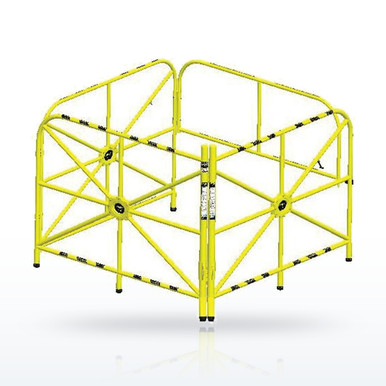
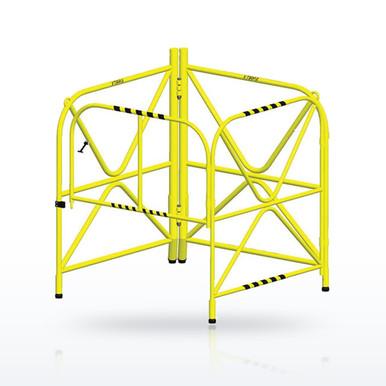
OSHA lists nine categories the employer must provide at no cost, maintain and make sure are used: testing and monitoring equipment; ventilating equipment; communications equipment; personal protective equipment where engineering controls are not enough; lighting; barriers and shields; equipment for safe entry and exit such as ladders; rescue and emergency equipment; and anything else needed for safe entry and rescue. In practice a permit-space entry kit is a calibrated multi-gas monitor, a blower and duct, a radio or voice link between entrant and attendant, a tripod or davit with a winch, a harness with a retrieval line, a guard around the opening, and a light rated for the atmosphere. Which items apply to a given space is decided by the hazard evaluation on the permit.
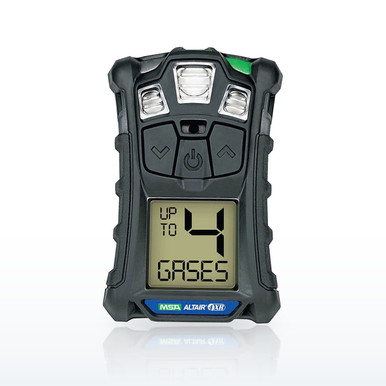
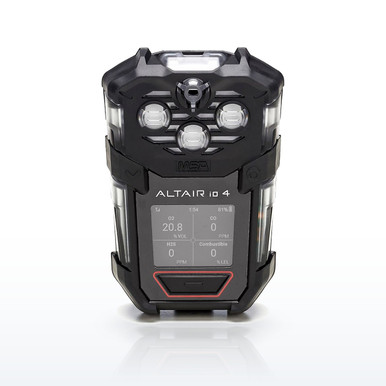
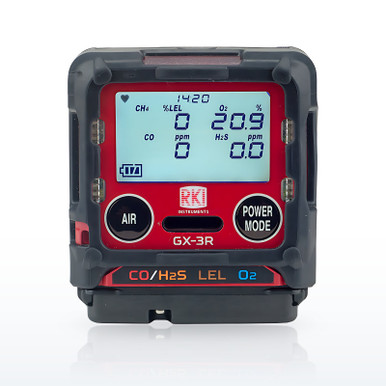
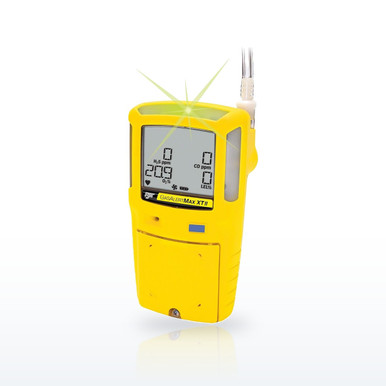
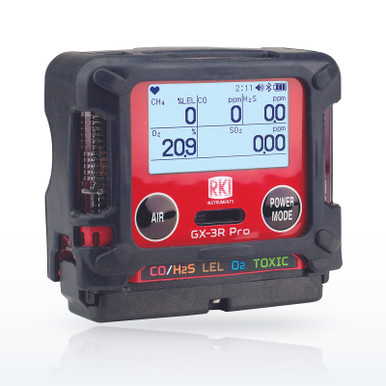
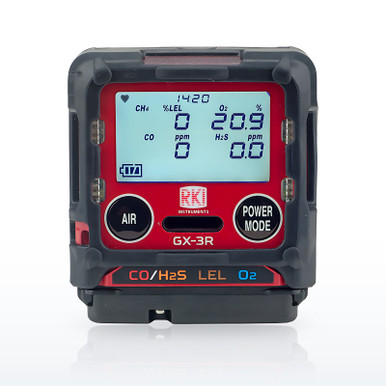
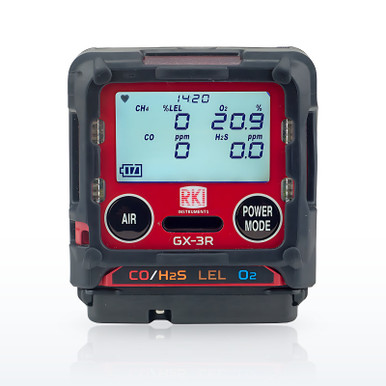 Four-gas monitorOxygen, combustibles, H2S and CO: the testing and monitoring item on the list
Why does the standard list equipment at all? Most of 1910.146 is about procedure: the permit, the attendant, the entry supervisor, the rescue service. Paragraph (d)(4) is the one place it says what has to be physically on site, because a permit program with no gas monitor or no way to pull an entrant out is paperwork. The list is written in categories rather than models so that the hazard evaluation, not a catalog, decides what each space needs.
What are the nine categories?
From 1910.146(d)(4)(i) through (ix), with what each one usually is on a jobsite.
What are the rules for the gas monitor?
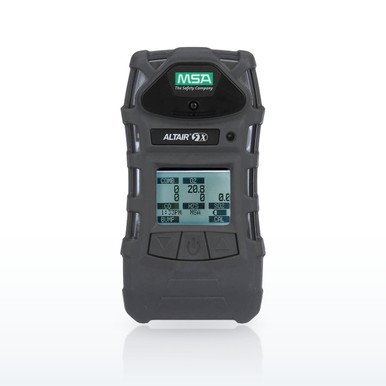
Test before entry, in a fixed order: oxygen first, then combustible gases and vapors, then toxic gases and vapors. The order matters because combustible sensors read wrong when oxygen is low and the oxygen reading tells you whether the other readings can be trusted. Test as far as feasible into any space that cannot be isolated, and keep monitoring where entrants are working; entrants or their representatives may watch the testing and ask for a re-test. A monitor that cannot be bump tested and calibrated is not a calibrated direct-reading instrument.
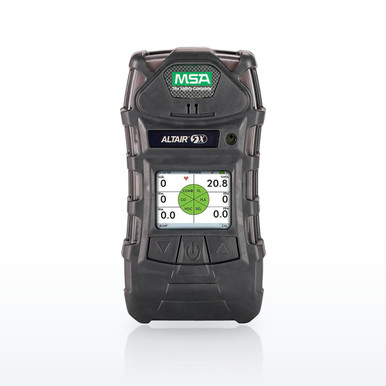
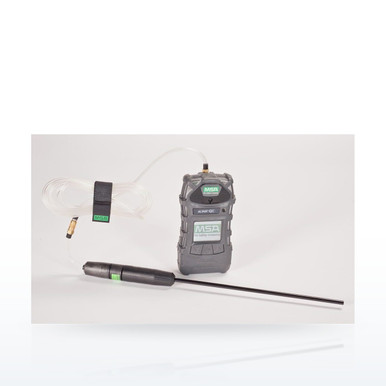
1910.146(c)(5)(ii)(C) and (d)(5)(i) through (vi), the order in (d)(5)(iii); the construction rule, 1926.1204(e)(3), states the same order and 1926.1204(e)(2) requires continuous monitoring unless the equipment is not commercially available or periodic monitoring is shown to be enough.A diffusion monitor clipped to the entrant reads the air at the entrant. A pumped (sample-draw) monitor with a probe reads the air at the bottom of a manhole before anyone enters, which is what the pre-entry test needs; a hand aspirator or built-in pump on a diffusion unit does the same job. Many crews carry one of each or a pumped unit that does both.
1910.146(d)(5)(i): test conditions in the permit space before entry is authorized.What does the retrieval equipment have to be?
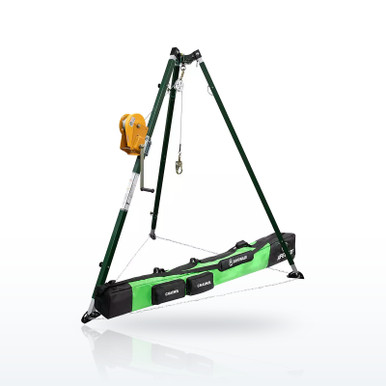
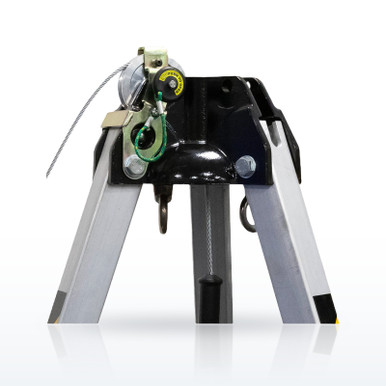
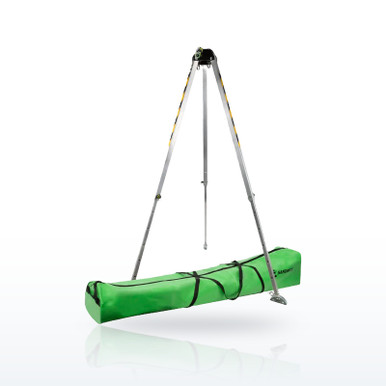
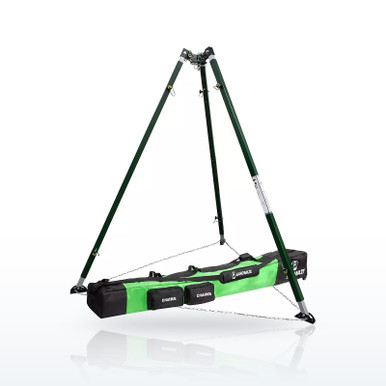
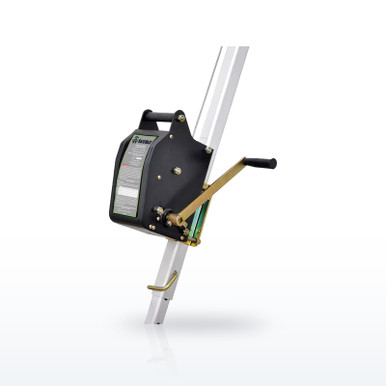
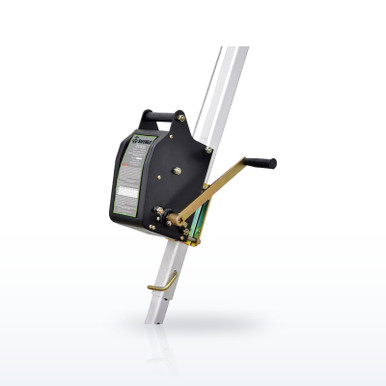
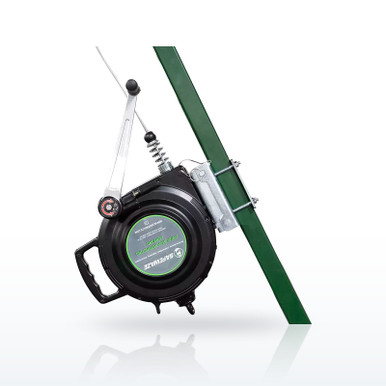
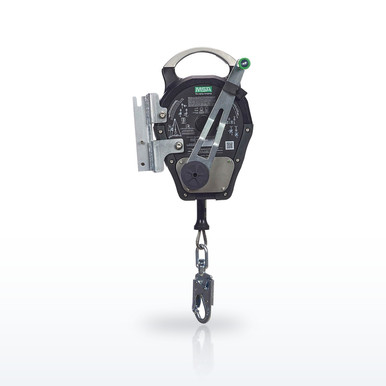
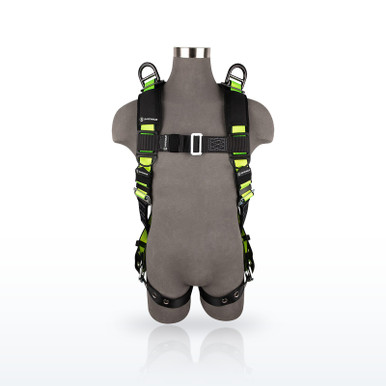
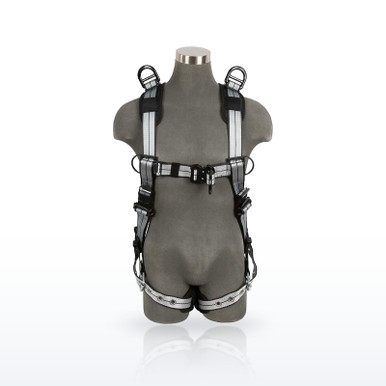
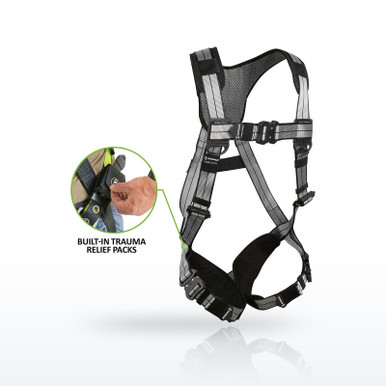
A chest or full-body harness with the retrieval line attached at the center of the back near shoulder level, above the head, or another point that gives a profile small enough to pull the entrant out; the other end attached to a mechanical device or fixed point outside the space so rescue can begin the moment it is needed; and for a vertical space more than 5 feet deep, a mechanical device, which is a personnel winch or a 3-way retrieval SRL on a tripod or davit. The retrieval system is required on every authorized entrant unless the employer determines it would increase the overall risk or would not help the rescue.
1910.146(k)(3)(i) and (ii); 1910.146(b), definition of retrieval system.What about the attendant and the permit?
- At least one attendant outside the space for the duration of entry, who stays until relieved, keeps an accurate count of entrants, monitors conditions inside and outside, orders evacuation when needed, and performs non-entry rescue per the employer’s procedure. The attendant may not enter to attempt a rescue unless trained and equipped for it and relieved by another attendant.
- A written permit posted at the entry, listing the hazards, the acceptable entry conditions, the test results, the rescue service and how to summon it, the communication procedures, and the equipment to be provided.
- Training for entrants, attendants and entry supervisors before first assignment, when duties change, and when the hazards change.
- Danger signs or an equally effective means to tell employees where the permit spaces are and what the danger is.
Gas monitors, tripods, winches, retrieval harnesses and barriers
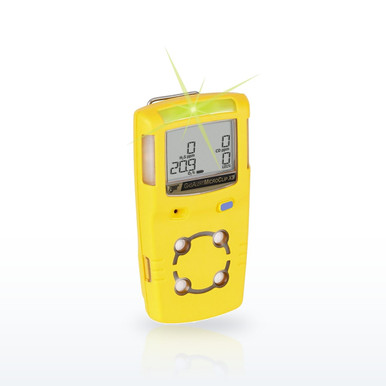
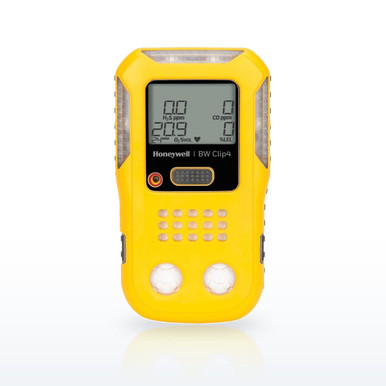
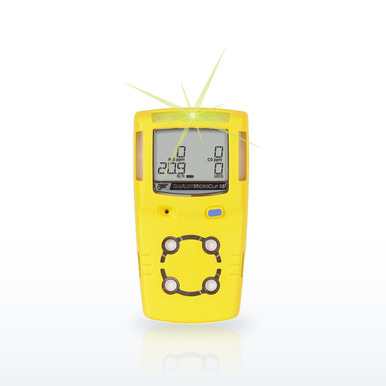
30 items · prices liveThe gases each monitor reads, the standard each retrieval device meets and the working loads are as published by the manufacturer. Pump kits, calibration gas and replacement sensors are on each monitor’s product page. Contractor Direct orders ship free.

Ventilation blowers and ducting, intrinsically safe lighting and confined-space radios are quoted on request: call (925) 215-7337.
Questions people ask
Does OSHA require a 4-gas monitor for confined space entry?
It requires testing and monitoring equipment that reads oxygen, flammable gas and the toxic contaminants the space can hold, in that order (1910.146(d)(4)(i) and (d)(5)). A four-gas monitor covers the usual set; the permit decides whether another sensor is needed.
In what order do you test a confined space?
Oxygen, then combustible gases and vapors, then toxic gases and vapors (1910.146(c)(5)(ii)(C); 1926.1204(e)(3)).
Is a tripod required?
Not by name. A mechanical retrieval device is required for a vertical permit space more than 5 feet deep, and a tripod with a winch or 3-way SRL is the usual device (1910.146(k)(3)(ii)).
Does the employer have to buy rescue equipment if we use the fire department?
Rescue equipment is required except to the extent the rescue service provides it, but the retrieval system on the entrant is the employer’s, and the rescue service still has to be evaluated for response time and given access to practice (1910.146(d)(4)(viii) and (k)(1)).
Who pays for the equipment?
The employer provides it at no cost to employees, maintains it and makes sure it is used properly (1910.146(d)(4)).
Is a ladder required?
Equipment such as ladders needed for safe ingress and egress is on the list (1910.146(d)(4)(vii)). Whether a fixed ladder, a portable ladder or a winch-assisted descent meets it depends on the space.
Do the same rules apply on a construction site?
Construction has its own standard, 1926 Subpart AA, with the same nine equipment categories (1926.1204(d)) and a continuous-monitoring rule. See the guide on how Subpart AA differs.
Standards and ratings on this page are as published in the documents named and by the manufacturers named. The employer’s hazard assessment and written program decide what applies at a given workplace. Verify a rating on the product and its spec sheet before use.