
Fall protection on ladders: what 1910.23 and 1926.1053 require
Portable ladders do not require a harness under either standard; the rules for them are about setup and climbing: extend 3 feet above the landing, keep one hand on the ladder, carry nothing that can throw you off balance. Fixed ladders are different. In general industry, any fixed ladder that extends more than 24 feet above a lower level needs a personal fall arrest system or a ladder safety system; a cage or well is accepted only on ladders installed before November 19, 2018, and only until November 18, 2036. In construction, a fixed ladder with a climb of 24 feet or more needs a ladder safety device, a self-retracting lifeline with rest platforms, or a cage or well with offset sections. A ladder safety system is the rail or cable with a sleeve that follows you up and locks when you fall.
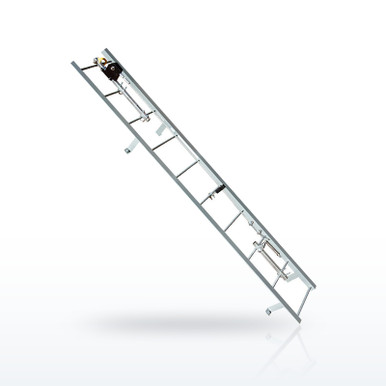
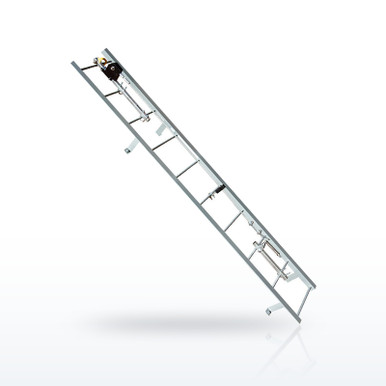
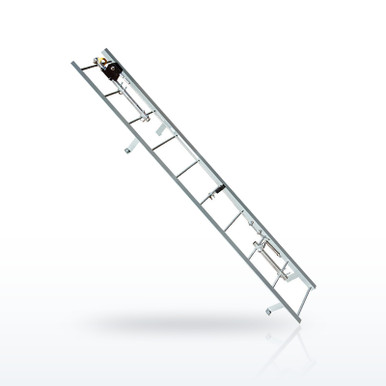
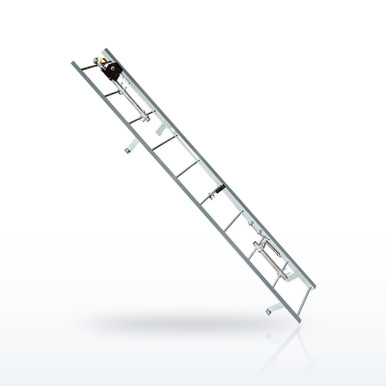
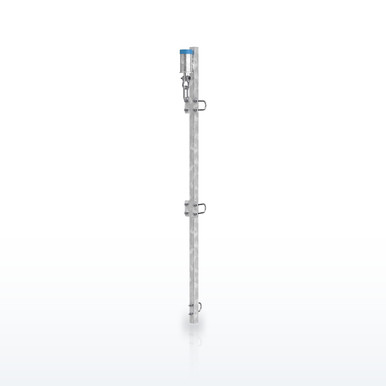
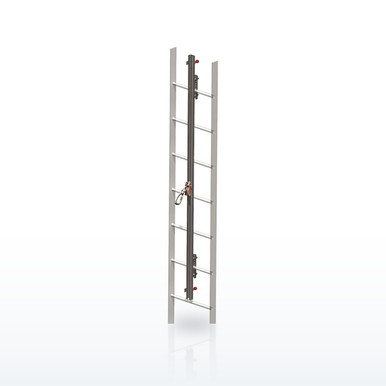
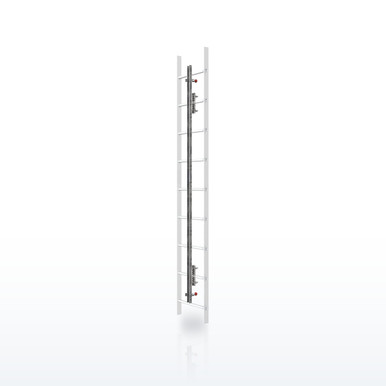
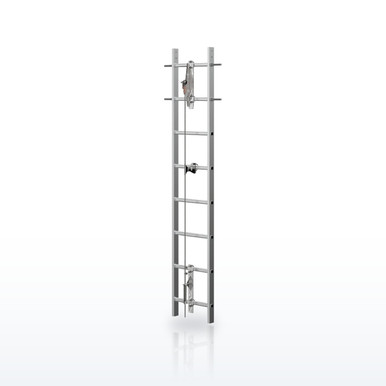
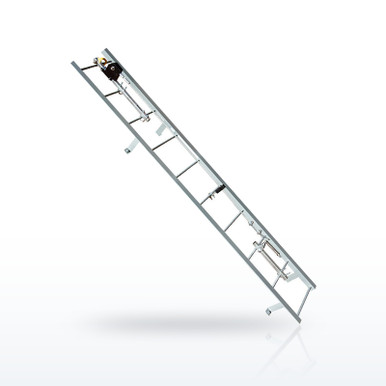 Safewaze 30-foot ladder climb systemGalvanized cable, top and bottom brackets and a locking sleeve, ANSI A14.3
Why did OSHA stop accepting cages? A cage was supposed to let a falling climber catch themselves against the hoops. In practice a climber who lets go falls down the inside of the cage, striking the hoops on the way, and the cage makes rescue harder. When OSHA rewrote the general industry walking-working surfaces rule in 2016 it set a 20-year phase-out: new fixed ladders over 24 feet get a fall arrest or ladder safety system from the start, replaced sections get one as they are replaced, and by November 2036 every fixed ladder over 24 feet has one. The construction standard still lists cages and wells as an option.
When does a ladder need fall protection?
The 24-foot threshold is the same in both standards; the accepted systems and dates differ.
What is a ladder safety system?
A rigid rail or a tensioned cable fixed to the ladder, with a sleeve or shuttle that rides on it. The climber clips the sleeve to the front D-ring of a harness and climbs with both hands free; if they slip, the sleeve locks on the rail or cable. The general industry criteria: both hands free to climb, no need to hold, push or pull any part of the system; the connection between the carrier and the harness attachment no longer than 9 inches; rigid carriers mounted at each end with intermediate mountings as needed; flexible (cable) carriers mounted at each end with cable guides 25 to 40 feet apart; and mountings that do not reduce the ladder’s design strength. The construction criteria add the 500-pound drop test, the 2-foot activation and the 7-feet-per-second descent limit.
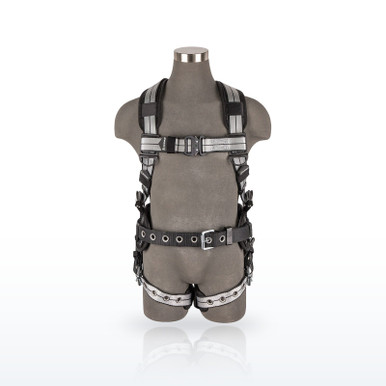
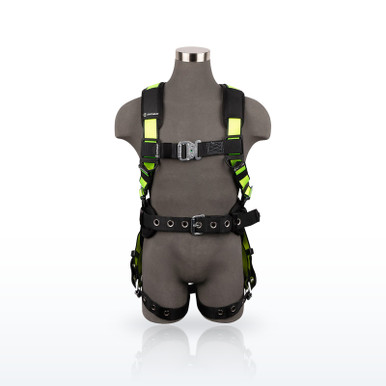
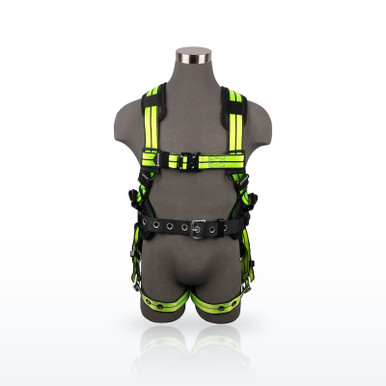
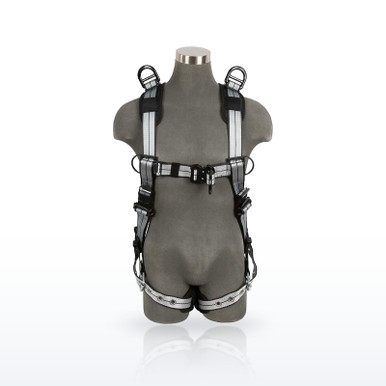
1910.29(i)(1) through (5); 1926.1053(a)(22)(i) through (iv) and (a)(23).The systems in the band are sold by cable length to match the ladder, with a top bracket, bottom bracket, cable, guides and a sleeve. The manufacturer lists the system to ANSI A14.3, the fixed-ladder standard, and sizes the kit for the number of climbers it can carry at once. The harness is bought separately; the sleeve connects at the sternal (front) D-ring, so the harness has to have one.
ANSI A14.3 as stated on the manufacturer spec sheets for the systems below; 1910.29(i)(2).Can a self-retracting lifeline be used instead?
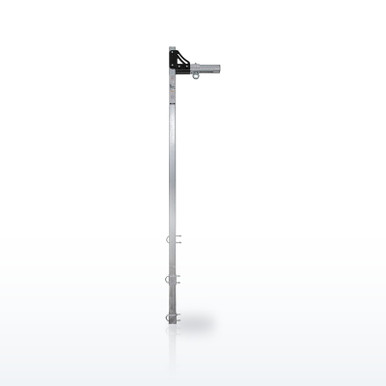
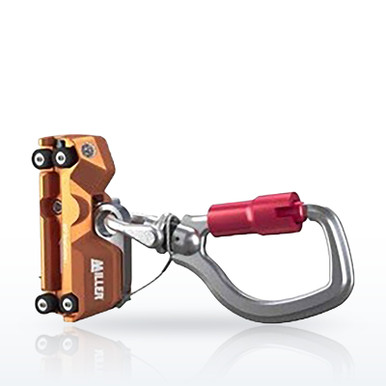
In construction, yes: self-retracting lifelines are named as an option alongside ladder safety devices, with rest platforms at intervals of 150 feet or less. In general industry the options are a personal fall arrest system or a ladder safety system, and an SRL anchored above the ladder is a personal fall arrest system; it has to meet 1910.140, including a 5,000-pound anchorage and the 1,800-pound force limit. The SRL ladder anchor posts in the band mount at the top of a fixed ladder for exactly this use. For a one-off climb where no system is installed, an SRL on an overhead anchor is the usual answer.
1926.1053(a)(19)(ii); 1910.28(b)(9)(i); 1910.140(c)(13)(i) and (d)(1)(i).What are the rules for portable ladders that get people hurt?
- Extend the side rails at least 3 feet above the upper landing, or secure the top and add a grab device if the ladder cannot extend that far.
- Keep at least one hand on the ladder when going up or down. Both standards say so, in almost the same words.
- Do not carry anything that could cause you to lose your balance and fall; hoist it or wear it.
- Set the ladder on a stable, level surface, and do not use it for anything but its designed purpose.
- Fixed ladders without cages or wells need 15 inches of clear width each side of the centerline and 30 inches of clearance on the climbing side.
Ladder climb systems, SRL ladder anchors, rope grabs and harnesses
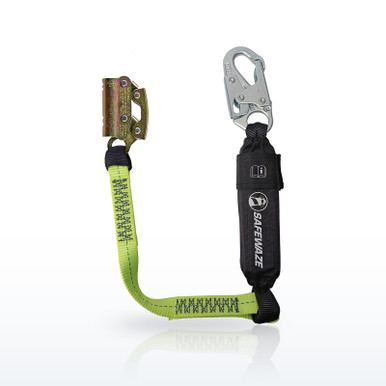
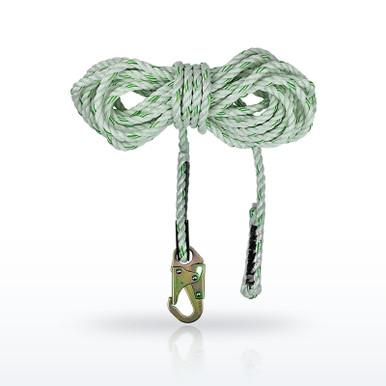
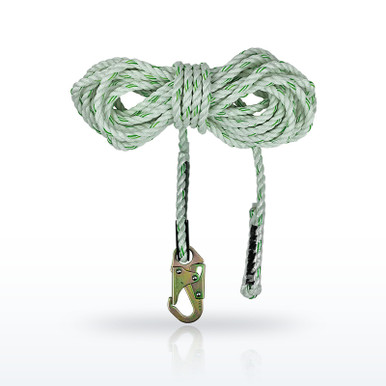
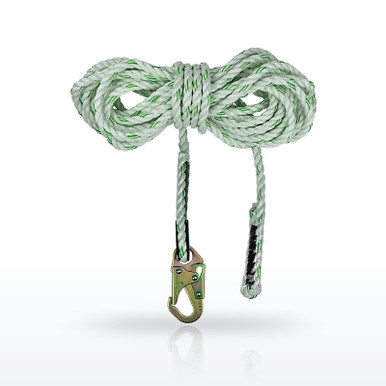
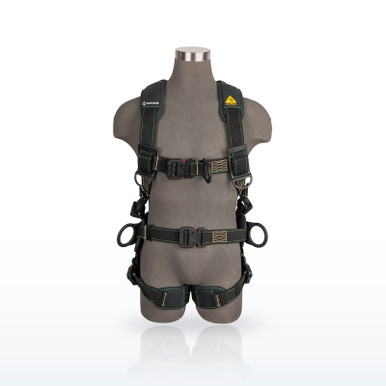
31 items · prices liveThe standard each item meets and the cable length are as published by the manufacturer. Climb systems are sold by length; the spec sheet gives the number of climbers and the harness D-ring required. Free shipping on orders over $199.
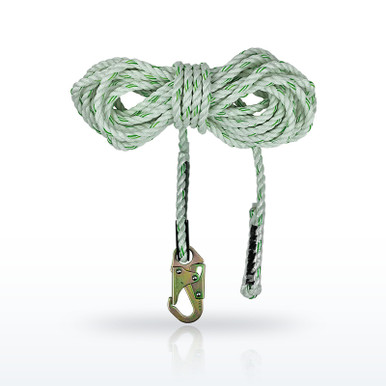
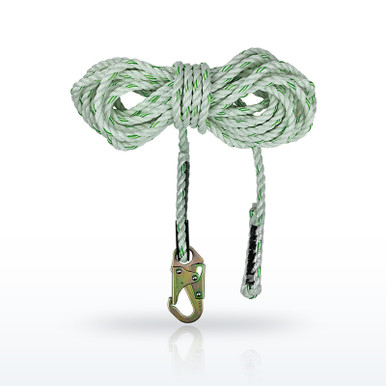
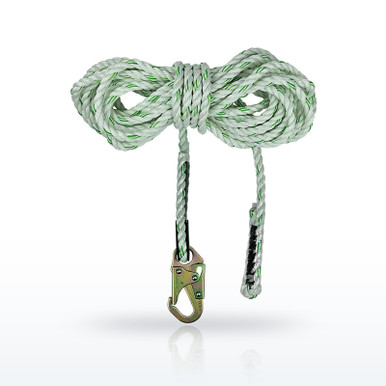
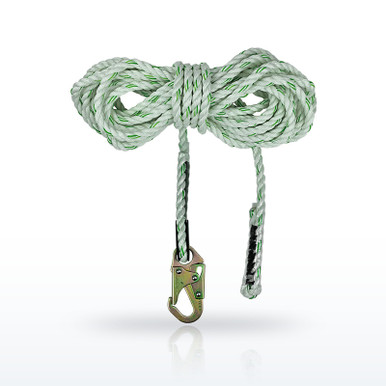
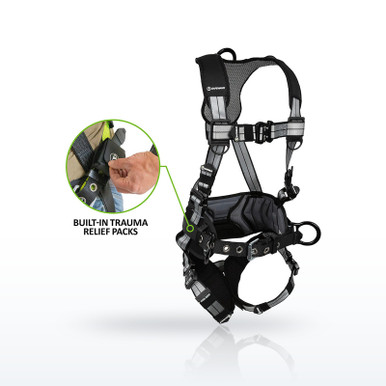
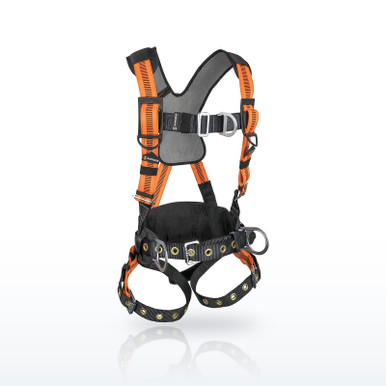
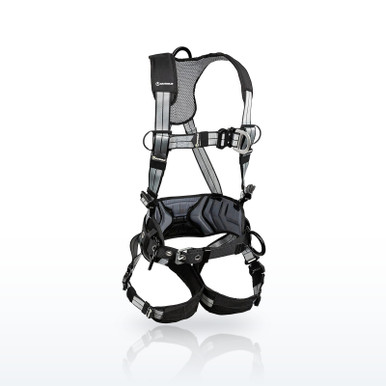
Stainless and 4-person climb systems, and fixed-ladder rail systems, are in the fall protection finder.
Questions people ask
Does OSHA require a harness on a ladder?
Not on a portable ladder. On a fixed ladder over 24 feet, general industry requires a personal fall arrest system or a ladder safety system (1910.28(b)(9)); construction requires a ladder safety device, an SRL or a cage or well (1926.1053(a)(19)).
Are ladder cages still allowed?
In general industry, only on fixed ladders installed before November 19, 2018, and only until November 18, 2036; after that every fixed ladder over 24 feet needs a fall arrest or ladder safety system (1910.28(b)(9)(i)). In construction a cage or well with offset 50-foot sections is still an option (1926.1053(a)(19)(iii)).
What height triggers fall protection on a fixed ladder?
More than 24 feet above a lower level in general industry; a climb of 24 feet or more in construction. In construction a shorter climb with a top more than 24 feet above lower levels is also covered.
What is the 9-inch rule?
The connection between the carrier or lifeline and the harness attachment point on a ladder safety system may not exceed 9 inches (1910.29(i)(2); 1926.1053(a)(22)).
Which D-ring does a ladder sleeve clip to?
The front (sternal) D-ring, so the climber stays facing the ladder. A harness for a climb system needs one; a back-D-only harness does not work with a ladder sleeve.
How high must a portable ladder extend above the roof or landing?
At least 3 feet above the upper landing surface, in both standards (1910.23(c)(11); 1926.1053(b)(1)).
Can I carry tools up a ladder?
Not anything that could cause a loss of balance; one hand stays on the ladder (1910.23(b)(12) and (b)(13); 1926.1053(b)(21) and (b)(22)).
Standards and ratings on this page are as published in the documents named and by the manufacturers named. The employer’s hazard assessment and written program decide what applies at a given workplace. Verify a rating on the product and its spec sheet before use.