
OSHA hearing protection requirements explained (1910.95)
OSHA’s general industry noise standard, 29 CFR 1910.95, does two things. Paragraphs (a) and (b) set the limit: Table G-16, which allows 8 hours at 90 dBA and halves the time for every 5 decibels more, and the order of controls (engineering and administrative first, then hearing protectors). Paragraphs (c) through (o) are the hearing conservation program, which starts at an 8-hour average of 85 dBA: measure the noise, test hearing every year, give out protectors free and make sure they cut the noise enough, train every year, and keep records. The mandatory appendices spell out how to compute exposure, how to judge an ear plug’s rating, and how audiometers and test booths must perform.
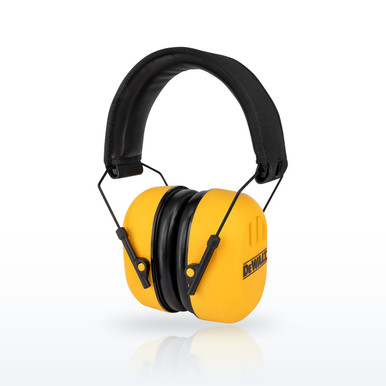 DEWALT DPG18-BX DPG18 Reducer NRR 28 Passive EarmuffPassive earmuffs rated NRR 27 and above by the manufacturer
Why is the standard written in two parts? The exposure limit and the duty to control noise date from OSHA’s first rules. The hearing conservation program was added in 1981 and 1983 because the limit alone was not catching damage: workers under 90 dBA were still losing hearing, and nobody was measuring it. So the standard now has a hard ceiling at 90 and a second, lower line at 85 where testing, protectors and training become mandatory. Everything in paragraphs (c) through (o) hangs on that 85 dBA figure.
What does each paragraph require?
The standard in order. Paragraph letters are the ones you will see on a citation.
OSHA permissible noise exposure: Table G-16 and the time limits
| Duration per day | Sound level (dBA, slow response) | What it means on the floor |
|---|---|---|
| 8 hours | 90 | The permissible exposure limit for a full shift |
| 6 hours | 92 | |
| 4 hours | 95 | A chainsaw or a bulldozer in the NIOSH examples |
| 3 hours | 97 | |
| 2 hours | 100 | A car horn at 16 feet in the CDC examples |
| 1.5 hours | 102 | |
| 1 hour | 105 | |
| 30 minutes | 110 | |
| 15 minutes or less | 115 | The table ends here |
| Any duration | 140 dB peak | Impulse or impact noise should not exceed this |
Mixed exposures: when the day has periods at different levels, add up each period’s actual time divided by its permitted time (C1/T1 + C2/T2 + …). A total over 1 exceeds the limit. Example: 2 hours at 95 (2/4 = 0.5) plus 2 hours at 90 (2/8 = 0.25) is 0.75, under the limit; add 1 hour at 100 (1/2 = 0.5) and it is 1.25, over. The 85 dBA action level is a separate figure defined in paragraph (c), not a row in the table; Table G-16a in Appendix A converts dose to an equivalent 8-hour level and is how the 50 percent dose equals 85 dBA.
29 CFR 1910.95 Table G-16 and footnote 1; Appendix A, Table G-16a; tool examples from NIOSH, Noise and Hearing Loss, and CDC, What Noises Cause Hearing Loss.
What has to happen when a hearing test shows a loss?
The standard calls it a standard threshold shift: an average change of 10 dB or more at 2,000, 3,000 and 4,000 Hz in either ear compared with the baseline. The employee must be told in writing within 21 days. Unless a physician decides the shift is not work-related, the employer fits (or refits) the employee with protectors, trains them, and requires their use, and refers them for a clinical evaluation if more testing is needed. If a later test shows the shift was not persistent, the employee is told and the protector requirement can be lifted for anyone under a 90 dBA average.
1910.95(g)(10)(i); (g)(8)(i); (g)(8)(ii)(A), (B) and (C); (g)(8)(iii).The protector chosen for that employee also changes. For most workers the standard asks the protector to bring exposure to 90 dBA or below. For a worker with a standard threshold shift, it must bring exposure to 85 or below, which in practice means a higher-rated plug or muff, or both together.
1910.95(j)(2) and (j)(3).How do you check whether a plug or muff is enough?
- Start with the NRR on the package. It is the manufacturer’s laboratory rating, required by EPA to appear on the label.
- With an A-weighted noise measurement (the usual kind): subtract 7 from the NRR, then subtract that remainder from the measured level. An NRR 33 plug at 100 dBA: 33 minus 7 is 26; 100 minus 26 is 74 dBA estimated under the plug.
- With a C-weighted measurement: subtract the full NRR from the C-weighted level.
- The target is 90 dBA or below, or 85 for an employee with a standard threshold shift. If exposures go up, re-check and issue a more effective protector where needed.
- The rating assumes the protector is fitted and worn correctly for the whole exposure; the appendix says so. NIOSH goes further and derates the label by 25 percent for muffs, 50 percent for foam plugs and 70 percent for other plugs before doing the arithmetic.
What do the appendices cover?
Appendix A: how to compute exposure and dose, with Table G-16a converting a dose percentage to an 8-hour equivalent level. Appendix B: the methods above for judging whether a protector is adequate. Appendix C: the audiometers. Appendix D: the test room (maximum background sound by octave band). Appendix E: calibrating audiometers. Those five are mandatory. Appendix F (age corrections to audiograms) and Appendix G (monitoring noise levels) are informational.
1910.95(n); Appendices A through G.Ear plugs and earmuffs by NRR
32 items · prices liveNRR is as tested by the manufacturer under ANSI S3.19 and printed on the package. Pack size and corded or uncorded are on the product page. Free shipping on orders over $199.
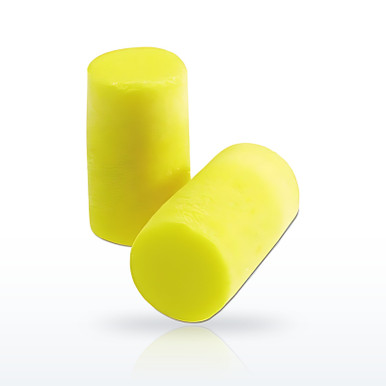
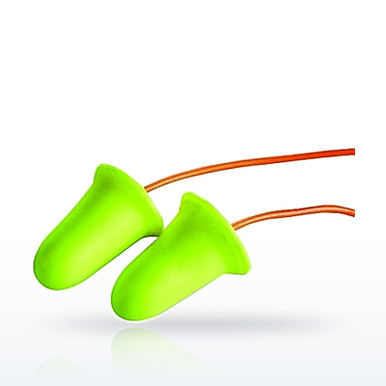
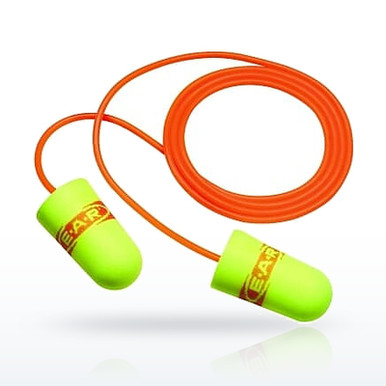
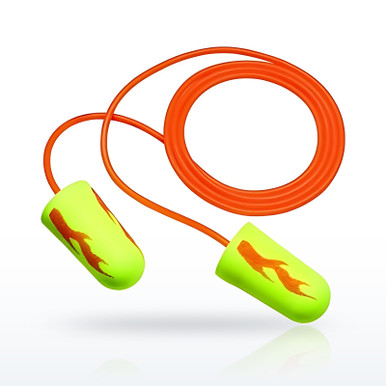

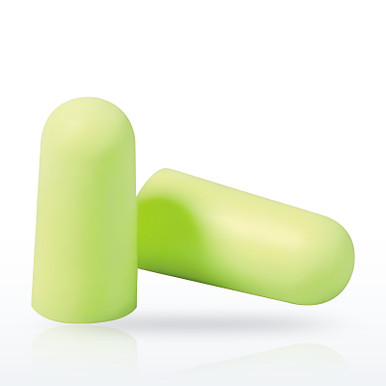

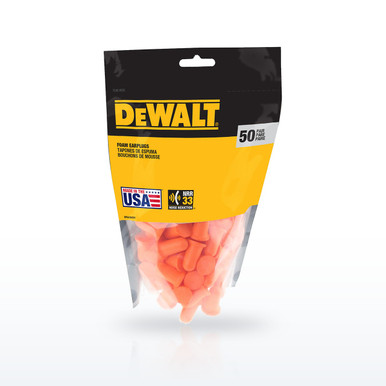
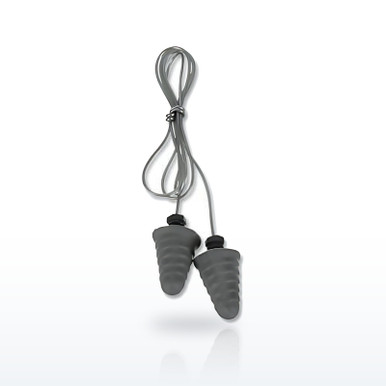
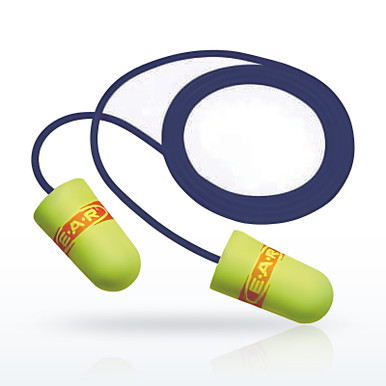
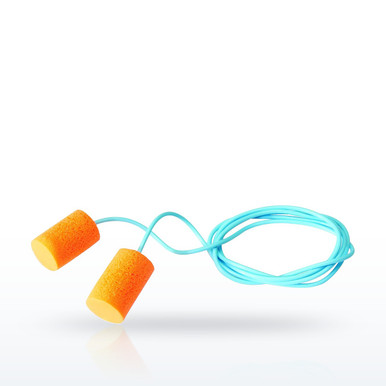
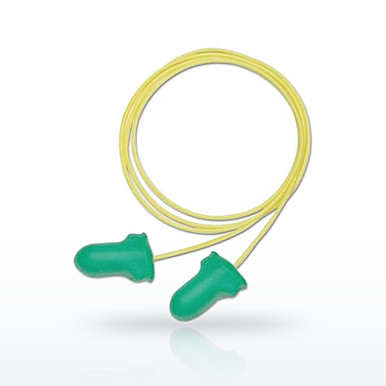
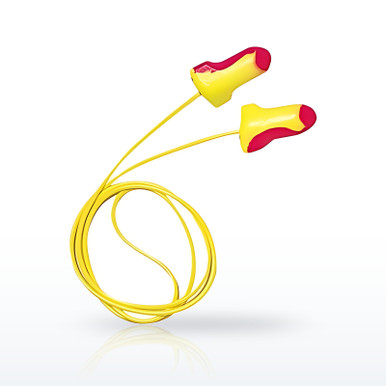
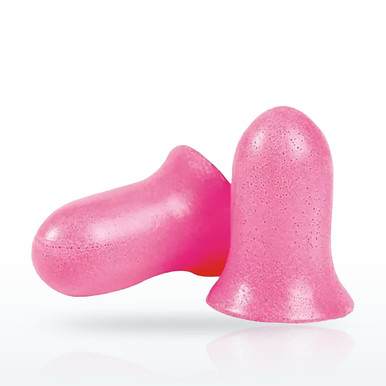
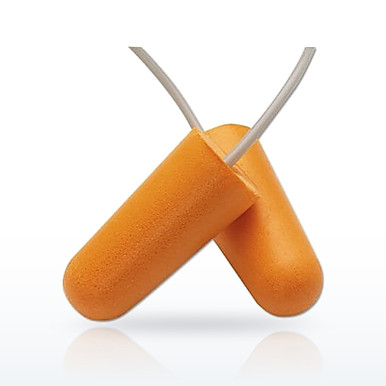

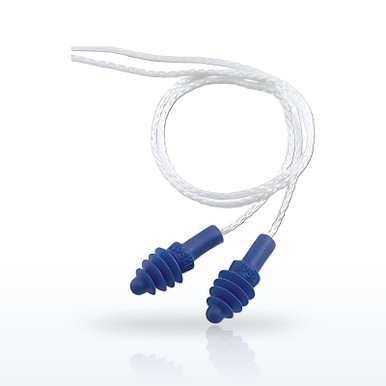
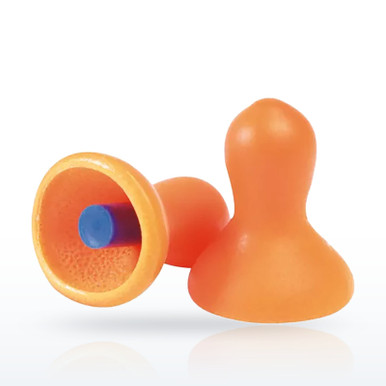
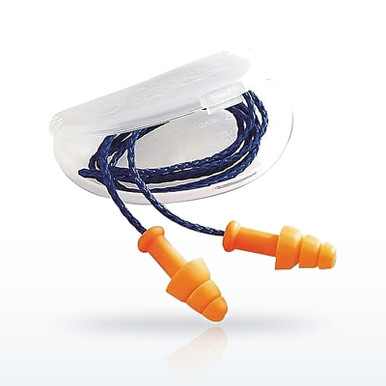
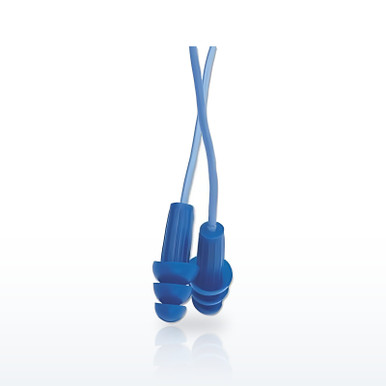
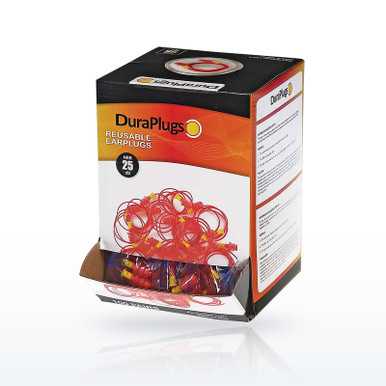
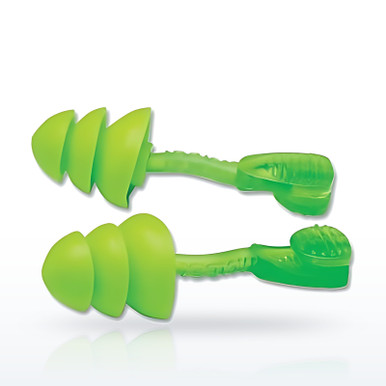

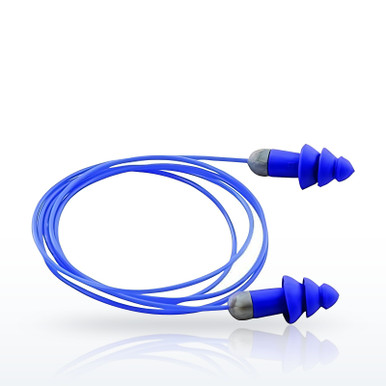
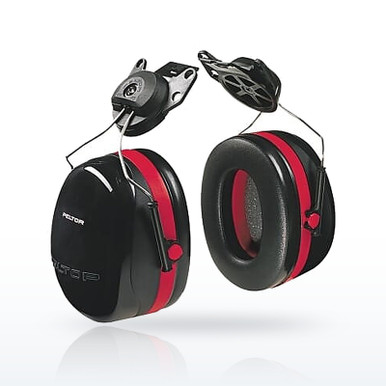
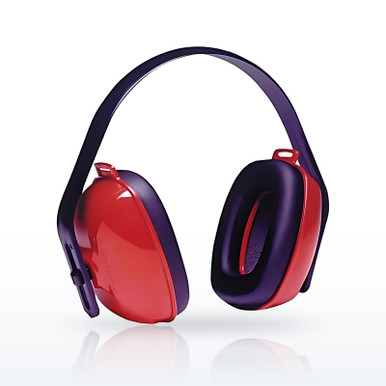
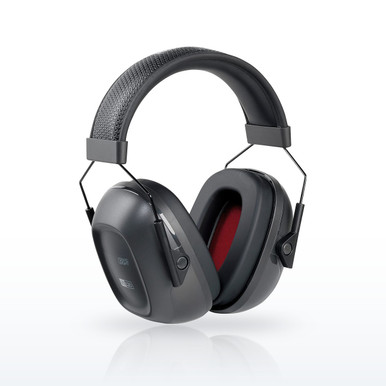
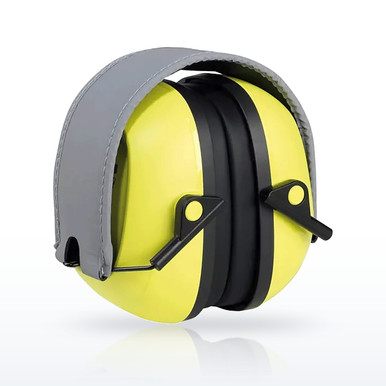
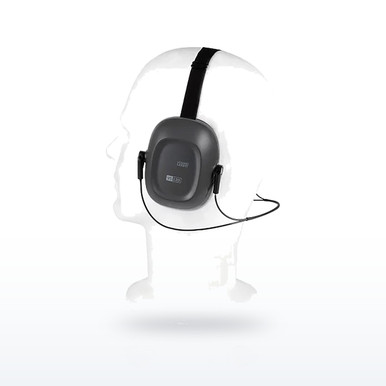
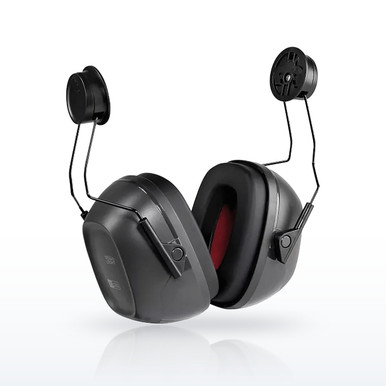
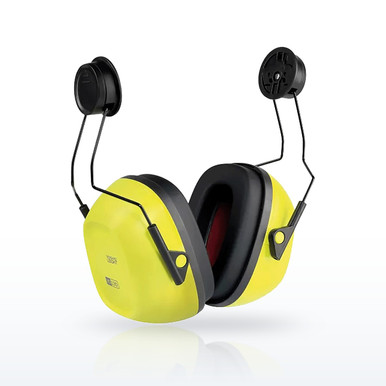
Dispensers, refills, banded plugs and cap-mounted muffs are in the hearing protection finder.
Questions people ask
What is the OSHA permissible exposure limit for noise?
90 dBA as an 8-hour time-weighted average, from Table G-16, with shorter times at higher levels: 95 for 4 hours, 100 for 2, 105 for 1, 115 for 15 minutes. (1910.95(a) and Table G-16.)
What is the OSHA action level for noise?
85 dBA as an 8-hour average, equal to a 50 percent dose. At that level the hearing conservation program is required. (1910.95(c).)
How does OSHA handle a day at several different noise levels?
Add each period’s time divided by its permitted time from Table G-16. If the total is more than 1, the exposure is over the limit. (Table G-16 footnote 1.)
What is the exchange rate in Table G-16?
5 decibels: every 5 dBA increase halves the allowed time. NIOSH uses 3 dB, which is stricter.
Does OSHA require annual hearing tests?
Yes, for every employee at or above 85 dBA: a baseline within 6 months of first exposure and an annual audiogram after that. (1910.95(g)(5) and (g)(6).)
How long must noise records be kept?
Exposure measurements for 2 years; audiometric test records for the duration of the employee’s employment. (1910.95(m)(3).)
Does 1910.95 apply to construction?
No. Construction is covered by 1926.52 and 1926.101, which keep the 90 dBA table but have no 85 dBA action level or audiometric requirements written in.
Which parts of the standard are mandatory appendices?
Appendices A through E (exposure computation, protector attenuation, audiometers, test rooms, calibration). F and G are informational. (1910.95(n).)
Standards and ratings on this page are as published in the documents named and by the manufacturers named. The employer’s hazard assessment and written program decide what applies at a given workplace. Verify a rating on the product and its spec sheet before use.