
What is a rescue plan, and does OSHA require one?
OSHA does not use the words "rescue plan" in its fall protection standards, but it requires the result. Both the construction and general industry rules say the employer shall provide for prompt rescue of employees in the event of a fall, or assure that employees are able to rescue themselves. A worker hanging in a harness after an arrested fall can lose consciousness in minutes and die in under 30, so "provide for" has to mean a plan made before the work starts: who rescues, with what equipment, how fast, and what the worker does while waiting. Permit-required confined spaces go further; there the standard spells out rescue service evaluation, equipment, training and practice.
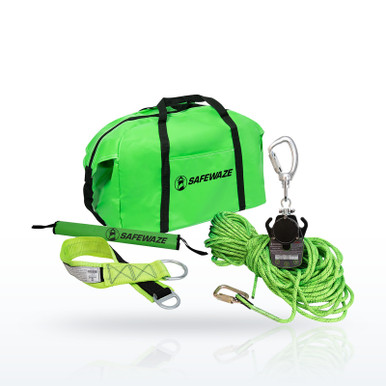
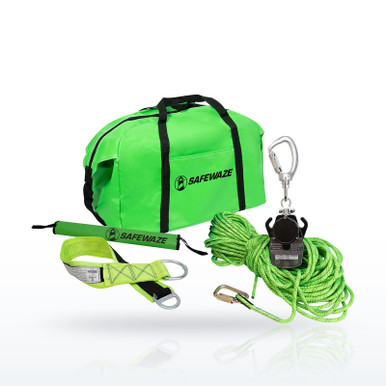
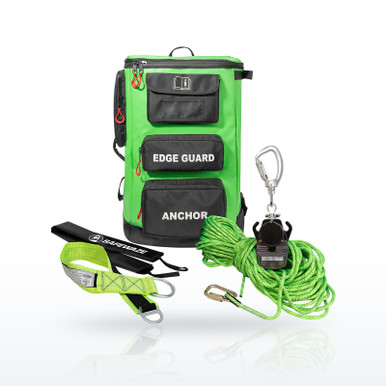
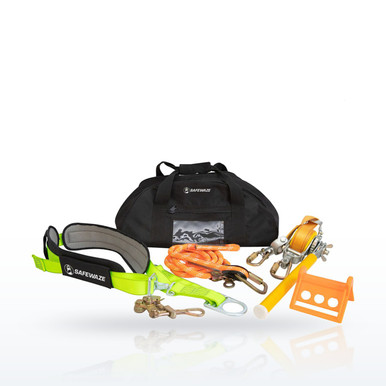 Safewaze rescue assist kitRope, rescue sling, ratchet and carabiners for lifting or lowering a suspended worker from the deck
Why is a plan required when the harness already worked? A personal fall arrest system stops the fall; it does not get the worker down. Hanging motionless in leg straps cuts off blood return from the legs, blood pools, and the brain is starved. OSHA’s bulletin on suspension trauma says unconsciousness followed by death can occur in less than 30 minutes, sooner for an injured or unconscious worker. Calling 911 after the fall and waiting is not prompt rescue in most places; the fire department’s rope team is often further than 30 minutes away. The plan exists so that the rescue starts in minutes with gear already on site.
What does OSHA require?
Three places in the rules, one idea: rescue is the employer’s job to arrange before the fall.
What is suspension trauma, and what should the suspended worker do?
Suspension trauma, which OSHA also calls orthostatic intolerance, is the loss of blood flow to the brain that comes from hanging upright and still in a harness. The leg straps restrict the veins, the leg muscles that normally pump blood back are not moving, blood pools in the legs, and the worker faints. Fainting in a harness does not restore flow the way fainting on the ground does, because the body stays upright. OSHA’s bulletin lists what speeds it up: injuries from the fall, shock, blood loss, harness fit, dehydration, heat and cold.
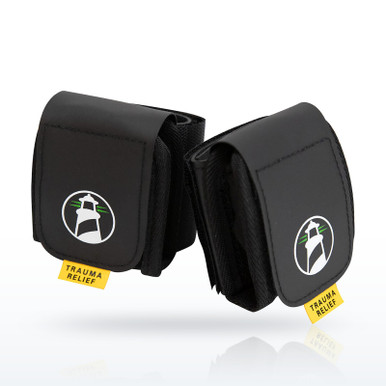
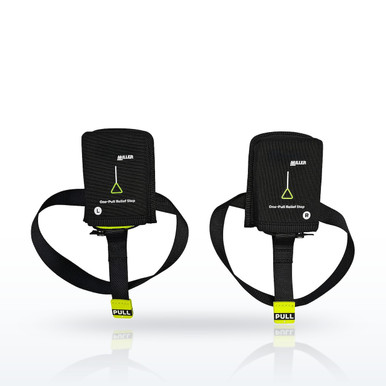
OSHA SHIB 03-24-2004, Suspension Trauma/Orthostatic Intolerance, updated 2011.While waiting, the worker should keep the legs moving, pumping them to work the calf muscles, and use a foothold if one is available to take weight off the straps. Trauma relief straps, the small pouches that attach to the harness and unfold into a loop the worker stands in, exist for this. They are not a rescue device; they buy time. The bulletin also says a rescued worker should be evaluated by a health-care professional even if they feel fine, because kidney damage can show up later.
OSHA SHIB 03-24-2004: pump legs frequently, footholds to relieve pressure and delay symptoms, post-rescue medical evaluation.What goes in a written rescue plan?
- The hazard and the location. Where fall arrest is used on this job, how high, what is below, and how a suspended worker could be reached: from the deck, from a lift, from the ground, from above.
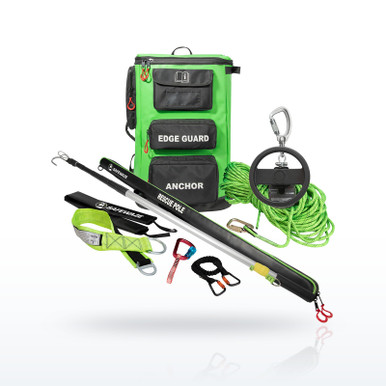
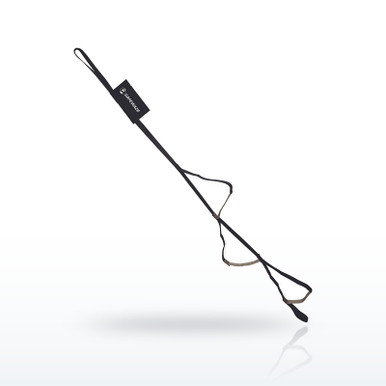
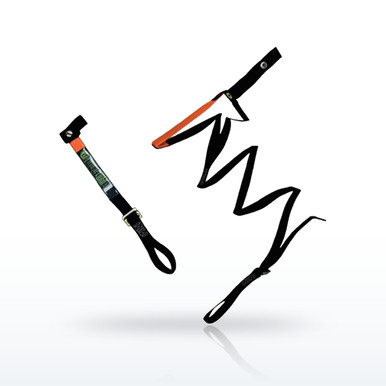
- The method, in order. Self-rescue first where possible. Then assisted rescue by the crew with on-site equipment: a lift brought to the worker, a rescue pole and hook to pull them to the edge, a descent device to lower them, a rescue kit to raise or lower from the anchor. Outside rescue services last, with their realistic response time written down.
- The equipment and where it is. A descent or rescue kit sized for the height, kept at the work area and inspected on the same schedule as the harnesses. A lift on site counts only if it stays on site and its operator is present.
- The people. Who is trained to perform each method, and who calls 911 and meets the ambulance. Rescuers need to practice the method with the actual kit; a kit in the bag that nobody has opened is not a plan.
- The worker’s part. Leg pumping, trauma straps, staying calm, signaling. This is a training item for everyone who wears a harness.
- After the rescue. Medical evaluation, equipment removed from service, incident review.
How is a confined space rescue plan different?
In a permit space the rescue problem is the atmosphere, not the hang. The standard names a rescue service that must be evaluated for response time and skill, informed of the hazards and given access to practice; rescuer training including first aid and CPR; a practice rescue at least every 12 months; and a retrieval system, a harness with a line to a winch or anchor outside the space, on each entrant so the attendant can pull them out without going in. For a vertical space more than 5 feet deep the mechanical device is mandatory. A fall rescue plan for a tank or manhole job has to include the confined-space pieces as well.
1910.146(k)(1) through (k)(3); 1926.1211(a) through (c); see the non-entry rescue guide for the equipment.Rescue kits, descent devices, rescue poles and trauma relief straps
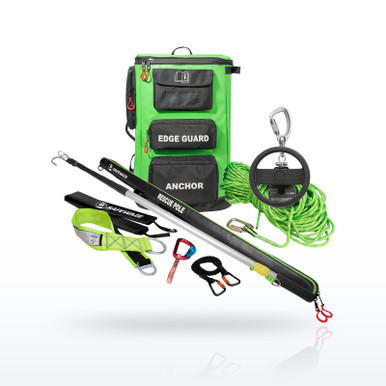
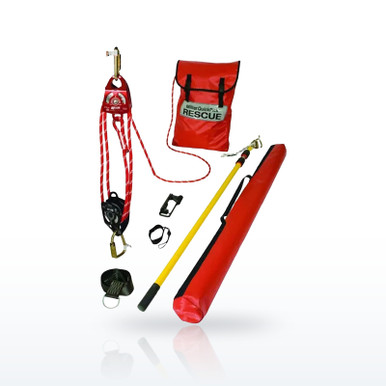
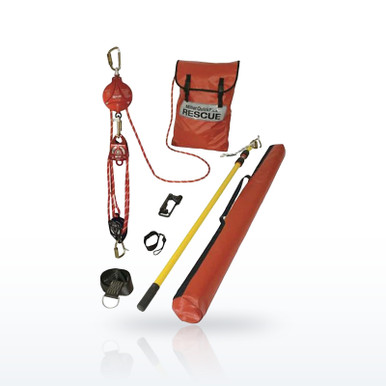
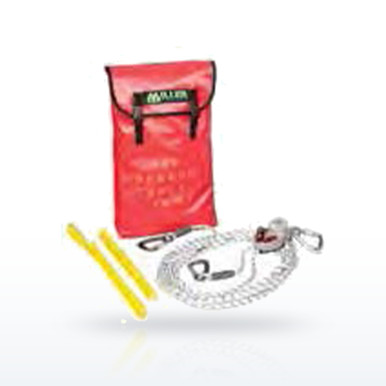
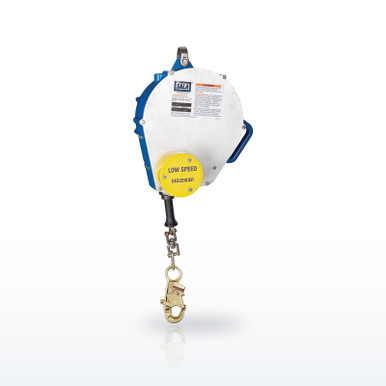
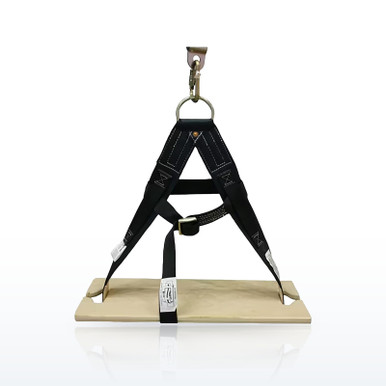
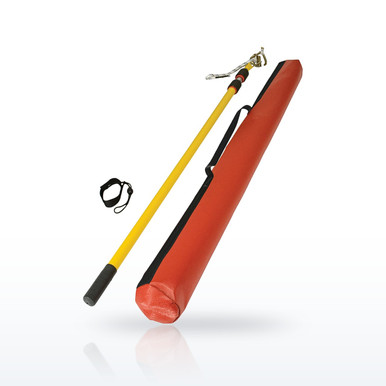
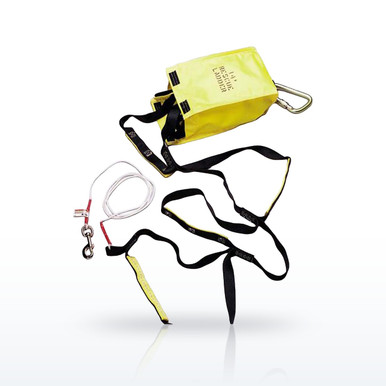
22 items · prices liveRated length, working load and the standard each device meets are as published by the manufacturer on the spec sheet. Descent and rescue kits are sold by rope length; choose one longer than the highest anchor on the job. Contractor Direct orders ship free.
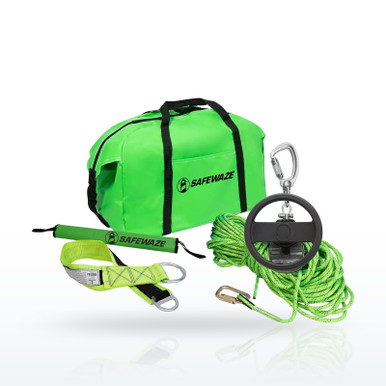
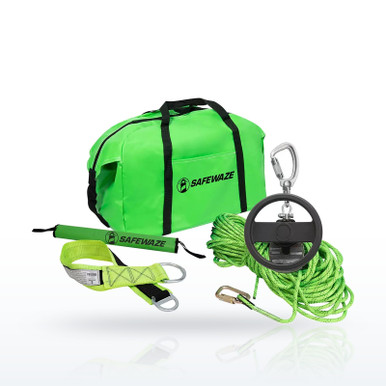
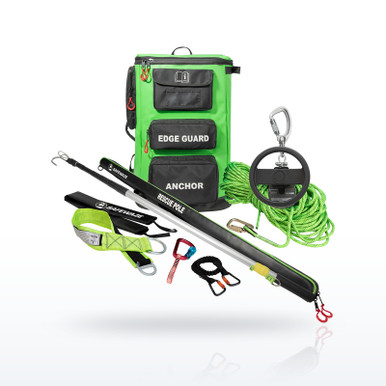
Tripods, davits and winches for confined-space retrieval are in the non-entry rescue guide and the fall protection finder.
Questions people ask
Does OSHA require a written rescue plan for fall protection?
It requires the employer to provide for prompt rescue or assure self-rescue (1926.502(d)(20); 1910.140(c)(21)). It does not say the plan must be written, but an inspector asking how you provide for it is answered by a written plan, and permit-space rescue procedures are part of the written permit program.
How long can a person hang in a harness?
OSHA’s suspension trauma bulletin says unconsciousness followed by death can occur in less than 30 minutes, and sooner for an injured or unconscious worker. Symptoms can begin within minutes.
Is calling 911 a rescue plan?
Only if the responding service can reach and lower the worker promptly, and most cannot inside the window the bulletin describes. The plan should put a method and equipment on site, with 911 as a backup.
What is a trauma relief strap?
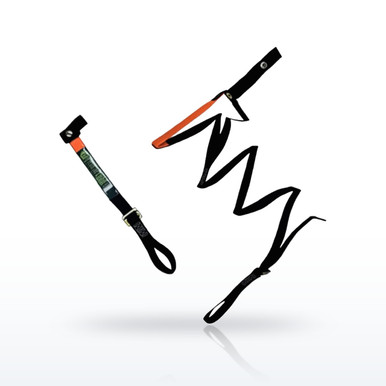
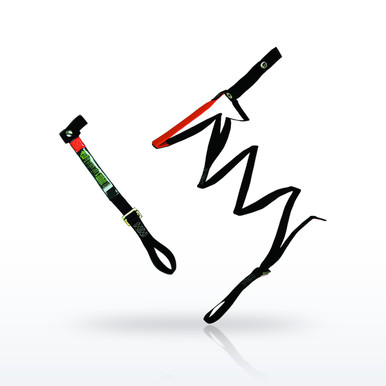
A pouch on the harness that unfolds into a loop the suspended worker stands in, taking weight off the leg straps and letting the legs pump. It delays suspension trauma; it does not get the worker down.
Do trauma straps satisfy the rescue requirement?
No. They buy time for the rescue the employer still has to provide.
Does the rescue plan have to be practiced?
For permit-required confined spaces, yes, at least every 12 months (1910.146(k)(2)(iv)). For fall arrest, the standard does not set a frequency, but a method nobody has practiced is not a plan that provides for prompt rescue.
What happens to the harness after a fall?
It and every component that took the impact come out of service immediately and are not reused unless a competent person determines they are undamaged (1926.502(d)(19); 1910.140(c)(17)).
Standards and ratings on this page are as published in the documents named and by the manufacturers named. The employer’s hazard assessment and written program decide what applies at a given workplace. Verify a rating on the product and its spec sheet before use.