Home › Guides › Roofing tools › Stripped screws
Guide · Bits and drivers · Screw extractors and seized fasteners

How do you remove a stripped or broken screw? Screw extractors, forward or reverse, sizing the extractor, what to do when the extractor itself breaks, the rubber band trick, penetrating oil, and the other tools that pull a seized screw

A screw extractor is a hardened, tapered, left-hand-threaded bit: you drill a pilot hole in the screw head, set the extractor in it, and turn it counterclockwise (reverse); the left-hand flutes bite harder as the screw resists and back it out. Size the extractor by the screw: the extractor packaging lists the screw range and the pilot drill for each number, and the pilot must be drilled dead center and no larger than listed. The rubber band trick (a wide band between a Phillips driver and a stripped head) works on a lightly stripped screw that is not seized. A broken extractor is harder steel than the screw and the usual way out is a carbide burr or a solid carbide bit to grind it away, or heat and a left-hand drill bit.
Bayshore Safety. Industrial safety, roofing tools and jobsite supplies since 2017. · Current as of November 2026 · the C&R product data on this site (SSC-682 screw remover; HSS 135° bits; magnetic bit holders); the extractor manufacturers’ published sizing (spiral-flute extractors #1 to #5 by screw size, with the drill size printed on the extractor); standard shop practice for seized fasteners (penetrating oil dwell, heat, left-hand drill bits)
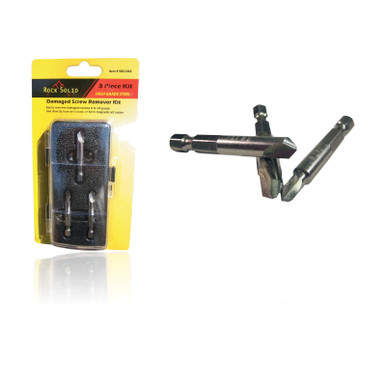
C&R SSC-682 Screw RemoverC&R SSC-682 Screw RemoverThe product data lists the SSC-682 as a retail-carded screw remover

The order of operations. A stripped screw is one whose recess has rounded so the driver spins; a seized screw is one whose threads have rusted or galled so it will not turn; a broken screw has lost its head. The fixes go from gentle to destructive: more grip on what is left (rubber band, a larger or different driver, pliers on the head), then penetrating oil and heat, then an extractor, then drilling the screw out and re-tapping or using a larger screw. The cards below answer each question people ask at each step, including what to do when the extractor breaks in the hole, which is the one question nobody wants to need.

Stripped and broken screws, question by question

Extractor sizes and pilot drills are the ones the extractor manufacturers print on their sets; the rest is shop practice.

Do you use a screw extractor in forward or reverse?Reverse (counterclockwise) for a standard right-hand screw. The extractor has left-hand spiral flutes: turning it counterclockwise drives it deeper into the pilot hole and, at the same time, turns the screw in the loosening direction. Run the drill slowly, or use a tap handle or wrench on the extractor’s square shank; speed does nothing but snap extractors. The one exception is a left-hand-threaded fastener (some fan and blade nuts), which comes out clockwise and needs a right-hand extractor.
What size screw extractor do I need, and how do you know?By the screw diameter, from the chart on the extractor set: #1 for #4 to #8 screws (3/32 pilot), #2 for #8 to #12 (7/64 to 1/8), #3 for 1/4 inch and 5/16 (5/32), #4 for 5/16 to 7/16 (1/4), #5 for 7/16 to 5/8 (5/16 to 3/8). The extractor must sit in a hole small enough to leave wall around it; too big a pilot leaves nothing to grip and splits the screw. Double-ended extractor bits combine a left-hand burnishing drill on one end and the extractor on the other and are sized the same way; the smallest sets start at #6 screws.
Do screw extractors really work, and how effective are they?On a screw that is stripped but not badly seized, almost always, if the pilot is centered and the extractor is turned slowly with steady downward pressure. On a screw rusted solid into steel, less often: the extractor breaks before the screw turns, because the extractor is hard and brittle and the screw is stronger than its head. The honest sequence is oil and heat first, extractor second, and drilling out third. Where an extractor fails it is usually because the pilot was off center or oversize, the extractor was spun fast, or no penetrant was given time to work.
How do you extract a broken screw extractor?An extractor is hardened tool steel, so nothing in a normal bit set will drill it. Options: break it up with a sharp punch and hammer (it is brittle and often shatters), then pick out the pieces; grind it out with a carbide burr in a rotary tool or a solid carbide drill bit at low speed; heat the part if it can take it and try the punch again; or use an EDM service for a part that cannot be replaced. Then drill the screw out and re-tap or install a thread insert. Prevention is the whole cure: turn extractors slowly by hand, never with an impact driver.
Can the rubber band trick remove a stripped screw, and what is the tool for stripped screws?The rubber band trick (a wide, flat rubber band laid over the stripped recess, then the driver pressed through it) adds friction and fills the rounded recess; it works on a screw that is only stripped, in wood or plastic, with a driver of the right size pushed hard. It does nothing for a seized screw. The dedicated tools: a screw remover bit set (the double-ended burnish-and-extract bits), a damaged-screw pliers with serrated jaws that grips a proud head, a manual impact driver struck with a hammer (it drives the bit in and turns it a few degrees at once), and for Torx and hex recesses, hammering in the next size up of a cheap bit.
Will WD-40 or penetrating oil loosen a stripped screw?A penetrating oil loosens a seized screw by creeping into the threads and breaking the rust bond; it does nothing for a stripped recess. Apply it, tap the screw head to shock the threads, and give it ten minutes to overnight. Products sold as penetrating oils (thin, with a solvent carrier) work better than general-purpose lubricant sprays, which are light oils in a solvent and work slowly. Heat from a torch on the surrounding metal expands it away from the screw; the combination of heat then penetrant is the standard sequence for rusted hardware.
How do you make a homemade screw extractor?A left-hand drill bit is the nearest thing: run in reverse, it often grabs the screw and backs it out before it drills through. A hacksaw slot cut in a proud head takes a flat screwdriver. A nut welded to a broken stud gives a hex to turn. A Dremel cut-off wheel slots a flush head. Grinding a taper on a hardened bit does not make a reliable extractor; the real tool costs a few dollars.
What is the smallest screw extractor, and is a screw extractor the same as a bolt extractor?Spiral extractor sets start at #1 for #4 screws (about 1/8 inch), and micro sets go down to #0 for electronics screws. A bolt extractor is usually a different tool: a socket with hardened spiral flutes inside that hammers onto a rounded bolt head or nut and grips it as it is turned (reverse again). Screw extractors go inside the fastener; bolt extractors go over it. Stripped Torx and hex screws in a roofing or siding context are usually fixed from the outside with the socket type if any head is proud.
How do you drill out a screw when nothing else works?Center-punch the screw, drill a pilot with a bit about a third of the screw diameter (a 135° split-point HSS bit at low speed with oil), then step up to the tap drill size for that thread and run a tap through to clean the threads out of the remains, or drill to the clearance size and move to the next screw size or a thread insert. Keep the drill square; a hole that wanders into the parent threads is what turns a stripped screw into a ruined part.

Stripped screws in plain words

  • Stripped means the recess is rounded; seized means the threads are stuck; broken means the head is gone. Each has its own fix.
  • Extractors turn counterclockwise, slowly, with downward pressure. Never with an impact driver.
  • Size the extractor from the chart on the set; drill the pilot dead center and no larger than listed.
  • The rubber band trick works on a lightly stripped screw in wood or plastic, not on a seized one.
  • Penetrating oil and heat first, extractor second, drill out third.
  • A broken extractor comes out with a punch, a carbide burr or a solid carbide bit; nothing in a normal set drills it.
  • A left-hand drill bit run in reverse is the next closest thing to an extractor.
  • Bolt extractors go over a rounded head; screw extractors go inside.

Questions people ask

How do you extract a broken screw extractor?

Shatter it with a sharp punch, grind it out with a carbide burr or solid carbide bit at low speed, or send the part for EDM; then drill out the screw and re-tap.

Can the rubber band trick be used to remove a stripped screw?

On a screw that is stripped but not seized, in wood or plastic, with firm pressure, yes.

How to make a homemade screw extractor?

A left-hand drill bit run in reverse, a hacksaw slot for a flat driver, or a nut welded to a broken stud; a real extractor costs a few dollars.

Do you use a screw extractor in forward or reverse?

Reverse; the left-hand flutes bite as they turn the screw out.

What is the tool to remove a stripped screw?

A screw remover bit set, damaged-screw pliers on a proud head, a manual impact driver, or a bolt extractor socket over a rounded hex.

Will WD-40 loosen a stripped screw?

It helps a seized screw if given time; a thin penetrating oil works faster. Neither fixes a rounded recess.

Do screw extractors really work?

On stripped screws with a centered pilot, turned slowly, usually; on rust-seized steel, oil and heat first or the extractor breaks.

What size screw extractor?

From the set’s chart: #1 for #4 to #8 screws, #2 for #8 to #12, #3 for 1/4 to 5/16, #4 to 7/16, #5 to 5/8, each with its listed pilot drill.

How effective are screw extractors?

Very, within their job: stripped heads and lightly seized screws. They are brittle and fail when spun fast or in an off-center hole.

Is there a difference between a screw extractor and a bolt extractor?

Yes: a screw extractor goes inside a pilot hole; a bolt extractor is a fluted socket that goes over a rounded head.

What is the smallest size screw extractor available?

#1 in standard sets, for #4 screws; micro sets go smaller for electronics.

How do you know what size screw extractor to use?

Match the screw diameter to the range printed on the extractor and drill the pilot size it lists.

What is a screw extractor bit?

A double-ended bit with a left-hand burnishing drill on one end and the tapered extractor on the other, for use in a drill at low speed.

The ratings, test results and standards shown here are the manufacturers' published values, reproduced as published. Nothing on this page is a recommendation by Bayshore Safety that any product is suitable for a particular task, hazard or workplace. Selecting safety products and protective equipment is the responsibility of the end user and the employer, based on their own hazard assessment and the regulations that apply to their work. Confirm every value on the manufacturer's own documentation before use.

Setting up a roofing crew or a shop?Call (925) 215-7337 or email us the trades, the crew size and the quantities and we will quote tools and supplies by the case, with the part numbers listed. We sell nationwide.
All roofing tools
How to buyCard, purchase order or invoice terms; quotes on request; agencies and institutions welcome.
Live Service & SupportReal people who know the products, Monday to Friday 7:30am to 4pm Pacific. 925-215-7337
We DeliverWe ship nationwide. Parcel and LTL freight to job sites and businesses across the U.S.