Home › Guides › Roofing tools › Drill bit sizes
Guide · Bits and drivers · Drill bits, tap drills and masonry bits

What drill bit size do you need? Fraction, number, letter and metric sizes, tap drills for 1/4-20 and M16, 5/16 vs 8 mm, HSS vs cobalt vs titanium vs carbide, oil and speed for steel, masonry bits and why a bit stops in concrete

Drill bits come in four size series that overlap: fractional (1/16 to 1/2 inch by 64ths), number (#80 small to #1 large), letter (A to Z, above #1) and metric (by 0.1 mm). A 5/16 inch bit is 0.3125 inch, which is 7.94 mm, so an 8 mm bit (0.315 in) is two thousandths bigger: for a clearance hole they are interchangeable, for a tap drill they are not. There is no 13/16 bit in a standard twist-drill set because sets stop at 1/2 inch; 13/16 is sold as a single reduced-shank bit, a spade bit or a hole saw. For steel, use HSS or cobalt at low speed with cutting oil; for concrete, a carbide-tipped masonry bit in a hammer drill, and a bit that stops advancing has hit rebar or lost its carbide.
Bayshore Safety. Industrial safety, roofing tools and jobsite supplies since 2017. · Current as of November 2026 · the C&R bit product data on this site (HSS 135° black oxide drill bits 5/32 to 1/2 in; carbide-tipped masonry bits 3/16 to 1/2 in; 1/8 in double-ended bits); the Unified tap drill chart (1/4-20: #7 / 13/64; 5/16-18: F / 17/64; 3/8-16: 5/16; 1/2-13: 27/64; M16x2: 14 mm; M10x1.5: 8.5 mm) as published in Machinery’s Handbook; the ANSI drill size series (fractional, number 1–80, letter A–Z)
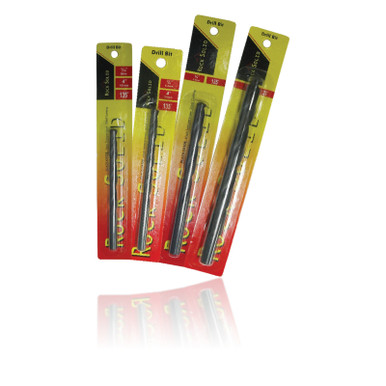
C&R DB-5/32 Drill Bit, 5 versionsC&R DB-5/32 Drill Bit, 5 versionsThe product data lists the C&R HSS bits as 135° split-point black oxide drill bits from 5/32 to 1/2 in

Why bit size is confusing. Four systems describe the same hole, the drill chart is in 64ths and thousandths, a tap needs a hole smaller than its nominal size, a bolt needs one larger, and the material decides the bit steel and the speed. This page gives the conversions people ask for most (5/16 and 8 mm, 9 mm, 6 mm, 3/32, 13/32, 21/64), the tap drills for the common fasteners, the three bit types, the steel grades, how to drill steel and aluminum without burning the bit, and what a masonry bit does in concrete. The bits we stock are listed below with their sizes.

Drill bits, question by question

Conversions are exact (1 inch = 25.4 mm); tap drill sizes are from the Unified and metric tap drill charts for 75 percent thread.

What is the equivalent drill bit size for a 5/16 inch hole, and is 5/16 the same as 8 mm?A 5/16 bit drills a 5/16 inch (0.3125 in, 7.94 mm) hole. The nearest metric bit is 8 mm (0.315 in), 0.0025 inch larger, which for a bolt clearance hole or an anchor is the same hole. For a tap drill it matters: 5/16-18 UNC is tapped with an F (0.257 in) or 17/64 bit, and an M8x1.25 is tapped with a 6.8 mm bit; the 5/16 or 8 mm bit is the clearance size for those bolts. In number and letter sizes, 5/16 falls between letter N (0.302) and O (0.316).
What size bits do drills use, and is 5/16 or 3/16 bigger?A 3/8 inch chuck takes shanks up to 3/8 inch, a 1/2 inch chuck up to 1/2 inch; bits larger than 1/2 inch have a reduced shank (Silver and Deming bits, 1/2 inch shank on a 9/16 to 1-1/2 inch bit). Hex-shank bits fit impact drivers and 1/4 inch quick-change chucks. 5/16 (0.3125) is bigger than 3/16 (0.1875); the fraction with the larger value is the larger bit, so 1/2 > 3/8 > 5/16 > 1/4 > 3/16 > 5/32 > 1/8 > 3/32 > 1/16.
Is there a 13/16, 13/32 or 21/64 drill bit, and what is 3/32 equal to?13/32 (0.406 in, 10.3 mm): yes, a standard fractional size in 64ths sets, and the tap drill for 1/2-20 UNF; it is not in 1/16-step sets. 21/64 (0.328 in, 8.3 mm): yes, in 64ths sets, the tap drill for 3/8-24 UNF. 13/16 (0.8125 in): made as a reduced-shank bit, spade bit or hole saw, not in a twist set. 3/32 is 0.09375 inch, 2.38 mm, the nearest metric 2.4 mm, the nearest number bit #41 (0.096); it is the pilot for #4 and #5 wood screws and a common pop-rivet drill is 1/8, the next size up.
What is a 9 mm drill bit in inches, what bit is 6 mm, and what bit for a 10 mm fastener or M16?9 mm is 0.354 in, between 11/32 (0.344) and 23/64 (0.359); use 23/64 for clearance. 6 mm is 0.236 in, between 15/64 (0.234) and 1/4 (0.250); a 15/64 is the closest fractional. For a 10 mm bolt the clearance hole is 10.5 or 11 mm (27/64 or 7/16 inch); the tap drill for M10x1.5 is 8.5 mm (Q or 11/32). For M16x2 the tap drill is 14 mm (35/64) and the clearance hole 17 mm (11/16). A 1/2 inch bit is 12.7 mm, the clearance for an M12 bolt.
Can I use a 3/16 drill bit for a 1/4 tap, and what are the common tap drill sizes?No; 3/16 (0.1875) is too small and the tap will bind and break. The tap drill for 1/4-20 UNC is #7 (0.201 in) or 13/64 (0.203); for 1/4-28 UNF, #3 (0.213) or 7/32. Other common ones: #10-24 uses #25 (0.1495) or 5/32; #10-32 uses #21 (0.159) or 5/32; 5/16-18 uses F (0.257) or 17/64; 3/8-16 uses 5/16; 7/16-14 uses U (0.368) or 3/8; 1/2-13 uses 27/64; 5/8-11 uses 17/32; 3/4-10 uses 21/32. Clearance holes are the next fractional size above the bolt (1/4 bolt: 17/64 close, 9/32 free).
What are the three types of drill bits, and what are the others?For general purpose the three are twist bits (steel, wood, plastic), masonry bits (carbide tip, concrete and brick) and spade or paddle bits (large holes in wood). Beyond those: brad-point bits for clean wood holes, auger bits for deep timber holes, hole saws for large diameters, step bits for sheet metal (one bit, many sizes), Forstner bits for flat-bottomed holes, countersinks, and glass and tile bits with a spear carbide point. Double-ended bits (our 1/8 in) give two tips on one shank for sheet metal screws and pop rivets.
Are HSS drill bits suitable for metal, and is cobalt or titanium better?HSS (high-speed steel) is the standard metal-drilling bit: it holds its hardness at drilling temperatures and drills mild steel, aluminum, brass and wood. Black oxide is a surface treatment on HSS that resists rust and reduces friction; it does not change the steel. Titanium nitride (TiN, the gold color) is a hard coating on HSS that lasts longer until it is resharpened, which removes it. Cobalt (M35 or M42 HSS with 5 to 8 percent cobalt) is a different alloy, harder and more heat resistant through the whole bit, for stainless, hardened and abrasive steels; it can be resharpened and stays cobalt. For mild steel, plain or black oxide HSS with oil; for stainless and hard steel, cobalt. The hardest bits for steel are solid carbide, which drill anything and snap if the drill wobbles.
Should steel be drilled fast or slow, and should I use oil when drilling metal?Slow, with pressure, with oil. Surface speed for HSS in mild steel is about 100 feet per minute: a 1/4 inch bit at 1,500 rpm, 1/2 inch at 750, 1 inch at 375. Faster burns the bit (blue chips are the sign). Steady pressure makes a continuous chip; a bit that rubs without cutting work-hardens the hole. Cutting oil or a dark sulfur-based threading oil cools and lubricates; a light penetrating oil is better than nothing for a few holes but evaporates and is not a cutting fluid. Aluminum drills fast and gums the flutes; kerosene or a wax stick keeps the chips clear. Center-punch every hole so the bit does not walk; a 135° split point starts without a punch on flat stock.
How do you drill hardened steel?With a cobalt or carbide bit at low speed, high pressure and plenty of cutting oil, after annealing the spot if possible (heat it red and let it cool slowly). Hardened bolts, springs and tool steel will not take a plain HSS bit; it skates and burns. A carbide-tipped masonry bit, sharpened, will sometimes get through a hardened screw when a twist bit will not, which is one trick for a stripped hardened screw (see the screw extractor guide linked below).
What drill bit is good for concrete, can a masonry bit go in a regular drill, and why won’t mine go through?A carbide-tipped masonry bit (our 3/16 to 1/2 in set) in a hammer drill; the hammer action chips the concrete while the flutes clear the dust. A masonry bit works in a regular drill in brick, mortar and soft block, slowly, and in concrete it is slow enough to be useless on anything but a shallow hole. For many holes or anchors in hard concrete, an SDS rotary hammer and SDS bits. A bit that stops advancing has hit rebar (the carbide will not cut it; move the hole or use a rebar-cutting bit), or has lost its carbide tip, or has glazed because the dust was not cleared. Pull the bit out every inch to clear dust, do not lean on it, and keep the speed moderate.
What is the longest masonry drill bit, and is there an angle drill bit?Masonry bits run to 24 and 36 inches in SDS-Plus and SDS-Max for drilling through walls and footings; standard-shank bits to about 18 inches. There is no bit that drills around a corner; a right-angle drill or an angle attachment holds a normal bit at 90 degrees, and flexible shaft extensions bend a few degrees for tight spots.
How can you tell the size of a drill bit, and what holds the bit?The size is stamped on the shank of fractional and number bits; worn stamps are read with a drill gauge (a plate with sized holes) or calipers across the flutes at the tip. The chuck holds the bit: keyed or keyless three-jaw chucks on drills, 1/4 inch hex quick-change chucks on impact drivers, SDS chucks on rotary hammers. Is a drill bit sharpener worth it? For a shop that goes through HSS bits, yes; a jig-type sharpener restores the 118° or 135° point in a minute. For a few bits a year, a new bit is cheaper. Scrap drill bits are HSS and worth little by weight.

Drill bits in plain words

  • Four size series: fractional (64ths), number (#80 to #1), letter (A to Z), metric (0.1 mm). They overlap and fill each other’s gaps.
  • 5/16 is 7.94 mm; 8 mm is 0.315 in. Same hole for clearance, different for tapping.
  • Tap drills: 1/4-20 takes #7 or 13/64; 5/16-18 takes F or 17/64; 3/8-16 takes 5/16; 1/2-13 takes 27/64; M16x2 takes 14 mm.
  • HSS for mild steel, aluminum and wood; cobalt for stainless and hard steel; carbide for the hardest. Titanium is a coating, cobalt is the alloy.
  • Drill steel slow with pressure and cutting oil; blue chips mean too fast.
  • Concrete takes a carbide masonry bit in a hammer drill; rebar stops it, dust glazes it.
  • Sets stop at 1/2 inch; 13/16 is a reduced-shank bit, spade bit or hole saw.
  • Center-punch or use a 135° split point so the bit does not walk.

Questions people ask

What is the equivalent drill bit size for a 5/16 inch hole?

A 5/16 bit (0.3125 in, 7.94 mm); the metric equivalent is 8 mm, two and a half thousandths larger.

What size bits do drills use?

Shanks up to the chuck size, 3/8 or 1/2 inch; larger bits have reduced shanks, and hex-shank bits fit impact drivers.

Is there a 13-16 drill bit?

Yes, as a reduced-shank bit, spade bit or hole saw; twist-bit sets stop at 1/2 inch.

What type of drill bit is good for concrete?

A carbide-tipped masonry bit in a hammer drill, or SDS bits in a rotary hammer for many holes.

What are the three types of drill bits?

Twist bits for metal and wood, masonry bits for concrete and brick, and spade bits for large holes in wood.

What is a 9 mm drill bit in inches?

0.354 inch, between 11/32 and 23/64.

Are HSS drill bits suitable for metal?

Yes; HSS is the standard metal-drilling steel for mild steel, aluminum and brass, with cobalt for stainless and hardened steel.

What type of drill bit is for aluminum?

HSS at higher speed with a lubricant (kerosene or wax) to keep the flutes from gumming.

What is the longest masonry drill bit you can buy?

About 36 inches in SDS-Max; standard shanks to about 18 inches.

What is a 3/32 drill bit equal to?

0.094 inch or 2.38 mm; the nearest metric is 2.4 mm and the nearest number bit #41.

Is 5/16 drill bit 8 mm?

Close: 5/16 is 7.94 mm, 8 mm is 0.315 inch. Interchangeable for clearance, not for tapping.

How do you drill hardened steel?

Cobalt or carbide bit, slow speed, firm pressure, cutting oil, and anneal the spot if you can.

Is cobalt or titanium a better drill bit?

Cobalt; it is a harder alloy through the whole bit. Titanium nitride is a coating that wears off on sharpening.

Is there a 13/32 drill bit?

Yes, in 64ths sets; it is the tap drill for 1/2-20.

Can a masonry bit be used with a regular drill?

In brick, mortar and soft block, slowly; in concrete it needs hammer action.

Should steel be drilled fast or slow?

Slow, about 100 surface feet per minute for HSS: 1,500 rpm for a 1/4 inch bit, 750 for 1/2 inch.

Should I use oil when drilling metal?

Yes, cutting oil; it cools and lubricates. A penetrating oil is a poor substitute but better than dry.

What is the hardest drill bit for steel?

Solid carbide, then cobalt HSS.

What drill bit is 6 mm?

0.236 inch; 15/64 is the closest fractional size.

Can I use a 3/16 drill bit for a 1/4 tap?

No; 1/4-20 takes a #7 or 13/64 bit. A 3/16 hole will break the tap.

Do they make a 21/64 drill bit?

Yes, in 64ths sets; it is the tap drill for 3/8-24.

What is the piece that holds a drill bit called?

The chuck.

Is it worth buying a drill bit sharpener?

For a shop that wears out HSS bits, yes; for occasional use, replacing the bit is cheaper.

Why won’t my masonry drill bit go through concrete?

It has hit rebar, lost its carbide tip, or glazed in packed dust; clear the hole every inch and do not lean on the drill.

The ratings, test results and standards shown here are the manufacturers' published values, reproduced as published. Nothing on this page is a recommendation by Bayshore Safety that any product is suitable for a particular task, hazard or workplace. Selecting safety products and protective equipment is the responsibility of the end user and the employer, based on their own hazard assessment and the regulations that apply to their work. Confirm every value on the manufacturer's own documentation before use.

Setting up a roofing crew or a shop?Call (925) 215-7337 or email us the trades, the crew size and the quantities and we will quote tools and supplies by the case, with the part numbers listed. We sell nationwide.
All roofing tools
How to buyCard, purchase order or invoice terms; quotes on request; agencies and institutions welcome.
Live Service & SupportReal people who know the products, Monday to Friday 7:30am to 4pm Pacific. 925-215-7337
We DeliverWe ship nationwide. Parcel and LTL freight to job sites and businesses across the U.S.