
What is in wasp and hornet spray, how far does it reach, and when do you use it? What the label states, the 20 foot stream, why a spray may not reach a nest, when wasps are in the nest, flammability and cleanup, and nests under the eave
A wasp and hornet spray is a pressurized aerosol that shoots a narrow stream of insecticide 15 to 20 feet so the user can hit a nest from a distance; the one we stock is a 14 oz petroleum-based can whose data lists a stream up to 20 feet and that it kills wasps and hornets, sold by the box of 12. The active ingredients on wasp sprays are pyrethroids (the label names them), carried in a petroleum solvent, which is why the can is flammable and why the label says to keep it away from flame and electrical outlets. UC IPM’s Pest Notes on social wasps say wasps are most likely to be in the nest at night, that even after dark and with a 20 foot stream stinging incidents are likely, that an underground nest may be far from its visible entrance, and that the applicator should cover the whole body, face and hands. Under FIFRA it is unlawful to use a pesticide in a way inconsistent with its label, so the label on the can is the instruction, and this page is not.
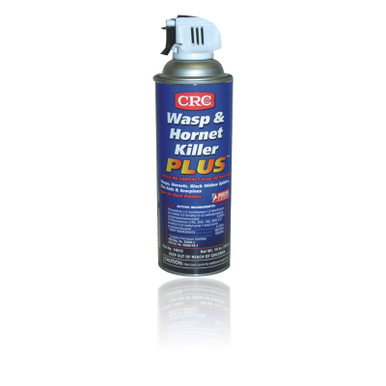 C&R Wasp Spray, 14 ozThe product data lists the C&R wasp spray as a 14 oz petroleum-based can that sprays up to 20 ft and kills wasps and hornets, sold by the box of 12
Why a roofing supplier sells wasp spray. Roofers find nests under eaves, in soffits, behind fascia, in gutters and in the ground at the base of the ladder, in the months when the colony is biggest and most defensive. The can rides in the truck for that. The questions people ask about it are mostly not about the can — what wasps hate, what time of day they are active, whether they chase you, whether the spray is flammable or toxic, why it did not work, what to do without it, how to get rid of a nest for good — and the honest sources for those are the university pest notes and the product label, which are what the cards below quote. Where a question is a pest-control or a medical question, the answer here is to call the people who do that work.
Wasp spray and nests, question by question
Statements about wasp behavior are from UC IPM Pest Notes 7450; statements about the can are from the product data and the label rule in FIFRA.
Wasp spray in plain words
- A 20 foot stream of pyrethroid insecticide in a petroleum carrier; the label on the can is the law under FIFRA.
- Wasps are in the nest at night; treat at dusk or after dark, in full protective clothing, with an exit planned, and expect some to come out.
- A ground or wall nest can be far from its hole; the stream may never reach it. That is a pest-control job.
- Flammable: never near flame, pilot lights, outlets or light fixtures.
- Paper wasps under eaves are rarely aggressive; yellowjackets are; mud daubers do not need treating.
- Colonies live one season; a new queen starts a new nest each spring. Seal the gaps and remove the food.
- Never on honey bees; call a beekeeper or the vector district.
- We sell the can and the pole; licensed pest control does the nests in walls and the ground.
Questions people ask
What do wasps absolutely hate?
The university pest notes do not list repellents; they say to remove what wasps are drawn to (protein, sugar, garbage, fruit) and describe traps. Home remedies are not in that guidance.
What is a good wasp repellent for houses?
Prevention per UC IPM: covered food and garbage, early removal of started nests, sealed soffit and wall gaps, and perimeter lure traps for yellowjackets; no spray repels them.
What time of day are wasps most active?
Foraging peaks in warm daylight; UC IPM says wasps are most likely to be in the nest at night, which is when a nest is treated.
Will wasps chase you if you spray their nest?
UC IPM says wasps attack when they sense poison at the nest and some come out even with freeze sprays; cover up and plan the exit.
Is midnight a good time to spray a wasp nest?
After dark is the time the pest notes name; midnight is no better than dusk, only darker.
Why is wasp spray not killing wasps?
The nest is usually not where the hole is (ground and wall nests), the stream missed the entrance, the colony is large, or the survivors are the agitated wasps UC IPM says to expect the next day.
What is a good alternative to wasp spray?
Knocking down a small early paper-wasp nest, lure or soapy-water traps for yellowjackets, and a licensed pest control operator or the vector district for nests in walls and the ground.
How to permanently get rid of wasp nests?
Colonies live one season; remove the nest, seal the gaps they used and remove food sources so a new queen does not start there next spring.
How much is wasp spray?
By the box of 12 for the 14 oz can we stock; the band on this page has the current price.
Is wasp spray flammable?
Yes; the petroleum-based aerosol carries a flammability warning and must not be sprayed near flame, pilot lights, outlets or fixtures.
How to clean up wasp spray?
Wash the oily film off siding, soffit and glass with detergent and water; keep it off surfaces about to be coated or sealed.
How to remove wasps without spray?
Early knockdown of started paper-wasp nests, traps for foragers, and professional removal for large or hidden nests.
What do professional exterminators use to kill wasps?
Labeled aerosols and insecticidal dusts applied into voids and ground nests with a duster, plus perimeter traps; the active ingredients are on their labels.
Is foaming wasp spray the better choice?
Foam reaches into cavities and ground holes; a stream is for exposed nests and entrances up to 20 feet away. Each has its use.
Do wasp sprays work?
UC IPM states that aerosols labeled for wasp and hornet nests can be effective against yellowjackets and paper wasps, with extreme caution and full protective clothing.
How toxic is wasp spray?
The label states it by its signal word and first-aid section; pyrethroids are low in acute toxicity to people at label doses and the solvent irritates eyes and skin.
Can wasp killer spray kill bees?
Yes, which is why it is never used on honey bees; call a beekeeper or the vector control district for a hive or swarm.
What month is worst for wasps?
Late summer and fall, when UC IPM says colonies are largest, food is scarcer and yellowjackets scavenge most.
Related guides
Push brooms, handles and extension polesBristles, braces and telescoping polesRoof brackets, roof jacks and ladder accessoriesAngles, planks, hooks and stabilizersOSHA safety glasses requirementsWhat 1910.133 saysWork gloves for roofingGloves by job: roofingFire extinguisher classesA, B, C, D and KThe ratings, test results and standards shown here are the manufacturers' published values, reproduced as published. Nothing on this page is a recommendation by Bayshore Safety that any product is suitable for a particular task, hazard or workplace. Selecting safety products and protective equipment is the responsibility of the end user and the employer, based on their own hazard assessment and the regulations that apply to their work. Confirm every value on the manufacturer's own documentation before use.