
Fire extinguisher types explained: Class A, B, C, D and K, and the agents that carry each rating
NFPA 10 (2026) classifies fires by what burns: Class A ordinary combustibles (wood, paper, cloth, plastics), Class B flammable and combustible liquids and gases, Class C fires that involve energized electrical equipment, Class D combustible metals, Class K cooking oils and fats. An extinguisher is listed for one or more classes, and its label shows which, with numbers for A and B that scale with the fire it was tested on (UL 711). The agent decides the classes. Multipurpose ABC dry chemical covers A, B and C and is the common building unit. Clean agents, halocarbon (Halotron BrX, Halotron I), carbon dioxide and water mist, cover C with B or A and leave no residue, which is why NFPA 10 points to them for delicate electronic equipment and away from dry chemical (5.5.4.6). Water covers A only. Class D agents are specific to the metal (5.3.2.4). Class K wet chemical is for commercial cooking (5.3.2.5, 6.6). Pick by the classes present, then by what the protected equipment can tolerate afterward.
Why do the classes matter more than the size? An agent that works on one class can make another worse: water spreads a liquid fire and conducts on a live circuit; dry chemical ruins the electronics it saves. The label's letters are the test results for the fires the unit is meant for. Match the letters to the room first, then size the unit by the tables in Chapter 6.
The five classes and the agents listed for them
As NFPA 10 (2026) and the listings describe them.
Agents and the classes they are listed for
| Agent | A | B | C | D | K | Residue | Notes |
|---|---|---|---|---|---|---|---|
| Multipurpose ABC dry chemical | Yes | Yes | Yes | No | No | Yes | Not for delicate electronics (5.5.4.6.2) |
| BC dry chemical (sodium or potassium bicarbonate) | No | Yes | Yes | No | No | Yes | Purple K for high Class B |
| Halotron BrX (2-BTP) | 551 only | Yes | Yes | No | No | None | Nonrechargeable Amerex units, 12-year life |
| Halotron I (HCFC-123) | 11 lb and up | Yes | Yes | No | No | None | Rechargeable |
| Carbon dioxide | No | Yes | Yes | No | No | None | 5-year intervals |
| Water mist | Yes | No | Yes | No | No | Water | De-ionized water |
| Water, stored pressure | Yes | No | No | No | No | Water | Never on live electrical |
| Foam | Yes | Yes | No | No | No | Yes | Not for polar solvents unless listed (5.5.4.4) |
| Wet chemical | Some | No | Some | No | Yes | Yes | Class K cooking |
| Dry powder | No | No | No | Yes | No | Yes | Specific to the metal |
Source: NFPA 10 (2026) 5.3.2, 5.5.4; classes as listed on each manufacturer's nameplate. Confirm on the nameplate.
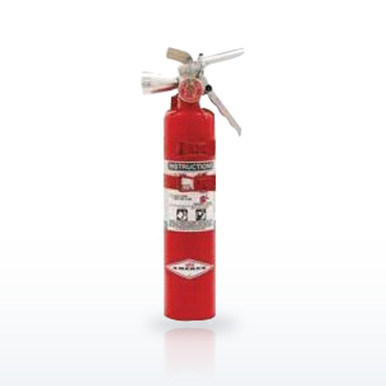
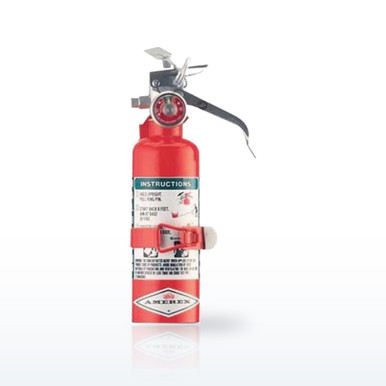
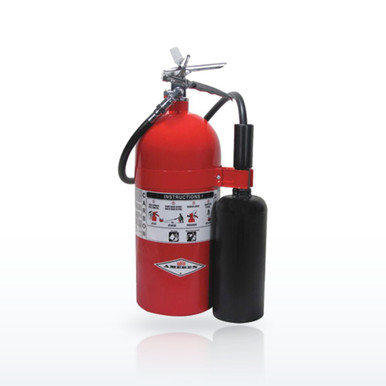
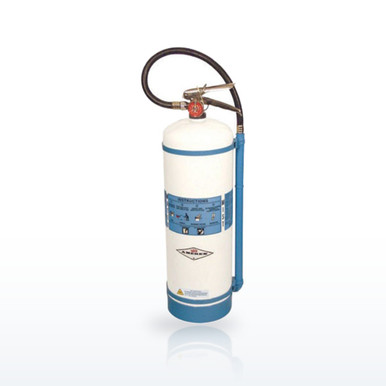
Extinguishers by agent
14 items · prices liveRatings as published by the manufacturer. Prices are live.
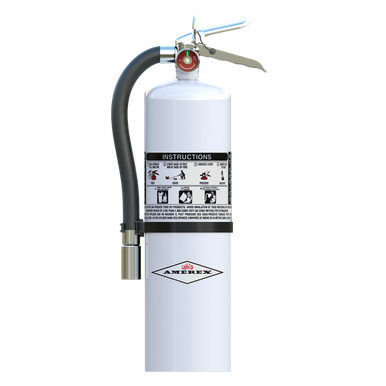
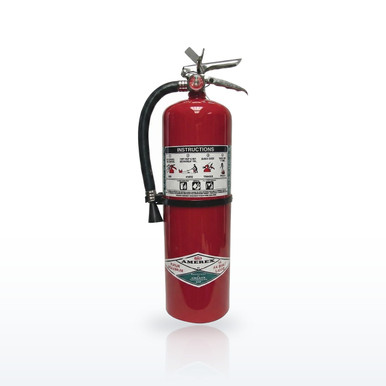
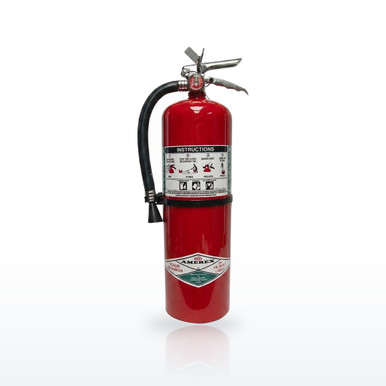
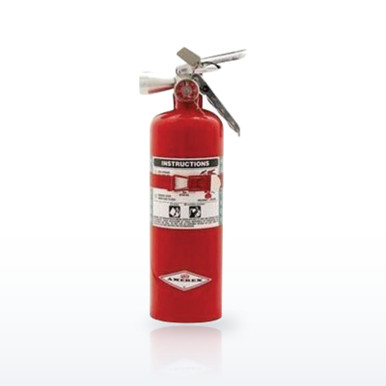

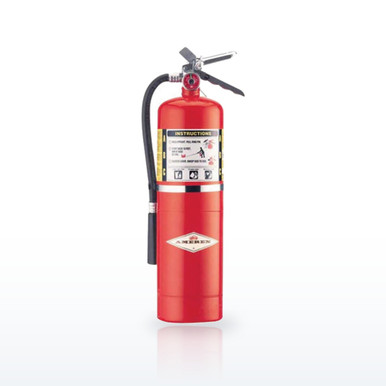
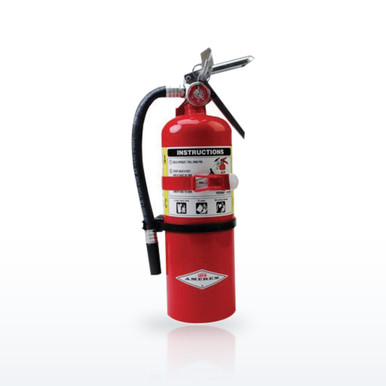
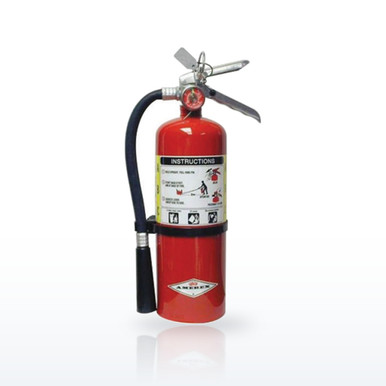
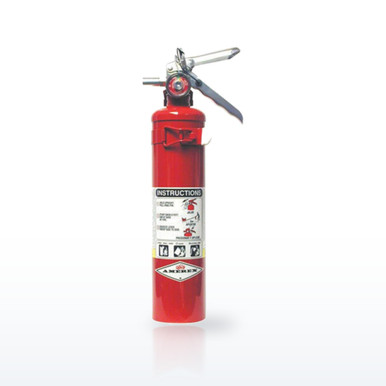
Cabinets, brackets and signs are in Fire protection accessories.
Questions people ask
What are the 5 types of fire extinguishers?
By fire class: A (ordinary combustibles), B (flammable liquids and gases), C (energized electrical), D (combustible metals), K (cooking oils and fats), per NFPA 10 (2026) 5.2.
What is an ABC fire extinguisher?
A multipurpose dry chemical unit listed for Class A, B and C fires; the usual building-protection unit.
What type of fire extinguisher is used for electrical fires?
Any Class C-listed type; for delicate electronic equipment NFPA 10 (2026) 5.5.4.6 points to Class C-listed clean agents and away from dry chemical.
What is a clean agent fire extinguisher?
One whose agent is non-conducting, volatile or gaseous and leaves no residue (NFPA 10 3.3.5): halocarbon, carbon dioxide, and water mist by common usage.
Which extinguisher for a kitchen?
A Class K wet chemical unit within 30 ft of the cooking appliance (5.3.2.5, 6.6.2).
Can one extinguisher cover all classes?
ABC units cover A, B and C. No portable covers D or K with the others; those take dedicated units.
Related guides
Fire extinguisher ratings explainedWhat 2A:10B:C meansClass C fire extinguishersWhat Class C means and which agents carry itClean agent fire extinguishersEvery clean agent unit, the agents compared, the codeNFPA 10 requirements explainedSelection, placement, inspection and testing in plain wordsThe ratings, test results and standards shown here are the manufacturers' published values, reproduced as published. Nothing on this page is a recommendation by Bayshore Safety that any product is suitable for a particular task, hazard or workplace. Selecting safety products and protective equipment is the responsibility of the end user and the employer, based on their own hazard assessment and the regulations that apply to their work. Confirm every value on the manufacturer's own documentation before use.