
Work Gloves for Roofing
36 gloves from 2 brands that a manufacturer names for this work, with current prices. Ratings as published by each manufacturer. We sell nationwide; ships in 1–2 business days.

What the rule says
Each entry is condensed from the paragraph cited; the paragraph itself is the rule and the link opens it.
29 CFR 1910.138(b): Selection: employers base the selection of hand protection on an evaluation of its performance characteristics relative to the tasks to be performed, the conditions present, the duration of use, and the hazards and potential hazards identified.
29 CFR 1910.138(a): General requirements: employers select and require the use of appropriate hand protection when hands are exposed to hazards such as skin absorption of harmful substances, severe cuts or lacerations, severe abrasions, punctures, chemical burns, thermal burns, and harmful temperature extremes.
29 CFR 1910.132(d)(1): Hazard assessment: the employer assesses the workplace to determine whether hazards are present, or likely to be present, that necessitate the use of personal protective equipment, and selects PPE that will protect the affected employee from the hazards identified.
Cal/OSHA Title 8 §3384(a): Hand protection: employers select, provide and require employees to use appropriate hand protection when hands are exposed to hazards such as skin absorption of harmful substances, cuts or lacerations, abrasions, punctures, chemical burns, thermal burns, radioactive materials, and harmful temperature extremes; §3384(b): hand protection is not worn where it could be caught in moving machinery or materials.
Cal/OSHA Title 8 §1514 (Construction Safety Orders): Personal protective devices on construction work: the employer requires employees to use the required personal protective equipment, used in accordance with the manufacturer's instructions, including protective equipment for the hands.
Source: 29 CFR, Occupational Safety and Health Standards, as published by OSHA (ecfr.gov), and California Code of Regulations, Title 8, as published by Cal/OSHA (dir.ca.gov), read Nov 6 2026.
What the standards body and the manufacturers publish for this work
The ISEA Key does not list roofing at any cut or puncture level, so this page lists only the gloves a manufacturer names for roofing.
On this page: 36 gloves that a manufacturer names for this work in its own documents. Each row says which document or which published band put it here.
Documents read: PIP Product Information workbook, October 2026 (APPLICATIONS column, written onto the product pages Nov 6 2026 as "Manufacturer Stated Applications") (read Nov 6 2026); The "Manufacturer Stated Applications" field on each product page (the manufacturer's own application words; the value names the document when it is not the product page) (read Nov 6 2026).
Source: PIP Product Information workbook, October 2026. The products listed are the styles the manufacturer names for the task or whose published rating falls in the band the standards body or the manufacturer names, not a selection by Bayshore Safety.
Narrow the list by what the job is like, cut level, coating, glove type, brand or size. Prices shown are current.
36 gloves
Ratings, coatings, gauges and sizes are as published by each manufacturer. The first group is the gloves a manufacturer names for this work; each row says why it is listed. Tap a group to open it.
 Named by the manufacturer for this work36 gloves
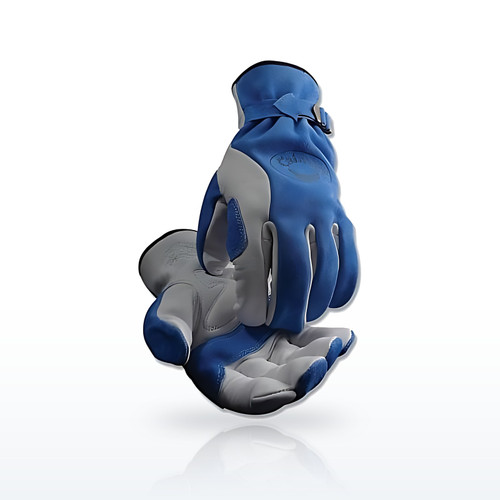
- Caiman 1302 Top Grain Cow Leather Drivers Gloves, Unlined, Blue/Gray — Caiman · Pair
- PIP 1BL18361 Drivers Gloves, Top Grain Cowhide, Regular Grade — PIP · Dozen
- PIP 68-101 Drivers Gloves, Top Grain Cowhide, Superior Grade — PIP · Dozen
- PIP 68-103 Drivers Gloves, Top Grain Cowhide, Regular Grade — PIP · Dozen
- PIP 68-105 Drivers Gloves, Top Grain Cowhide, Economy Grade — PIP · Dozen
- PIP 68-106 Drivers Gloves, Top Grain Cowhide, Industry Grade — PIP · Dozen
- PIP 68-118 Drivers Gloves, Top Grain Cowhide, Premium Grade — PIP · Dozen
- PIP 68-153 Drivers Gloves, Top Grain Cowhide, Regular Grade — PIP · Dozen
- PIP 68-158 Drivers Gloves, Top Grain Cowhide, Superior Grade — PIP · Dozen
- PIP 68-160 Drivers Gloves, Top Grain Cowhide, Industry Grade — PIP · Dozen
- PIP 68-160SB Drivers Gloves, Top Grain Cowhide, Industry Grade — PIP · Dozen
- PIP 68-161SB Drivers Gloves, Top Grain Cowhide, Regular Grade — PIP · Dozen
- PIP 68-162 Drivers Gloves, Top Grain Cowhide, Economy Grade — PIP · Dozen
- PIP 68-162HV Drivers Gloves, Top Grain Cowhide, Economy Grade — PIP · Dozen
- PIP 68-163 Drivers Gloves, Top Grain Cowhide, Regular Grade — PIP · Dozen
- PIP 68-163HV Drivers Gloves, Top Grain Cowhide, Regular Grade — PIP · Dozen
- PIP 68-163SB Drivers Gloves, Top Grain Cowhide, Regular Grade — PIP · Dozen
- PIP 68-165 Drivers Gloves, Top Grain Cowhide, Superior Grade — PIP · Dozen
- PIP 68-165HV Drivers Gloves, Top Grain Cowhide, Superior Grade — PIP · Dozen
- PIP 68-168 Drivers Gloves, Top Grain Cowhide, Premium Grade — PIP · Dozen
- PIP 69-134 Drivers Gloves, Split Cowhide, Regular Grade — PIP · Dozen
- PIP 69-189 Drivers Gloves, Split Cowhide, Premium Grade — PIP · Dozen
- PIP 70-300 Drivers Gloves, Top Grain Pigskin, Industry Grade — PIP · Dozen
- PIP 70-318 Drivers Gloves, Top Grain Pigskin, Superior Grade — PIP · Dozen
- PIP 70-360 Drivers Gloves, Top Grain Pigskin, Industry Grade — PIP · Dozen
- PIP 70-368 Drivers Gloves, Top Grain Pigskin, Superior Grade — PIP · Dozen
- PIP 71-3600 Drivers Gloves, Top Grain Goatskin, Industry Grade — PIP · Dozen
- PIP 71-3601 Drivers Gloves, Top Grain Goatskin, Regular Grade — PIP · Dozen
- PIP 71-3618 Drivers Gloves, Top Grain Goatskin, Premium Grade — PIP · Dozen
- PIP 984K Drivers Gloves, Top Grain Cowhide, Premium Grade — PIP · Dozen
- PIP 9920K Drivers Gloves, Top Grain Deerskin, Superior Grade — PIP · Dozen
- PIP 9925K Drivers Gloves, Top Grain Deerskin, Regular Grade — PIP · Dozen
- PIP 993K Drivers Gloves, Top Grain Cowhide, Regular Grade — PIP · Dozen
- PIP 994 Drivers Gloves, Top Grain Pigskin, Economy Grade — PIP · Dozen
- PIP 994K Drivers Gloves, Top Grain Pigskin, Economy Grade — PIP · Dozen
- PIP HVO990K Drivers Gloves, Top Grain Cowhide, Premium Grade — PIP · Dozen
Not listed here: gloves with no published rating and no manufacturer application for this work. Browse all gloves, open a glove type page, or call (925) 215-7337.
Questions people ask about gloves for roofing
What kind of gloves do roofers use? The only source we use is the manufacturer's own application list: the gloves on this page are the styles PIP names for roofing in its workbook. The ISEA Key does not list roofing at any cut or puncture level, so there is no rated group here. Grip and coating are the manufacturer's statements on each product page.
What gloves do you need for construction? 29 CFR 1910.138(b) answers it with a method, not a glove: the employer bases the selection on the tasks, the conditions, the duration of use and the hazards identified in the 1910.132(d) hazard assessment. The ISEA Key lists construction and general purpose work at cut level A1 and construction at puncture levels 1 to 5 depending on the task, and the manufacturers name specific styles for construction in their own documents; the construction and general labor page lists both sets, with the reason each glove is there on its row.
What are some good waterproof gloves for construction work? Waterproof is a coating question in the manufacturers' documents: a full-dip coating (PVC, nitrile or latex over the whole hand) keeps liquid out, a palm-dip keeps the back of the hand breathable and lets water in from the back, and the product page states which one a glove has. Use the Coating pick-list here to narrow the list to fully coated or PVC coated gloves; the product page is where the manufacturer states what the coating resists.
Which gloves have the most grip? Grip is a coating finish in the manufacturers' documents, not a rated number: sandy or crinkle nitrile and crinkle latex are published for wet and oily grip, foam nitrile for light oil, smooth PU for dry grip, and PVC with a rough finish for slick wet surfaces. The Coating pick-list and the Wet or oily grip chip narrow this list by the published coating; which finish fits the surface is the user's call.
What are the different cut resistance levels for gloves? ANSI/ISEA 105 rates cut resistance A1 to A9 by the grams of force it took a straight blade to cut through the material at 20 mm of travel in the ASTM F2992 test: A1 200 to 499 g, A2 500 to 999 g, A3 1,000 to 1,499 g, A4 1,500 to 2,199 g, A5 2,200 to 2,999 g, A6 3,000 to 3,999 g, A7 4,000 to 4,999 g, A8 5,000 to 5,999 g, A9 6,000 g and above. The level on each glove is the manufacturer's published test result; the cut-level pick-list on this page groups the gloves by it.
Related: Fall Protection for Roofers · Roofing · Coated Gloves · Nitrile Coated Gloves · What is a glove coating? · OSHA hand protection requirements: what 1910.138 says · every glove by job, cut level and coating.
Other jobs: Construction, general labor · Drywall, carpentry, framing · Concrete, masonry, tile · Demolition, heavy construction · Electrical, utility · HVAC, sheet metal · Metal fabrication, machine shops · Glass handling · Food processing, prep · Warehouse, packaging · Mechanics, automotive · Landscaping, farm, grounds · Oil and gas, mining · Driving, equipment · Assembly, small parts · Welding · Chemicals, cleaning · Hot work, foundry · Cold, freezer.
The ratings, test results and standards shown here are the manufacturers' published values, reproduced as published. Nothing on this page is a recommendation by Bayshore Safety that any product is suitable for a particular task, hazard or workplace. Selecting safety products and protective equipment is the responsibility of the end user and the employer, based on their own hazard assessment and the regulations that apply to their work. Confirm every value on the manufacturer's own documentation before use.