
Are nitrile gloves food safe? What the 21 CFR food-contact listing means, and what nitrile is not for
A nitrile glove is food safe when its manufacturer states that the glove material meets the FDA food-contact rules in 21 CFR Part 177 (for nitrile rubber, section 177.2600, rubber articles intended for repeated use); the listing is on the box and in the manufacturer’s product data, and it is a property of that glove, not of nitrile in general. On this site PIP’s Ambi-dex disposable nitrile, latex and vinyl gloves and a number of its cut-resistant gloves carry a 21 CFR listing in the manufacturer’s data, and each product page shows it. Food contact is separate from chemical resistance: PIP’s permeation data for nitrile shows breakthrough in minutes for acetone and methylene chloride and more than eight hours for isopropyl alcohol and 50% sodium hydroxide.
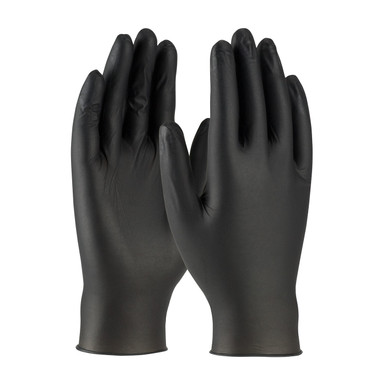 Ambi-dex Axle 63-632PF Disposable Gloves, Nitrile, 4 MilDisposable nitrile glove the manufacturer lists for FDA 21 CFR food contact (PIP data)
Why the listing matters. The FDA Food Code (3-301.11) requires food employees to avoid bare-hand contact with ready-to-eat food, and the gloves used have to be made of materials the FDA allows in contact with food. 21 CFR Part 177 lists the polymers, and the rubber-article rule in 177.2600 covers nitrile; a manufacturer that states 21 CFR for a glove is saying the glove’s formulation meets that rule, including the extractables limits in the regulation. The listing does not say anything about tear strength, thickness or chemical resistance, which are separate figures on the product page.
What “food safe” does and does not cover
As the manufacturer’s data and the regulation state it.
What nitrile gloves are not for, from the manufacturer’s data
The food-contact listing is a material rule. These figures are PIP’s published permeation data and ratings:
- Ketones and chlorinated solvents: acetone (CAS 67-64-1) breaks through PIP’s unsupported nitrile in under 1 to 6 minutes and methylene chloride (75-09-2) in 2 to 3 minutes, performance level 0 on the EN 374-1 scale.
- Aromatic solvents: toluene (108-88-3) 21 to 39 minutes (level 1 to 2); xylene (1330-20-7) 40 to 115 minutes (level 2 to 3).
- Where nitrile does hold: isopropyl alcohol (67-63-0) and 50% sodium hydroxide (1310-73-2) more than 480 minutes (level 6) on the same styles; gasoline (8006-61-9) 413 minutes (level 5) on the flock-lined 50-N160 series.
- Electrical work: a nitrile disposable or coated glove carries no ASTM D120 voltage class; see the rubber insulating gloves guide.
- Cut hazards: a disposable nitrile glove has no ANSI/ISEA 105 cut rating. The cut-resistant gloves with a 21 CFR listing below are the ones the manufacturer rates for both.
Portwest lists food contact under the European rule, not 21 CFR
Portwest marks 16 gloves and sleeves on this site “CE food safe”: a listing under European Regulation (EC) 1935/2004, the rule for materials in contact with food, shown with the glass-and-fork symbol. That is a different listing from the US 21 CFR food-contact statement the groups above are built on, so the Portwest gloves sit in their own group and the product page states the European listing exactly as Portwest does.
Portwest product pages and US data sheets for the styles shown (documents.portwest.com), fetched Nov 7 2026The 21 CFR line on the Radians disposable glove pages
Radians’ disposable examination gloves on this site (the RWG9413 to RWG9418 nitrile styles from 3 to 8 mil and the RWG9114 and RWG9115 latex styles) list on each product page: single use, powder free and ambidextrous; ASTM D6319 for nitrile examination gloves or ASTM D3578 for latex; ASTM D6978 testing for use with chemotherapy drugs, fentanyl citrate, xylazine HCl and gastric acid; the FFDCA food handling rule, 21 CFR Parts 170 to 199; a textured grip and touchscreen use. Radians states the nitrile styles are made “to eliminate risks associated with natural rubber latex allergies”; the latex styles carry no such line. Its industrial-grade nitrile (RWG9405, RWG9406, RWG9606, RWG9608) and latex (RWG9104, RWG9105) list the 21 CFR food handling rule without the ASTM examination standard. The Thickness line on each page is the mil figure Radians lists.
The Radians RWG94 and RWG91 product pages on radians.com, fetched Nov 8 2026.More questions people ask
When should you not use nitrile gloves?
Ketones and chlorinated solvents: PIP’s permeation data shows acetone under 6 minutes and methylene chloride 2 to 3 minutes on its unsupported nitrile. No voltage rating and no cut rating on a disposable nitrile glove.
Answers from the sources named above and in the byline.Questions people ask
Are nitrile gloves food safe?
When the manufacturer states the glove meets FDA 21 CFR Part 177 (177.2600 for nitrile rubber). PIP marks those gloves “21 CFR” in its product data and the product page shows it; a glove without the listing is not stated for food contact.
When should you not use nitrile gloves?
Ketones and chlorinated solvents: PIP’s permeation data shows acetone under 6 minutes and methylene chloride 2 to 3 minutes on its unsupported nitrile. No voltage rating and no cut rating on a disposable nitrile glove.
Are nitrile gloves chemical resistant?
To some chemicals: PIP’s data shows more than 480 minutes against isopropyl alcohol and 50% sodium hydroxide, 413 minutes against gasoline on the 50-N160 series, and minutes against acetone. The chemical resistance chart guide explains the levels.
What thickness of nitrile glove is used for food service?
The food-service nitrile gloves on this page are 3 to 5 mil in the manufacturer’s data, most at 4 mil; thickness is a durability figure, not part of the food-contact rule.
Do food-contact gloves have to be powder-free?
The FDA banned powdered examination and surgeon’s gloves in 2017 (21 CFR 878.4460, 878.4480); the gloves on this page are powder-free as the manufacturer states.
Does the color of nitrile gloves mean anything?
Not in the standards. Color is a manufacturer’s choice; blue became common in food and medical work because it shows against food if a piece tears off, and black is sold for automotive and tattoo work. The food-contact listing (21 CFR 177.2600 in the US, the EU food-contact rule in Europe) is on the box and in the product data, not in the color.
What is the average thickness of nitrile gloves?
Disposable nitrile gloves run from about 3 mil to 8 mil at the palm (a mil is a thousandth of an inch): 3 to 4 mil for food service and exam use, 5 to 6 mil for shop work, 8 mil for heavier industrial use. Thickness is printed on the box; a thicker glove lasts longer but has no chemical or cut rating unless its data states one.
Does nitrile mean latex-free?
Nitrile is a synthetic rubber (acrylonitrile-butadiene) and contains no natural rubber latex proteins; the manufacturer states its Ambi-dex nitrile gloves are latex-free.
What are nitrile hand gloves used for?
Food handling when the glove carries a 21 CFR Part 177 listing, examination and cleanup work where a latex-free barrier is wanted, and incidental splash with chemicals the manufacturer’s chart supports (isopropyl alcohol and 50 percent sodium hydroxide hold more than 480 minutes in the data here). Not for ketones or chlorinated solvents, electrical work or cut hazards.
Are 4 mil nitrile gloves good?
4 mil is the most common thickness among the food-service nitrile gloves on this page (3 to 5 mil in the manufacturers’ data). Thickness is a durability figure, not part of the food-contact rule; MCR Safety lists the thickness in mil, the length and the AQL grade (medical 0.0 to 1.5, industrial 1.6 to 4.0) on each disposable style.
Can you use nitrile gloves for cleaning?
For incidental splash with a chemical the glove’s chart supports, yes, and they are removed as soon as they are contaminated. Thin disposables show short breakthrough times for many solvents; for soaking or extended contact the chemical resistance chart guide explains how to read the manufacturer’s data.
Can you reuse nitrile gloves?
Disposable (single use) gloves are not washed or decontaminated for reuse under 29 CFR 1910.1030(d)(3)(ix)(B), and the FDA Food Code change-out points apply in food work; a torn, punctured or contaminated glove is replaced at once. Reusable nitrile is a different, heavier glove with its own chart.
The ratings, test results and standards shown here are the manufacturers' published values, reproduced as published. Nothing on this page is a recommendation by Bayshore Safety that any product is suitable for a particular task, hazard or workplace. Selecting safety products and protective equipment is the responsibility of the end user and the employer, based on their own hazard assessment and the regulations that apply to their work. Confirm every value on the manufacturer's own documentation before use.