
Why do chefs and mechanics wear black nitrile gloves, what are nitrile gloves made of, and why did latex fall out of use?
Nitrile is a synthetic rubber, acrylonitrile-butadiene, made without the natural rubber latex proteins that cause latex allergy; Radians states on its RWG94 pages that the gloves are made “to eliminate risks associated with natural rubber latex allergies.” The color is a pigment and nothing more: the same material is sold blue, black and orange, and the trade picks black where grease, ink, dye and sauces would show on a light glove and where a dark glove makes light debris visible, blue where a torn piece has to show against food. Latex fell out of use for two reasons on the record. The FDA banned powdered patient examination gloves and powdered surgeon’s gloves effective January 18, 2017, because the powder carried latex proteins into the air and the wound; and since 1998 FDA labeling rules (21 CFR 801.437) have required every medical device containing natural rubber latex to say so, which put the allergy on every box. Several states have since written latex-glove restrictions for food service into their food codes; that rule is the state’s, so the health department that inspects the kitchen is the authority. The Radians pages name the standards each glove is made to: ASTM D6319 for nitrile examination gloves, ASTM D3578 for latex, ASTM D6978 for chemotherapy drug testing, and the FFDCA food handling rule at 21 CFR 170 to 199.
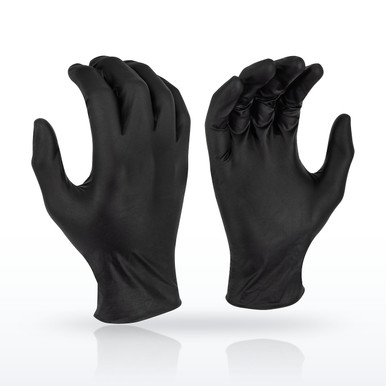 Radians RWG9417 Disposable Nitrile Gloves, 7 mil, Exam GradeBlack nitrile examination glove Radians lists to ASTM D6319 and D6978, powder free (Radians data)
Why the color question keeps coming up. Nitrile gloves started blue because blue is not a food color and a torn fingertip shows up on a cutting board. Black came later from the automotive and tattoo trades, where a light glove is stained in minutes and a dark one hides the grease while making metal shavings and light debris easy to see; kitchens picked it up for the same reasons, and because it reads as clean on camera. None of this is on the label, and no standard rates color. What the standard rates is the material and the barrier: ASTM D6319 sets the dimensions, tensile strength, elongation and freedom from holes for a nitrile examination glove, D3578 does the same for latex, and D6978 is the permeation test against named chemotherapy drugs that Radians lists on its exam gloves. The latex question is older and better documented. NIOSH’s 1997 alert laid out the allergy, from skin rash to anaphylaxis, and named glove powder as the carrier that aerosolized the protein; the FDA took the powder off the market in 2017; and the latex label became mandatory. Latex is still sold, and Radians still makes it, because it fits and stretches in a way nitrile does not, but the choice now has an allergy warning on the box.
The material facts, piece by piece
From the standards and the FDA and NIOSH documents named in the byline.
What the Radians disposable glove pages list
From the product pages on radians.com:
- RWG9413, 9414, 9415, 9426, 9417 and 9418: nitrile examination gloves from 3 to 8 mil, powder free, ambidextrous, textured grip, touchscreen use, ASTM D6319, ASTM D6978 (chemotherapy drugs, fentanyl citrate, xylazine HCl, gastric acid) and 21 CFR 170 to 199 food handling.
- RWG9417 (exam grade, 7 mil) and RWG9406 (industrial grade, 6 mil) are the black nitrile styles; RWG9405 (industrial, 5 mil) and the exam styles are blue; RWG9606 and RWG9608 are orange industrial-grade nitrile, all listed to 21 CFR 170 to 199.
- RWG9114 and RWG9115: latex examination gloves, ASTM D3578, with ASTM D6978 on the 14 mil RWG9114; RWG9104 and RWG9105: industrial-grade latex. All four list 21 CFR food handling, and Radians makes no latex-free claim for them.
- Radians describes its nitrile exam gloves as made for non-sterile medical and industrial use; the Thickness line on each page is the mil figure Radians lists.
More questions people ask
What is the difference between powdered and powder-free nitrile gloves, and why are nitrile gloves not powdered?
The powder is cornstarch dusted inside the glove to make it slide on; a powder-free glove gets the same effect from chlorination (a chlorine wash that hardens the inner surface) or a polymer inner coating. The FDA banned powdered patient examination and surgeon’s gloves effective January 18, 2017, because the powder carries latex proteins into the air and causes airway inflammation, granulomas and adhesions when it reaches body tissue, so no medical nitrile glove has been powdered since; industrial gloves may still be, and a few vinyl styles are. Nitrile was never the glove that needed powder most, since it does not stick to itself the way latex does, and the manufacturers on this site mark every nitrile disposable powder-free.
Answers from the sources named above and in the byline.Questions people ask
Why do chefs use black nitrile gloves?
The color is a pigment and no standard rates it. The trade picks black where stains would show on a light glove and where light-colored debris should stand out; blue stays common where a torn piece must show against food. Radians sells its nitrile gloves in blue, black and orange; the ASTM D6319 exam styles are blue or black.
What are nitrile gloves made of?
Acrylonitrile-butadiene synthetic rubber. It contains no natural rubber latex protein; Radians states its nitrile exam gloves are made to eliminate the risks associated with natural rubber latex allergies.
When should nitrile gloves be worn?
The standards define what the glove is: ASTM D6319 for examination use, ASTM D6978 for handling the chemotherapy drugs tested, 21 CFR 170 to 199 for food handling. Which task calls for which glove is the employer’s hazard assessment under 1910.132(d) and 1910.138; the standing statement on this page applies.
Why are latex gloves not used anymore?
Latex allergy, documented in NIOSH Alert 97-135, and the FDA’s 2017 ban on powdered gloves, which removed the version of the latex glove that aerosolized the protein. Latex gloves are still legal and still sold; they carry the 21 CFR 801.437 latex caution.
What states have banned latex gloves?
Several states restrict latex gloves in food service through their state food codes. The list changes and the rule is the state’s; the health department that inspects the kitchen is the authority. The federal Food Code does not ban latex.
Are black nitrile gloves thicker than blue?
Not by color. Radians lists its black RWG9417 at 7 mil and black RWG9406 at 6 mil, and its blue exam styles from 3 to 8 mil; the Thickness line on each page is the figure.
Can you be allergic to nitrile?
Not to latex protein, which nitrile does not contain. Reactions to the chemical accelerators used in nitrile and latex manufacture are a separate contact dermatitis; the latex allergy guide covers it.
What are the differences between black nitrile gloves and blue nitrile gloves?
Pigment. The same nitrile compound is sold in both colors, and the thickness, the ASTM D6319 listing and any 21 CFR food-contact statement are properties of the style, not the color: Radians lists its black RWG9417 at 7 mil and its blue RWG9405 at 5 mil, so a black glove is thicker only when that style is. Black is chosen where grease, ink and sauces would show on a light glove; blue where a torn piece has to show against food.
Why do mechanics wear orange gloves?
For the same reason some wear black: color. Orange industrial-grade nitrile (Radians RWG9606 and RWG9608 on this site) stands out against dark parts and engine bays, and a torn piece shows. The material and the 21 CFR food-handling listing are the same as the blue and black styles; the color changes nothing in the rating.
What is the powder they put in latex gloves?
Cornstarch, added to make the glove easier to pull on. The FDA banned powdered patient examination gloves and powdered surgeon's gloves effective January 18, 2017, because the powder carried latex proteins into the air and into wounds; the disposable gloves sold here are powder-free.
Are all disposable gloves made of latex?
No. Latex means natural rubber. Nitrile is a synthetic rubber (acrylonitrile-butadiene) and vinyl is PVC; neither contains the natural rubber proteins that cause latex allergy. Since 1998 any medical glove that does contain natural rubber latex must say so on its label (21 CFR 801.437).
Why aren’t nitrile gloves powdered?
The FDA’s 2017 ban removed powder from medical gloves, and nitrile does not need it to don the way latex did; the manufacturers here mark all their nitrile powder-free.
Why do people wear black rubber gloves, and why do mechanics wear black?
The pigment is the only difference: black hides grease, ink, sauce and dye and shows light debris; blue shows a torn piece against food. Radians, MCR Safety and PIP sell the same nitrile in blue, black and orange.
Why do people wear gloves to pump gas?
To keep gasoline off the skin; a nitrile glove holds fuels (PIP lists 413 to more than 480 minutes for its nitrile chemical gloves), where latex is poor with hydrocarbons on OSHA’s chart.
Related guides
Nitrile vs latex vs vinylThe three disposable glove materialsNitrile gloves and latex allergyCan you react to a non-latex glove?Are nitrile gloves food safe?The 21 CFR listingWhen to change disposable glovesTears, time and tasksGloves for bloodborne pathogensExam grade and the 1910.1030 ruleThe ratings, test results and standards shown here are the manufacturers' published values, reproduced as published. Nothing on this page is a recommendation by Bayshore Safety that any product is suitable for a particular task, hazard or workplace. Selecting safety products and protective equipment is the responsibility of the end user and the employer, based on their own hazard assessment and the regulations that apply to their work. Confirm every value on the manufacturer's own documentation before use.