
Cut-resistant gloves for food handling: the two listings to look for, and what the levels mean on a line
A cut-resistant glove for food handling carries two separate statements from its manufacturer: an ANSI/ISEA 105 cut level (A1 to A9, from the TDM-100 test in grams) and an FDA 21 CFR food-contact listing for the glove material. On this site PIP marks the second as “21 CFR” in its product data; the cut-resistant gloves with that listing are uncoated knit gloves in HPPE, Kevlar, Dyneema or PolyKor yarns, rated A2 to A9, several sold by the dozen for issue on a line. A coated cut glove without the listing is rated for the blade but not stated for food contact; a disposable glove worn over a knit liner adds the barrier the knit does not have.
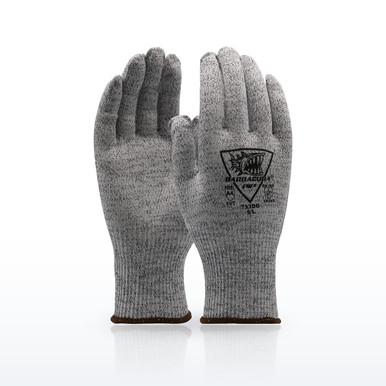 G-Tek PolyKor Barracuda 713DG Cut Resistant Gloves, ANSI A4, UncoatedUncoated cut-resistant knit glove with a 21 CFR listing in PIP’s data
Why two listings. ANSI/ISEA 105 rates the material against a blade; it says nothing about what the yarn or the coating leaves on food. FDA 21 CFR Part 177 is the opposite: it lists the polymers allowed in contact with food and says nothing about cuts. A glove used at a slicer or a deboning station has to answer both, and in PIP’s data they are two different columns, which is why both appear on the product page. The Food Code (3-304.15) also treats a single-use glove as single-task; a knit cut glove is reusable and is laundered on the manufacturer’s instructions, so plants commonly wear a disposable over it where the food is ready to eat.
How the plants read the two numbers
From the manufacturer’s data and the standards.
What the data says about the food-listed cut gloves below
Each line is the manufacturer’s published figures:
- G-Tek PolyKor Barracuda 713DG Cut Resistant Gloves, ANSI A4, Uncoated: A4, PIP test result 2,199 g, HPPE, uncoated, sold by the dozen.
- G-Tek CoreShield CS23-7518B-V Cut Resistant Gloves, ANSI A3, Nitrile Coated: A3, PIP test result 1,499 g, HPPE, nitrile coating, sold by the pack.
- G-Tek CoreShield CS25-7518B-V Cut Resistant Gloves, ANSI A5, Nitrile Coated: A5, PIP test result 2,200 g, HPPE, nitrile coating, sold by the pack.
- G-Tek CoreShield CS27-7518B-V Cut Resistant Gloves, ANSI A7, Nitrile Coated: A7, PIP test result 4,999 g, HPPE, nitrile coating, sold by the pack.
- G-Tek CoreShield CS29-7518B Cut Resistant Gloves, ANSI A9, Nitrile Coated: A9, PIP test result 8,300 g, HPPE, nitrile coating, sold by the pack.
- G-Tek CoreShield CS22-7518B Cut Resistant Gloves, ANSI A2, Nitrile Coated: A2, PIP test result 918 g, HPPE, nitrile coating, sold by the pack.
- G-Tek CoreShield CS24-7518B Cut Resistant Gloves, ANSI A4, Nitrile Coated: A4, PIP test result 2,199 g, HPPE, nitrile coating, sold by the pack.
- G-Tek CoreShield CS26-7518B Cut Resistant Gloves, ANSI A6, Nitrile Coated: A6, PIP test result 3,999 g, HPPE, nitrile coating, sold by the pack.
Portwest’s food-contact cut gloves
Portwest’s cut-resistant gloves and the A690 sleeve carry the European food-contact listing (Regulation 1935/2004, “CE food safe”) rather than a 21 CFR statement, so they are grouped separately above; the EP30 metal-detectable ear plugs are listed for the same plants. Each product page states the listing as Portwest does.
Portwest product pages and US data sheets for the styles shown (documents.portwest.com), fetched Nov 7 2026Questions people ask
What gloves are used when handling food?
This site does not rank gloves. The ones the manufacturer lists for both a cut level and 21 CFR food contact are in the band above, with PIP’s own gram figures; the level a station needs comes from the plant’s hazard assessment.
Can you wear a cut-resistant glove directly on food?
When its manufacturer lists the glove for 21 CFR food contact, yes as far as the material rule goes; many plants add a disposable over it for ready-to-eat food under the Food Code’s single-use rule.
Are cut-resistant gloves waterproof?
A knit cut glove is not; the disposable over-glove or a coated version gives the liquid barrier. The coating has to carry its own food-contact listing.
What cut level is used at a slicer?
Plants commonly specify A4 to A6 for slicers and deboning; the figure is the plant’s decision from its hazard assessment, and the manufacturer’s rating is what the glove delivers in the TDM-100 test.
Can food-plant cut gloves be washed?
The cut-resistant yarns are launderable per the manufacturer; see the wash guide for the rules by yarn and coating.
What are A6 cut-resistant gloves?
Gloves whose material withstood 3,000 to 3,999 grams of straight-blade load in the ANSI/ISEA 105 test, the start of the heavy range used in meat processing, glass and metal fabrication. For food handling the A6 glove also needs a food-contact listing (21 CFR in the US, the EU rule for Portwest’s styles), stated separately in the manufacturer’s data.
Can nitrile coated cut gloves be washed for reuse on a line?
Yes, on the manufacturer’s laundering instructions (warm water, detergent, low heat), but a coated glove without a food-contact listing is rated for the blade only; the uncoated listed knits, or a disposable over-glove on a knit, are what the plants use where the glove touches food.
When should you wear cut-resistant gloves?
When the task puts a blade or a sharp edge against the hand: slicers, deboning, trimming, opening cases with a knife. The plant’s hazard assessment under 29 CFR 1910.138 names the station and the level; the glove then has to carry that ANSI/ISEA 105 level and, on food, the 21 CFR food-contact listing from its manufacturer.
How do you tell if gloves are food safe?
By the manufacturer’s statement, not the material. The box or the product data carries the 21 CFR Part 177 listing (177.2600 for nitrile and other rubber articles); the cut-resistant knits in the band show it where PIP, MCR Safety or Portwest state it, and a glove without the line is not stated for food contact.
Are powder-free nitrile gloves safe for food handling?
When the manufacturer lists the glove for 21 CFR food contact. Powder-free is the norm since the FDA banned powdered examination gloves in 2017, and a disposable nitrile over a cut-resistant knit is how many plants put a barrier over the knit for ready-to-eat food.
Why wear protective clothing when handling food?
For the food and for the hand: the Food Code’s bare-hand rule keeps hands off ready-to-eat food, and OSHA’s hand protection rule puts cuts on the list of hazards the employer selects gloves for. A cut-resistant knit under a food-listed disposable does both jobs at a slicer.
What are the FDA requirements for food handling gloves?
Two. The glove material must be one permitted for food contact under 21 CFR Part 177 (177.2600 for rubber articles, which is how a nitrile or knit glove gets its listing), and the FDA Food Code (section 3-304.15) requires single-use gloves to be used for one task and discarded when damaged, soiled or when the task is interrupted. The FDA approves no glove by brand; the manufacturer states the 21 CFR listing on the box and the product page, which is the mark to look for.
The ratings, test results and standards shown here are the manufacturers' published values, reproduced as published. Nothing on this page is a recommendation by Bayshore Safety that any product is suitable for a particular task, hazard or workplace. Selecting safety products and protective equipment is the responsibility of the end user and the employer, based on their own hazard assessment and the regulations that apply to their work. Confirm every value on the manufacturer's own documentation before use.