
Bayshore Safety & Industrial Supplies Guide
Are level 3 nitrile gloves good? What “level 3”, 4 mil and 6 mil mean on a disposable nitrile glove, and the numbers that are rated
There is no “level 3” for a nitrile glove in any standard. The number a listing calls a level is usually the thickness in mil (one mil is one thousandth of an inch): MCR Safety states 3.5 to 8 mil on its NitriShield nitrile gloves, with 3.5 and 4 mil the food-service and light-task weights, 6 mil the general shop weight and 8 mil the heavy-duty 12 inch glove. The numbers that are rated are different ones: the AQL grade from the water-leak test (MCR Safety: medical grade 0.0 to 1.5, industrial grade 1.6 to 4.0), the FDA listings (21 CFR 880.6250 for an examination glove, 21 CFR Part 177 for food contact), the EN ISO 374-1 chemical type and letters where the glove has them, and ASTM D6978 for chemotherapy drug permeation where MCR Safety lists it. An ANSI cut level A3 is a different thing again, a 1,000 to 1,499 gram blade test on a knit work glove; no disposable nitrile glove carries one. Whether a 3 or 4 mil glove is “good” is answered by the task: thickness is a durability and puncture figure, and the grade and listings are what the rules read.
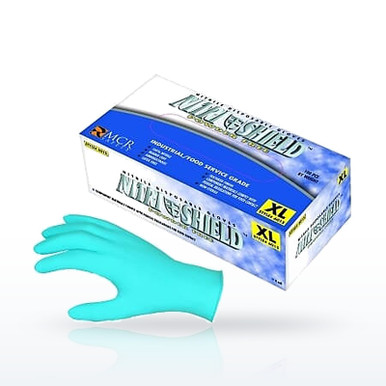 MCR Safety NitriShield 6015 Disposable Nitrile Gloves, 4 mil, 9.5 inIndustrial and food service grade, 4 mil, FDA food contact listed (MCR Safety data)
Why the question has no level in it. Disposable gloves are sold by thickness, and sellers turn the thickness into tiers (light, medium, heavy; or level 1, 2, 3) that mean whatever the seller says. The standards do not. MCR Safety’s disposable glove guide draws its one line at the water-leak test: a medical grade glove passes at an acceptable quality level of 0.0 to 1.5 (fewer pinholes per hundred), an industrial grade glove at 1.6 to 4.0, and the grade is printed on the box with the thickness in mil and the length in inches. A 3.5 mil glove and a 6 mil glove can both be industrial grade; a 4 mil glove can be medical grade. Thickness tells you how long the glove lasts on the hand and how much it resists a puncture; the grade tells you how many will leak out of the box; the FDA and EN ISO 374-1 listings tell you what the glove is stated for. The product rows below carry all of them as MCR Safety states them, and the price as listed today.
The numbers on a disposable nitrile glove, and what each one is
From MCR Safety’s disposable glove guide and the product pages.
How to read a nitrile glove listing against the task
- Food service and light tasks: 3.5 to 4 mil with the FDA food contact line; changed at every task change under the Food Code (see the change-out guide).
- Shop, automotive and cleanup: 6 mil for the longer wear and puncture resistance, 12 inch where the wrist is in the work; the oil and grease resistance is nitrile’s, in any thickness.
- Examination and first aid: a medical grade (AQL 1.5) style listed under 21 CFR 880.6250, replaced as soon as practical when contaminated and never washed for reuse (29 CFR 1910.1030(d)(3)(ix)).
- Chemicals: a disposable is for incidental splash only, and only with a chemical the manufacturer’s chart or the EN ISO 374-1 letters support; acetone and methylene chloride break through thin nitrile in minutes (the chemical chart guide).
- Cut hazards: no disposable glove has a cut level; a cut-resistant knit under a food-listed disposable is the usual pairing at a slicer.
- Latex allergy: nitrile contains no natural rubber latex protein, and MCR Safety lists its nitrile gloves as latex-free; the allergy guide covers reactions to accelerators.
MCR Safety nitrile disposable gloves on this site, by thickness, grade and listings
| Style | Thickness | Length | Grade | Listings MCR Safety states |
|---|---|---|---|---|
| 60035G | 3.5 mil | 9.5 in | Industrial / Food Service | — |
| 60035O | 3.5 mil | 9.5 in | Industrial / Food Service | FDA food contact, ASTM D6978 |
| 60035P | 3.5 mil | 9.5 in | Industrial / Food Service | — |
| 60035Y | 3.5 mil | 9.5 in | Industrial / Food Service | — |
| 6060 | 3.7 mil | 9 in | Industrial / Food Service | FDA food contact |
| 6001 | 4 mil | 9.5 in | Industrial / Food Service | FDA food contact |
| 6010G | 4 mil | 9.5 in | Medical | FDA food contact |
| 6010O | 4 mil | 9.5 in | Medical | FDA food contact, EN ISO 374-1 |
| 6010P | 4 mil | 9.5 in | Medical | FDA food contact, EN ISO 374-1 |
| 6015 | 4 mil | 9.5 in | Industrial / Food Service | FDA food contact, EN ISO 374-1 |
| 6061 | 4 mil | 9.5 in | Industrial / Food Service | FDA food contact |
| VP6015 | 4 mil | 9.5 in | Industrial / Food Service | — |
| 6010 | 4.5 mil | 9.5 in | Medical | FDA food contact, EN ISO 374-1 |
| NIT645 | 4.5 mil | 9.5 in | Industrial / Food Service | — |
| 6006 | 6 mil | 9.5 in | Industrial / Food Service | FDA food contact |
| 6012 | 6 mil | 12 in | Medical | FDA food contact, EN ISO 374-1, ASTM D6978 |
| 6016B | 6 mil | 9.5 in | Industrial / Food Service | FDA food contact, EN ISO 374-1, ASTM D6978 |
| 6016O | 6 mil | 9.5 in | Industrial / Food Service | FDA food contact, EN ISO 374-1, ASTM D6978 |
| 6062 | 6 mil | 12 in | Industrial / Food Service | FDA food contact, ASTM D6978 |
| 6032 | 8 mil | 12 in | Industrial / Food Service | FDA food contact, EN ISO 374-1 |
Thickness is the manufacturer’s stated nominal figure; the AQL grade is from MCR Safety’s disposable glove guide definitions.
Source: MCR Safety product pages and specification sheets for the styles shown
Questions people ask
Are level 3 nitrile gloves good?
No standard defines a level for a nitrile glove; “level 3” on a listing is the seller’s tier, usually a thickness. Read the mil, the AQL grade and the listings on the box: those are the figures that mean something, and MCR Safety states all of them on each style.
What does 4 mil mean on nitrile gloves?
Four thousandths of an inch at the palm, the general-purpose disposable weight; MCR Safety’s 4 mil styles are industrial and food service grade or medical grade, 9.5 inches long, most with the FDA food contact listing.
Is 6 mil better than 4 mil?
Thicker: more wear and more puncture resistance, less feel. MCR Safety’s 6 mil styles are the shop and automotive weight, two of them 12 inches long; the grade and the listings, not the thickness, say what the glove is stated for.
What is the difference between medical grade and industrial grade nitrile gloves?
The water-leak test limit: medical grade AQL 0.0 to 1.5, industrial grade 1.6 to 4.0, in MCR Safety’s guide; a medical grade glove is listed under 21 CFR 880.6250 as an examination glove. Thickness can be the same.
Is a level 3 glove the same as an A3 cut-resistant glove?
No. A3 is an ANSI/ISEA 105 cut level (1,000 to 1,499 grams on a straight blade) on a knit work glove; no disposable nitrile glove carries a cut level.
Can you reuse a 6 mil nitrile glove?
Not a single-use glove: 29 CFR 1910.1030(d)(3)(ix)(B) says disposable gloves are not washed or decontaminated for reuse, and the Food Code changes them at every task. Reusable nitrile is a heavier unsupported or flock-lined glove (11 to 22 mil in MCR Safety’s Nitri-Chem line) with its own chemical chart.
What thickness nitrile glove for food handling?
MCR Safety’s food service styles run 3.5 to 6 mil with the FDA food contact line; the Food Code reads the listing and the change-out, not the thickness.
Related guides
Nitrile vs latex vs vinyl glovesWhat each material resistsAre nitrile gloves food safe?The 21 CFR listingWhen must disposable gloves be changed?OSHA and FDA Food Code rulesNitrile gloves and latex allergyAnd reactions to non-latex glovesHow to read a chemical resistance chartBreakthrough, degradation, the lettersThe ratings, test results and standards shown here are the manufacturers' published values, reproduced as published. Nothing on this page is a recommendation by Bayshore Safety that any product is suitable for a particular task, hazard or workplace. Selecting safety products and protective equipment is the responsibility of the end user and the employer, based on their own hazard assessment and the regulations that apply to their work. Confirm every value on the manufacturer's own documentation before use.
© 2026 Bayshore Safety & Industrial Supplies, Inc. All rights reserved. This guide may not be copied or republished without written permission.