
What should you not clean with a microfiber cloth, and wet or dry? How microfiber works, what ruins it, washing temperature, bleach and softener, microfiber vs cotton vs terry, how to tell real microfiber, shop rags and box rags, and rags in bulk
Microfiber is a split polyester-polyamide fiber finer than silk that grabs dust and oil by surface area and static, so a dry cloth dusts and a damp cloth (wrung nearly dry) cleans glass, screens and paint without chemicals; what it should not touch is anything that fills or melts the fibers: hot surfaces, grease and oil in quantity, solvents, tar, adhesives, paint, concrete dust and anything abrasive, and it should not be used on a rough surface that snags it. Wash microfiber warm (up to about 140°F), with detergent, no bleach and no fabric softener (softener coats the fibers and ends the static pickup), with other microfiber only, and dry on low. The jobs microfiber should not do are the jobs for cotton shop rags: wiping solvent, tar, adhesive, roof cement, oil and paint, then throwing the rag away. Rags are sold by the pound in 10, 25 and 50 lb boxes of white knit, colored knit, sweatshirt and turkish towel grades.
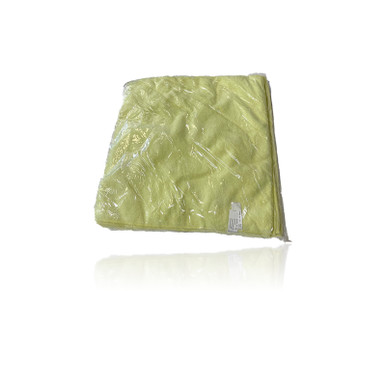 C&R Microfiber Cloths, YellowThe product data lists the WP-CLOTH as a 10 lb net box of wiping cloths in white knit, colored knit, sweatshirt and turkish towel grades
Two different cloths for two different messes. A microfiber cloth is a precision tool for dust, fingerprints and light soil on smooth surfaces, and it is ruined by the things a jobsite is made of. A cotton rag is a consumable for everything else. The questions below sort which is which: what not to clean with microfiber, wet or dry, its downsides, whether all microfiber is the same and how to tell the real thing, what temperature to wash it, bleach and dish soap, microfiber vs cotton and terry, how often it can be used and when it is done, and then the rag side: what box rags are, the grades, rags for staining, and where to buy them in bulk.
Microfiber and rags, question by question
Care rules are the ones microfiber manufacturers print; rag grades are from the product data on this site and the recycled-textile trade.
Microfiber and rags in plain words
- Microfiber: dry for dust, damp for cleaning glass, screens and paint. Fold in quarters for eight faces.
- Keep microfiber away from heat, grease, oil, tar, adhesive, paint, solvents, rough surfaces and abrasive dust.
- Wash warm with plain detergent, no bleach, no softener, no dryer sheets, with microfiber only; dry low.
- Real microfiber is split polyester/polyamide and drags on dry skin; unsplit polyester slides.
- Cotton rags for solvents, tar, cement, oil and paint; use once and discard.
- Grades: white knit (lint-free, staining), colored knit (grease and cement), sweatshirt (spills, solvent), turkish towel (water).
- Oil- and stain-soaked rags self-heat: dry them flat outside or seal them in a metal can of water.
- Rags are sold by the pound, 10, 25 and 50 lb boxes.
Questions people ask
What should you not clean with a microfiber cloth?
Hot surfaces, grease, oil, tar, adhesive, paint, solvents, rough or sharp surfaces and abrasive dust; use a cotton rag for those.
Is it better to dust with a wet or dry microfiber cloth?
Dry for dusting; damp and well wrung for cleaning glass and surfaces.
What are the downsides of using microfiber cloths?
Ruined by softener, bleach, heat and grease; must be washed separately; shed microplastics; melt near a torch; a dirty cloth scratches.
Are all microfiber cleaning cloths the same?
No; real cleaning cloths are split polyester/polyamide rated by GSM, and cheap unsplit polyester wipes like any synthetic cloth.
What temperature should I wash microfiber cloths?
Warm, up to about 140°F, with plain detergent and no softener or bleach; dry on low.
How do I clean microfiber towels?
Wash with other microfiber only, warm, plain detergent, no softener, no chlorine bleach, extra rinse, low dry.
How to identify real microfiber cloth?
It drags on dry skin, catches on calluses and absorbs a spill instead of pushing it; the label says split polyester/polyamide and a GSM weight.
What is microfiber used for?
Dusting, glass, screens, stainless, painted surfaces, polishing and damp cleaning without chemicals.
Is microfiber cloth better than cotton?
For dust and smooth surfaces, yes; for spills, solvents, tar, oil and paint, cotton rags.
Can I use bleach on microfiber towels?
Not chlorine bleach; oxygen bleach in moderation is fine.
What are alternatives to microfiber cloths?
Cotton knit rags, terry towels, cellulose sponges and paper wipes, depending on the job.
Can you use dish soap to clean microfiber cloths?
A little in a bucket for a hand wash, yes; rinse well. Plain detergent in the machine.
What is the difference between a microfiber cloth and a microfiber towel?
Size and weight; the towel is larger and heavier (higher GSM) for drying and polishing.
Do you throw away microfiber towels after use?
No; wash them, unless they have wiped grease, tar or paint.
What are microfiber cloths made of?
Split polyester and polyamide, usually 80/20 or 70/30.
What ruins microfiber towels?
Fabric softener, dryer sheets, chlorine bleach, high heat, grease and abrasive grit.
Can I wash all my microfiber towels together?
Yes, together and only with other microfiber; separate heavily soiled ones.
Where can I buy rags in bulk?
From industrial and janitorial suppliers by the 10, 25 and 50 lb box; we ship them nationwide.
Is microfiber or terry cloth better for cleaning?
Microfiber for dust and streak-free glass; terry for soaking up water and wet work.
How often can you use a microfiber cloth?
Daily, washed after each day, for 200 to 500 washes if never softened or bleached.
Related guides
Heavy-duty hand cleanersPumice, citrus and waterlessDust mops and mop headsCleaning a dust mop and when it beats a broomRoof cement, sealant and primerASTM D4586 and D41, and removing tarContractor bags, drum liners, stretch wrap and tapesSizes, mil and what each is forWhich gloves protect against chemicals?How to read a chemical resistance chartThe ratings, test results and standards shown here are the manufacturers' published values, reproduced as published. Nothing on this page is a recommendation by Bayshore Safety that any product is suitable for a particular task, hazard or workplace. Selecting safety products and protective equipment is the responsibility of the end user and the employer, based on their own hazard assessment and the regulations that apply to their work. Confirm every value on the manufacturer's own documentation before use.