
Crowbar, pry bar, wrecking bar or flat bar: what is the difference, and which one pulls nails? Shapes and lengths, wonder bars and roofing bars, cat’s paws and nail pullers, mini pry bars, and the bar for demolition and tear-off
They are all levers; the names describe the shape. A crowbar or wrecking bar is a round or hexagonal steel bar, 18 to 60 inches, with a gooseneck claw at one end and a chisel or pinch point at the other, for heavy prying and pulling framing apart. A flat bar (wonder bar, handy bar, pry bar) is a flat stamped or forged bar, 7 to 21 inches, with a bent claw at one end, a flat beveled end at the other and nail slots in both, for pulling nails, lifting trim, siding and shingles, and prying anything that a crowbar would crush. A roofing bar is a flat bar with a wider nail slot and a bent, offset claw made for roofing nails and shingle work. A cat’s paw is a short bar with a sharp curved claw that is driven under a nail head with a hammer to dig it out of the wood. A nail puller is the generic name for any of them used that way, and also for the lever-and-jaw tool that grips a headless nail.
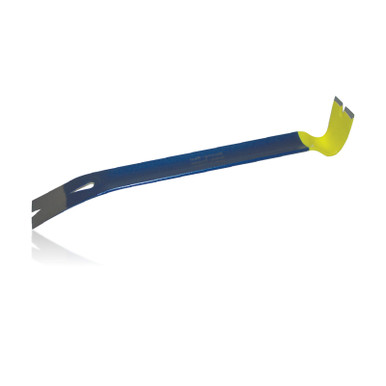 Estwing EHB-15 Handy Pry Bar, 15 inThe product data lists the Estwing ProClaw as a 16 in roofing bar
Matching the bar to the pull. A pry bar does two things: it multiplies force (a long bar on a short fulcrum) and it gets under something thin without wrecking it (a flat bar). The questions below sort the names, then pick the bar for each job a roofer meets: pulling roofing nails and shingles, lifting flashing and drip edge, prying decking and fascia, tear-off, and the small jobs a 7 inch bar does in a pouch. Estwing’s warranty page is the reminder on the other half of the pair: a hammer is for unhardened nails, and the bar, not the claw of the hammer, is for the hardened ones.
Pry bars, question by question
Lengths and types are from the product data on this site; the name definitions follow the Hand Tools Institute usage.
Pry bars in plain words
- Crowbar = wrecking bar: round or hex, 18 to 60 inches, gooseneck claw, for demolition.
- Flat bar = wonder bar = handy bar: flat, 7 to 24 inches, claw and beveled end, both slotted, for nails, trim, siding, flashing and shingles.
- Roofing bar: a flat bar with a wide offset claw for roofing nails and shingle replacement.
- Cat’s paw: short bar with a sharp claw struck under a nail head to dig it out; it leaves a mark.
- Nail puller: any of the above, or the lever-and-jaw tool for headless nails.
- Length is leverage: 36 inches on a 2 inch claw is about eighteen to one.
- A 7 inch bar in the pouch and a 15 to 18 inch flat bar in the bag cover most of a roofer’s day.
- Pull hardened nails with a bar, not a hammer claw; Estwing says so on its warranty page.
Questions people ask
What is the pry bar for demolition?
A 24 to 36 inch wrecking bar for decking, fascia and framing, a 48 to 60 inch bar for heavy pulls, and a flat bar for anything that comes off in one piece.
What is a small pry bar for?
Pouch work: pulling single nails, lifting shingle tabs and flashing seams, popping trim, opening cans; it fits where a long bar cannot.
What are pry bars good for?
Pulling nails without crushing wood, lifting trim, siding, flashing and shingles, separating boards and opening crates.
What does a wrecking bar look like?
A round or hex steel bar with a gooseneck claw at one end and a chisel point at the other, 18 to 60 inches long.
What is the difference between a crowbar and a pry bar?
A crowbar is the heavy round-stock bar with a gooseneck claw; pry bar is the general name and usually means the flat bar.
Are mini pry bars worth it?
Yes for roof and trim work; a 7 inch bar is the one that is in the pouch when it is needed.
Is there a difference between a crowbar and a prybar?
Same as above; prybar is one spelling of pry bar, the general term.
What is a nail puller called?
A nail puller, cat’s paw, nail claw or flat bar, or the lever-and-jaw nail puller for headless nails.
What is a Johnson pry bar?
A long wood-handled lever with a steel toe and wheels for moving machinery; sometimes a long pinch bar.
What is a nail puller?
Any lever that pulls a nail by its head, or the hinged-jaw tool that grips the shank and rolls it out.
How do you use a nail puller?
Set the claw behind the head, strike the back of a cat’s paw to dig under it, rock the bar back to lift, then finish with a flat bar.
What is the difference between a wrecking bar and a crow bar?
None in US trade use; both are the gooseneck demolition bar.
What is the tool for extracting nails?
A flat bar or roofing bar for headed nails, a cat’s paw for buried heads, a lever nail puller for headless shanks.
Related guides
Roof tear-off toolsShingle shovels, spud bars and how long it takesRoofing hammers and hatchetsWeights, faces, gauges and EstwingShovels, spades and scoopsThe three types and what each is forOSHA safety glasses requirementsWhat 1910.133 saysWork gloves for roofingGloves by job: roofingThe ratings, test results and standards shown here are the manufacturers' published values, reproduced as published. Nothing on this page is a recommendation by Bayshore Safety that any product is suitable for a particular task, hazard or workplace. Selecting safety products and protective equipment is the responsibility of the end user and the employer, based on their own hazard assessment and the regulations that apply to their work. Confirm every value on the manufacturer's own documentation before use.