Home › Guides › Roofing tools › Roller covers and nap
Guide · Coating application · Roller covers, frames, trays and mixers

What roller nap do you use, 3/8 or 1/2 or longer? Roller cover sizes and cores, nap for roof coatings and rough surfaces, woven vs microfiber vs foam, why rollers are left in paint, saving a wet roller, tray liners, bucket grids and drill mixers

Nap is the length of the fiber on a roller cover, and it is chosen by the surface, not the paint: 1/4 inch for smooth doors and metal, 3/8 inch for smooth drywall and plaster, 1/2 inch for lightly textured walls and ceilings, 3/4 inch for rough textured walls, concrete block and stucco, and 1 to 1-1/4 inch for very rough masonry, granulated roofing and roof coatings. A longer nap holds more material and reaches into texture; a shorter nap leaves a smoother film. On a roof, acrylic and silicone coatings go on with 3/4 to 1-1/4 inch nap covers on 9 or 18 inch frames, out of a 5-gallon bucket with a grid rather than a tray. Painters leave a roller in the paint between coats because a cover that stays wet does not have to be washed; a wrapped wet roller keeps overnight.
Bayshore Safety. Industrial safety, roofing tools and jobsite supplies since 2017. · Current as of November 2026 · the C&R roller cover, frame, tray and mixer product data on this site (RC9 covers in 1/4, 3/8, 1/2, 3/4 and 1-1/4 in nap, RC18 in 3/8, 1/2 and 3/4 in, RC3 and RC4 mini covers, jumbo 9 in covers, microfiber and Drylon shed-resistant covers, phenolic and poly cores; 5-wire and jumbo frames with 5/16 in stems, 18 in aluminum frames; 9 and 18 in trays, liners, bucket grid; universal paint mixers in three sizes); the nap-to-surface convention printed on roller cover packaging across the trade; roof coating manufacturers’ published application guidance (3/4 to 1-1/4 in nap for acrylic and silicone roof coatings on granulated and rough surfaces)
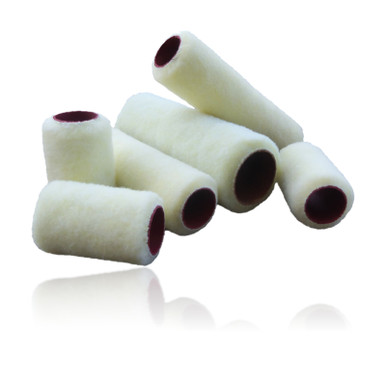
C&R RC9-3/8 Roller Cover, 5 sizes, 9 inC&R RC9-3/8 Roller Cover, 5 sizes, 9 inThe product data lists the RC9 as a 9 in phenolic-core roller cover made in 1/4, 3/8, 1/2, 3/4 and 1-1/4 in nap

Reading a roller cover. Three things are printed on the sleeve: the length (3, 4, 9, 9-3/8, 14 and 18 inches), the nap (1/4 to 1-1/4 inch), and the fabric and core (woven or knit polyester, microfiber, lambswool, foam; phenolic, poly or cardboard core). The frame is matched by length and by stem diameter (1/4 inch for standard frames, 5/16 inch for heavy 5-wire and jumbo frames; jumbo covers have a 2-1/4 inch core instead of 1-1/2). The questions people ask — which nap, what the sizes are, what professionals use, whether frame matters, woven vs microfiber vs foam, why painters leave rollers in paint, how to keep a wet roller, whether to reuse a tray liner, what roof coating does to a roller, how a paint mixer works — are all answered from those three figures below.

Roller covers and the gear around them, question by question

Nap, size and core figures are from the product data on this site; the nap-to-surface pairings are the ones printed on cover packaging across the trade.

Is 1/2 or 3/8 nap better, and what is the difference between naps?Neither is better; they are for different surfaces. 3/8 inch is the standard smooth-wall nap: enough pile to hold paint and lay off smooth on drywall, plaster and primed wood. 1/2 inch holds more and follows light texture (orange peel, knockdown, ceilings) with a slightly heavier stipple. If the wall is smooth, 3/8; if it has texture, 1/2; if the texture is deep (popcorn, heavy knockdown, block), 3/4. Short nap (1/4) is for doors, trim and metal where a near-spray finish is wanted. The product data on our RC9 lists all five naps on one phenolic core.
What is a nap roller, a short nap roller, and the standard roller sizes?Every fabric roller cover is a nap roller; the term distinguishes it from foam. Short nap is 1/4 inch and below (some are 3/16 and 1/8, sold as smooth or mohair). Lengths: 3 and 4 inch mini rollers for trim and tight spots, 7 and 9 inch for walls (9 is standard; 9-3/8 is the same cover for frames that run slightly long), 12 and 14 inch for big walls, 18 inch for floors, ceilings, roofs and decks. Cores: standard 1-1/2 inch, jumbo 2-1/4 inch (more fabric, more paint, a jumbo frame with a 5/16 inch stem).
Which roller nap for roof coatings, and what is the roller for concrete?Roof coating manufacturers publish 3/4 inch nap for smooth single-ply and metal, 1 to 1-1/4 inch for granulated modified bitumen, cap sheet and rough built-up roofs; the coating is heavy-bodied and the surface is rough, so the long nap carries enough material to meet the wet-mil thickness the data sheet calls for. An 18 inch frame on an extension pole with 3/4 to 1-1/4 inch nap, fed from a 5-gallon bucket with a grid, is the standard roof-coating setup; a 9 inch jumbo cover does the details. For concrete floors and block, 3/4 inch for block filler and rough concrete, 3/8 to 1/2 for smooth slabs and epoxy (the squeegee guide linked below covers the notched squeegee that lays epoxy and coatings before back-rolling).
What do professional painters use for rollers, and does the frame matter?A 9 inch 5-wire heavy-duty frame with a 5/16 inch stem (our RF9HDN1), 3/8 or 1/2 inch woven or microfiber covers bought by the case, an 18 inch frame for ceilings and floors, and a bucket and grid instead of a tray for anything over a room. The frame matters in two ways: a flimsy 4-wire frame flexes and the cover slips or leaves a track at the end; and a frame that spins poorly throws paint. A frame with a threaded handle takes an extension pole, which is how ceilings and roofs are rolled without a ladder.
What are the differences between woven, knit, microfiber and foam rollers?Woven polyester (the blue and white sleeves) is tight-pile, sheds least and gives the smoothest fabric finish; knit polyester is loftier, holds more paint and sheds a few fibers early; microfiber is a very fine dense fiber that holds a lot of paint, releases it evenly and leaves almost no stipple (our MFRC-900); Drylon and other shed-resistant blends are for stains and finish coats (DRC-504); lambswool holds the most and is for oil-based and stains; foam leaves no nap texture and is for doors, cabinets and gloss enamel, but it bubbles with fast-drying latex and is useless on texture. A white woven roller vs a microfiber roller: woven for a clean smooth-wall finish on a budget, microfiber for fewer loads and the smoothest film.
Why do painters leave rollers in the paint can, and how do you preserve a wet roller?Because washing a roller cover takes ten minutes and a gallon of water, and a cover that stays saturated does not dry out between coats or between rooms. The standard moves: leave the loaded roller in the bucket under the grid with a damp rag over it for a lunch break; for overnight, wrap the wet cover tightly in plastic wrap or a plastic bag, squeeze the air out and put it in a cool place (some put it in the fridge); for a week, the same, with the bag sealed. Latex keeps this way for a day or two, oil for longer. Before reuse, roll off the first pass on cardboard. A cover worth saving is a good one; a bargain cover is used once.
What is the trick to painting ceilings?A 1/2 inch nap on an 18 inch frame on an extension pole, a bucket and grid, the room cut in first, and rolling in one direction toward the light in overlapping W passes so the laps stay wet; stop only at a corner. Flat ceiling paint hides laps better than anything with sheen. Eye protection is not optional under a ceiling (see the eye protection guide linked below).
What is the standard size of a paint tray, are trays reusable, and what about liners?The standard tray is sized for a 9 inch roller with a well of about a quart; 18 inch trays (our 18TRAY) take the big frame and hold about a gallon. Metal trays (PPT90) last for years and are cleaned or lined; plastic trays are lighter and flex. Liners are a thin plastic shell that drops into the tray so the tray stays clean; they are reusable if the paint is rinsed out while wet, and dried latex peels out of a liner in one sheet, which is the "how to peel a paint tray" trick. Instead of a liner: a plastic bag pulled over the tray and taped, or no tray at all and a 5-gallon bucket with a bucket grid, which holds a gallon or more, does not tip on a roof and is what production painters and coating crews use.
How long does paint last in a tray, and what do you do with used trays?An open tray of latex skins in an hour in a warm room and is unusable by the next morning; covered tightly with a plastic bag it keeps overnight. Oil-based lasts longer but skins too. Pour leftover paint back through a strainer, let the film in the tray dry and peel it, and the tray or liner is clean. Dried latex is household waste in most places; liquid paint is not.
What can I use instead of a paint mixer, and how does a drill mixer work?A paint mixer is a steel or plastic paddle on a shaft chucked in a drill; it spins the paint from the bottom of the can up the sides, which a stir stick does not do in a five-gallon bucket of roof coating or a settled gallon of primer. The sizes match the container: a small paddle (1-3/4 inch) for quarts and gallons, 3-1/4 inch for 2-gallon pails, 4-1/2 inch for 5-gallon buckets of coating, mud or mortar. Without one: a stir stick for a gallon of paint (scrape the bottom and lift), the paint store’s shaker, or pouring back and forth between two buckets (boxing), which is also how several gallons are blended to one color. Run the mixer slow, below the surface, so it does not whip air into a coating that will later bubble.
What are the disadvantages of roof coatings, and how are they applied?A roof coating is a maintenance layer, not a roof: it will not bridge a failed seam, it needs a clean, dry, sound substrate and a primer on some surfaces, it has a window of temperature and dew point, and its life depends on the wet-mil thickness actually applied, which is why the manufacturers publish gallons per square and a nap size. Acrylics need a dry day and night; silicones stay dirty and cannot be recoated with anything but silicone; aluminum coatings are the traditional reflective layer on built-up roofs. The tools are a 1 to 1-1/4 inch nap on an 18 inch frame, a notched or straight squeegee for spreading, and a 5-gallon grid. Read the coating manufacturer’s data sheet for the figures; our product pages carry only what the tools are.
How do I know what size my paint roller is, and do roller covers from different brands fit?Measure the cover end to end (9 inches is standard) and the core inside diameter (1-1/2 inch standard, 2-1/4 inch jumbo). Any 9 inch standard-core cover fits any 9 inch standard frame; jumbo covers need a jumbo frame; mini covers fit the mini frame of the same length. The frame stem (1/4 or 5/16 inch) is between the frame and the handle, not the cover.

Roller covers in plain words

  • Nap is fiber length. 1/4 smooth and metal, 3/8 smooth walls, 1/2 light texture and ceilings, 3/4 rough and block, 1 to 1-1/4 very rough and roof coatings.
  • Sizes: 3 and 4 inch mini, 9 inch standard (9-3/8 same thing), 18 inch for floors, ceilings and roofs. Jumbo covers have a 2-1/4 inch core and need a jumbo frame.
  • Woven sheds least, microfiber holds most and leaves least stipple, foam is for gloss on smooth doors.
  • Roof coatings: 3/4 to 1-1/4 inch nap on an 18 inch frame, from a 5-gallon bucket with a grid, to the wet mil the coating data sheet states.
  • Painters leave rollers in paint so the cover does not dry out between coats; wrap a wet cover tight in plastic to keep it overnight.
  • A bucket and grid replaces a tray on anything bigger than a room, and does not tip on a roof.
  • Liners peel clean once the paint dries; a plastic bag over the tray does the same job.
  • A drill mixer paddle matches the container: small for gallons, 4-1/2 inch for 5-gallon buckets; run it slow and below the surface.

Questions people ask

Why do painters leave rollers in paint cans?

So the cover stays saturated between coats and does not have to be washed; a damp rag over the bucket for a break, plastic wrap for overnight.

What do professional painters use for rollers?

A 9 inch 5-wire frame with 3/8 or 1/2 inch woven or microfiber covers by the case, an 18 inch frame for ceilings and floors, and a bucket and grid instead of a tray.

Which roller do you use for painting walls?

3/8 inch nap for smooth drywall, 1/2 inch for light texture, 3/4 inch for heavy texture or block; woven for a smooth finish, microfiber for fewer loads.

How do you preserve a wet paint roller?

Wrap it tightly in plastic wrap or a bag with the air squeezed out and keep it cool; latex lasts a day or two that way.

What can I use instead of a paint tray liner?

A plastic bag pulled over the tray and taped, or skip the tray and use a 5-gallon bucket with a bucket grid.

Can you reuse a paint tray liner?

Yes, if it is rinsed while wet; dried latex also peels out of a liner in one sheet.

Is 1/2 or 3/8 nap better for walls?

3/8 for smooth walls, 1/2 for lightly textured walls and ceilings; the surface decides, not the paint.

What roller nap for concrete?

3/4 inch for rough concrete and block filler, 3/8 to 1/2 inch for smooth slabs and epoxy after it is spread with a squeegee.

What is the difference between roller naps?

Longer nap holds more material and reaches into texture; shorter nap leaves a smoother film. 1/4 to 1-1/4 inch covers the range.

How do I know what size my paint roller is?

Measure the cover length (9 inch standard) and the core diameter (1-1/2 inch standard, 2-1/4 inch jumbo).

What is the standard size of a paint tray?

A 9 inch tray holding about a quart; 18 inch trays hold about a gallon for the big frames.

What can I use instead of a seam roller?

That is a different tool for membrane seams; see the seam roller guide linked below. A paint roller does not replace it.

What is considered a short nap roller?

1/4 inch and shorter, for smooth doors, trim, metal and gloss finishes.

What is the trick to painting ceilings?

An 18 inch frame on a pole with 1/2 inch nap, a bucket and grid, flat paint, rolling toward the light in overlapping passes and stopping only at corners.

Are paint trays reusable?

Metal trays indefinitely; plastic trays for many jobs; let the paint dry and peel it, or use a liner.

Is a foam roller better than a pile roller?

Only for gloss enamel on smooth doors and cabinets; foam bubbles with fast latex and does nothing on texture.

What are the disadvantages of roof coatings?

They need a clean, dry, sound roof and the right weather, they do not bridge failed seams, and their life depends on applying the wet-mil thickness the manufacturer states.

What is the difference between a microfiber and a woven paint roller?

Woven polyester sheds least and gives a clean smooth finish; microfiber holds more paint, releases it evenly and leaves almost no stipple.

Does the paint roller frame matter?

Yes: a stiff 5-wire frame with a 5/16 inch stem keeps the cover true and takes an extension pole; flimsy frames flex and track.

What can I use instead of a paint mixer?

A stir stick for a gallon, the store shaker, or boxing between two buckets; for 5 gallons of coating a drill mixer paddle is the tool.

The ratings, test results and standards shown here are the manufacturers' published values, reproduced as published. Nothing on this page is a recommendation by Bayshore Safety that any product is suitable for a particular task, hazard or workplace. Selecting safety products and protective equipment is the responsibility of the end user and the employer, based on their own hazard assessment and the regulations that apply to their work. Confirm every value on the manufacturer's own documentation before use.

Setting up a roofing crew or a shop?Call (925) 215-7337 or email us the trades, the crew size and the quantities and we will quote tools and supplies by the case, with the part numbers listed. We sell nationwide.
All roofing tools
How to buyCard, purchase order or invoice terms; quotes on request; agencies and institutions welcome.
Live Service & SupportReal people who know the products, Monday to Friday 7:30am to 4pm Pacific. 925-215-7337
We DeliverWe ship nationwide. Parcel and LTL freight to job sites and businesses across the U.S.