Home › Guides › Roofing tools › Seam rollers and single-ply tools
Guide · Single-ply roofing · Seam rollers, probes, membrane rollers and TPO, PVC and EPDM

Is a seam roller necessary, and what do you use instead? Silicone vs steel seam rollers, 2 inch vs 4 inch, seam probes, weighted membrane rollers, TPO vs PVC vs EPDM, 45 vs 60 mil, what sticks to each membrane, and how a rubber roof is patched

A seam roller is a small hand roller (a silicone, steel or nylon wheel 1-3/4 to 2 inches wide and 2 to 4 inches in diameter on a forked handle) that presses a membrane seam, a tape or a flashing down with concentrated force so the adhesive, tape or hot-air weld bonds along its whole width. On single-ply roofs it is necessary: a TPO or PVC hot-air weld is rolled immediately behind the welder to fuse the sheets, an EPDM tape seam is rolled to set the tape, and every manufacturer’s detail requires it. Silicone rollers are for hot-air welds (the silicone does not stick to or mark the hot sheet); steel rollers are for tapes and adhesive seams; the 2 inch wheel does seams and the 4 inch covers flashings and wide laps. A seam probe is the blunt steel pick dragged along the finished seam edge to find a void. Nothing substitutes for a roller on a warranted roof; a paint roller or a block of wood does not deliver the pressure.
Bayshore Safety. Industrial safety, roofing tools and jobsite supplies since 2017. · Current as of November 2026 · the C&R seam roller and probe product data on this site (silicone rollers 1-5/16 x 1-3/4, 1-3/4 x 3, 2 x 2 and 2 x 4 in; steel single- and double-fork rollers 2 x 2 and 2 x 4 in; nylon V-shaped roller 2 x 7/16 in; threaded-handle rollers; rollers with a heavy-duty seam probe; 10 in seam probes and wood-handle probe; weighted membrane rollers 75, 100 and 150 lb, with and without wheels; MS-1063 two-blade membrane slitter); ASTM D4637 (EPDM sheet), D6878 (TPO sheet) and D4434 (PVC sheet) as the published membrane designations, with the 45 and 60 mil thicknesses they list; the membrane manufacturers’ published seaming methods (hot-air welding for TPO and PVC, tape or adhesive for EPDM) and probe-check procedure
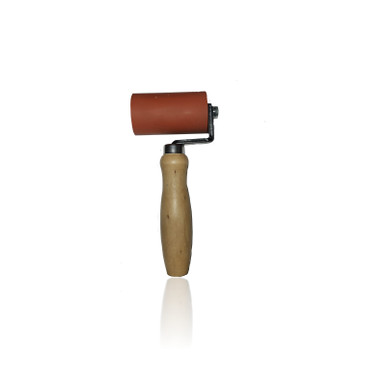
C&R CR03003 Seam Roller, 1-3/4 in x 3 in, SiliconeC&R CR03003 Seam Roller, 1-3/4 in x 3 in, SiliconeThe product data lists the CR03003 as a 1-3/4 x 3 in silicone seam roller, sold individually

Why single-ply has its own tools. A single-ply roof is one sheet of membrane (TPO, PVC or EPDM) over insulation, and the roof is only as good as its seams: a hot-air weld on TPO and PVC, a tape or adhesive seam on EPDM, each made with a roller behind the heat or the tape and checked with a probe. The questions below start with the roller (is it necessary, what instead, silicone or steel, 2 or 4 inch), then the membranes people ask about (what EPDM is, who makes TPO, TPO vs PVC, 45 vs 60 mil, what sticks to TPO, the downsides of EPDM, how to patch a rubber roof, what glue to use) and the weighted roller that sets adhered sheets. The membrane manufacturers’ details govern every one of those answers on a warranted roof; what is here is the tool side.

Seam rollers and single-ply, question by question

Roller sizes and materials are from the product data on this site; membrane facts are the ASTM designations and what the membrane manufacturers publish about their own sheets.

Is a seam roller necessary, and what can I use instead?On any single-ply seam, yes. A hot-air weld fuses only where the two hot surfaces are pressed together, and the roller is what presses them, in the two or three seconds before the sheet cools; an EPDM seam tape bonds only under the pressure of a roller, which is why the manufacturers specify a 2 inch steel roller and a specific number of passes. On a repair with a self-adhered patch or a flashing tape, a roller is what makes the patch a repair instead of a bandage. Instead of one: for a small sealing-tape patch on a shed or RV, a block of wood or the heel of a hand gives some pressure; a paint roller gives almost none; a wallpaper seam roller is the same tool in a lighter build and works for tape, not for welds. Our 1-3/4 x 3 inch silicone roller sold individually is the one to buy for a single repair.
Silicone, steel or nylon, and 2 inch or 4 inch: which seam roller?Silicone for hot-air welding of TPO and PVC: the silicone wheel does not stick to the softened membrane or leave marks, and it tolerates the heat. Steel for EPDM seam tape, cover tape, flashing tape and adhesive seams: the hard wheel delivers the most pressure through the tape. Nylon V-shaped rollers (our 2 x 7/16 in) ride in a corner or along a lap edge to press the very edge of a seam. Size: the 2 x 2 inch (or 1-3/4 x 3) wheel is the seam roller, narrow enough to concentrate force on a 1-1/2 to 2 inch weld; the 2 x 4 inch roller covers flashing pieces, wide laps and patches faster. Single fork vs double fork is the handle: a double fork holds the axle at both ends for heavy pressure, a single fork gets into corners. Threaded-handle rollers screw onto a broom handle so field seams can be rolled standing up, and the rollers with a heavy-duty seam probe on the handle end carry the probe with the roller.
What does a seam probe do, and how do you check a seam?A seam probe is a blunt, rounded steel pick on a handle (ours are 10 inch, with a heavy-duty version and a wood-handle version). After the weld has cooled, the probe is drawn along the edge of the seam with light pressure; where the weld is complete it slides over the edge, where there is a void or a cold weld it catches and lifts the edge. Voids are marked and re-welded or patched. The manufacturers also call for a destructive test strip cut from a trial weld at the start of each day and whenever the welder settings change, peeled by hand to confirm the film tears rather than the weld separating. A probe is also the carpet installer’s seam tool and the name is shared; a seam roller for carpet is a different, star-wheeled tool.
What is a weighted membrane roller for?A 75, 100 or 150 lb steel roller on a handle, rolled over a fully adhered or self-adhered membrane after it is laid to press the whole sheet into the adhesive and drive out air; the manufacturers specify the weight (often a minimum of 75 to 100 lb) and the pattern (roll the length, then the width). The wheeled versions (our 75 and 100 lb with wheels) are tipped onto the wheels to move between sheets. These ship by freight because of the weight. A hand seam roller does the seams; the weighted roller does the field.
What is an EPDM rubber roof, and what are its downsides?EPDM (ethylene propylene diene monomer, ASTM D4637) is a synthetic rubber sheet, black or white, 45, 60 or 90 mil, in rolls up to 50 feet wide, laid loose and ballasted, mechanically fastened or fully adhered, with seams made with tape (or, on older roofs, splice adhesive) and a steel roller. It has been on roofs since the 1960s and stays flexible in cold. The downsides the manufacturers and the trade name: black EPDM absorbs heat, it is a rubber sheet and is punctured by sharp debris and dropped tools, its seams depend on clean, primed rubber and a roller, it shrinks over decades and pulls at the flashings, and oils, solvents and asphalt products attack it, so roof cement and petroleum products are not used on it. Repairs are made with EPDM primer, cover tape or self-adhered EPDM patch and a roller.
What is TPO, who makes it, and is TPO the same as PVC?TPO (thermoplastic polyolefin, ASTM D6878) is a white (also gray and tan) reinforced thermoplastic sheet, 45, 60 or 80 mil, seamed by hot-air welding: the welder heats both sheets to a melt and the silicone roller fuses them, so the seam is as strong as the sheet. Several large roofing manufacturers make TPO under their own names; we sell the tools, not the sheet, and the sheet manufacturer’s data sheet names its own product. TPO and PVC (polyvinyl chloride sheet, ASTM D4434) are both white thermoplastics welded the same way with the same rollers and probes, and they are not the same: PVC is plasticized, has a longer record, resists grease and chemicals better and is the sheet over restaurant kitchens; TPO has no plasticizers, is more flexible in cold and is lower in cost. They are not welded to each other.
What sticks to TPO roofing, and what glue for a rubber roof?Almost nothing sticks to TPO except TPO: the sheet is a polyolefin, like polyethylene, and ordinary adhesives, tapes and sealants slide off. Repairs and flashings are TPO welded to TPO, or the manufacturer’s TPO primer with its TPO-compatible cover tape and sealant. On EPDM, the adhesives are EPDM bonding adhesive (for the field), seam primer and seam tape (for seams), and lap sealant at the edges, all from the membrane manufacturer, applied to clean rubber scrubbed with the primer; no other glue, and no asphalt. On PVC, PVC welded to PVC and the manufacturer’s PVC sealants. The rule on all three: the membrane manufacturer’s own accessories, and the warranty depends on it.
Is 45 or 60 mil EPDM better, and what thickness for TPO?Thicker: 60 mil has a third more rubber over the reinforcement, resists punctures and hail better, and is the standard for commercial roofs and longer warranties; 45 mil is the lighter, lower-cost sheet for sheds, small flat roofs, RVs and budget work. TPO follows the same logic (45, 60, 80 mil) and most manufacturers tie their longer warranties to 60 mil and up. We do not rate membranes; the thickness and warranty tables are on each manufacturer’s data sheet.
How do you patch a rubber roof, and what is the patch for it?Clean the area with the manufacturer’s cleaner, prime the rubber with EPDM primer until it is tacky, apply a self-adhered EPDM patch (cover tape or a pre-cut patch) extending at least 2 to 3 inches past the damage in every direction with rounded corners, roll it hard with a 2 inch steel seam roller from the center out, and run lap sealant around the edge. For TPO and PVC, a patch of the same membrane is hot-air welded over the damage and rolled with the silicone roller, then probed. Sealing tapes and roof cement from the asphalt aisle are not patches for a rubber roof; they lift, and the cement attacks EPDM.
What is a membrane slitter, and what does a commercial TPO roof involve?A membrane slitter (our MS-1063, two blades) cuts a clean strip of TPO or PVC for flashing and cover strips without the wander of a hook blade; it lasts longer because two blades share the work. A commercial TPO roof is the full system: insulation and cover board over the deck, the membrane fastened or adhered, every seam welded and probed, flashings welded at walls, curbs and penetrations, walkway pads at the equipment, and a manufacturer inspection for the warranty. The seam roller, probe, weighted roller and slitter here are the hand tools of that work; the welder, the fasteners and the sheet are the roofing contractor’s.
What does a seam roller do for carpet, and what is a seam roller in wallpaper?Different tools with the same name: the carpet seam roller is a spiked or star-wheeled roller that works the carpet pile into hot-melt seam tape; the wallpaper seam roller is a small hard-rubber or plastic wheel that presses paper seams flat. Neither is used on a roof, and the roofing rollers here are not used on carpet.

Seam rollers and single-ply in plain words

  • A seam roller presses a weld, tape or patch so it bonds across its width; on single-ply it is required, not optional.
  • Silicone roller for hot-air welds on TPO and PVC; steel roller for EPDM tape and adhesive seams; nylon V for edges.
  • 2 inch wheel for seams; 4 inch for flashings and patches; threaded handle to roll standing up.
  • Probe every cooled seam; a catch means a void. Cut a test strip each day.
  • Weighted 75 to 150 lb roller presses the field of an adhered sheet.
  • EPDM is rubber, seamed with primer and tape; TPO and PVC are thermoplastics, seamed by welding; TPO and PVC do not weld to each other.
  • Only the membrane manufacturer’s own adhesives, tapes and sealants stick; no asphalt on EPDM.
  • 60 mil is the commercial standard; 45 mil is the light sheet.

Questions people ask

What can I use instead of a seam roller?

On a warranted roof, nothing. On a small sealing-tape repair, a wood block or hand pressure; a paint roller does not deliver the force.

Is a seam roller necessary?

Yes on every single-ply seam: it fuses a hot-air weld and sets a tape seam; the manufacturers specify it.

Who makes TPO?

Several large roofing manufacturers under their own names; the sheet manufacturer’s data sheet names the product. We sell the tools.

What is an EPDM rubber roof?

A synthetic rubber sheet (ASTM D4637) in 45, 60 or 90 mil, ballasted, fastened or adhered, seamed with primer and tape.

What is the patch for a rubber roof?

EPDM primer plus self-adhered EPDM cover tape or patch, rolled with a steel seam roller and edged with lap sealant.

What sticks to TPO roofing?

Only TPO welded to TPO, or the manufacturer’s TPO primer, cover tape and sealant; ordinary adhesives slide off.

Is TPO roofing the same as PVC?

No. Both are welded white thermoplastics, but PVC is plasticized and chemical resistant and TPO is a polyolefin; they do not weld to each other.

What are the downsides of EPDM roofing?

Heat absorption on black sheet, puncture by sharp debris, seam dependence on primer and rolling, long-term shrinkage, and damage from oils, solvents and asphalt products.

Is 45 or 60 mil EPDM better?

60 mil is thicker, more puncture resistant and carries the longer warranties; 45 mil is the light, lower-cost sheet.

What is the material to seal roof leaks on a membrane?

The membrane manufacturer’s own patch system: welded TPO or PVC, or primed EPDM tape; not asphalt cement.

What type of glue should I use on rubber roofing?

EPDM bonding adhesive for the field, seam primer and tape for seams, lap sealant at edges, all from the membrane manufacturer.

What is a commercial TPO roof?

A welded thermoplastic membrane over insulation and cover board with welded flashings, probed seams, walk pads and a manufacturer warranty inspection.

What does a seam roller do for carpet?

A different, star-wheeled tool that works carpet pile into hot-melt seam tape.

What is a seam probe?

A blunt steel pick drawn along a cooled seam edge to find voids; it catches where the weld is incomplete.

What is a weighted roller for?

Pressing a fully adhered or self-adhered membrane into its adhesive across the whole sheet; 75 to 150 lb.

The ratings, test results and standards shown here are the manufacturers' published values, reproduced as published. Nothing on this page is a recommendation by Bayshore Safety that any product is suitable for a particular task, hazard or workplace. Selecting safety products and protective equipment is the responsibility of the end user and the employer, based on their own hazard assessment and the regulations that apply to their work. Confirm every value on the manufacturer's own documentation before use.

Setting up a roofing crew or a shop?Call (925) 215-7337 or email us the trades, the crew size and the quantities and we will quote tools and supplies by the case, with the part numbers listed. We sell nationwide.
All roofing tools
How to buyCard, purchase order or invoice terms; quotes on request; agencies and institutions welcome.
Live Service & SupportReal people who know the products, Monday to Friday 7:30am to 4pm Pacific. 925-215-7337
We DeliverWe ship nationwide. Parcel and LTL freight to job sites and businesses across the U.S.