Home › Guides › Roofing tools › Roofing torches
Guide · Hot work · Propane roofing torches and torch-down roofing

What is a roofing torch, and how does torch-down roofing work? Propane roofing torches and weed burners, yellow vs blue flame, the hottest point, modified bitumen cap and base sheets, how torch-down is removed, and the hot-work rules

A roofing torch is a propane burner on a long handle (a 100,000 to 500,000 BTU/hr bell-shaped head on a 3 to 4 foot tube with a hose to a 20 to 100 lb cylinder) used to melt the asphalt on the underside of modified bitumen roofing so it bonds to the layer below as the roll is unrolled; a detail torch is the same thing with a small head for flashings and laps. Torch-down roofing is APP-modified bitumen (ASTM D6222): a base sheet is mechanically fastened or adhered over the deck or insulation, then the cap sheet is unrolled while the torch heats its back to a glossy flow and a torch trowel presses the laps. The hottest part of a propane flame is just past the tip of the inner blue cone; a yellow, lazy flame is fuel-rich and sooty, a sharp blue flame is the working flame. Torch work is hot work: 29 CFR 1926.352 and 1910.252(a) require combustibles moved or shielded, an extinguisher at hand and a fire watch during and for at least 30 minutes after.
Bayshore Safety. Industrial safety, roofing tools and jobsite supplies since 2017. · Current as of November 2026 · the C&R Magnum torch product data on this site (C-100 torch combo, L-100S torch, LE-100S long-handle torch kit with electric starter, S-30 detail torch, by the case of 3; the 6-1/4 in torch trowel); 29 CFR 1910.252(a) and 1926.352 (fire prevention for welding, cutting and heating, including the fire watch); ASTM D6222 / D6223 (SBS and APP modified bitumen cap sheets) as published designations; the NRCA Roofing Manual on torch-applied modified bitumen
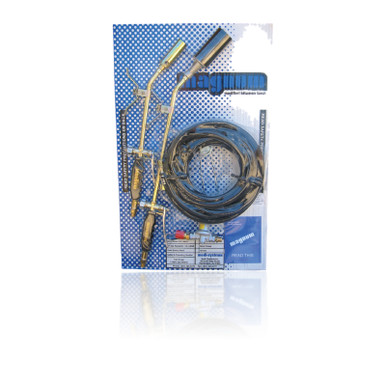
C&R Magnum C-100Torch Roofing TorchC&R Magnum C-100Torch Roofing TorchThe product data lists the LE-100S as a long-handle torch kit with an electric starter

What the torch is and is not. A roofing torch is a tool for one product family, torch-applied modified bitumen, and the same burner sold as a weed burner is used to burn weeds, thaw ice and heat-shrink; it is not a soldering torch, a plumber’s torch or a cutting torch. The questions below cover the torch (yellow vs blue, hottest point, which burns hottest, weed burning), the roof (what torch-down is, how it is applied, the underlayment and base sheet, whether it can go over shingles, its disadvantages and how it is removed) and the rules (hot work, fire watch, the cold-applied alternatives). Prices for torch-down rolls and roof replacement are questions for a roofing supply house and a roofer; we sell the tools.

Roofing torches and torch-down, question by question

Torch data is from the product pages on this site; the roofing method is the NRCA and manufacturer method; the fire rules are quoted from 29 CFR 1926.352 and 1910.252(a).

What is the difference between a yellow and a blue propane flame, and where is the hottest point?A blue flame has enough air mixed with the propane for complete combustion; a yellow flame is fuel-rich, burns cooler, deposits soot on the roofing and means the air shutter is closed too far, the orifice is dirty or the tank is nearly empty and the pressure has dropped. The working flame on a roofing torch is blue with a slight yellow tip at full throttle. The hottest point is just beyond the tip of the inner blue cone (around 3,600°F in air for propane at the cone tip); the outer envelope is cooler. For torch-down the roll is heated with the outer flame played across the roll, not the cone jammed into it, which scorches the asphalt and burns the reinforcement.
Which propane torch burns the hottest, and what is a weed burner?The flame temperature of propane in air is the same for every torch; what differs is heat output (BTU per hour), set by the orifice and the head size, from 20,000 BTU/hr for a hand torch to 500,000 for a large roofing head. A weed burner is a roofing-style torch sold for burning weeds in gravel and cracks, thawing frozen ground and pipes, and starting burn piles; it is a lower-output head on a long handle. Is it a good idea to burn weeds with a propane torch? It works on young weeds in gravel and on cracks in pavement; it is a fire-risk tool near dry grass, mulch and fences, and many counties ban it in fire season. Our Magnum torches are roofing torches; the detail torch (S-30) is the small head.
What is torch-down roofing, and are torch-down roofs good?Torch-down is the trade name for torch-applied modified bitumen (mod bit): asphalt modified with APP (atactic polypropylene) so it melts and flows under the torch and sets as a tough plastic-asphalt sheet, reinforced with polyester or fiberglass, with a granulated or smooth top surface, in 1 meter wide rolls about 33 feet long (one square per roll). It is a low-slope roofing system for flat and nearly flat roofs, garages, porches and commercial decks. We do not rate roofing systems; what the manufacturers publish is 15 to 25 year warranties on multi-ply systems, good puncture and foot-traffic resistance, and the requirement that it be installed by a trained torch applicator with the fire precautions below.
How do you apply torch-down roofing, step by step?The deck is cleaned, primed where the manufacturer requires it (concrete, old asphalt, metal) and a base sheet (a fiberglass or polyester mod-bit base, or a mechanically fastened base) is installed with laps per the manufacturer; the cap sheet is then rolled out, aligned, re-rolled from both ends, and unrolled while the torch heats its underside to a glossy flow, with the applicator walking backward and the roll pushed forward with the foot or a roller; laps (3 inches side, 6 inches end) are heated and pressed with the torch trowel until a small bead of asphalt bleeds out along the whole lap, which is the sign of a sealed seam; granules are embedded in the bleed-out to cover it. Flashings are two-ply with the detail torch. The manufacturer’s instructions govern laps, primer, and the surfaces that must not be torched (foam insulation, wood decks without a base sheet).
What type of underlayment for torch-down, and can you put torch-down over shingles?The underlayment is the base sheet: a mod-bit base (ASTM D6163 / D6164 fiberglass or polyester base) or a fastened fiberglass base sheet, never bare wood or foam, because the torch flame on a wood deck or on polyiso is a fire. Over shingles: some manufacturers allow a torch-applied cap over a mechanically fastened base sheet laid over one layer of flat, dry shingles on a low-slope roof; most do not allow it over curled or multiple layers, and the base sheet is what makes it possible, not the torch. The building code limits roof layers to two in most jurisdictions.
What are the disadvantages of torch down roofing?Fire risk during application (torch work is the leading cause of roofing fires, which is why the fire-watch rules exist), the need for a trained applicator and a permit for hot work on many commercial sites, the smell and smoke during installation, limited slope (it is a low-slope product), the difficulty of torching near wood, foam and combustible walls, and the fact that it cannot be installed in heavy wind. The alternatives that avoid the flame are self-adhered (SA) modified bitumen, cold-process adhesive-applied mod bit and the single-ply membranes in the seam roller guide linked below.
How do you remove a torch-down roof?It is a tear-off with scrapers: the cap and base sheets are cut into strips with a roof cutter or a hook-blade knife, lifted with spud bars and a tine bar (or a power roof scraper on a large deck), and hauled; the fasteners are pulled, the deck is inspected and repaired, and insulation under it is replaced if wet. The tear-off guide linked below covers the tools. Weight: about 100 to 150 lb per square for a two-ply torch-down system, more with gravel.
What are the hot-work rules for torch roofing?29 CFR 1926.352 (construction) and 1910.252(a) (general industry) say the same thing: move combustibles 35 feet away or shield them, cover floor and wall openings, keep suitable fire extinguishing equipment ready for instant use, assign a fire watch wherever more than a minor fire might develop, and keep the watch for at least a half hour after the work ends (many owners and insurers require an hour or more and a written hot work permit). On a roof that means an extinguisher at the torch, a second at the ladder, a look under the deck edge and into the walls before torching near them, no torching within a few feet of any combustible that cannot be protected, and a walk of the roof and the building interior after the torch is off. The hot work permit guide linked below covers the permit.
How much does a roll of torch-down weigh and cost, and how much is a torch-down roof?A roll of APP cap sheet is one square (about 100 square feet) and weighs 70 to 100 lb depending on thickness and surfacing; base sheets are lighter. We do not sell the rolls and do not quote roofing material or labor prices; a roofing supply house gives the material price per roll and a roofer the installed price per square.
What is a roofing torch kit, and what is the electric starter?A kit is the torch head and handle, the hose (usually 10 to 25 feet), a regulator for the propane cylinder and sometimes a trowel and a striker. An electric starter (our LE-100S) is a push-button piezo igniter in the handle so the torch lights without a striker, which matters when the torch is relit dozens of times a day. The C-100 combo adds the detail head to the large head on one handle set. Cylinders are 20 to 100 lb; a 100,000 BTU head burns about a pound of propane an hour at full throttle.

Roofing torches in plain words

  • A roofing torch is a long-handled propane burner that melts the back of modified bitumen rolls so they bond; a detail torch does laps and flashings.
  • Blue flame is the working flame; yellow means too little air, a dirty orifice or a low tank. The hottest point is just past the inner blue cone.
  • Torch-down is APP modified bitumen: base sheet first, then the cap sheet unrolled under the torch with the laps pressed by a torch trowel until asphalt bleeds out.
  • Never torch directly on wood, foam or near combustibles; the base sheet is what goes on the deck.
  • Hot work: combustibles 35 feet away or shielded, extinguisher at hand, fire watch for at least 30 minutes after (29 CFR 1926.352).
  • A weed burner is the same torch with a smaller head; it is a fire-season hazard near dry grass.
  • Removal is a scraper tear-off: cut, spud, haul.
  • Self-adhered and cold-applied mod bit avoid the flame.

Questions people ask

What is the difference between a yellow and a blue propane torch flame?

Blue is complete combustion and the working flame; yellow is fuel-rich, cooler and sooty, from too little air, a dirty orifice or a low tank.

Where is the hottest point of a propane torch?

Just beyond the tip of the inner blue cone, around 3,600°F for propane in air.

Are torch down roofs good?

We do not rate roof systems; manufacturers publish 15 to 25 year warranties on multi-ply torch-applied mod bit installed by trained applicators.

What type of underlayment for torch down roofing?

A modified bitumen or fiberglass base sheet, mechanically fastened or adhered; never bare wood or foam under the torch.

How to remove a torch down roof?

Cut it into strips, lift with spud bars and a tine bar or a power scraper, pull fasteners, inspect the deck.

How to apply torch down roofing?

Prime where required, install the base sheet, unroll the cap sheet under the torch to a glossy flow, press the laps with a torch trowel until asphalt bleeds out, embed granules in the bleed-out.

What are the disadvantages of torch down roofing?

Fire risk during application, trained-applicator and permit requirements, smoke and smell, low slope only, and no torching near wood, foam or combustible walls.

Which propane torch burns the hottest?

All propane-air flames reach the same temperature; heat output in BTU/hr is what differs, up to about 500,000 on a large roofing head.

Is it a good idea to burn weeds with a propane torch?

It works on young weeds in gravel and cracks and is a fire hazard near dry grass, mulch and fences; many counties ban it in fire season.

Can you put a torch down over shingles?

Only where the manufacturer allows a fastened base sheet over one flat, dry layer of shingles; the code limits roofs to two layers.

How much does it cost to replace a torch down roof?

We sell the tools and do not quote roofing prices; a roofer gives the installed price per square.

How heavy is a roll of torch down roofing?

About 70 to 100 lb for a one-square APP cap sheet roll.

What is the fire watch rule for torch work?

29 CFR 1926.352 and 1910.252(a): combustibles moved or shielded, extinguisher ready, and a fire watch during and for at least 30 minutes after.

The ratings, test results and standards shown here are the manufacturers' published values, reproduced as published. Nothing on this page is a recommendation by Bayshore Safety that any product is suitable for a particular task, hazard or workplace. Selecting safety products and protective equipment is the responsibility of the end user and the employer, based on their own hazard assessment and the regulations that apply to their work. Confirm every value on the manufacturer's own documentation before use.

Setting up a roofing crew or a shop?Call (925) 215-7337 or email us the trades, the crew size and the quantities and we will quote tools and supplies by the case, with the part numbers listed. We sell nationwide.
All roofing tools
How to buyCard, purchase order or invoice terms; quotes on request; agencies and institutions welcome.
Live Service & SupportReal people who know the products, Monday to Friday 7:30am to 4pm Pacific. 925-215-7337
We DeliverWe ship nationwide. Parcel and LTL freight to job sites and businesses across the U.S.