
What are the OSHA roof fall protection rules for low-slope and steep roofs?
OSHA splits roofs at a 4-in-12 pitch. On a low-slope roof (4 in 12 or flatter) a worker 6 feet or more above a lower level must have a guardrail, safety net or personal fall arrest system, or a warning line paired with one of those or with a safety monitor. On a roof 50 feet wide or less a safety monitor alone is allowed. On a steep roof (steeper than 4 in 12) the choices narrow to guardrails with toeboards, safety nets or a personal fall arrest system; warning lines and monitors are not allowed. Residential roofing follows the same 6-foot rule with a fall protection plan allowed only where the employer can show the usual systems are infeasible.
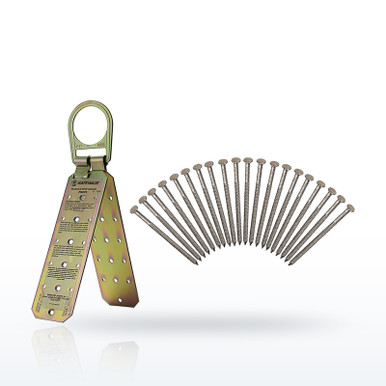
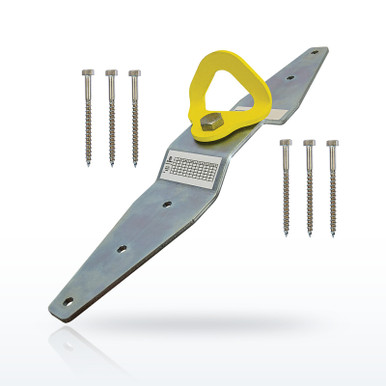
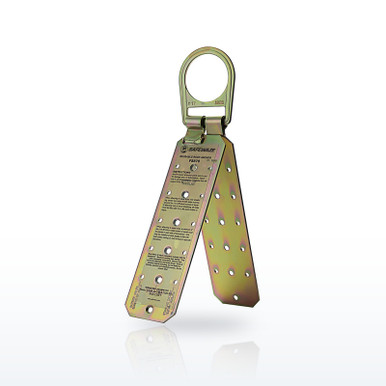 Safewaze FS870 reusable roof anchorNailed to the ridge or rafter, removed when the job is done
Why does the pitch change the rule? On a flat or nearly flat roof a worker can be kept away from the edge: a line 6 feet back, and a person whose only job is to watch, is enough to keep a crew out of the fall zone. On a steep roof there is no safe zone. A slip anywhere on the surface can carry the worker to the edge, so the standard allows only systems that physically stop the fall. The 4-in-12 line is where OSHA drew that boundary.
What does Subpart M require on a roof?
The rule in pieces. All of it starts at 6 feet above the lower level.
How does a warning line system work?
A warning line is a rope, wire or chain on stanchions that marks off the part of the roof where work can go on without a guardrail, net or harness. It goes around all sides of the work area. With no mechanical equipment in use it sits at least 6 feet back from the edge. Where mechanical equipment is in use it sits at least 6 feet from the edge on the sides parallel to the direction the equipment travels and at least 10 feet from the edge on the sides perpendicular to it.
1926.500(b), definition of warning line system; 1926.502(f)(1).The line itself has to be flagged with high-visibility material at intervals of no more than 6 feet, and it has to hang between 34 and 39 inches above the roof surface, including sag. Anyone working between the line and the edge has to be protected by one of the other systems; the line only defines where the unprotected work can happen.
1926.502(f)(2)(i) and (ii).What does a safety monitor actually have to do?
The employer designates a competent person to watch the crew and warn anyone who is unaware of a fall hazard or working in an unsafe way. The monitor must be on the same roof surface, within sight of the workers and close enough to talk to them, and may not be given other duties that could take their attention away from monitoring. That last line is the one most often missed: the monitor cannot also be tearing off shingles.
1926.502(h)(1).What does a personal fall arrest system on a roof have to meet?
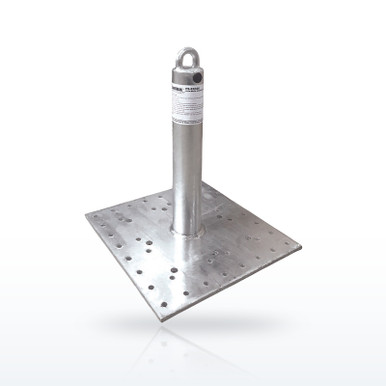
- An anchorage that holds 5,000 pounds per worker attached, or is part of a system designed by a qualified person with a safety factor of two. A roof anchor nailed to a rafter is sized by its manufacturer to meet that figure when installed as instructed.
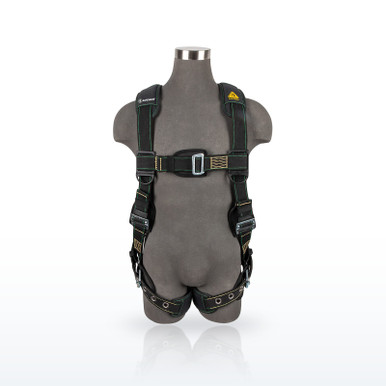
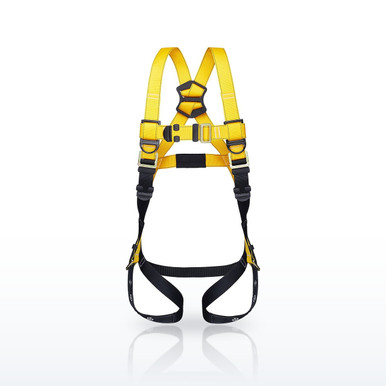
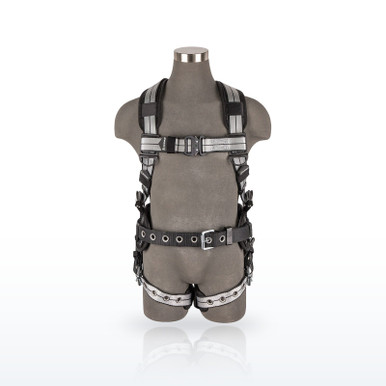
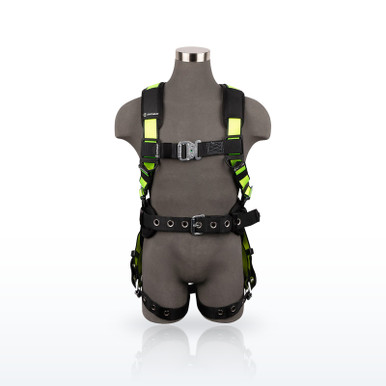
- A full-body harness. Body belts have not been acceptable for fall arrest since January 1, 1998; they remain acceptable in a positioning system.
- Rigging that keeps free fall to 6 feet or less, stops the worker within 3.5 feet of deceleration and does not let the worker contact a lower level. On a roof that means measuring the drop to the ground or the next level before choosing a lanyard length.
- Arresting force limited to 1,800 pounds with a harness.
- Inspection before each use, and removal from service after any fall.
Roof anchors, roof kits and harnesses
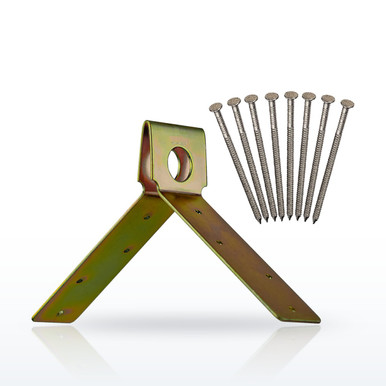
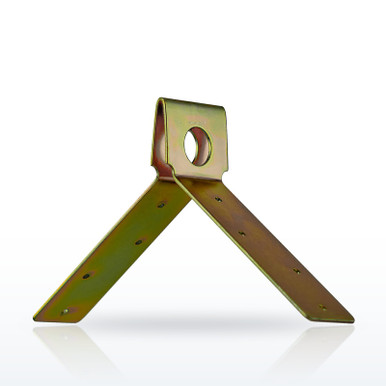
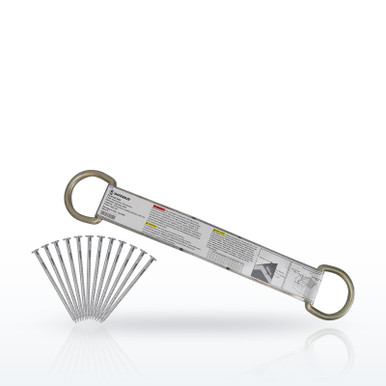
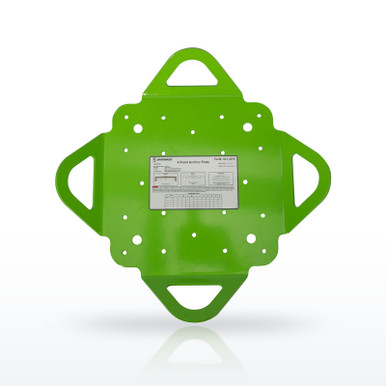
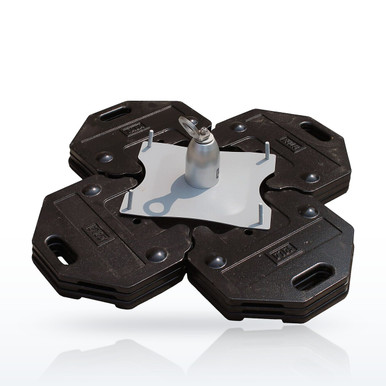
32 items · prices liveAnchor material and the ANSI standard each item meets are as published by the manufacturer. The product page and spec sheet give the fasteners, substrate and installation each anchor is rated for. Contractor Direct orders ship free.

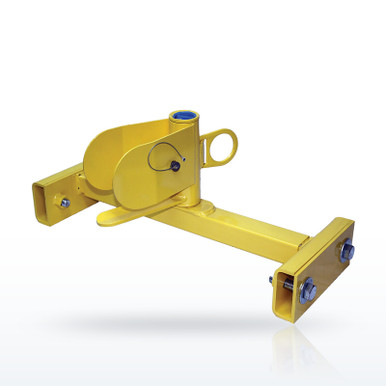
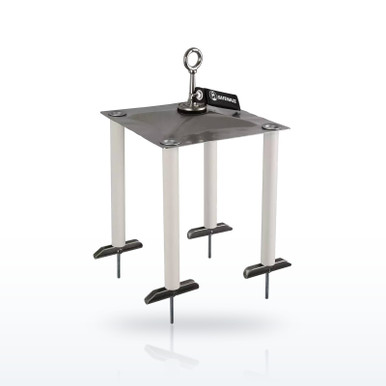
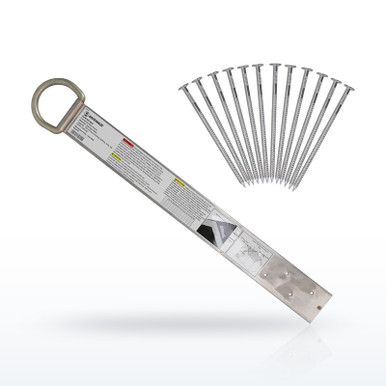
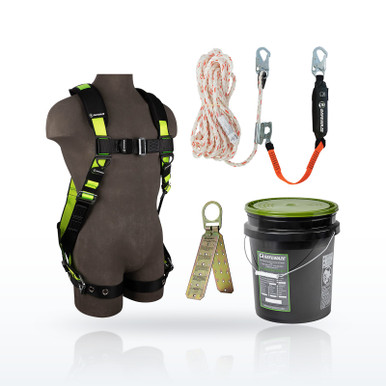
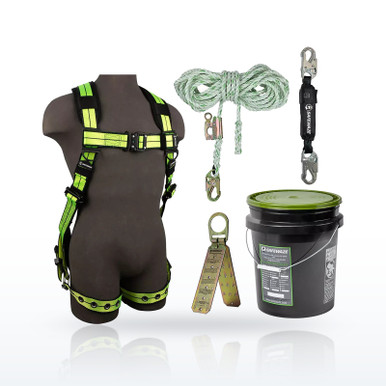
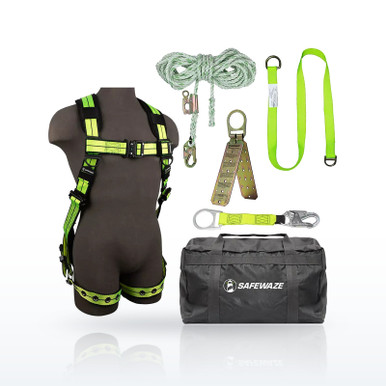
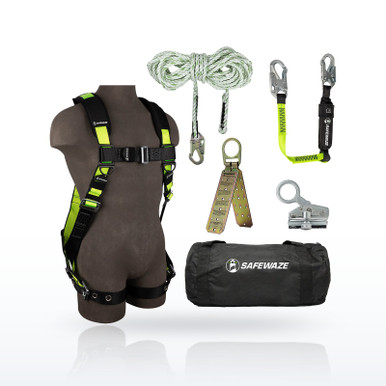
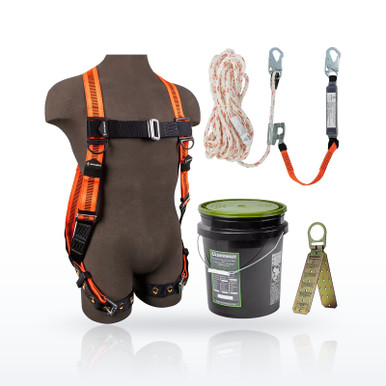
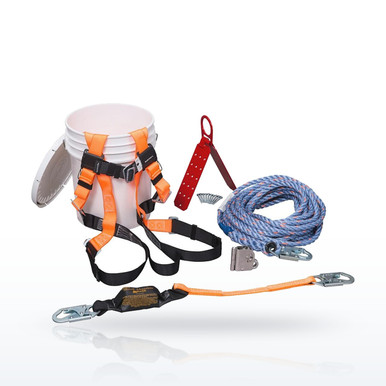
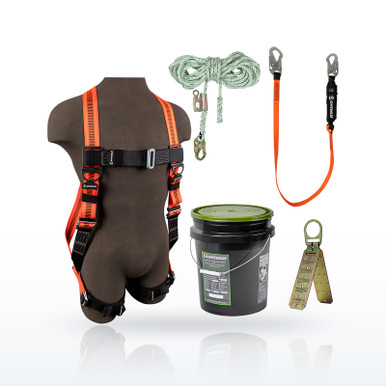
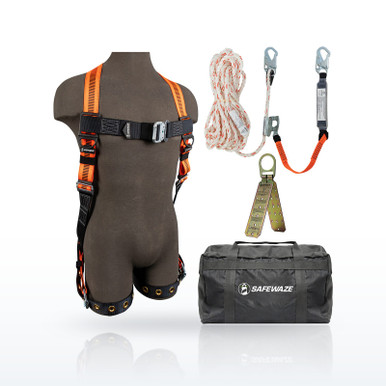
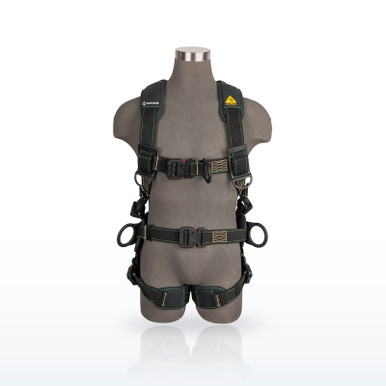
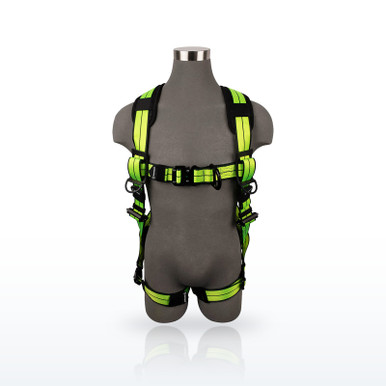
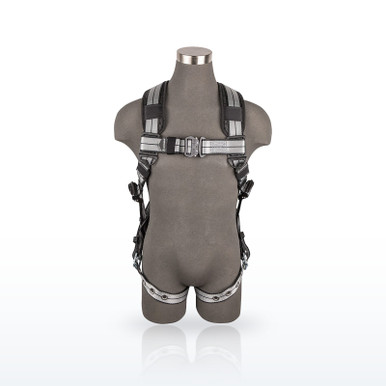
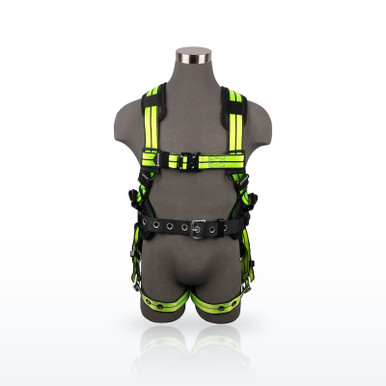
Guardrail systems, warning line stanchions and safety nets are quoted on request: call (925) 215-7337.
Questions people ask
At what height does OSHA require fall protection on a roof?
6 feet above a lower level, for both low-slope and steep roofs in construction (1926.501(b)(10) and (b)(11)).
What pitch is a low-slope roof?
4 in 12 or less. Anything steeper than 4 in 12 is a steep roof (1926.500(b)).
Can a warning line be used on a steep roof?
No. Warning lines and safety monitors are low-slope options only. A steep roof needs guardrails with toeboards, safety nets or a personal fall arrest system (1926.501(b)(11)).
How far from the edge does a warning line go?
At least 6 feet, or 10 feet on the sides perpendicular to the travel of mechanical equipment when equipment is in use (1926.502(f)(1)).
When can a safety monitor be used by itself?
Only on a low-slope roof 50 feet or less in width. Wider roofs need the monitor paired with a warning line (1926.501(b)(10) note).
Does a safety monitor need to be a competent person?
Yes. The employer designates a competent person, who stays on the same surface, in sight and within talking distance, with no other duties that distract from monitoring (1926.502(h)(1)).
Can I use a body belt on a roof?
Not for fall arrest. Body belts have been unacceptable as part of a personal fall arrest system since January 1, 1998. They may be used in a positioning device system (1926.502(d) introductory text and (e)).
Does the 6-foot rule apply to residential roofing?
Yes. Residential construction is covered at 6 feet by 1926.501(b)(13), and a fall protection plan is allowed only where the employer can demonstrate that guardrails, nets or fall arrest are infeasible or create a greater hazard.
Standards and ratings on this page are as published in the documents named and by the manufacturers named. The employer’s hazard assessment and written program decide what applies at a given workplace. Verify a rating on the product and its spec sheet before use.