
Bayshore Safety & Industrial Supplies Guide
What must an emergency action plan include? The six elements of OSHA 1910.38, the 5 components and 7 requirements people ask about, who needs a written plan, the four emergency action steps, evacuation, alarms, training and the first aid it names
OSHA 1910.38 lists six minimum elements of an emergency action plan: procedures for reporting a fire or other emergency; procedures for emergency evacuation, including the type of evacuation and exit route assignments; procedures for employees who remain to operate critical plant operations before they evacuate; procedures to account for all employees after evacuation; procedures for employees performing rescue or medical duties; and the name or job title of every employee who may be contacted for more information. An employer must have the plan whenever an OSHA standard in Part 1910 requires one; it must be written, kept in the workplace and available to employees, except that an employer with 10 or fewer employees may communicate it orally. The rule also requires an employee alarm system with a distinctive signal for each purpose, designated and trained employees to assist in evacuation, and a review of the plan with each employee when it is made, when their duties change and when the plan changes. The "5 components" and "7 requirements" lists on the web are these six elements counted differently, usually with the alarm and the training added.
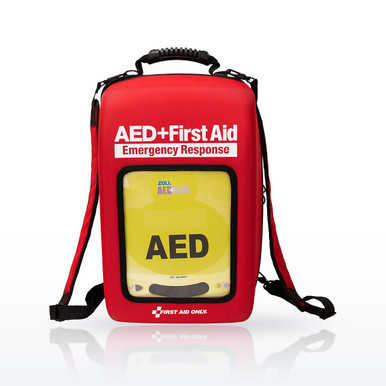 First Aid Only 91744 CPR Kit, Class B, 236 PiecesFirst Aid Only prints a Class B AED and first aid emergency response bag with eight treatment packs, wall mountable and portable, that holds any AED
Why the count keeps changing. People search for the 5 components, the 7 requirements, the 4 steps and the 6 elements of an emergency plan and get a different number from every source, because the rule has six minimum elements and the sources add the alarm system, the training, the review, or a headcount of their own. This page prints the six as 1910.38 states them, says who must have a written plan and who may give it orally, names what the plan’s "rescue or medical duties" line means for the first aid, bleeding control, AED, eyewash and spill equipment on the wall, and answers the evacuation, Cal/OSHA and cardiac-emergency-plan questions with the rule and OSHA’s first aid guide. It is a workplace rule page; a household emergency plan is the ready.gov list on the 72-hour kit guide linked below.
The six minimum elements of an emergency action plan, 29 CFR 1910.38(c)
| Element | What the rule says | What it means on the floor |
|---|---|---|
| (c)(1) Reporting | Procedures for reporting a fire or other emergency | Who calls 911, who pulls the alarm, the internal number, what to say |
| (c)(2) Evacuation | Procedures for emergency evacuation, including type of evacuation and exit route assignments | Full or partial evacuation or shelter in place, which exit each area uses, the posted map |
| (c)(3) Critical operations | Procedures to be followed by employees who remain to operate critical plant operations before they evacuate | Who shuts down which process, and when they leave |
| (c)(4) Accounting for employees | Procedures to account for all employees after evacuation | The assembly point and the headcount |
| (c)(5) Rescue and medical duties | Procedures to be followed by employees performing rescue or medical duties | The first aiders, the first aid, bleeding control and AED equipment they use, and who may not attempt a rescue |
| (c)(6) Contact | The name or job title of every employee who may be contacted by employees who need more information about the plan or an explanation of their duties | The plan owner, by title |
| (d) Alarm | An employee alarm system with a distinctive signal for each purpose, per 1910.165 | The horn, the strobe, the announcement; different for fire and for shelter in place |
| (e) Training | Designate and train employees to assist in a safe and orderly evacuation | Floor wardens and their training |
| (f) Review | Review the plan with each employee when it is developed or they are first assigned, when their responsibilities change, and when the plan changes | Onboarding, reassignment, every revision |
Source: 29 CFR 1910.38 Emergency action plans (eCFR)
The questions, one by one
What are the 5 components of an emergency plan, and the 7 requirements?
The six elements of 1910.38(c) are the components; the five-component lists usually merge critical operations into evacuation, and the seven-requirement lists add the alarm system (1910.38(d)) and either the training (e) or the written-plan requirement (b). Any count is right if it covers reporting, evacuation and exit routes, critical operations, accounting for everyone, rescue and medical duties, a contact, an alarm, training and review. OSHA’s rule is the one that is enforced.
Are emergency action plans required, and who needs a written one?
1910.38(a): an employer must have an emergency action plan "whenever an OSHA standard in this part requires one". The standards that require one include the fire extinguisher rule (1910.157, where extinguishers are provided but employees are not expected to use them, or where the employer uses the plan in place of extinguishers), fixed extinguishing systems, process safety management, hazardous waste operations, grain handling and others; most workplaces with an alarm and extinguishers end up covered. 1910.38(b): the plan must be in writing, kept in the workplace and available to employees for review, except that an employer with 10 or fewer employees may communicate the plan orally.
What are the four basic emergency action steps, in order, and the 4 steps of an emergency response plan?
The four steps that training programs teach map onto the rule: recognize and report (alarm, 911), evacuate or shelter (the exit routes and assembly point), account for everyone, and respond with the trained people and equipment (first aid, bleeding control, AED, extinguisher) while waiting for the fire department or EMS. The Red Cross three (check, call, care) are the medical version of the same order, on the first aid basics guide linked below.
What are the evacuation procedures a plan must include?
1910.38(c)(2) asks for the type of evacuation (full, partial, phased, or shelter in place) and exit route assignments; 1910.36 and 1910.37 set what an exit route is and how it is marked, lit and kept clear; the posted map with "you are here" and the assembly point is how most employers meet it. Employees who need help evacuating are assigned a buddy and the plan says so; OSHA’s evacuation guidance and the Americans with Disabilities Act are the sources for that part, and we do not reproduce them here.
What is the main purpose of an action plan, and why are they important?
To get everyone out, or to a safe place, and accounted for, without anyone staying behind to do something they are not trained or equipped for. The rule exists because in a fire or a release the losses are people who did not know the exit, were not counted, or tried a rescue. The "rescue or medical duties" element is the one that touches this site: it is where the plan names the first aiders and the equipment OSHA 3317 says to keep readily available.
What first aid supplies does the plan point to?
The plan’s medical-duties procedures name the first aiders 1910.151(b) requires where no clinic is near, and the supplies they use: the first aid kit or cabinet (Z308.1 Class A or B), the bleeding control kit where OSHA’s 2019 letter expects Class B items and tourniquets, the AED and its cabinet if the site has one (OSHA 3317 says every worksite should consider one), the eyewash where corrosives are used (1910.151(c)), the BBP spill kit for cleanup under 1910.1030, and a response bag that carries the packs to the scene. The band lists First Aid Only’s versions of each.
What is a cardiac emergency response plan?
A plan for sudden cardiac arrest in a building: who calls 911, where the AEDs are, who is trained in CPR and AED use, how the AED is maintained and who is notified after use. OSHA 3317 lists the elements of a worksite AED program (physician oversight, state and local rules, EMS coordination, quality assurance, periodic review); several states require such a plan in schools and gyms. It is the medical-duties element of the emergency action plan written out for one emergency.
What are the three C’s in an emergency action plan?
A training mnemonic: communicate (report and alarm), coordinate (who does what, where everyone goes) and care (rescue and medical duties). The rule’s own words are the six elements; the three C’s are a way to remember them.
What are the requirements for an emergency action plan under California OSHA?
Cal/OSHA Title 8 section 3220 carries the same elements as the federal rule (emergency escape procedures and routes, critical operations, accounting for employees, rescue and medical duties, reporting, and contacts), with the same written-plan rule and a 10-employee oral exception, and section 3221 is the fire prevention plan. We state that from the Cal/OSHA sections as published; a California employer reads them directly.
What is a site-specific emergency plan, and how do I plan for workplace emergencies and evacuations?
A site-specific plan is 1910.38 written for one building or jobsite: its hazards, its exits, its assembly point, its first aiders and equipment, its alarm. OSHA’s eTool and its evacuation planning materials walk through it; the short version is to write the six elements, post the map, install and test the alarm, put the first aid, bleeding control, AED and eyewash where the plan says, train the wardens and the first aiders, and drill. A jobsite under 1926 writes the same plan with 1926.35 as the rule.
Does OSHA require an emergency response plan, and how is that different?
An emergency response plan is the HAZWOPER term (1910.120) for the plan a site needs when its own employees respond to a hazardous substance release; it has more elements (pre-emergency planning, roles, PPE, decontamination, evacuation routes, medical treatment). An employer who evacuates everyone and calls the fire department needs only the 1910.38 emergency action plan and says so in it.
In plain words
- Six elements: report, evacuate (with exit routes), critical operations, headcount, rescue and medical duties, a contact.
- Plus an alarm with a distinctive signal, trained evacuation helpers, and a review with each employee at hire, on reassignment and on every change.
- Required whenever another OSHA standard requires one; written and kept at work, except oral for 10 or fewer employees.
- The 5, 7 and 4-step lists are the six elements counted with the alarm and training added.
- Rescue and medical duties means the first aiders and the equipment: first aid cabinet, bleeding control, AED, eyewash, spill kit.
- A household plan is ready.gov; an emergency response plan is the HAZWOPER term.
Questions people ask
What must an emergency action plan include?
The six elements of 1910.38(c): reporting procedures, evacuation and exit routes, critical operations, accounting for employees, rescue and medical duties, and a contact name or title.
What are the 5 components of an emergency plan?
The six elements with critical operations folded into evacuation, or with the alarm counted; the rule lists six.
What are the 7 requirements of an emergency plan?
The six elements plus the alarm system, or the training; the rule also requires a written plan and a review with each employee.
Are emergency action plans required?
Whenever an OSHA standard in Part 1910 requires one; extinguisher, fixed system, process safety and other rules do.
Does the plan have to be written?
Yes, kept in the workplace and available to employees; an employer with 10 or fewer employees may give it orally.
What are the four basic emergency action steps?
Recognize and report, evacuate or shelter, account for everyone, respond with trained people and equipment.
What are the evacuation procedures?
The type of evacuation and the exit route assignments, posted; exit routes meet 1910.36 and 1910.37.
What is the main purpose of an emergency plan?
To get everyone out or to safety and accounted for, with no untrained rescue attempts.
What first aid does the plan point to?
The first aiders and their first aid cabinet, bleeding control kit, AED, eyewash and BBP spill kit.
What is a cardiac emergency response plan?
The medical-duties element written for sudden cardiac arrest: 911, AED locations, trained responders, AED maintenance.
What is the difference between an emergency action plan and an emergency response plan?
The action plan is 1910.38 (evacuate and call for help); the response plan is the HAZWOPER plan for employees who respond to a release.
What does California require?
Cal/OSHA Title 8 section 3220 carries the same elements and the same written-plan rule.
The ratings, test results and standards shown here are the manufacturers' published values, reproduced as published. Nothing on this page is a recommendation by Bayshore Safety that any product is suitable for a particular task, hazard or workplace. Selecting safety products and protective equipment is the responsibility of the end user and the employer, based on their own hazard assessment and the regulations that apply to their work. Confirm every value on the manufacturer's own documentation before use.
© 2026 Bayshore Safety & Industrial Supplies, Inc. All rights reserved. This guide may not be copied or republished without written permission.