
Who owns BW Technologies, Honeywell Analytics and MSA Safety, and what does each company make? BW Technologies by Honeywell, the Honeywell gas detection brands, MSA since 1914, what MSA stands for, where MSA is located, and the lines each publishes
BW Technologies is a Honeywell brand: Honeywell’s own pages present the portable detectors as "BW Technologies by Honeywell" and its gas detection page says "Honeywell, RAE and BW Technologies offer a comprehensive portfolio of portable gas detectors"; Honeywell Analytics is the Honeywell gas detection name that the MicroDock and MAX XT II documents use. MSA Safety Incorporated is an independent public company: MSA’s Company Overview page states it was "established in 1914", began as Mine Safety Appliances Company, and makes self-contained breathing apparatus, fixed gas and flame detection, portable gas detection instruments, industrial head protection, fire and rescue helmets and fall protection. We stock both lines and sell nationwide.
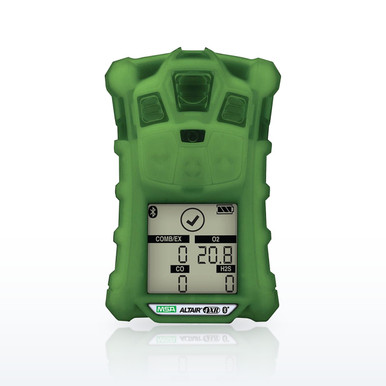 MSA 10178558 ALTAIR 4XR 4-Gas Monitor, LEL/O2/H2S/CO, Glow-in-the-Dark CaseMSA lists the ALTAIR 4XR at a 20-hour run time, IP68, a 4-year warranty and Class I Div 1 Groups A, B, C, D
Why the ownership question comes up. Gas detectors are bought by model name, and the names outlast the companies: a "BW Clip" or a "GasAlertMicroClip" is still asked for by the name it had before Honeywell’s brand went on the box, and "MSA" is read by some buyers as a type of hard hat rather than a company. This page answers the ownership and what-do-they-make questions from the manufacturers’ own pages and catalogs, which is the only place we take company facts from; where a manufacturer does not publish something (its executives, its revenue, its factory locations), this page says so and does not guess. The two lines are in the band with the model each item belongs to.
The companies, question by question
Quotations are from the MSA Company Overview and Our History pages, the MSA catalog and Honeywell’s portable gas detection pages, all fetched Nov 10 2026.
In plain words
- BW Technologies is a Honeywell brand ("BW Technologies by Honeywell"); the detectors are sold today as Honeywell BW.
- Honeywell Analytics is the Honeywell gas detection business name used in the same manuals; RAE Systems is Honeywell’s PID and area-monitor name.
- MSA Safety Incorporated was established in 1914 as Mine Safety Appliances Company, is public (listed in 2000), and is headquartered in Cranberry Township, Pennsylvania.
- MSA makes SCBA, fixed and portable gas detection, industrial head protection, fire and rescue helmets (Cairns), Globe turnout gear, fall protection, Latchways systems and XTIRPA confined-space equipment, by its own list.
- ALTAIR is MSA’s portable gas detector family; V-Gard is its hard hat line; XCell is its sensor platform; GALAXY GX2 is its test stand.
- We stock both lines at the prices on the rows and sell nationwide; the model pages carry the manufacturer’s documents.
Questions people ask
Who owns BW Technologies?
Honeywell International; the detectors are branded "BW Technologies by Honeywell" and sold as Honeywell BW on Honeywell’s own pages.
Is Honeywell BW the same as Honeywell Analytics?
The same detectors: Honeywell Analytics is the gas detection business name used in the manuals, and Honeywell BW is the brand on the product pages.
What is MSA Safety?
An independent public safety-equipment manufacturer established in 1914 as Mine Safety Appliances Company, now "MSA: The Safety Company", making SCBA, gas detection, head protection, fire helmets and fall protection.
What does MSA Safety stand for?
Mine Safety Appliances, the company’s name from 1914; it now uses MSA Safety and calls itself The Safety Company.
Who owns MSA?
Its public shareholders; MSA Safety is not a subsidiary of another manufacturer, and its history page marks its stock-exchange listing in 2000.
Where is MSA Safety headquartered?
Cranberry Township, Pennsylvania (1000 Cranberry Woods Drive, per the V-Gard technical sheet), with stock shipping from Pittsburgh.
What does MSA Safety make?
By MSA’s own list: SCBA, fixed gas and flame detection, portable gas detectors (ALTAIR), industrial head protection (V-Gard), fire and rescue helmets (Cairns), and fall protection.
Does MSA make Cairns helmets?
Yes; MSA Cairns fire helmets have their own section in the MSA catalog, alongside Globe turnout gear.
What is an MSA monitor?
A portable gas detector in MSA’s ALTAIR family: ALTAIR, 2X, 4XR, 5X, io 4 or io 6.
What is the MSA helpline number?
MSA prints its US customer service line as 1-800-MSA-2222 on its literature; our own line is (925) 215-7337 for orders and service.
What are Honeywell’s main gas detection products?
Honeywell BW single- and multi-gas detectors (Clip, Solo, MicroClip, MAX XT II, Clip4, Ultra, Flex, Icon), RAE Systems PIDs and area monitors, IntelliDoX docks and colorimetric tubes, as Honeywell’s portables page lists them.
Is Uvex part of Honeywell?
Honeywell sells safety eyewear under the Uvex name in North America, as its PPE pages show; the German Uvex company is separate. We do not stock it.
Who is the CEO of MSA Safety?
MSA publishes its leadership on its investor pages, not on the product pages this site draws from, so we do not list executives here.
Who makes the better detector, BW or MSA?
This site does not rank manufacturers; both lines publish their figures, which the guides linked below put side by side.
Related guides
Who owns RKI Instruments?And where RKI is locatedSingle-gas vs multi-gas detectorsWhich does the job need?What is a gas monitor?Detector vs monitor vs meterHow to bump test, zero and turn off a Honeywell BW ClipActivation, hibernation and the end-of-life countdownHow to calibrate, bump test and reset an MSA ALTAIR 4XRButtons, zero and span, the LEDs and the 4X differencesMSA V-Gard questions answeredService life, CSA, Fas-Trac III, Skullgard and what fitsThe ratings, test results and standards shown here are the manufacturers' published values, reproduced as published. Nothing on this page is a recommendation by Bayshore Safety that any product is suitable for a particular task, hazard or workplace. Selecting safety products and protective equipment is the responsibility of the end user and the employer, based on their own hazard assessment and the regulations that apply to their work. Confirm every value on the manufacturer's own documentation before use.