DBI-SALA®
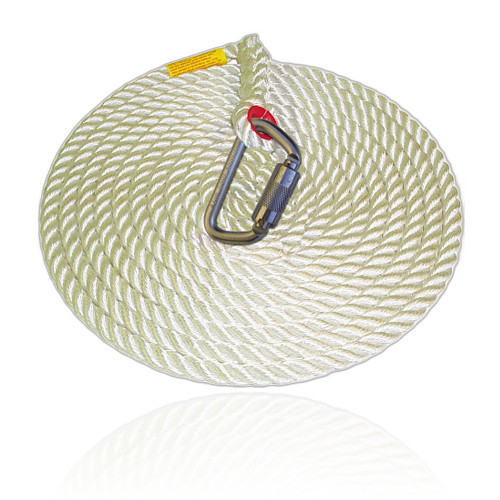
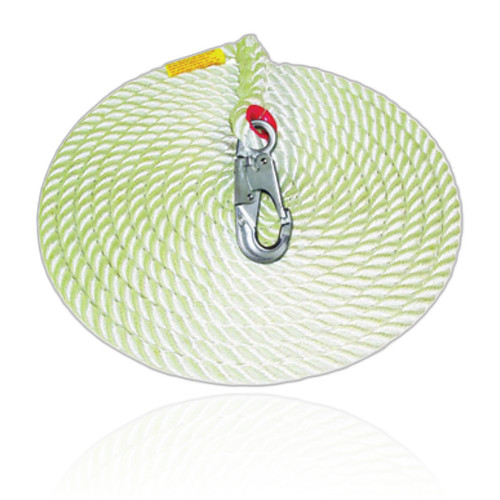
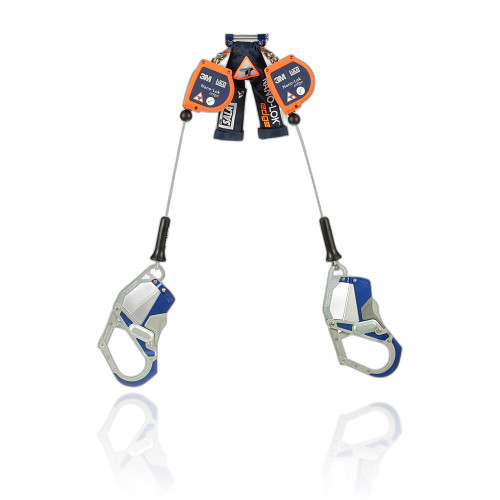
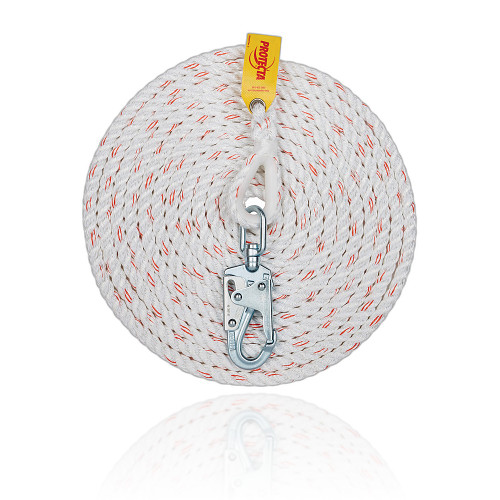
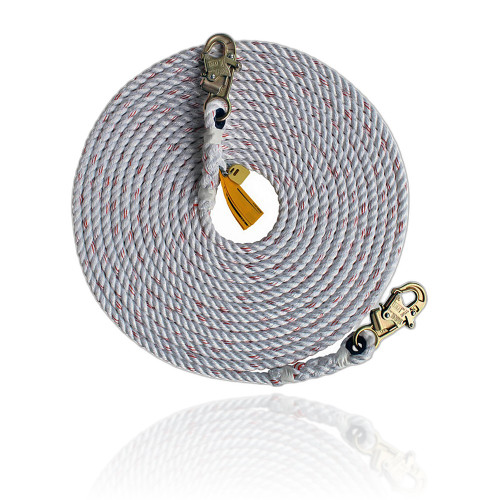
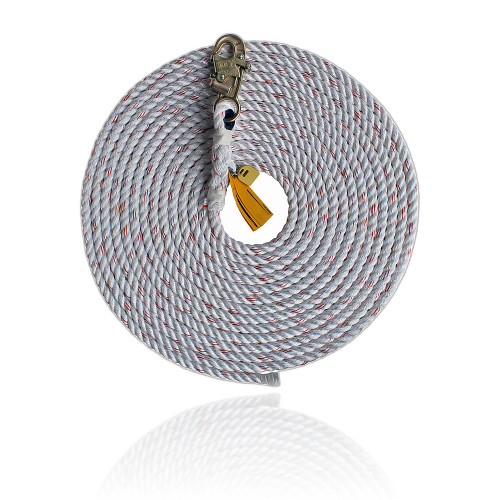
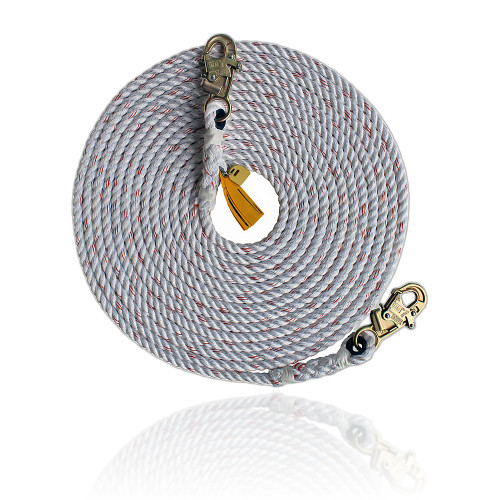
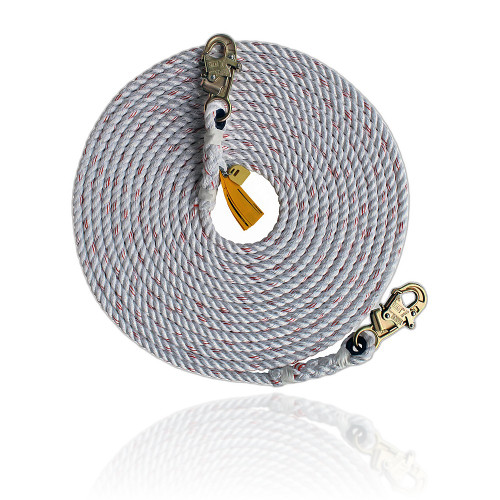
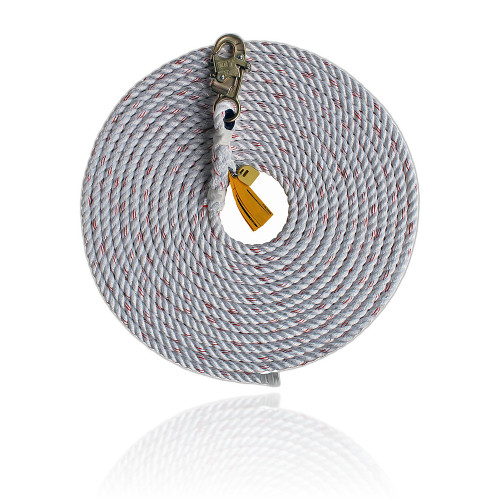
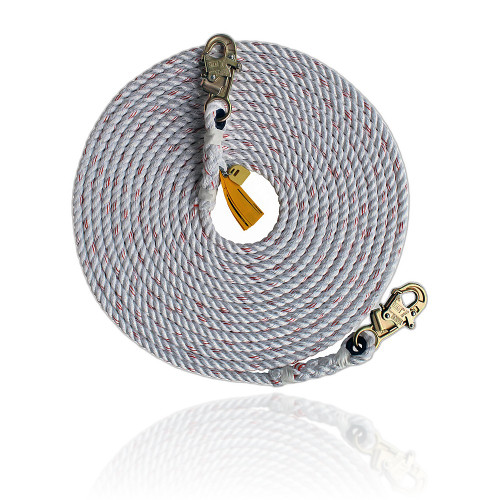
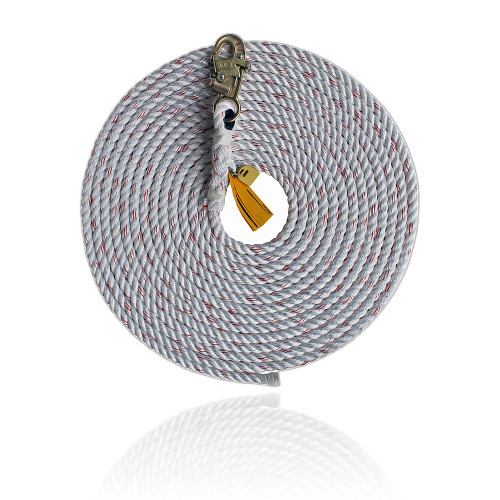
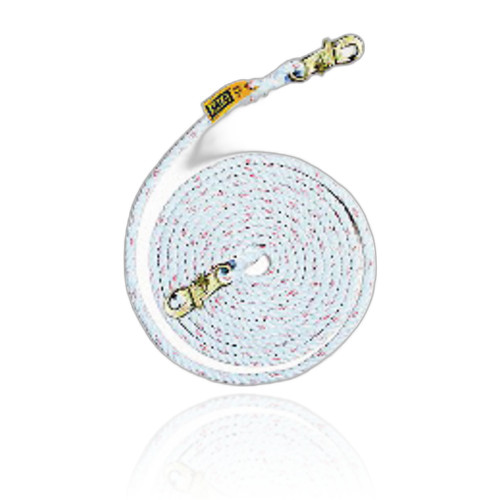
3M DBI-SALA AC230A1 Vertical Lifeline, 100' Nylon, Snap Hook, Temporary, 310 lb
Item # AC230A1
$308.00

Rope grabs, cable sleeves, lifeline rope, counterweights, top and bottom brackets for Safewaze and Miller vertical lifeline systems. Match the grab to the rope diameter listed on the item.
112 products from Safewaze, FallTech, Miller. Sold individually (42).
Brands in this category: Safewaze (87) · FallTech (42) · Miller (5)
ANSI/ISEA Z359 covers harnesses, lanyards, self-retracting devices and anchorage connectors. A Z359.11 harness is rated for a user weight (clothing and tools included) of 130 to 310 lb; OSHA 1926.502 sets maximum arresting force at 1,800 lb with a full-body harness and a free fall of no more than 6 ft. Energy-absorbing lanyards and SRLs list the maximum arrest force and arrest distance from the standard's test; the product label carries the standard, capacity and date of manufacture.
OSHA 1926.502 Fall Protection Systems Criteria and Practices: what it requires and the equipment it names: 29 CFR 1926.502 sets the criteria for every system 1926.501 allows. Guardrails: top rail 42 inches plus or minus 3 that withstands 200 pounds, midrail 150 pounds. Personal fall arrest: connectors of forged or formed steel, D-rings and snaphooks of 5,000 pounds tensile proof tested to 3,600, locking snaphooks, lanyards and vertical lifelines of 5,000 pounds, SRLs limiting free fall to 2 feet rated 3,000 pounds, anchorages of 5,000 pounds per employee or engineered to a safety factor of two, arresting force limited to 1,800 pounds, free fall limited to 6 feet, deceleration distance 3.5 feet, dorsal attachment, inspection before each use, and no body belts since 1998. OSHA 1926.451 Scaffolds, General Requirements: what it requires and the equipment it names: 29 CFR 1926.451(g) requires each employee on a scaffold more than 10 feet above a lower level to be protected from falling: by a personal fall arrest system on boatswains' chairs, catenary, float, needle beam and ladder jack scaffolds; by both a personal fall arrest system and a guardrail on single-point and two-point adjustable suspension scaffolds and rope-supported self-contained adjustable scaffolds; by a guardrail or personal fall arrest system on all other scaffolds (including supported frame scaffolds and scissor lifts); and by a competent person's determination of what is feasible for erectors and dismantlers. Every rule page lists the equipment the rule names with the products we carry for it; the safety rules index has them all.
Can lifelines be vertical and horizontal? Yes, and the rules differ. A vertical lifeline hangs from one anchorage and serves one worker (1926.502(d)(10)), with a rope grab as the connector; a horizontal lifeline stretches between two anchorages for one or more workers and must be designed, installed and used under a qualified person as part of a complete system with a safety factor of at least two (1926.502(d)(8)). Both have a 5,000 lb minimum breaking strength (d)(9). More in the guide: What is a horizontal lifeline, and what does 1926.502(d)(8) require? Temporary cable, rope and retractable systems, by users and span
When must fall protection be worn? Where the system chosen for the situation is a personal fall arrest system, the harness is worn and connected whenever the employee is exposed at the trigger height; where guardrails or nets protect the edge, nothing is worn. Aerial and boom lifts require a harness and lanyard attached to the boom or basket at any height when working from the platform (1926.453(b)(2)(v)). More in the guide: OSHA fall protection requirements explained: 1926 Subpart M, section by section
What are the OSHA inspection requirements for personal fall protection harnesses? Inspect prior to each use for wear, damage and other deterioration, and remove defective components from service (1926.502(d)(21)); in general industry, before initial use during each workshift (1910.140(c)(18)); and after any fall arrest, remove the system from service until a competent person inspects it and determines it is undamaged and suitable (1926.502(d)(19)). OSHA sets no written-record requirement for the pre-use check; the annual competent-person inspection and its record come from ANSI Z359.11 as the manufacturers reproduce it. More in the guide: How long is a safety harness good for? Service life and retirement
What are the OSHA requirements for horizontal lifelines? Design, installation and use under the supervision of a qualified person, as part of a complete personal fall arrest system that maintains a safety factor of at least two (1926.502(d)(8)); end anchorages that hold 5,000 lb per attached worker or are engineered (d)(15); lifeline material of 5,000 lb minimum breaking strength (d)(9); and, if it is used with a connector too small for the line, a locking snap hook or carabiner that cannot roll out (d)(6). Safewaze sells its systems complete and does not allow parts to be interchanged. More in the guide: What is a horizontal lifeline, and what does 1926.502(d)(8) require? Temporary cable, rope and retractable systems, by users and span
Ratings and specifications on this page are shown as published by the manufacturer or the named standard and describe performance in that standard's test. They are not a recommendation for any task. The employer's hazard assessment decides what protective equipment a job needs. Verify details against the manufacturer's current documentation before you buy.