
What do Draeger tubes measure? The gases, the ranges and what the number on the tube means
A Draeger tube measures the momentary concentration of one gas or vapor in air. The handbook lists short-term tubes for several hundred substances; we list 183 tubes covering 98 gases and substance groups, from acetaldehyde and ammonia to vinyl chloride and xylene, in ranges from parts per billion (benzene 0.25/a reads 0.25 ppm) to percent by volume (carbon dioxide 5%/a reads to 60 vol.-%). Each tube is calibrated to one substance and one measuring range at 20 °C and 1,013 hPa; the number in its name is the lowest value of that range and the letter is the version (handbook p. 114). A reading takes between 10 seconds and 15 minutes with a Draeger tube pump (p. 35). The tube gives one number at one place and one moment; it does not alarm or log.
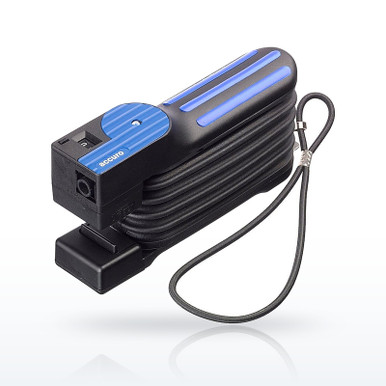 Draeger accuro detector tube hand pumpBellows pump, 100 mL (± 5 %) per stroke, 1 to 50 strokes and higher, no power supply (handbook p. 31)
Why one tube per gas and per range? The handbook explains that a Draeger tube is a glass tube with a reagent on a carrier that reacts with one substance, or one family of substances, and changes color; the scale printed on it is calibrated in batches against a Draeger pump for one measuring range (pp. 20–29, 114). Hydrogen sulfide alone therefore has twelve tubes, from 0.2/a (0.2 to 5 ppm) to 2%/a (2 to 40 vol.-%), because no single reagent layer can read both a workplace limit of a few ppm and a sour-gas stream of several percent. The gas page for each substance lists every range side by side with the OSHA PEL and the NIOSH REL and IDLH from the Pocket Guide, so the range and the limit sit on one screen.
What the handbook says a Draeger tube is calibrated to
All from section 6.1.1, Notes on the Data about Dräger-Tubes (pp. 114–117).
What the tube cannot tell you
The handbook is specific about the limits of a short-term tube:
- More than one gas at once. A tube is calibrated to one substance; if others are present, the cross-sensitivity entry says whether they add to, hide or do not affect the reading (handbook p. 116).
- A concentration outside its range. Below the first scale mark there is no reading; above the last mark the layer discolors completely, sometimes during the first stroke, which is why the handbook says to watch the tube throughout the measurement (p. 39).
- What happened before or after. The reading is the concentration in the air drawn through the tube during the strokes. A continuous monitor is the instrument for a worker inside the hazard (see the guide on tubes vs electronic monitors).
- The reading at a different pressure without correction. The volume drawn changes with ambient pressure; the handbook gives the correction factor 1,013 hPa divided by the actual pressure (p. 115).
Draeger tubes by gas family
13 items · prices liveA sample across the ranges, one tube per family; the gas pages list every tube. Ranges, strokes and times are as published in the handbook. Orders ship in 1–2 business days.
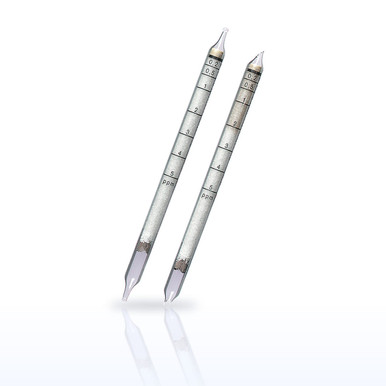
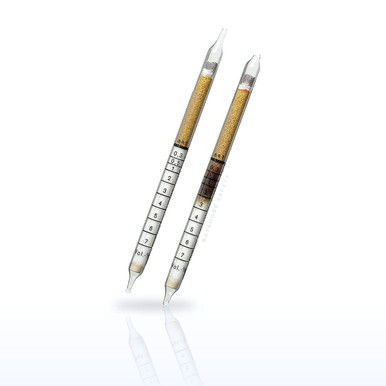
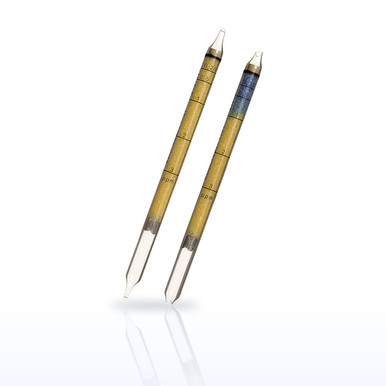
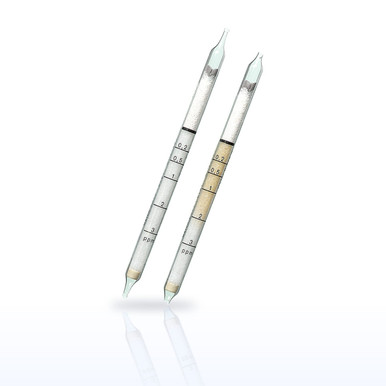
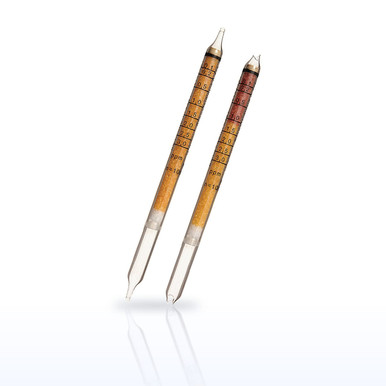
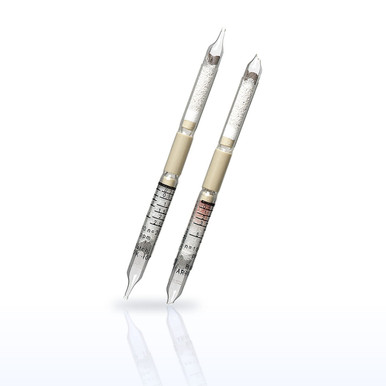
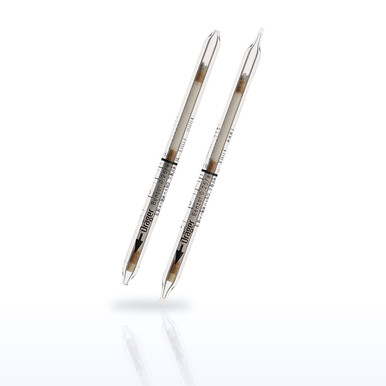
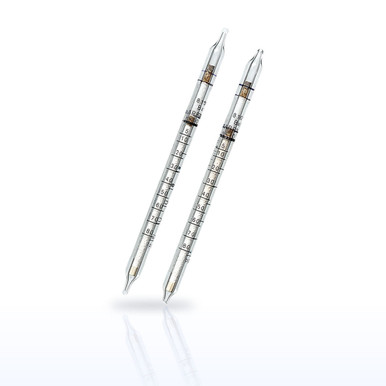
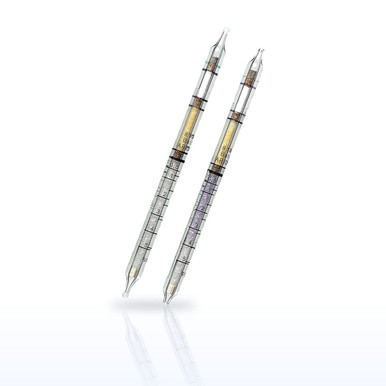
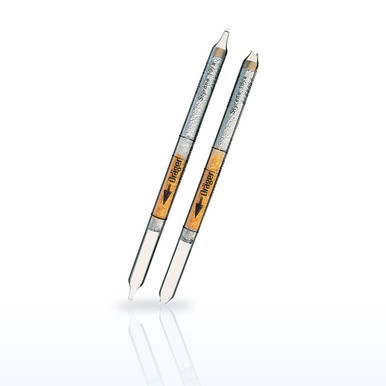
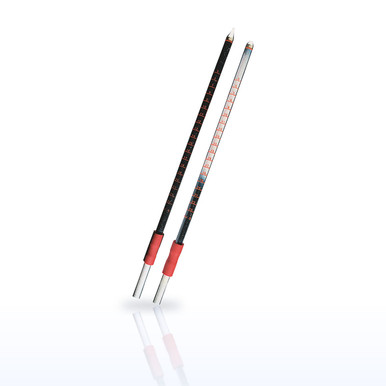
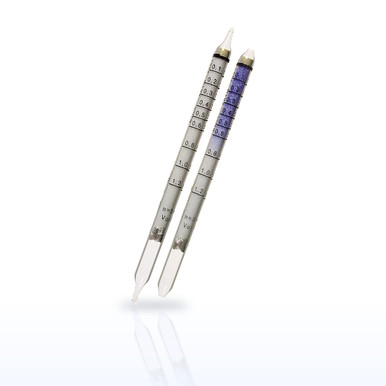
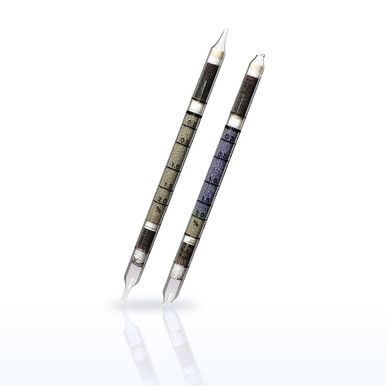
Every Draeger tube we list, with the handbook data, is on the Draeger tubes A–Z chart; each gas has its own page with the OSHA and NIOSH limits.
Questions people ask
What do Draeger tubes measure?
The momentary concentration of one gas or vapor in air, read as a color stain against the scale printed on the tube. We list 183 tubes for 98 gases and substance groups; the handbook lists several hundred substances.
What does the number in a tube name mean?
The lower end of the measuring range in the unit on the scale (ppm, mg/m³, mg/L or vol.-%): Ammonia 5/a starts at 5 ppm. The letter changes when Draeger improves the tube; D marks a direct-indicating diffusion tube (handbook p. 114).
Can one tube read several gases?
It reads the substance it is calibrated to. Others present may discolor it too; every tube’s handbook entry lists those cross-sensitivities, and some tubes, such as Polytest, are made to indicate a group of substances rather than one.
How accurate is a Draeger tube?
The handbook states a relative standard deviation per tube, typically ± 10 to 30 %, which for Draeger tubes relates to the whole specified measuring, temperature and humidity range (p. 86).
Is a Draeger tube a gas monitor?
No. It gives one spot reading with no alarm and no log. OSHA’s confined-space standard calls for a calibrated direct-reading instrument and continuous monitoring during entry; see the confined-space guide.
Related guides
What do Draeger tube names mean? 0.2/a, 5/b, 100/a-P, 20/a-D and the part numberTube names and codesHow many pump strokes does a Draeger tube take, and how long does a reading take?Strokes and measuring timeHow to read a Draeger tube: the stain, the scale and the three cases the handbook describesReading a tubeDraeger tubes by gas and range: all 183 tubes for 98 gases on one pageTubes by gas and rangeStandards and ratings on this page are as published in the documents named and by the manufacturers named. The employer’s hazard assessment and written program decide what applies at a given workplace. Verify a rating on the product and its spec sheet before use.