
Which Draeger tube range covers the OSHA PEL or the IDLH? Reading the limits next to the ranges
A Draeger tube only reads inside its measuring range, so the question for any gas is where the exposure limit sits relative to the ranges on offer. OSHA’s permissible exposure limits are in 29 CFR 1910.1000 Table Z (or a substance standard such as 1910.1048 for formaldehyde); NIOSH publishes its recommended exposure limits and the IDLH values in the Pocket Guide to Chemical Hazards. For hydrogen sulfide the OSHA PEL is a ceiling of 20 ppm and the IDLH is 100 ppm; the Draeger tubes run from 0.2 to 5 ppm (0.2/a) up to 2 to 40 vol.-% (2%/a), so a 5/b tube (5 to 60 ppm) spans both numbers and a 0.2/a does not reach the IDLH. Every gas page on this site prints the PEL, REL and IDLH from the Pocket Guide above the table of tubes and ranges, so the comparison is a matter of reading two lines.
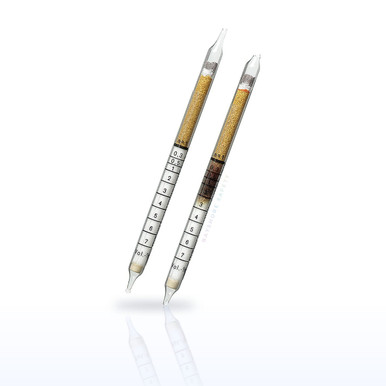
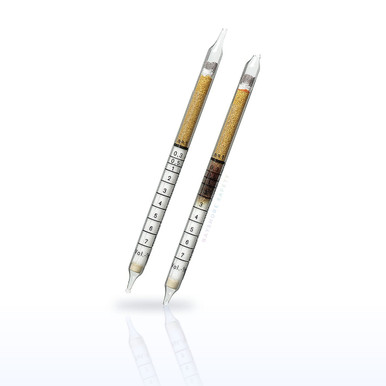
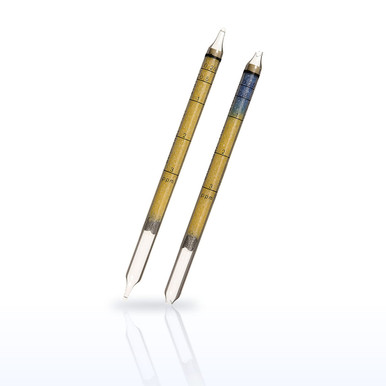
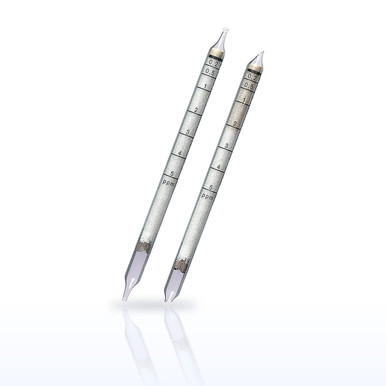 Draeger Hydrogen Sulfide 5/b Detector Tubes, Box of 10Hydrogen sulfide 5/b, 5 to 60 ppm: spans the OSHA ceiling of 20 ppm and the IDLH of 100 ppm is above its range
Why print the limits next to the tubes? Because the limit is what the reading is compared with, and the two are published in different places. The PEL is an 8-hour time-weighted average, a short-term limit or a ceiling; the NIOSH REL is often lower than the PEL; the IDLH is the concentration NIOSH defines as immediately dangerous to life or health. A short-term tube gives a momentary concentration, which is the kind of number a ceiling or an IDLH is written in; comparing a single tube reading with an 8-hour TWA is a different exercise, and the handbook’s long-term measurement systems (section 2.12) and diffusion tubes exist for that. The gas pages give the limits with their qualifiers (TWA, ST, C, Ca) exactly as the Pocket Guide prints them.
The limits, as the Pocket Guide lists them for six gases
PEL = OSHA permissible exposure limit; REL = NIOSH recommended exposure limit; IDLH = immediately dangerous to life or health. TWA 8-hour average, ST 15-minute, C ceiling, Ca potential carcinogen.
What a tube reading can and cannot be compared with
The handbook and the Pocket Guide each define what their numbers are:
- A ceiling (C) or a peak limit is a momentary value; a short-term tube reading is a momentary value for the strokes drawn (handbook p. 35).
- An 8-hour TWA is an average over the shift. One tube reading is one point; the handbook’s long-term systems and direct-indicating diffusion tubes (section 2.12, 5.3) measure over hours.
- The IDLH is a NIOSH value used in respirator selection; the gas pages list it as the Pocket Guide gives it, including Ca where NIOSH marks a potential carcinogen.
- The tube’s standard deviation (± 10 to 30 % for most tubes) applies to the reading; the handbook states it per tube (p. 115).
- The range on the tube is valid only with the stated strokes on a Draeger pump, at 20 °C and 1,013 hPa, with the pressure correction applied elsewhere (pp. 114–115).
Low-range and high-range tubes for the same gas
9 items · prices liveRanges from the handbook entries; the limits on each gas page. Orders ship in 1–2 business days.
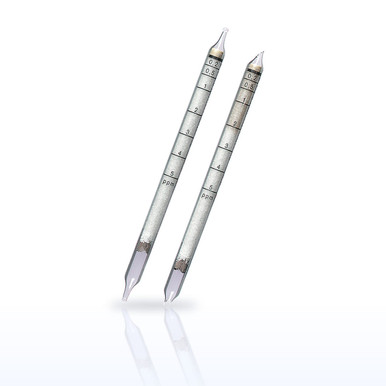
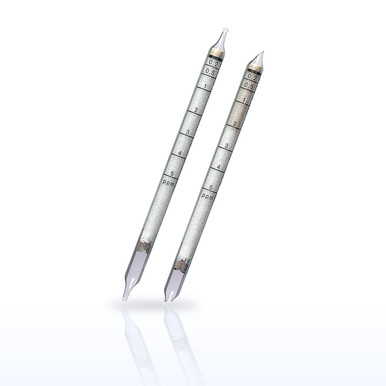
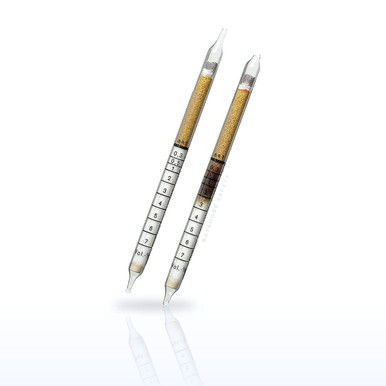
Every Draeger tube we list, with the handbook data, is on the Draeger tubes A–Z chart; each gas has its own page with the OSHA and NIOSH limits.
Questions people ask
Where do I find the OSHA PEL for a gas?
29 CFR 1910.1000 Table Z, or the substance’s own standard; the NIOSH Pocket Guide lists the PEL next to the REL and IDLH, and each of our gas pages prints those three lines with the Pocket Guide entry linked.
Does a Draeger tube read the PEL?
It reads any concentration inside its measuring range. Whether the PEL falls inside that range is read off the gas page, where the limit and every tube’s range are listed together.
What is the IDLH?
NIOSH’s immediately-dangerous-to-life-or-health value for the substance, as listed in the Pocket Guide; for hydrogen sulfide it is 100 ppm.
Can a short-term tube measure an 8-hour TWA?
It gives a momentary concentration. The handbook describes diffusion tubes and long-term measurement systems for averages over hours (sections 2.12 and 5.3).
Are the limits on this site current?
They are copied from the NIOSH Pocket Guide online edition on the date in the byline and linked to the entry so the current value can be checked.
Related guides
Draeger tubes by gas and range: all 183 tubes for 98 gases on one pageTubes by gas and rangeDraeger tubes and confined space entry: what the OSHA standard asks for and where a tube fitsConfined spaceWhat do Draeger tubes measure? The gases, the ranges and what the number on the tube meansWhat Draeger tubes measureDraeger MicroTubes vs short-term tubes: the ppb system and when the handbook describes eachMicroTubesStandards and ratings on this page are as published in the documents named and by the manufacturers named. The employer’s hazard assessment and written program decide what applies at a given workplace. Verify a rating on the product and its spec sheet before use.