
What is a Class C fire extinguisher, what is it used for, and which type should you use on energized electrical equipment?
Class C is not a kind of fire so much as a condition: a Class A or Class B fire that involves energized electrical equipment. A Class C rating on an extinguisher means the agent has been tested as non-conductive, so the operator can use it on a live circuit without the discharge carrying current back. NFPA 10 (2026) 6.4.1 requires Class C-rated extinguishers where energized electrical equipment can be encountered, and 6.4.3 sizes and places them on the Class A or B hazard underneath, because that is what is actually burning. Multipurpose ABC dry chemical, carbon dioxide, water mist and halocarbon clean agents all carry C ratings. The choice between them is made by what the equipment can tolerate afterward: 5.5.4.6 directs that delicate electronic equipment be protected by Class C-listed types and not by dry chemical, which leaves residue in everything it reaches. Once the power is cut, the fire is simply Class A or B and is fought as one.
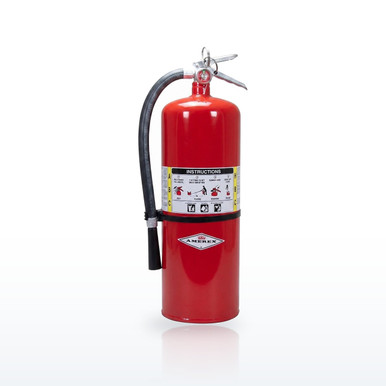
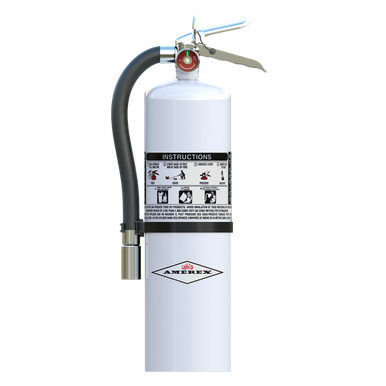 Amerex 28084 Model 551 Halotron BrX Clean Agent Fire Extinguisher, 12.5 lbClass C listed clean agent with a 2-A rating
Why does Class C have no number? Class A and B ratings carry numbers (2-A, 10-B) because UL 711 tests how much fire of that class the unit puts out. Class C is a pass or fail on conductivity: either the agent stream conducts or it does not. That is why a label reads 2A:10B:C, never 10C.
Which Class C type for which equipment
What the equipment can take after the fire decides it.
Class C-rated agents compared
| Agent | Typical ratings | Residue | NFPA 10 (2026) service | Fit for delicate electronics (5.5.4.6) |
|---|---|---|---|---|
| ABC multipurpose dry chemical | 2A:10B:C to 10A:120B:C | Yes, corrosive powder | 6-year internal (mild steel), 12-year hydro | No (5.5.4.6.2) |
| Halotron BrX (halocarbon) | 2A:10B:C, 5B:C, 2B:C | None | Nonrechargeable Amerex units: none; 12-year life (7.3.6.3) | Yes |
| Halotron I (halocarbon) | 2A:10B:C, 1A:10B:C, 5B:C, 2B:C, 1B:C | None | 6-year internal, 12-year hydro | Yes |
| Carbon dioxide | 10-B:C | None | 5-year internal, 5-year hydro | Yes |
| Water mist | 2-A:C | Water | 5-year hydro | Yes (listed C) |
Source: NFPA 10 (2026) 5.5.4.6, Tables 7.3.3.1 and 8.3.1, 7.3.6.3; ratings from each manufacturer's product data.
Class C-rated extinguishers
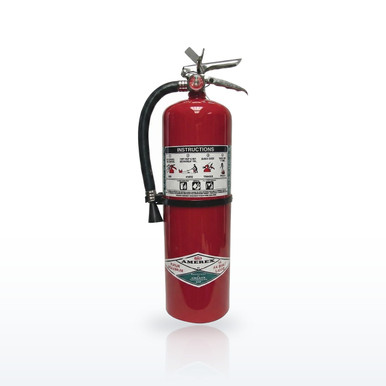
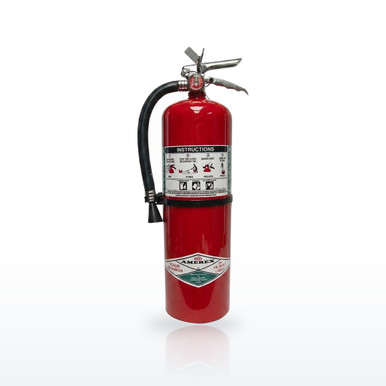
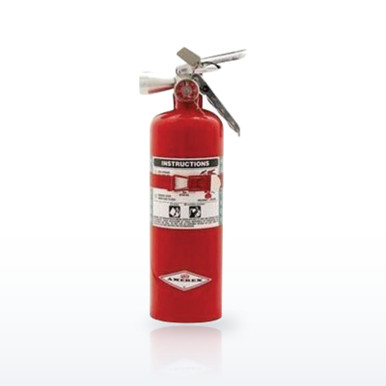
14 items · prices liveClean agents first, then ABC. Ratings as published by the manufacturer. Prices are live.
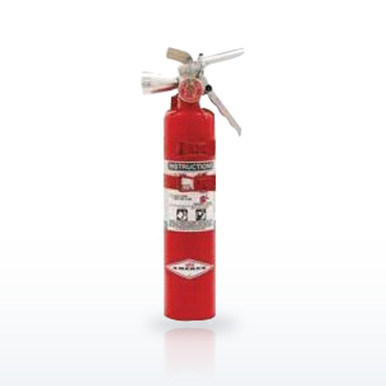
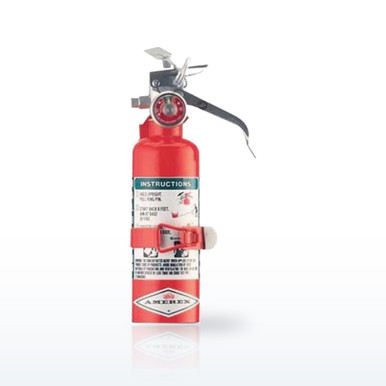
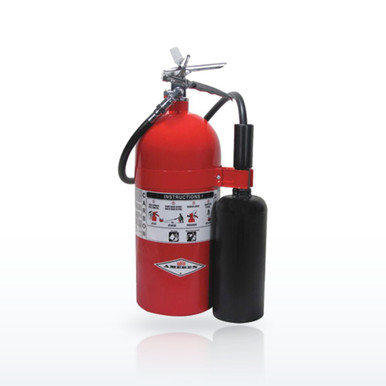

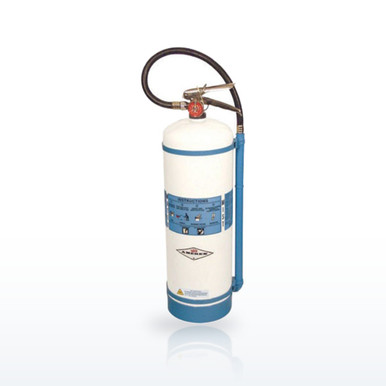
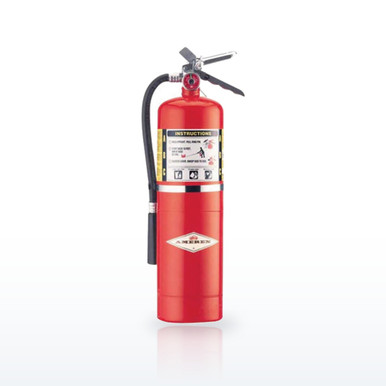
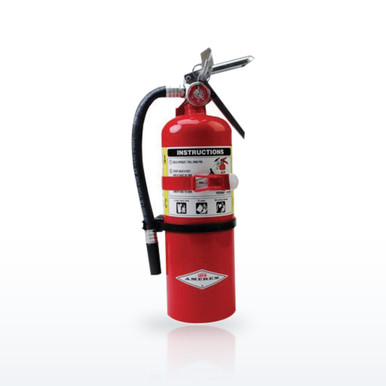
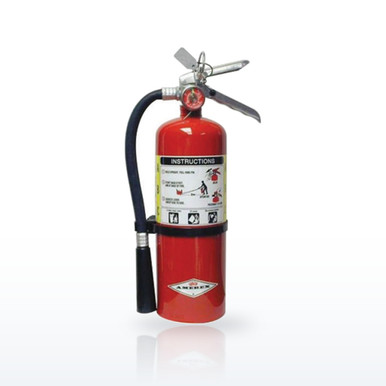
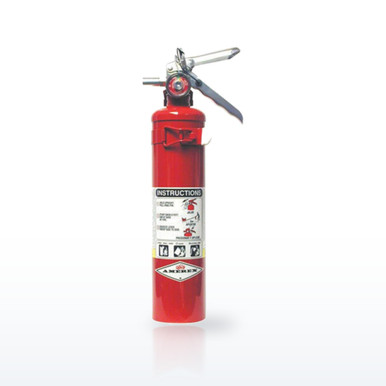
Cabinets, brackets and signs are in Fire protection accessories.
Questions people ask
What does Class C mean on a fire extinguisher?
The agent is tested non-conductive and the unit is listed for fires involving energized electrical equipment. There is no number because it is a pass/fail test (UL 711).
What is a Class C fire?
A Class A or Class B fire that involves energized electrical equipment. Cut the power and it becomes an A or B fire.
Can I use an ABC extinguisher on an electrical fire?
ABC units are Class C rated. NFPA 10 (2026) 5.5.4.6.2 says dry chemical is not installed to protect delicate electronic equipment, because of the residue.
What extinguisher is best for a server room?
A Class C-listed clean agent: halocarbon, carbon dioxide or water mist (5.5.4.6.1). Check the nameplate minimum room volume for halogenated units (5.3.2.6.1).
How is a Class C extinguisher sized?
On the Class A or B hazard present (6.4.3): 2-A within 75 ft for light and ordinary Class A, 5-B within 30 ft or 10-B within 50 ft for light Class B.
Is CO2 or Halotron better for electrical fires?
Both are Class C listed and leave no residue. CO2 carries B:C ratings only; the Halotron units add a Class A rating at 11 lb and up. Room volume and service intervals differ; see the comparison above.
Related guides
Clean agent fire extinguishersEvery clean agent unit, the agents compared, the codeClean agent extinguishers for data centersWhat NFPA 10 asks for in a data hallFire extinguisher ratings explainedWhat 2A:10B:C meansNFPA 10 requirements explainedSelection, placement, inspection and testing in plain wordsThe ratings, test results and standards shown here are the manufacturers' published values, reproduced as published. Nothing on this page is a recommendation by Bayshore Safety that any product is suitable for a particular task, hazard or workplace. Selecting safety products and protective equipment is the responsibility of the end user and the employer, based on their own hazard assessment and the regulations that apply to their work. Confirm every value on the manufacturer's own documentation before use.