
What does 2A:10B:C mean? Fire extinguisher ratings explained
A rating like 2A:10B:C is three test results on one label. The number before A is the Class A rating: UL 711 fire tests on wood cribs and panels, where 1-A is roughly the fire a 1.25 gallon water extinguisher handles and each step up is a larger test fire, so 2-A is twice the Class A capability of 1-A. The number before B is the Class B rating: the square feet of flammable liquid pan fire a trained operator put out in the test, roughly 40 percent of the pan area, so a 10-B unit was tested on a 25 square foot pan. The C has no number: it is a pass on an electrical conductivity test, meaning the agent can be used on energized equipment. NFPA 10 (2026) uses these numbers directly: Table 6.2.1.1 asks for at least 2-A per light or ordinary hazard area within 75 ft, Table 6.3.1.1 for 5-B within 30 ft or 10-B within 50 ft in light hazard, and 5.5.1 lets a multi-letter unit satisfy each of its letters. A 2A:10B:C unit therefore meets the light and ordinary Class A minimum and the light Class B minimum in one cylinder.
Why does a 12.5 lb clean agent unit carry the same 2-A as a 15.5 lb one? The rating is a test result, not a weight. UL 711 measures what the unit puts out; an agent that interrupts combustion chemically gets more rating per pound than one that mostly cools. That is why selection by rating, not by pound, is what the standard asks for (6.1.1.3).
Reading a rating in three parts
Each part is a separate UL 711 test.
Ratings on common units and what NFPA 10 (2026) does with them
| Unit | Rating | Meets Class A minimum (2-A light/ordinary) | Meets Class B minimum (5-B at 30 ft, light) | Class C |
|---|---|---|---|---|
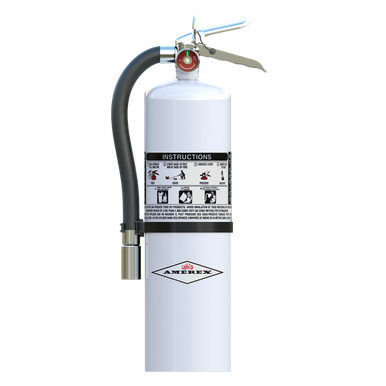
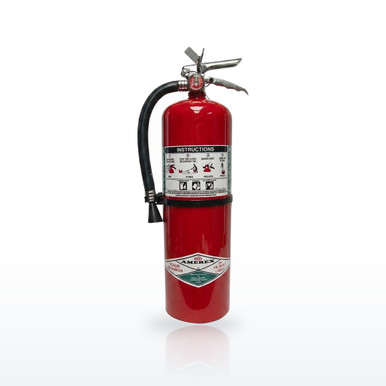
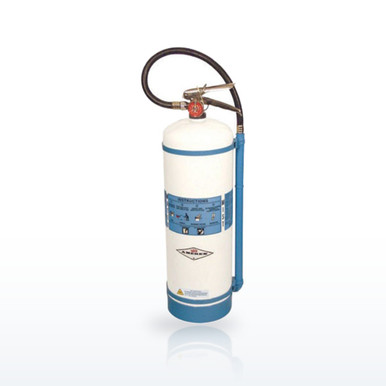
| Amerex 551 Halotron BrX, 12.5 lb | 2A:10B:C | Yes | Yes (10-B at 50 ft) | Yes |
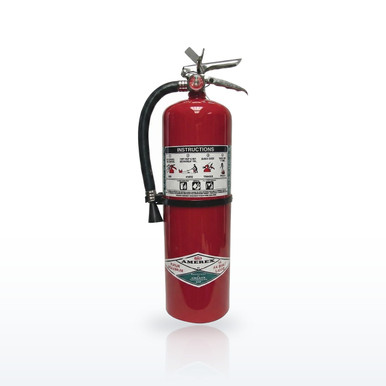
| Amerex 398 Halotron I, 15.5 lb | 2A:10B:C | Yes | Yes | Yes |
| Amerex 397 Halotron I, 11 lb | 1A:10B:C | No (two 1-A water units may equal one 2-A; 6.2.1.3.1) | Yes | Yes |
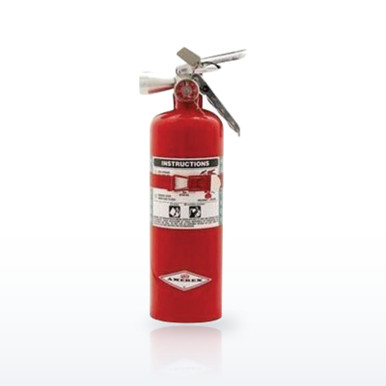
| Amerex 549 / 547 Halotron BrX, 3.75 lb | 5B:C | No | Yes (at 30 ft) | Yes |
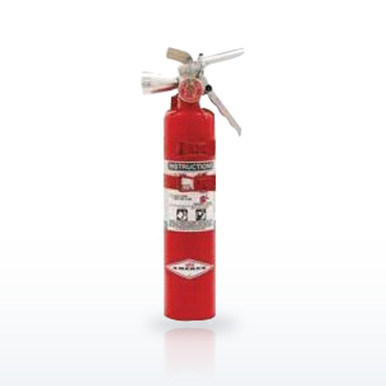
| Amerex A537TS Halotron BrX, 1.79 lb | 2B:C | No | No | Yes |
| Amerex 330 CO2, 10 lb | 10-B:C | No | Yes | Yes |
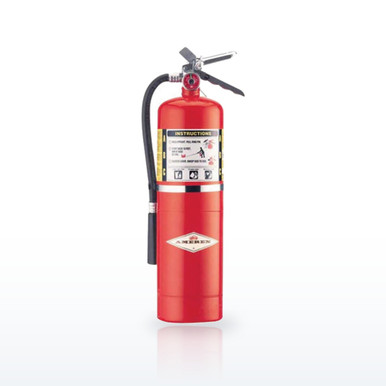
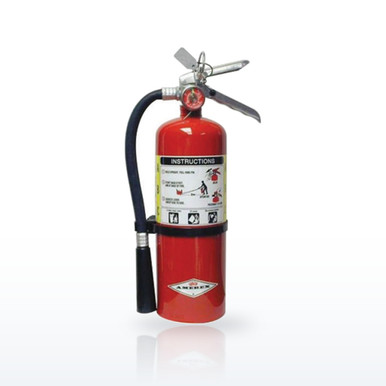
| Amerex B456 ABC, 10 lb | 4A:80B:C | Yes | Yes (extra hazard at 50 ft) | Yes |
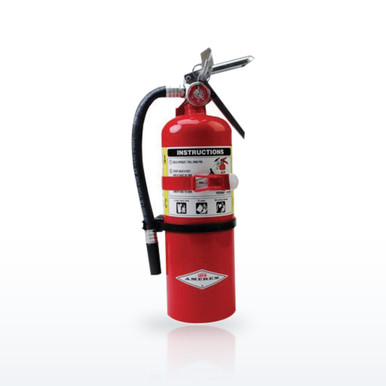
| Amerex B500 ABC, 5 lb | 2A:10B:C | Yes | Yes | Yes |
Source: ratings as published by Amerex; NFPA 10 (2026) Tables 6.2.1.1 and 6.3.1.1, 5.5.1, 6.2.1.3.
Extinguishers by rating
14 items · prices liveRatings as published by the manufacturer. Prices are live.
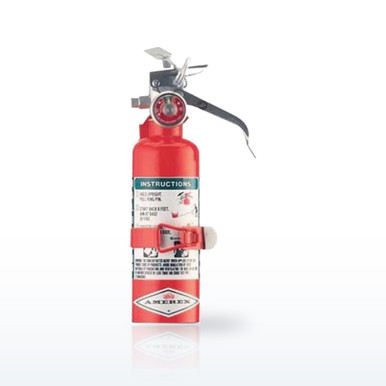
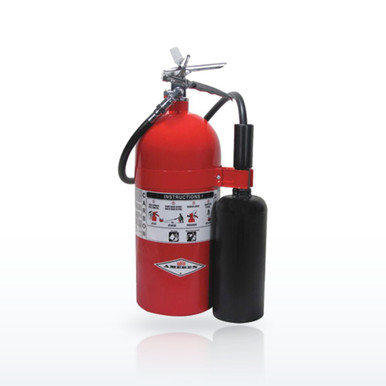

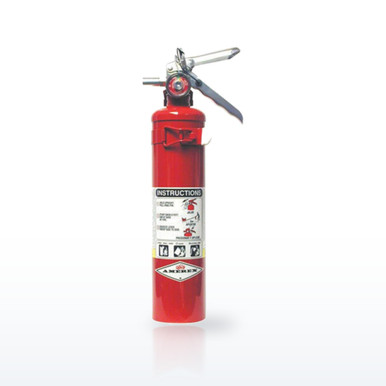
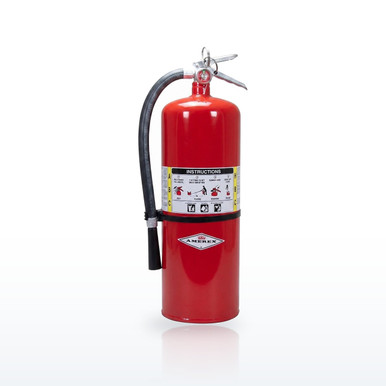
Cabinets, brackets and signs are in Fire protection accessories.
Questions people ask
What does 2A:10B:C mean?
Class A rating of 2, Class B rating of 10, and a Class C listing: tested on wood fires, a 25 sq ft liquid pan fire, and passed the electrical conductivity test (UL 711).
What does 10B mean on a fire extinguisher?
The unit put out a 25 sq ft flammable liquid pan fire in the UL 711 test; the number is about 40 percent of the pan area.
Why is there no number with the C?
Class C is a pass/fail conductivity test, not a size of fire.
What rating does NFPA 10 require?
At least 2-A within 75 ft for light and ordinary Class A hazard, 4-A for extra; 5-B at 30 ft or 10-B at 50 ft for light Class B, more for ordinary and extra (Tables 6.2.1.1, 6.3.1.1).
Does a bigger extinguisher always mean a higher rating?
No. Ratings are test results; different agents earn different ratings per pound. Select by rating (6.1.1.3).
Can two smaller extinguishers add up to a required rating?
Only in the cases NFPA 10 allows: two 1-A water units for one 2-A (6.2.1.3.1), two 2.5 gal water units for one 4-A (6.2.1.3.2), up to three foam units for a Class B requirement (6.3.2.5). Otherwise lower-rated units do not combine (6.3.1.1.1).
Related guides
Fire extinguisher typesA, B, C, D, K and the agents behind themClass C fire extinguishersWhat Class C means and which agents carry itNFPA 10 requirements explainedSelection, placement, inspection and testing in plain wordsClean agent fire extinguishersEvery clean agent unit, the agents compared, the codeThe ratings, test results and standards shown here are the manufacturers' published values, reproduced as published. Nothing on this page is a recommendation by Bayshore Safety that any product is suitable for a particular task, hazard or workplace. Selecting safety products and protective equipment is the responsibility of the end user and the employer, based on their own hazard assessment and the regulations that apply to their work. Confirm every value on the manufacturer's own documentation before use.