
NFPA 10 fire extinguisher requirements explained: selection, placement, mounting height, inspection and testing (2026 edition)
NFPA 10, Standard for Portable Fire Extinguishers, is the document OSHA (29 CFR 1910.157) and the fire codes adopt for how extinguishers are chosen, placed and kept. The current edition is 2026 and NFPA lets anyone read it free online. In plain words it says: pick extinguishers listed for the classes of fire present, with Class A building protection everywhere (5.5.2), Class B, C, D or K where those hazards exist (5.5.3), Class C-listed types and no dry chemical for delicate electronics (5.5.4.6), and halogenated agents only in rooms at least the nameplate minimum volume (5.3.2.6.1). Place them so no one walks more than 75 ft to a Class A unit or 30 to 50 ft to a Class B unit (Tables 6.2.1.1, 6.3.1.1), hung on a manufacturer bracket or in a cabinet (6.1.3.4) with the top no more than 5 ft up for units under 40 lb (6.1.3.9), visible or signed (6.1.3.3). Inspect monthly (7.2), maintain yearly with a tag (7.3.1.1, 7.3.4), examine internally and hydrotest on the type's interval (Tables 7.3.3.1, 8.3.1), and retire nonrechargeable units at 12 years (7.3.6.3).
Why does NFPA 10 matter if it is "only a standard"? Because the fire code your city adopted (the International Fire Code or NFPA 1) and OSHA 1910.157 point to it for the details. The inspector checks placement and tags against NFPA 10; the architect writes the spec to it; the insurer asks for the maintenance records it requires. The authority having jurisdiction (3.2.2) decides how it applies to your building, and state amendments exist.
NFPA 10 (2026) in seven questions
Each answer names its section.
Placement numbers from NFPA 10 (2026)
| Hazard | Minimum rating | Maximum travel distance | Section |
|---|---|---|---|
| Class A, light or ordinary hazard | 2-A | 75 ft | Table 6.2.1.1 |
| Class A, extra hazard | 4-A | 75 ft | Table 6.2.1.1 |
| Class B spill, light hazard | 5-B or 10-B | 30 ft or 50 ft | Table 6.3.1.1 |
| Class B spill, ordinary hazard | 10-B or 20-B | 30 ft or 50 ft | Table 6.3.1.1 |
| Class B spill, extra hazard | 40-B or 80-B | 30 ft or 50 ft | Table 6.3.1.1 |
| Class C | Sized on the A or B hazard | As for A or B | 6.4.3 |
| Class D | Per the metal | 75 ft | 6.5.2 |
| Class K | Listed for K | 30 ft | 6.6.2 |
Source: NFPA 10 (2026), sections as cited. Occupancy hazard classes are defined in 5.4.
Extinguishers by class
14 items · prices liveRatings as published by the manufacturer. Prices are live.
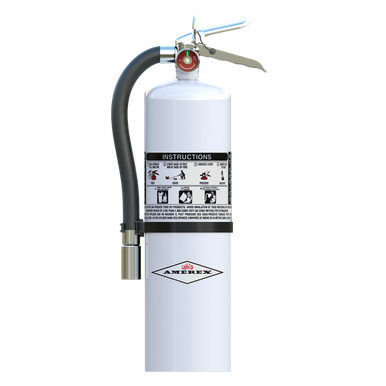
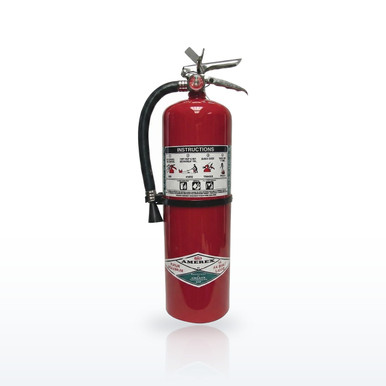
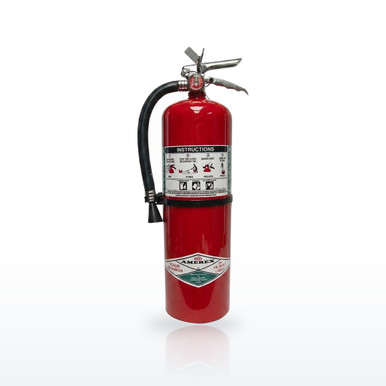
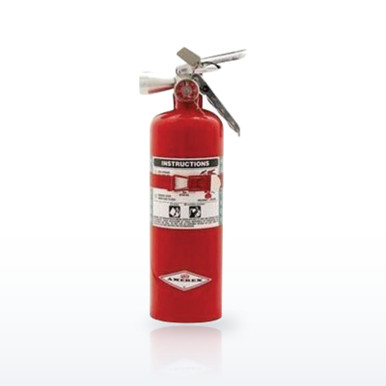
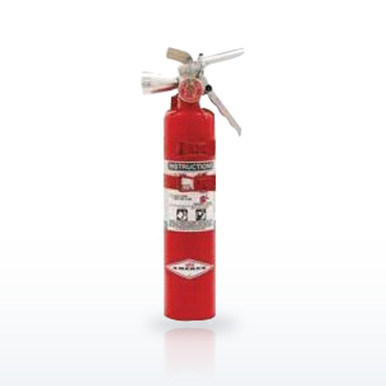
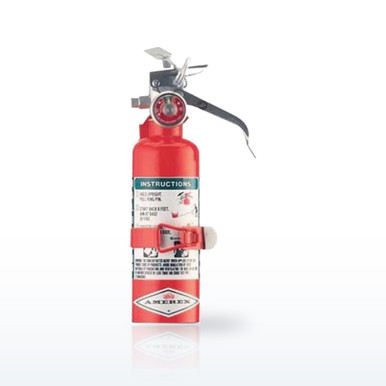
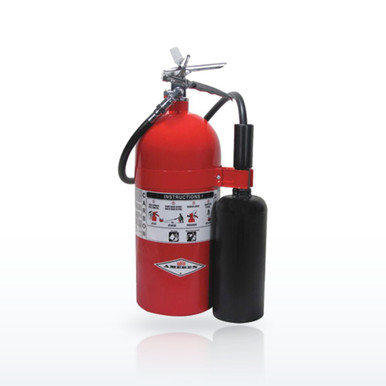

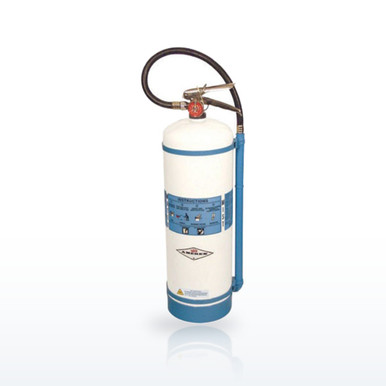
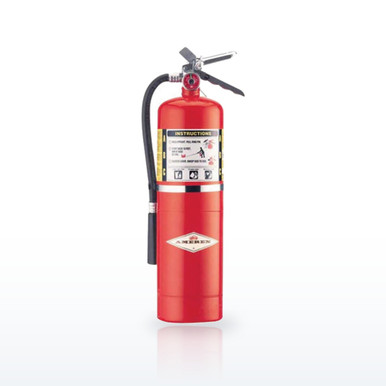
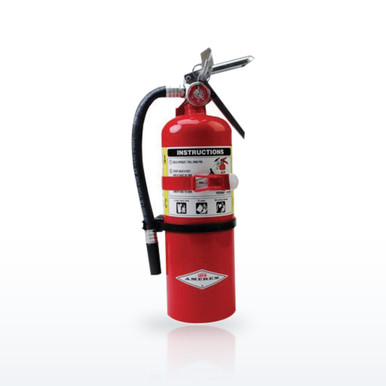
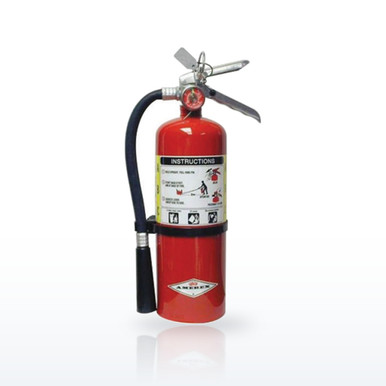
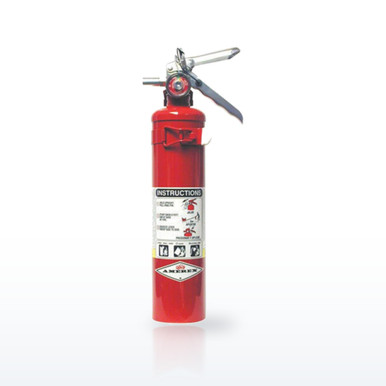
Cabinets, brackets and signs are in Fire protection accessories.
Questions people ask
What is NFPA 10?
The NFPA standard for the selection, installation, inspection, maintenance, recharging and hydrostatic testing of portable fire extinguishers. Current edition 2026; free to read on nfpa.org.
Is NFPA 10 required by law?
It becomes enforceable where a fire code or OSHA adopts it; OSHA 29 CFR 1910.157 references it for workplaces. Your authority having jurisdiction decides which edition applies.
How far apart must fire extinguishers be?
Class A: no more than 75 ft of travel to one; Class B: 30 or 50 ft by rating; Class K: 30 ft (NFPA 10 (2026) 6.2, 6.3, 6.6).
How high should a fire extinguisher be mounted?
Top no more than 5 ft above the floor for units up to 40 lb, 3.5 ft for heavier units, bottom at least 4 in (6.1.3.9).
How often does NFPA 10 require inspection?
Monthly after being placed in service (7.2.1); maintenance at least once a year (7.3.1.1).
What does NFPA 10 say about server rooms?
Delicate electronic equipment is protected by Class C-listed types and not by dry chemical (5.5.4.6); halogenated units follow the nameplate minimum room volume (5.3.2.6.1).
Related guides
Fire extinguisher mounting height and placementHeights, travel distances and cabinets under NFPA 10Inspection, maintenance and hydrostatic testingMonthly, annual, 6-year and 12-year explainedDo fire extinguishers expire?Rechargeable vs nonrechargeable, and the 12-year ruleClass C fire extinguishersWhat Class C means and which agents carry itThe ratings, test results and standards shown here are the manufacturers' published values, reproduced as published. Nothing on this page is a recommendation by Bayshore Safety that any product is suitable for a particular task, hazard or workplace. Selecting safety products and protective equipment is the responsibility of the end user and the employer, based on their own hazard assessment and the regulations that apply to their work. Confirm every value on the manufacturer's own documentation before use.