
Do fire extinguishers expire? How long a fire extinguisher is good for under NFPA 10 (2026)
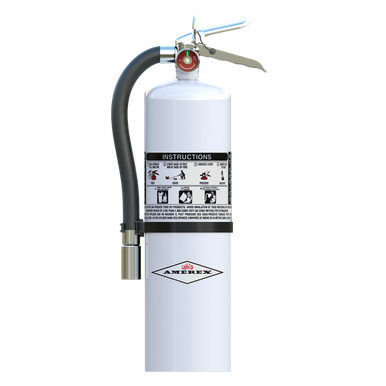
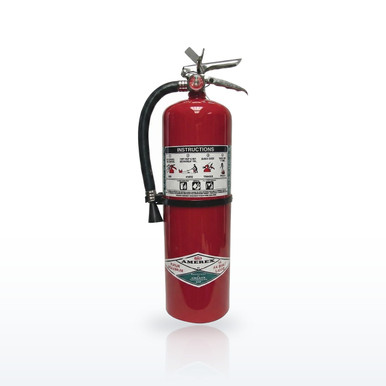
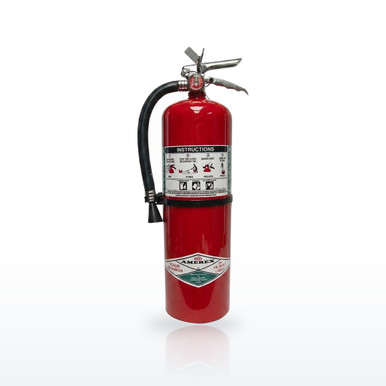
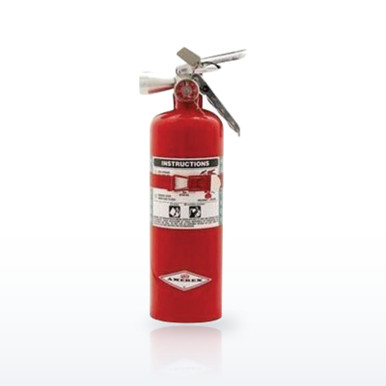
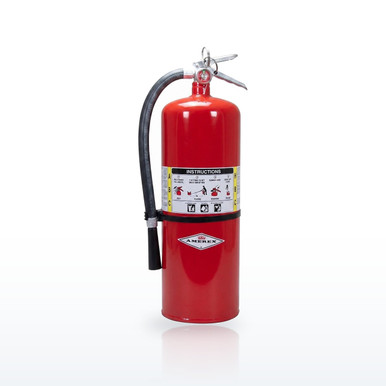
There is no expiration date on a rechargeable fire extinguisher. It stays in service as long as it passes the monthly inspection (7.2), the annual maintenance (7.3.1.1), the internal examination on its interval (Table 7.3.3.1: 1 to 6 years by type) and the hydrostatic test on its interval (Table 8.3.1: 5 or 12 years by type), and as long as the cylinder shows none of the conditions in 8.4.2 that condemn it. A nonrechargeable extinguisher is different: NFPA 10 (2026) 7.3.6.3 removes it from service no later than 12 years from the date of manufacture on the nameplate, with no internal examination and no hydrostatic test in between. So the question is which kind you have: look at the label for "nonrechargeable" or "non-refillable," and for the manufacture date. Amerex's Halotron BrX units, for example, are sealed, nonrechargeable, and replaced at 12 years; its Halotron I and ABC units are rechargeable and serviced on the tables.
Why does a sealed unit get a date and a rechargeable one does not? A rechargeable unit is opened and examined on its interval; the examination is the proof it is still good. A nonrechargeable unit is never opened, so the standard substitutes a fixed service life, 12 years from manufacture, for the examinations it cannot have (7.3.6.3).
How to tell what you have and what is due
Three things on the label answer it.
NFPA 10 (2026) intervals by extinguisher type
| Type | Internal examination (Table 7.3.3.1) | Hydrostatic test (Table 8.3.1) | Service life |
|---|---|---|---|
| Nonrechargeable, any agent (incl. Amerex Halotron BrX) | Not required (7.3.3.6, 7.3.6.3) | Not required | Remove at 12 years from manufacture (7.3.6.3) |
| Halogenated agents, rechargeable (Halotron I, halon) | 6 years | 12 years | While it passes |
| Dry chemical, stored pressure, mild steel / brass / aluminum | 6 years | 12 years | While it passes |
| Dry chemical, stainless shell | 5 years | 5 years | While it passes |
| Carbon dioxide | 5 years | 5 years | While it passes |
| Water, water mist, loaded stream, antifreeze | 5 years (water); 1 year (loaded stream) | 5 years | While it passes |
| Wet chemical | 5 years | 5 years | While it passes |
| Foam | 3 years | 5 years | While it passes |
Source: NFPA 10 (2026) Tables 7.3.3.1 and 8.3.1, 7.3.3.6, 7.3.6.3.
Nonrechargeable and rechargeable units
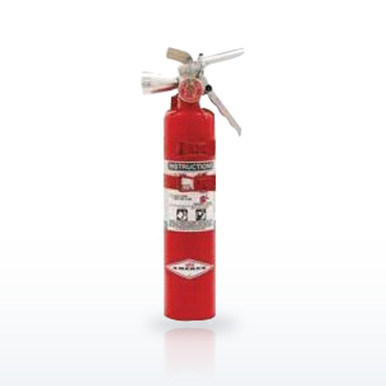
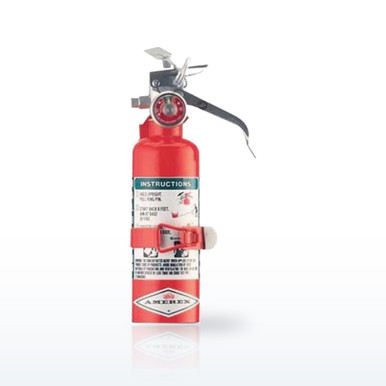
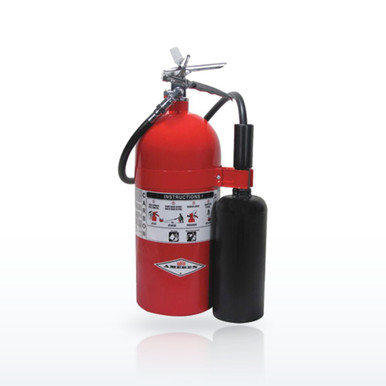
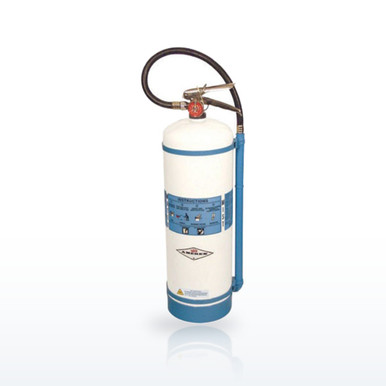
14 items · prices liveThe nonrechargeable Halotron BrX units are replaced at 12 years; the rest are serviced on the tables. Prices are live.

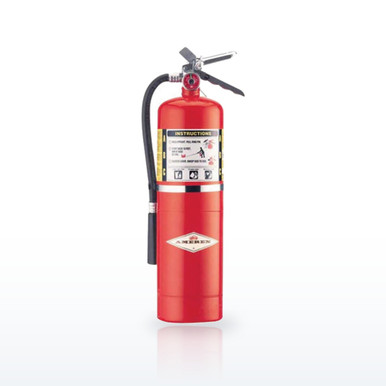
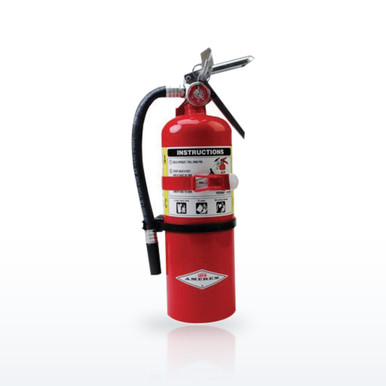
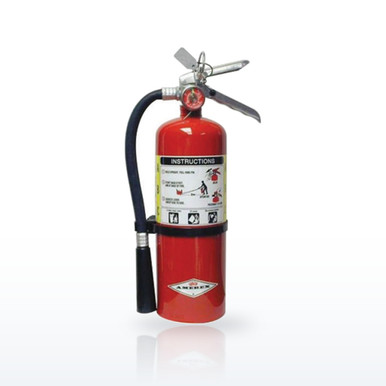
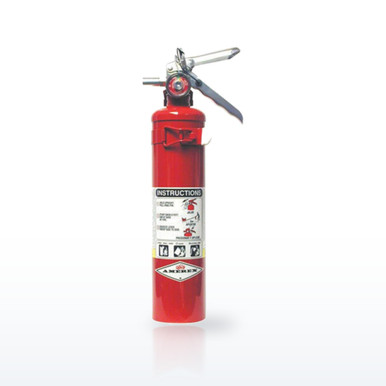
Cabinets, brackets and signs are in Fire protection accessories.
Questions people ask
How long is a fire extinguisher good for?
Rechargeable: as long as it passes inspection, maintenance, internal examination and hydrostatic test on the NFPA 10 intervals. Nonrechargeable: no more than 12 years from the date of manufacture (7.3.6.3).
Is a 10-year-old fire extinguisher still good?
A rechargeable one, if its 6-year and hydrostatic work is current and it passes inspection. A nonrechargeable one, for two more years at most.
Where is the expiration date on a fire extinguisher?
There is no expiration date as such. Use the date of manufacture on the nameplate: nonrechargeable units leave service 12 years after it.
Do nonrechargeable extinguishers need a hydrostatic test?
No. NFPA 10 (2026) 7.3.6.3 exempts them and replaces the test with the 12-year limit.
Can a fire extinguisher be used after it expires?
A nonrechargeable unit past 12 years is removed from service under NFPA 10 (2026) 7.3.6.3 and replaced with a unit suitable for the hazard and of at least equal rating (7.1.3).
Is it cheaper to recharge or replace?
Depends on the unit and the service company. A nonrechargeable unit is never recharged; a rechargeable unit is recharged after any use (7.1.3, 7.8).
Related guides
NFPA 10 requirements explainedSelection, placement, inspection and testing in plain wordsInspection, maintenance and hydrostatic testingMonthly, annual, 6-year and 12-year explainedNFPA 10 for nonrechargeable extinguishersWhat the standard asks of a sealed unitClean agent fire extinguishersEvery clean agent unit, the agents compared, the codeThe ratings, test results and standards shown here are the manufacturers' published values, reproduced as published. Nothing on this page is a recommendation by Bayshore Safety that any product is suitable for a particular task, hazard or workplace. Selecting safety products and protective equipment is the responsibility of the end user and the employer, based on their own hazard assessment and the regulations that apply to their work. Confirm every value on the manufacturer's own documentation before use.