
Fire extinguisher inspection, maintenance and hydrostatic testing: the monthly, annual, 6-year and 12-year intervals under NFPA 10 (2026)
NFPA 10 (2026) runs four clocks on a portable extinguisher. Inspection (7.2) is the quick monthly check the owner does: in place, unobstructed, instructions out, seal intact, full by weight or heft, no damage, indicator in range, with the month, year and initials recorded and the last 12 kept. Maintenance (7.3) is the annual thorough examination by a trained person with a tag showing month, year, person and agency, and for most rechargeable types an internal examination on the interval in Table 7.3.3.1: 1 year for loaded stream, pump tank and cartridge-operated dry chemical, 3 for foam, 5 for water, CO2, wet chemical and stainless dry chemical, 6 for halogenated agents and mild-steel stored-pressure dry chemical. Six-year maintenance (7.3.6) empties and examines stored-pressure units that carry a 12-year hydrostatic test. Hydrostatic testing (Chapter 8) proves the cylinder on the interval in Table 8.3.1: 5 years for water, foam, CO2, wet chemical and stainless dry chemical; 12 years for mild-steel dry chemical, halogenated agents and dry powder. Nonrechargeable units skip the internal examinations and the test and leave service at 12 years from manufacture (7.3.3.6, 7.3.6.3).
Why four clocks instead of one? Each catches a different failure. The monthly look catches a missing or discharged unit. The annual maintenance catches damage and wear. The internal examination catches caked agent and corrosion inside. The hydrostatic test catches a cylinder that will not hold pressure. A sealed nonrechargeable unit cannot be opened, so the standard replaces the inside checks with a fixed 12-year life.
The four clocks, by section
Who does it, what it covers, what it produces.
NFPA 10 (2026) intervals by type
| Extinguisher type | Internal examination (Table 7.3.3.1) | Hydrostatic test (Table 8.3.1) |
|---|---|---|
| Stored-pressure loaded stream, antifreeze | 1 year | 5 years |
| Pump tank water, calcium chloride | 1 year | 5 years |
| Dry chemical, cartridge or cylinder operated, mild steel | 1 year | 12 years |
| Dry powder, cartridge or cylinder operated, mild steel | 1 year | 12 years |
| Wetting agent | 1 year | 5 years |
| Stored-pressure water, water mist | 5 years | 5 years |
| Foam | 3 years | 5 years |
| Dry chemical, stored pressure, stainless | 5 years | 5 years |
| Carbon dioxide | 5 years | 5 years |
| Wet chemical | 5 years | 5 years |
| Dry chemical, stored pressure, mild steel, brazed brass, aluminum | 6 years | 12 years |
| Halogenated agents (rechargeable) | 6 years | 12 years |
| Dry powder, stored pressure, mild steel | 6 years | 12 years |
| Nonrechargeable, any agent | Not required (7.3.3.6) | Not required; remove at 12 years (7.3.6.3) |
Source: NFPA 10 (2026) Tables 7.3.3.1 and 8.3.1, 7.3.3.6, 7.3.6.3.
Extinguishers by service type
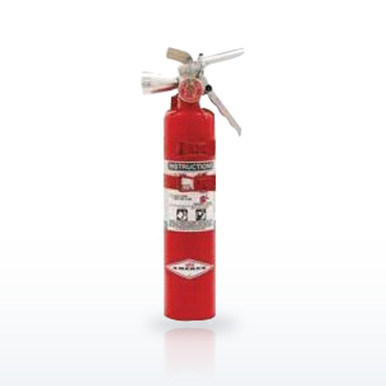
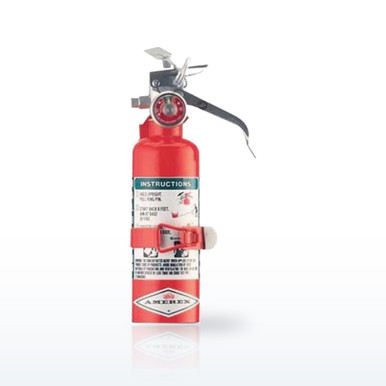
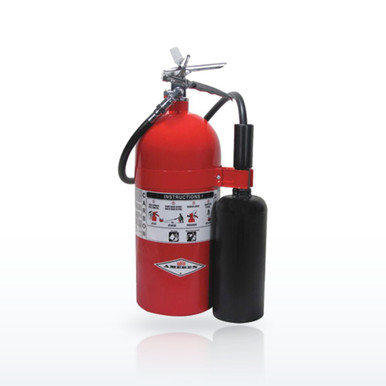
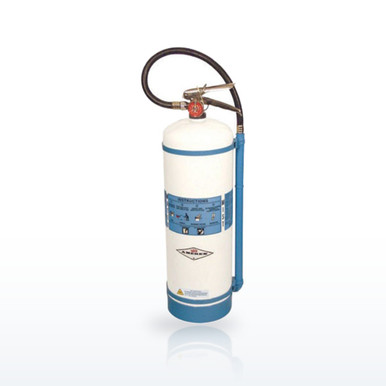
14 items · prices liveNonrechargeable units first. Ratings as published by the manufacturer. Prices are live.
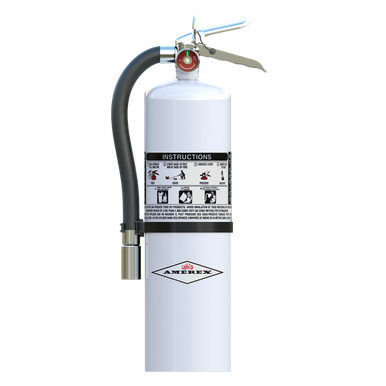
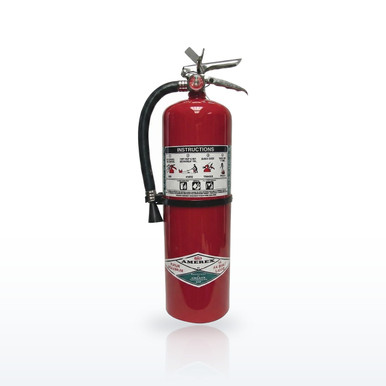
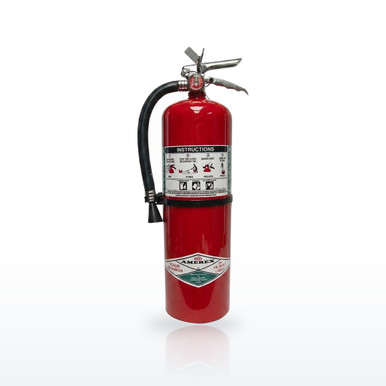
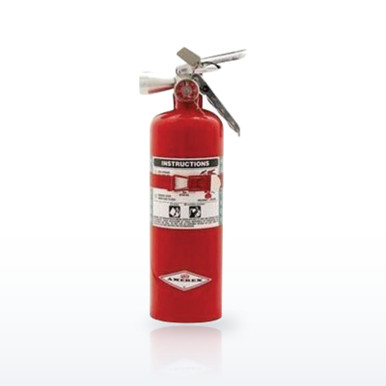

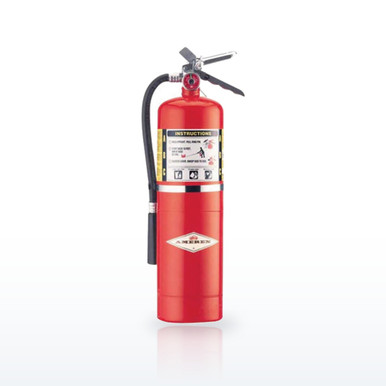
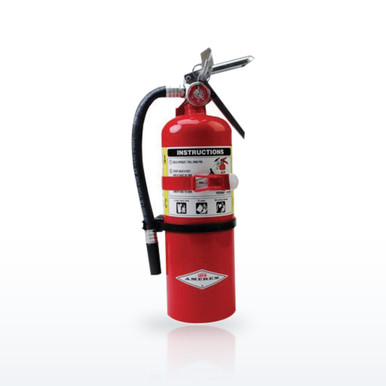
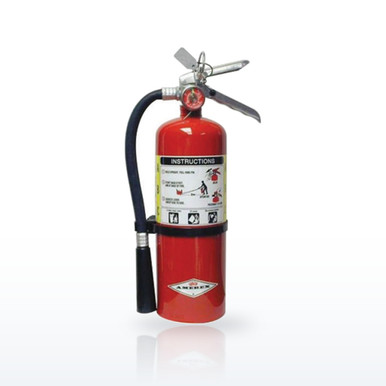
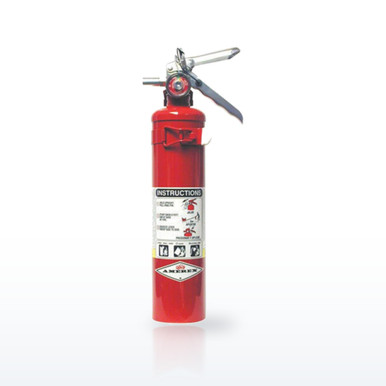
Cabinets, brackets and signs are in Fire protection accessories.
Questions people ask
How often should fire extinguishers be inspected?
Monthly after being placed in service (NFPA 10 (2026) 7.2.1), with records of the last 12 inspections (7.2.4.1.5).
How often is fire extinguisher maintenance required?
At least once a year, at a hydrostatic test, or when an inspection finds a problem (7.3.1.1).
How often do fire extinguishers need a hydrostatic test?
Every 5 or 12 years by type (Table 8.3.1): 5 for water, foam, CO2, wet chemical and stainless dry chemical; 12 for mild-steel dry chemical, halogenated agents and dry powder. Nonrechargeable units: never; replaced at 12 years.
What is the 6-year maintenance on a fire extinguisher?
Stored-pressure units that carry a 12-year hydro are emptied and internally examined every 6 years (7.3.6), with a label recording it (7.3.6.5).
Who can do fire extinguisher maintenance?
Trained persons with the manufacturer's service manual, tools and parts (7.1.2.2); where a certification is required the certifying body tests to the standard (7.1.2.1). Inspections do not require certification (7.1.2.3).
What gets a fire extinguisher condemned?
Repairs by welding or brazing, worn or corroded threads, pitting under the nameplate, fire exposure, deep dents, corrosion over 10 percent of the wall, use for any other purpose, and others in 8.4.2.
Related guides
Do fire extinguishers expire?Rechargeable vs nonrechargeable, and the 12-year ruleNFPA 10 for nonrechargeable extinguishersWhat the standard asks of a sealed unitNFPA 10 requirements explainedSelection, placement, inspection and testing in plain wordsFire extinguisher mounting height and placementHeights, travel distances and cabinets under NFPA 10The ratings, test results and standards shown here are the manufacturers' published values, reproduced as published. Nothing on this page is a recommendation by Bayshore Safety that any product is suitable for a particular task, hazard or workplace. Selecting safety products and protective equipment is the responsibility of the end user and the employer, based on their own hazard assessment and the regulations that apply to their work. Confirm every value on the manufacturer's own documentation before use.