
How high should a fire extinguisher be mounted, and where does it go? NFPA 10 (2026) mounting height, travel distance and cabinet rules
NFPA 10 (2026) 6.1.3.9 sets the height by weight: an extinguisher with a gross weight up to 40 lb is hung so its top is no more than 5 ft (1.53 m) above the floor; one over 40 lb, other than wheeled units, so its top is no more than 3.5 ft (1.07 m) up; and the bottom of any hand portable unit is never less than 4 in (102 mm) above the floor. Where it goes is set by 6.1.3: conspicuous, readily accessible, along normal paths of travel including exits, visible or marked with signs where visual obstructions cannot be avoided (6.1.3.1 to 6.1.3.3). It hangs on the manufacturer's hanger or bracket, a listed bracket, or sits in an approved cabinet or wall recess, never on a field-made hanger (6.1.3.4). Cabinets keep the same height rule (6.1.3.11.5), are unlocked unless malicious use requires a lock with emergency access (6.1.3.11.1), and on a fire-resistance-rated wall are surface-mounted or listed fire-rated (6.1.3.11.6). Travel distance decides spacing: 75 ft to a Class A unit, 30 or 50 ft to a Class B unit by rating, 30 ft to a Class K unit.
Why 5 ft, and why by weight? The rule is about lifting a charged unit off its hook in a hurry. A 20 lb unit at chest height comes off a hanger cleanly; a 50 lb unit at the same height does not, so the heavier class drops to 3.5 ft. The 4 in minimum keeps the cylinder off wet floors and out of mop reach. Signs and cabinets exist for visibility, not for height.
Mounting and placement, step by step
What the installer checks against NFPA 10 (2026).
NFPA 10 (2026) height and distance numbers
| Item | Number | Section |
|---|---|---|
| Top of unit, gross weight up to 40 lb | Not more than 5 ft (1.53 m) above the floor | 6.1.3.9.1 |
| Top of unit, gross weight over 40 lb (not wheeled) | Not more than 3.5 ft (1.07 m) above the floor | 6.1.3.9.2 |
| Bottom of any hand portable unit | Not less than 4 in (102 mm) above the floor | 6.1.3.9.3 |
| Travel distance to a Class A unit | 75 ft (22.9 m) | Table 6.2.1.1 |
| Travel distance to a Class B unit | 30 ft (9.1 m) or 50 ft (15.25 m) by rating | Table 6.3.1.1 |
| Travel distance to a Class K unit | 30 ft (9.1 m) | 6.6.2 |
| Travel distance to a Class D agent | 75 ft (22.9 m) | 6.5.2 |
| Maximum floor area per Class A unit | 11,250 sq ft | Table 6.2.1.1 |
Source: NFPA 10 (2026), sections as cited.
Extinguishers with the bracket in the box
14 items · prices liveAmerex units ship with a wall or vehicle bracket; cabinets and signs are in Fire protection accessories. Prices are live.
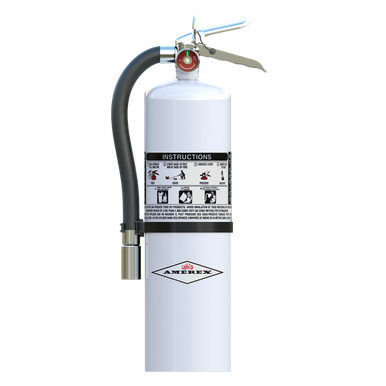
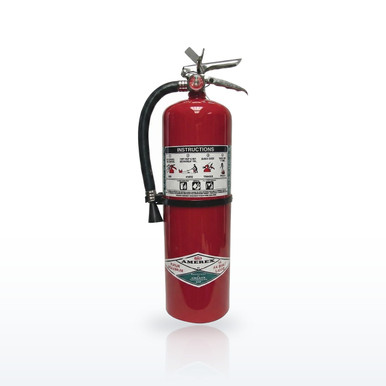
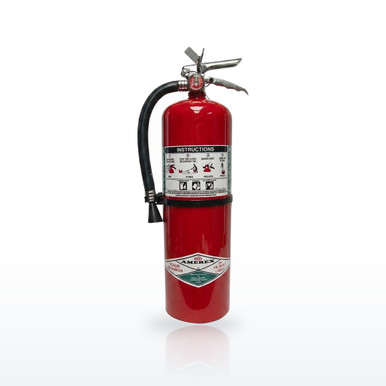
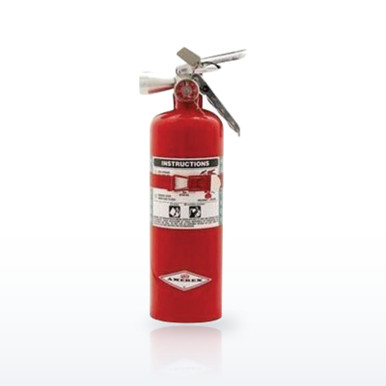
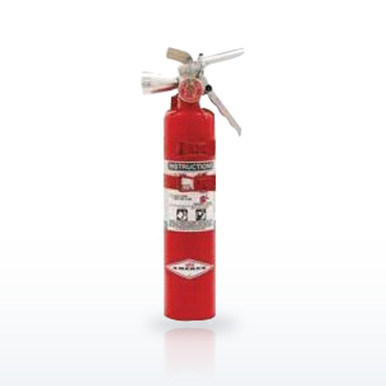
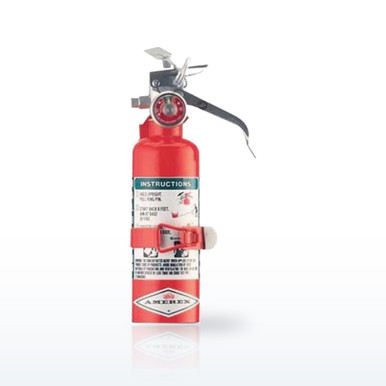
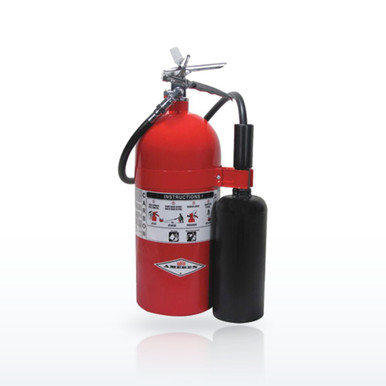

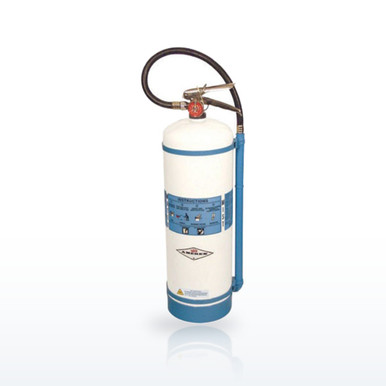
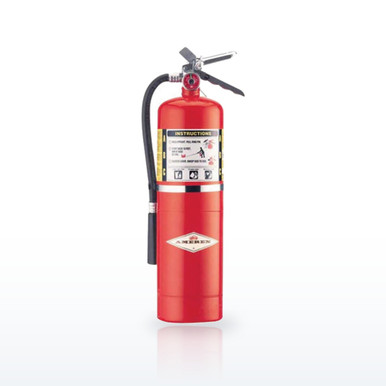
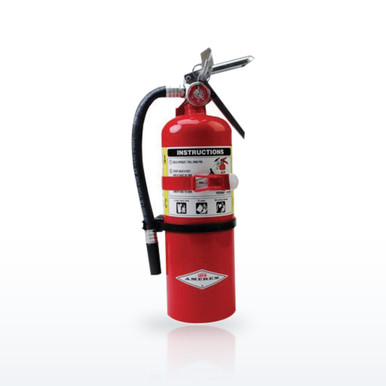
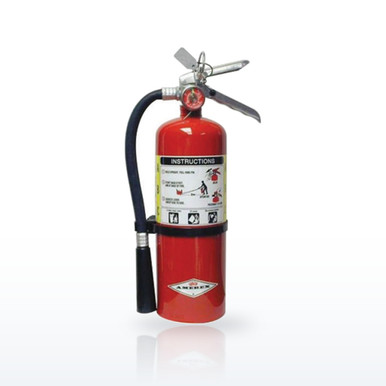
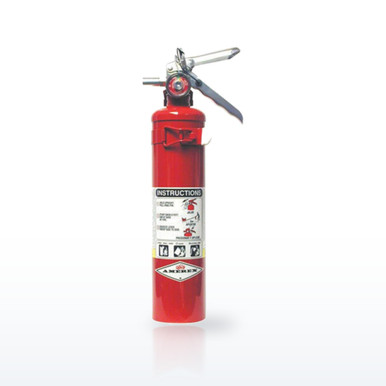
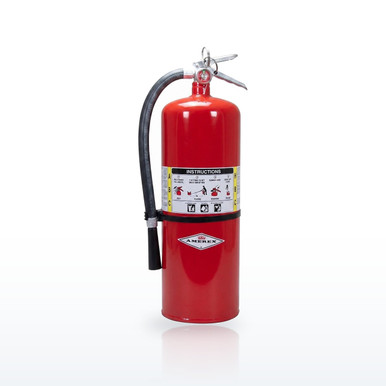
Cabinets, brackets and signs are in Fire protection accessories.
Questions people ask
How high should a fire extinguisher be mounted?
Top no more than 5 ft above the floor for units up to 40 lb; 3.5 ft for heavier units; bottom at least 4 in up (NFPA 10 (2026) 6.1.3.9).
What is the OSHA fire extinguisher mounting height?
OSHA 1910.157 adopts NFPA 10 for installation details; NFPA 10 gives the 5 ft and 3.5 ft rule.
How far apart should fire extinguishers be?
Close enough that travel distance to a Class A unit is 75 ft or less, to a Class B unit 30 or 50 ft by rating (Tables 6.2.1.1, 6.3.1.1).
Can a fire extinguisher be mounted in a cabinet?
Yes, where it stays visible or is signed (6.1.3.3.3); the cabinet keeps the height rule (6.1.3.11.5) and is not locked except against malicious use with emergency access (6.1.3.11.1).
Does a fire extinguisher cabinet need to be fire rated?
On a fire-resistance-rated wall, only surface-mounted cabinets or listed fire-rated cabinets are installed (6.1.3.11.6); existing installations are exempt.
Can I make my own fire extinguisher bracket?
No. Hangers and brackets are not fabricated in the field (6.1.3.4.1).
Related guides
NFPA 10 requirements explainedSelection, placement, inspection and testing in plain wordsInspection, maintenance and hydrostatic testingMonthly, annual, 6-year and 12-year explainedFire extinguisher typesA, B, C, D, K and the agents behind themClean agent fire extinguishersEvery clean agent unit, the agents compared, the codeThe ratings, test results and standards shown here are the manufacturers' published values, reproduced as published. Nothing on this page is a recommendation by Bayshore Safety that any product is suitable for a particular task, hazard or workplace. Selecting safety products and protective equipment is the responsibility of the end user and the employer, based on their own hazard assessment and the regulations that apply to their work. Confirm every value on the manufacturer's own documentation before use.