
How many lumens do you need for a hard hat headlamp? Rechargeable vs battery lamps, run time, red and strobe modes, clips and mounts, whether lights on a helmet are allowed, intrinsically safe lamps, and miner’s cap lamps
For most work on a hard hat, 150 to 400 lumens is the useful range: 150 lumens lights a task at arm’s length and a walkway, 300 to 400 lights a room-sized area or a pipe rack ten to twenty feet away, and more than that mostly shortens the run time and blinds whoever is facing you. Studson’s three SHK-1 lamps sit in that range at 150, 350 and 450 lumens, with stated run times of up to 8 hours on the 350-lumen lamp and 2 to 4 hours on the 450-lumen zoom lamp. Lights on a helmet are allowed as long as the lamp mounts without altering the shell (a clip, a strap or a bracket the helmet manufacturer lists), and in a gas or dust atmosphere the lamp must carry a hazardous-location listing, which an ordinary headlamp does not.
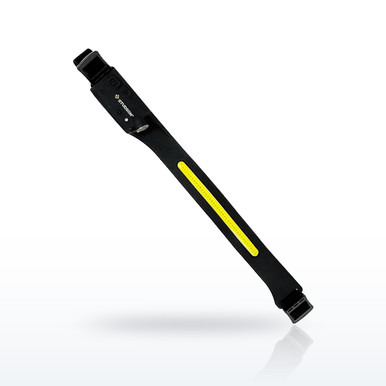 Studson SHK1-HL Hard Hat Headlamp, 350 Lumens, Wave Activation, RechargeableStudson lists the SHK1-HL at 350 lumens with wave activation, up to 8 hours of run time, USB charging and IPX4
Why lumens are the wrong first question. Lumens measure the total light a lamp puts out, not how far it reaches or how long it lasts, and the headlamp market advertises them the way car makers once advertised horsepower. On a hard hat the questions that decide the lamp are how it mounts (a clip into the helmet, a strap over it, a bracket molded for it), how it is switched with gloves on, how long it runs at the setting you actually use, whether it charges by USB or takes AAA cells, and whether the place you work needs a lamp listed for a hazardous atmosphere. This page takes those in order, with Studson’s three SHK-1 lamps as the worked example and the other lamps and brackets we stock beside them, and ends with the miner’s cap lamp that the phrase “mining helmet” usually means (the video-game questions that share the words are not about any of this).
Headlamps on a hard hat, question by question
Figures are the manufacturers’, as printed on the product pages; the accessory rules are ANSI/ISEA Z89.1’s as the live lamp bracket guide quotes them.
Headlamps in plain words
- 150 lumens for close work, 300 to 400 for general site work, more only for distance; read the run time beside the lumens.
- Studson: SHL 150 lm with a motion sensor, HL 350 lm wave-activated up to 8 h, THL 450 lm zoom 2 to 4 h; all USB rechargeable.
- Red light keeps night vision and does not dazzle; strobe and flashing modes are for being seen.
- Mount with a clip, strap or manufacturer bracket; never drill, glue or cut the shell.
- Lights on a helmet are allowed; a metal bracket through a Class G or E shell is not.
- Gas or dust atmosphere: the lamp needs a hazardous-location listing; low voltage alone is not intrinsically safe.
- IPX4 is splash-resistant; IP67 is submersible; IK05 is an impact rating on the housing.
Questions people ask
How many lumens do I need for my headlamp?
150 to 200 for close work, 200 to 400 for general site work, 400 and up for distance; beyond that the number mostly costs run time.
Is 1,000 lumens bright for a headlamp?
Yes; it is a hunting and caving setting most trades never use, and a lamp holds it for minutes, not a shift.
What is the highest lumen headlamp available?
Work headlamps top out around 1,000 to 2,000 lumens on a short high setting; six-figure lumen claims on flashlights are marketing numbers with no test behind them.
Which rechargeable headlamp should I get for a hard hat?
We do not rank lamps; the figures to compare are lumens by mode, run time by mode, charge time, how it mounts to your helmet and how it switches with gloves on. Studson prints all of them for its three lamps.
Are lights on helmets legal?
On a hard hat, yes, as an accessory that does not alter the shell: a clip, strap or manufacturer bracket. Drilling the shell or a metal bracket through a Class E shell is what the standard rules out.
How to strap a headlamp to a hard hat?
Stretch the headband over the shell with the lamp centered above the brim and the strap in the groove or on the clips the helmet provides; Studson states its lamps’ bands are helmet-compatible, and other helmet manufacturers say in their instructions whether a strap is allowed.
What kind of flashlight can clip to a hard hat?
A small angle-head or pen light with a brim clip; a magnetic base will not hold on a plastic shell.
What is the flashing red light on a headlamp for?
Being seen: it marks a worker to traffic or a spotter. Steady red preserves night vision and does not dazzle people you look at.
How do I change the batteries in my headlamp?
On a rechargeable lamp you do not; charge it by USB (2.5 hours on the Studson SHL and HL). The THL also takes a removable 14500 cell behind its battery cover.
How do you bring a dead rechargeable battery back to life?
Usually you cannot; a lithium cell left flat for months is damaged. Charge before storage and top up monthly; a lamp that will not charge is replaced.
What is an intrinsically safe headlamp?
A lamp listed for a hazardous (gas or dust) location, built so its circuit cannot ignite the atmosphere; low voltage alone does not make a lamp intrinsically safe. Studson lists an SHK1-EPHL for 2026; the Nightstick intrinsically safe headlamps on this page carry their listing on the product page.
How do miner’s lamps work?
A cap lamp clips to the helmet bracket and runs off a belt battery through a cord for a full shift; underground mines fall under MSHA, whose lamp approvals are separate from OSHA’s hazardous-location rules.
How do I turn on the mining helmet?
If you mean a real cap lamp, the switch is on the lamp head and the lamp lives on a charger rack between shifts. The video-game questions that share this wording are not about any lamp we sell.
How long is a cap lamp designed to operate?
A full shift on one charge, with the lamps racked on chargers between shifts; the manufacturer’s sheet gives the hours for its lamp.
What does it mean when the green light on a headlamp blinks?
On most USB lamps a blinking charge light means charging in progress and a steady light means full; the lamp’s sheet says which, and the Studson THL shows the level on an indicator.
Related guides
High-visibility hard hats and lamp bracketsWhat the standard saysWhat accessories fit a hard hat, and is a chin strap required?Slots, rails, brackets and straps by helmetStudson SHK-1 questions answeredFull brim or standard, Class C or E, HighBar, dual cert, weight and service lifeClass G, Class E and Class C hard hatsThe electrical ratingsTool tethering and dropped objectsWhat ANSI/ISEA 121 coversThe ratings, test results and standards shown here are the manufacturers' published values, reproduced as published. Nothing on this page is a recommendation by Bayshore Safety that any product is suitable for a particular task, hazard or workplace. Selecting safety products and protective equipment is the responsibility of the end user and the employer, based on their own hazard assessment and the regulations that apply to their work. Confirm every value on the manufacturer's own documentation before use.