Home › Guides › Head › Using a cooling towel
Guide · Heat, cold and ergonomics · Cooling towels, neck shades and sun brims on a hard hat

Bayshore Safety & Industrial Supplies Guide

How do you use a cooling towel, and how do you store, wash and reuse one? Activating an evaporative towel, how long it stays cold, towels under a hard hat, neck shades and sun brims, and what UPF 50 means

Wet the towel through, wring it out until it stops dripping, and snap it in the air a few times; that is the whole activation on every evaporative towel we carry, Studson’s included (Studson’s instruction: wet thoroughly, wring out excess water, snap or wave to trigger cooling). It cools by evaporation, not by being cold, so it does the most in dry moving air, gives less in humidity, and restarts whenever you re-wet it. Studson states up to 2 hours of cooling per wetting for its 10 by 33 inch towel; Radians states up to 5 hours for its Arctic Radwear fabric, depending on humidity. Between uses, rinse it, let it dry flat or hanging, and store it dry; it is reusable for as long as the fabric holds water, which is many washes.
Bayshore Safety. Industrial safety and PPE supplier since 2017. · Current as of November 2026 · the Studson cooling towel, neck shade, sun brim, sun shield and FR sun brim product pages and the accessory spec sheet (studson.com); the Radians Arctic Radwear product pages as quoted in the live cooling towel guide (radians.com); NIOSH Criteria Document on Occupational Exposure to Heat and Hot Environments (DHHS (NIOSH) 2016-106), on evaporation and humidity; OSHA-NIOSH heat guidance; ANSI/ISEA Z89.1 accessory rules as the live lamp bracket guide quotes them; Liberty Safety product pages and spec sheets (libertysafety.com, read Nov 11 2026)
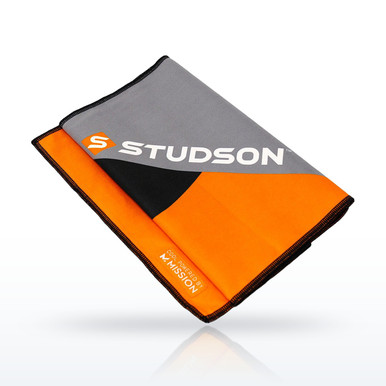
Studson MSN-CT Cooling Towel, UPF 50, 10 x 33 in, Powered by MissionStudson MSN-CT Cooling Towel, UPF 50, 10 x 33 in, Powered by MissionStudson states the towel stays cool for up to 2 hours per wetting, carries UPF 50 and is 90 percent polyester, 10 percent nylon

Why the instructions matter more than the brand. People ask how to use a particular towel (Cadono, Frogg Toggs, Mission, Arctic Radwear) as if each had its own trick. They do not: every evaporative towel is a synthetic knit or microfiber that holds water in the fiber and releases it slowly as vapor, and evaporation takes heat with it. What differs between brands is the size, the stated cooling time, the sun rating and the care label, which this page quotes for the ones we stock. The second half covers the other ways to keep a head cool under a hard hat, since a towel around the neck is only one of them: the clip-on neck shade, the slide-on sun brim, the full-brim sun shield and the arc-rated sun brim that Studson makes for the SHK-1, and what UPF 50 means on all of them.

Using a cooling towel, question by question

Instructions and figures are the manufacturers’ (Studson, Radians); the physics is NIOSH’s.

How do I use a cooling towel, whatever the brand?Three steps, on every brand: soak the towel in water until it is wet through (cool water helps for the first few minutes but is not required); wring it until it stops dripping, because a dripping towel is wasting the water it should be evaporating; then snap it in the air five or six times, which spreads the fibers and starts evaporation. Drape it over the back of the neck, or fold it under the collar. When it feels warm or dry, wet it again and repeat; there is no limit on cycles. Studson’s printed instruction for its towel is exactly this: wet thoroughly, wring out excess water, snap or wave to trigger cooling. Towels sold for sport (Cadono, Frogg Toggs and the like) work the same way; their hang tags say the same three things.
How long does a cooling towel stay cold, and why does it stop?It never stays cold; it stays damp and cools by evaporation. Studson states up to 2 hours per wetting for its towel; Radians prints up to 5 hours for Arctic Radwear, depending on humidity; both figures assume air moving past the fabric. It stops when the fabric dries out, which is faster in wind and dry heat, or when the air is so humid that evaporation slows, in which case it feels like a wet rag because that is all evaporation can do. NIOSH’s heat criteria make the point that evaporation is the mechanism and humidity is its limit. Re-wetting restarts the clock; a snap in the air restarts the evaporation on a towel that has gone still.
Are you supposed to wet it, freeze it, or put it in the fridge?Wet it. A frozen towel is a stiff cold cloth that thaws in minutes and then behaves as a wet towel, and freezing can damage a PVA towel. A refrigerated towel feels colder for the first few minutes and then does what any wet towel does. The cooling that lasts is evaporation, which needs water in the fiber and dry air around it, not stored cold. The Radians activation instruction, quoted in the live towel guide, is to soak for two to three minutes, wring, snap and wear; Studson’s is the same without the minutes.
How do you store a cooling towel between shifts?Rinse it in clean water (sweat and sunscreen clog the fiber), wring it, and let it dry open, hung or flat, out of direct sun; then fold it into its tube or bag dry. A towel stored wet in a sealed tube grows mildew, which is the main reason towels get thrown away. Radians lists its fabric as anti-microbial treated against mold and odor; Studson prints no such claim for its towel, so dry storage is the rule. On a crew the simplest system is one towel in use and one drying, swapped at the break.
How do you wash a cooling towel, and can it go in the dryer?Hand wash or a gentle machine cycle in cool water with a little detergent, rinse well, and air dry; no bleach, no fabric softener and no dryer sheet, because anything that coats the fiber stops it holding water, which is the whole mechanism. Radians prints no wash instructions on its towel page and defers to the hang tag; Studson prints the fabric (90 percent polyester, 10 percent nylon, brushed microfiber) and no wash instruction either, so the same cool-wash, air-dry rule applies. A towel that has stiffened can usually be brought back by soaking in plain water and kneading it.
Can cooling towels be reused, and how long do they last?Yes, indefinitely in principle: every wetting is a new use. In practice the fabric thins, picks up grime and loses its grip on water after a season or two of daily use and washing, and a towel that dries out in twenty minutes where it used to last an hour is done. Nothing about the towel is consumed except the water.
What is a good cooling cloth for the neck, and what is a sweat towel called?For the neck, a towel about a foot wide and two to three feet long that can be draped or tied: Studson’s is 10 by 33 inches, Radians’ RCS1 is 26 by 17 and its wraps are 32 by 12. A sweat towel is just a small absorbent towel; a cooling towel is the evaporative kind, and the two are different fabrics. For under a hard hat, where a towel will not fit, the Radians cooling sweatband and the Studson pad set do the absorbing, and the neck shade and sun brim below keep the sun off instead.
Do cooling towels work in humid weather, and do they really work at all?They work in proportion to how dry the air is. In dry heat with a breeze a wet towel on the neck is a measurable relief, because evaporation is the same mechanism the body uses to shed heat and the neck is where blood runs close to the skin. As humidity rises evaporation slows, and at saturation it stops; NIOSH’s criteria document says this of all evaporative cooling. A towel is a comfort control, not a heat program: OSHA and NIOSH put water, rest, shade and acclimatization first, and the heat stress guides linked below cover that.
Does a helmet visor or a sun brim block UV, and what does UPF 50 mean?UPF is the fabric equivalent of SPF: a UPF 50 fabric lets through about one fiftieth (2 percent) of the ultraviolet that hits it. Studson prints UPF 50 on its cooling towel and neck shade and UPF 50+ on its sun brim; those are the manufacturer’s ratings for the fabric. A clear face shield or helmet visor blocks UV only if its manufacturer says so (most polycarbonate windows carry a U rating under Z87.1 when they are tested for it; the face shield guide linked below covers the marks), and a plain helmet brim shades the face but not the neck or ears. That is what the neck shade and the full brim sun shield are for.
What attaches to a hard hat to keep the sun off?Studson makes four pieces for the SHK-1, and the pattern is the same for other helmet brands. A neck shade clips to the back of the helmet and hangs over the neck (Studson’s: UPF 50, fits both the standard brim and the full brim, lightweight, clips on and off). A sun brim slides over the helmet and adds a soft brim all round (Studson’s: UPF 50+, both shells, orange or light grey). A sun shield is a rigid extension that clips to a full brim (Studson’s 1615880, made by Paulson: ABS and polycarbonate, 3 oz, with a grey transparent front panel so you can still look up, full brim only). And an arc-rated sun brim for electrical and oil and gas crews, where an ordinary cotton shade is not allowed (Studson’s SHK1-FRSB: 12 cal/cm² arc rating, NFPA 2112 and ASTM F1506 listed, made in the USA, full brim only, with a detachable FR mesh neck drape). Under Z89.1 an accessory must not alter the helmet, so these clip and slide on; none of them drills the shell.
Is a white or light helmet cooler than a dark one?Somewhat, and the manufacturers say so in general terms: a light shell reflects more sun, and vented shells move air. Studson states that its forthcoming SHK-2 runs about 7 percent cooler than a competitive benchmark in its own heat-stress testing, which it attributes to the Koroyd construction and the absence of foam, not to color. On a hot site the order of effect is shade, venting, a sweatband and water, then shell color; the hard hat colors guide linked below covers the color question itself.
How to make chilled towels, and does a wet towel over a fan help?A chilled towel for a break is any clean towel wrung out in ice water; it cools by contact for a few minutes and then by evaporation like any wet towel. A wet towel over a fan cools the air passing through it by the same evaporation (it is how an evaporative cooler works) and only in dry air; in humid air the fan moves wet air. The towel on the neck does more than the towel on the fan.

Cooling towels in plain words

  • Wet it through, wring until it stops dripping, snap it, wear it on the neck; re-wet when it dries. Same on every brand.
  • It cools by evaporation, not by being cold: dry moving air is where it works, humidity is where it fades.
  • Studson states up to 2 hours per wetting (10 x 33 in, UPF 50); Radians states up to 5 hours depending on humidity.
  • Do not freeze it; rinse it after a shift and store it dry, or it mildews.
  • Cool wash, air dry, no softener or dryer sheet, because a coated fiber will not hold water.
  • UPF 50 lets through about 2 percent of UV; it is a fabric rating, printed by the manufacturer.
  • For a hard hat: neck shade (clips on), sun brim (slides over), full-brim sun shield (clips to the brim), FR sun brim for arc-rated work.
Studson product pages; Radians Arctic Radwear pages as quoted in the live towel guide; NIOSH 2016-106.

Questions people ask

How do I use a Cadono cooling towel, or any other brand?

Soak it, wring it until it stops dripping, snap it in the air and wear it on the neck; re-wet it when it dries. Every evaporative towel works the same way, and the hang tag says the same three steps.

How to store a cooling towel?

Rinse it, let it dry open and out of the sun, then put it away dry. A towel sealed wet in its tube mildews.

How do you wash cooling cloths?

Cool water, a little detergent, rinse, air dry. No bleach, fabric softener or dryer sheets; a coated fiber stops holding water.

Can cooling towels be reused?

Yes, every wetting is a new use; the fabric lasts a season or two of daily use and washing before it stops holding water well.

How long does a Studson cooling towel stay cool?

Studson states up to 2 hours per wetting, in moving air; it is re-wetted to restart.

Are Mission cooling towels good?

Studson’s towel is made by Mission and Studson prints its figures: up to 2 hours of cooling, UPF 50, 10 by 33 inches, 90 percent polyester and 10 percent nylon. Whether it suits your heat is a question of humidity, not brand.

Do Frogg Toggs towels work?

Any evaporative towel works in dry moving air and fades in humidity; we do not carry that brand and quote only the manufacturers we do.

What is a good cooling cloth for the neck?

A towel about a foot wide and two to three feet long that drapes or ties: Studson’s is 10 by 33 inches, the Radians wraps 32 by 12.

Is a sweat towel the same as a cooling towel?

No. A sweat towel absorbs; a cooling towel is a synthetic that holds water and cools by releasing it slowly as vapor.

How to make chilled towels?

Wring a clean towel out in ice water; it cools by contact for minutes, then by evaporation. A cooling towel does the same for longer because its fiber holds more water.

Does a helmet visor block UV rays?

Only if the manufacturer says so; a window tested for UV under Z87.1 carries a U mark. A brim shades the face, not the neck or ears, which is what a neck shade or sun shield adds.

What does UPF 50 mean?

The fabric lets through about one fiftieth of the ultraviolet that hits it, the fabric equivalent of SPF; Studson prints UPF 50 on its towel and neck shade and UPF 50+ on its sun brim.

Can you put a sun shade on a hard hat?

Yes, with a shade made for it: a clip-on neck shade, a slide-on sun brim, a clip-on full-brim sun shield, or an FR sun brim for arc-rated work. None of them alters the shell.

Is a white hard hat cooler than a black one?

A little; light shells reflect more sun. Shade, venting, a sweatband and water matter more, and Studson attributes its SHK-2 heat figure to construction, not color.

The ratings, test results and standards shown here are the manufacturers' published values, reproduced as published. Nothing on this page is a recommendation by Bayshore Safety that any product is suitable for a particular task, hazard or workplace. Selecting safety products and protective equipment is the responsibility of the end user and the employer, based on their own hazard assessment and the regulations that apply to their work. Confirm every value on the manufacturer's own documentation before use.

Need hard hats or safety helmets for a crew?Call (925) 215-7337 or email us the trades and headcount and we will quote by the case with the Z89.1 type and class each manufacturer publishes.
Hard hat selector

© 2026 Bayshore Safety & Industrial Supplies, Inc. All rights reserved. This guide may not be copied or republished without written permission.

How to buyCard, purchase order or invoice terms; quotes on request; agencies and institutions welcome.
Live Service & SupportReal people who know the products, Monday to Friday 7:30am to 4pm Pacific. 925-215-7337
We DeliverWe ship nationwide. Parcel and LTL freight to job sites and businesses across the U.S.