
What is the minimum room volume on a clean agent fire extinguisher, and how do you check a room against it?
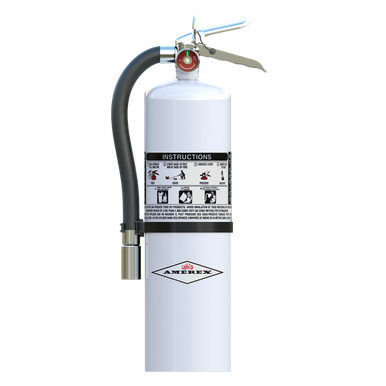
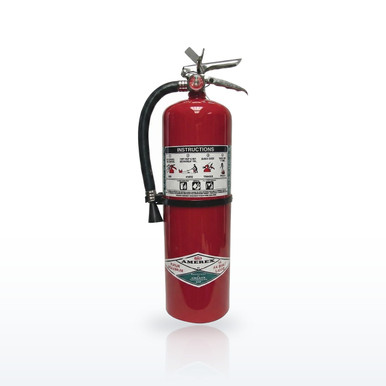
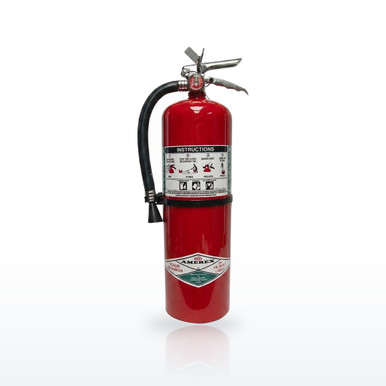
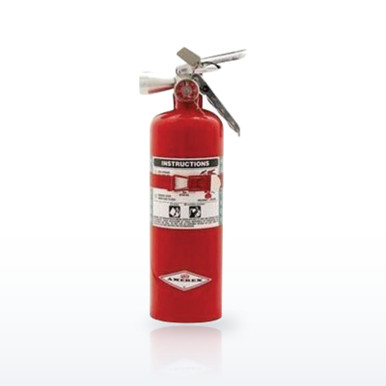
Every halogenated agent extinguisher carries a warning on its nameplate: do not use in confined spaces smaller than a stated volume. The number comes from the agent's listing and exists because a halocarbon discharged in a small closed room can reach a concentration the listing does not allow. NFPA 10 (2026) 5.3.2.6.1 turns that warning into a placement rule: portable extinguishers containing halogenated agents are placed in line with the minimum confined-space volume on the nameplate. Checking a room takes a tape measure: length times width times height, all in feet, gives cubic feet, and the unit's minimum must be at or below it. On Amerex's HT Series the minimums are 2,988 cubic feet for the 12.5 lb 551, 896 for the 3.75 lb 547 and 549, and 427 for the 1.79 lb A537TS. A 20 by 15 ft room with a 10 ft ceiling is 3,000 cubic feet and takes any of them; a 12 by 12 ft battery room with a 9 ft ceiling is 1,296 and takes the 547, 549 or A537TS but not the 551.
Why is this the number that catches submittals? Specs are written to ratings, and the big unit carries the rating. Small rooms on the same project, battery rooms, IDF closets, electrical closets, are often below the big unit's minimum. An architect reviewing a submittal against 5.3.2.6.1 will reject the unit for those rooms. Measure the room types before the submittal and list the model per room.
How to check a room in four steps
Length, width, height, compare.
Example rooms against the Amerex HT Series minimums
| Room | Dimensions (ft) | Volume (cu ft) | 551 (2,988) | 547 / 549 (896) | A537TS (427) |
|---|---|---|---|---|---|
| Data hall | 100 x 60 x 14 | 84,000 | Fits | Fits | Fits |
| Electrical room | 25 x 20 x 10 | 5,000 | Fits | Fits | Fits |
| UPS room | 20 x 15 x 10 | 3,000 | Fits | Fits | Fits |
| Battery room | 16 x 14 x 10 | 2,240 | Does not fit | Fits | Fits |
| IDF closet | 10 x 10 x 9 | 900 | Does not fit | Fits | Fits |
| Small closet | 7 x 6 x 9 | 378 | Does not fit | Does not fit | Does not fit |
Source: Amerex HT Series clean agent sheet; NFPA 10 (2026) 5.3.2.6.1. Volumes are arithmetic on the stated dimensions.
Clean agent units by minimum room volume
6 items · prices liveSmallest minimum first. Ratings and minimums as published by Amerex. Prices are live.
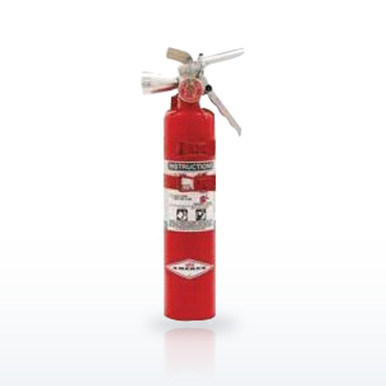
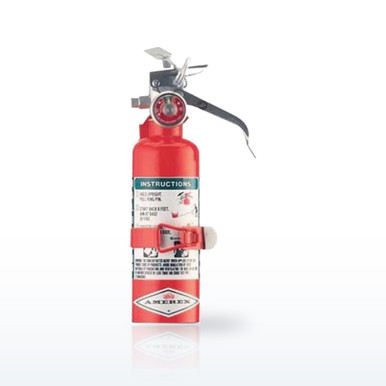
Cabinets, brackets and signs are in Fire protection accessories.
Questions people ask
What does minimum room volume mean on a fire extinguisher?
The smallest enclosed space the manufacturer's listing allows the unit to be used in; discharging a halogenated agent in a smaller room could exceed the allowed concentration.
Is the minimum room volume a code requirement?
Yes. NFPA 10 (2026) 5.3.2.6.1 requires placement of halogenated agent extinguishers to follow the nameplate warning.
What is the minimum room size for the Amerex 551?
2,988 cubic feet (84.6 m3) per Amerex.
Which Halotron BrX unit fits a 2,200 cubic foot room?
The 547 or 549 (896 cu ft and up) or the A537TS (427 and up). The 551 is listed for 2,988 and up.
Does CO2 have a minimum room volume?
CO2 nameplates carry their own confined-space cautions; follow the nameplate and the authority having jurisdiction.
Does an ABC extinguisher have a minimum room volume?
No; 5.3.2.6.1 applies to halogenated agents. ABC units are not used to protect delicate electronic equipment (5.5.4.6.2).
Related guides
Fire extinguishers for UPS and battery roomsSmall rooms and what fitsClean agent extinguishers for data centersWhat NFPA 10 asks for in a data hallAmerex HT SeriesFour units and their minimums side by sideClean agent fire extinguishersEvery clean agent unit, the agents compared, the codeThe ratings, test results and standards shown here are the manufacturers' published values, reproduced as published. Nothing on this page is a recommendation by Bayshore Safety that any product is suitable for a particular task, hazard or workplace. Selecting safety products and protective equipment is the responsibility of the end user and the employer, based on their own hazard assessment and the regulations that apply to their work. Confirm every value on the manufacturer's own documentation before use.