
What is a non-permit confined space? OSHA’s definition, examples of confined spaces, the three atmospheric hazards, and how a permit space is reclassified
A non-permit confined space, in 29 CFR 1910.146(b), is a confined space that does not contain or, with respect to atmospheric hazards, have the potential to contain any hazard capable of causing death or serious physical harm. The construction rule, 1926.1202, says the same in other words: a space that meets the definition of a confined space but not the requirements for a permit-required one. A confined space itself needs three things: large enough to bodily enter and work in, limited or restricted means of entry or exit, and not designed for continuous occupancy. OSHA’s own examples are tanks, vessels, silos, storage bins, hoppers, vaults and pits in 1910.146(b), and the construction scope note in 1926.1201 adds manholes, sewers, boilers, incinerators, HVAC ducts, storm drains, water mains, drilled shafts, digesters, lift stations, cesspools, turbines, chillers and mixers. The three atmospheric hazards that make a space permit-required are in the definition of hazardous atmosphere: a flammable gas above 10 percent of its LFL, oxygen below 19.5 or above 23.5 percent, and any substance above its permissible exposure limit; engulfment, inward-sloping walls and any other recognized serious hazard add the other three permit triggers. A permit space becomes a non-permit space only under (c)(7), after every hazard is eliminated and the employer certifies it; ventilation alone does not count.
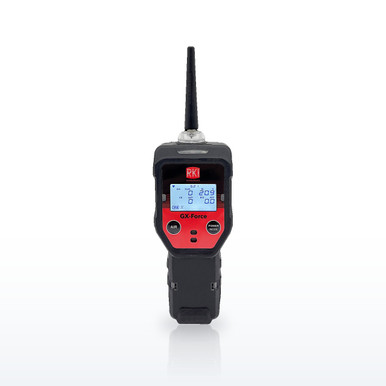 RKI Instruments 72-FA-A-A15 GX-Force 4-Gas Sample-Draw Monitor, LEL/O2/H2S/COPumped four-gas monitor for the pre-entry test from outside the space (RKI data)
Why the classification matters more than the label on the door. Every confined space is evaluated under 1910.146(c)(1); the ones that can hold a hazard become permit spaces and bring the whole permit program with them: written program, permit, attendant, entry supervisor, rescue, testing before and during entry. A non-permit space brings none of that, which is why employers want the classification and why OSHA hedges it with the words “or have the potential to contain.” A tank that is clean today but is plumbed to a product line has the potential; a vault that floods has the potential; a pit next to a sewer connection has the potential. The non-permit decision is the employer’s, has to be defensible, and is revisited whenever the use or configuration of the space changes ((c)(6)). Two routes exist for getting into a permit space without the full permit: (c)(5), alternate procedures where forced air ventilation alone controls the only hazard, which is an atmospheric one, and (c)(7), reclassification where every hazard has been eliminated. The standard draws the line between them in a note: control of atmospheric hazards through forced air ventilation does not constitute elimination.
The six things that make a confined space permit-required
From the 1910.146(b) definitions. The first three are the atmospheric hazards; one of the six is enough.
Examples OSHA itself gives, and how the rules treat them
From the two OSHA standards and the RKI product pages named in the byline:
- 1910.146(b), in the definition of confined space: tanks, vessels, silos, storage bins, hoppers, vaults and pits are named as spaces that may have limited means of entry.
- 1926.1201(a), the construction scope note: bins; boilers; pits (elevator, escalator, pump, valve or other equipment); manholes (sewer, storm drain, electrical, communication or other utility); tanks (fuel, chemical, water or other liquid, solid or gas); incinerators; scrubbers; concrete pier columns; sewers; transformer vaults; HVAC ducts; storm drains; water mains; precast concrete and other pre-formed manhole units; drilled shafts; enclosed beams; vessels; digesters; lift stations; cesspools; silos; air receivers; sludge gates; air preheaters; step-up transformers; turbines; chillers; bag houses; and mixers and reactors.
- The construction rule excludes work under Subpart P (excavations), Subpart S (underground construction, caissons, cofferdams and compressed air) and Subpart Y (diving); a trench is an excavation, not a confined space, unless it is also a space the definition catches.
- Alternate procedures, 1910.146(c)(5): where the only hazard is atmospheric and continuous forced air ventilation alone controls it, entry may proceed without a permit, attendant or rescue arrangements, but the atmosphere is still tested before entry with a calibrated direct-reading instrument for oxygen, flammables and toxics in that order, there may be no hazardous atmosphere while anyone is inside, and the ventilation runs the whole time; the entrant may watch the pre-entry test.
- Reclassification, 1910.146(c)(7): if the space poses no actual or potential atmospheric hazard and every other hazard is eliminated without entry, it may be reclassified as non-permit for as long as the hazards stay eliminated; if entry is needed to eliminate the hazards, that entry is a permit entry. The employer documents the basis in a certification with the date, the location and the signature of the person making the determination, available to each entrant.
- The note under (c)(7): control of atmospheric hazards through forced air ventilation does not constitute elimination; ventilation-controlled spaces are (c)(5) spaces, not reclassified ones.
- The RKI monitors in the band are the direct-reading instruments the (c)(5) test and the (d)(5) permit test use: RKI states the GX-Force draws a sample through its internal pump from up to 100 ft away, and the GX-3R and GX-3R Pro read LEL, O2, H2S and CO by diffusion or with the RP-3R clip-on pump.
The three routes into a space, side by side
| Route | Conditions | What is still required | Paperwork |
|---|---|---|---|
| Non-permit confined space | No hazard, and no potential for an atmospheric hazard, capable of death or serious physical harm (1910.146(b)) | Re-evaluation if the use or configuration changes (c)(6) | The employer’s evaluation under (c)(1) |
| Permit space entered under alternate procedures, (c)(5) | The only hazard is atmospheric and forced air ventilation alone controls it; monitoring data supports it | Pre-entry test in order (O2, flammables, toxics) with a calibrated instrument; no hazardous atmosphere while anyone is inside; continuous ventilation; periodic testing | A certification with date, location and signature of the person making the determination, available to entrants |
| Permit space reclassified as non-permit, (c)(7) | No actual or potential atmospheric hazard and all other hazards eliminated (not merely controlled) | Permit entry if anyone must enter to eliminate the hazards; return to permit status if a hazard arises | A certification with date, location and signature |
| Permit-required confined space, full program | Any of the six characteristics | Written program, permit, testing before and during entry, attendant, entry supervisor, rescue, equipment under (d)(4) | The permit, kept at least 1 year (e)(6) |
Source: 29 CFR 1910.146(b), (c)(1), (c)(5), (c)(6), (c)(7), (d)(4), (e)(6), current e-CFR.
Questions people ask
What is the definition of a non-permit confined space according to OSHA?
A confined space that does not contain or, with respect to atmospheric hazards, have the potential to contain any hazard capable of causing death or serious physical harm (29 CFR 1910.146(b)); 1926.1202 says a space that meets the definition of a confined space but not that of a permit-required one.
What are 5 examples of confined spaces?
OSHA’s own: tanks, vessels, silos, storage bins, hoppers, vaults and pits in 1910.146(b); the construction scope note adds manholes, sewers, boilers, HVAC ducts, storm drains, water mains, drilled shafts, digesters, lift stations, cesspools, turbines, chillers and mixers.
What are the two types of confined spaces?
Permit-required and non-permit. The difference is the hazard: a permit space has or could have a hazardous atmosphere, engulfment, an entrapping configuration or another serious hazard; a non-permit space has none.
What are the three main atmospheric hazards associated with confined spaces?
From the hazardous-atmosphere definition in 1910.146(b): a flammable gas, vapor or mist above 10 percent of its lower flammable limit; oxygen below 19.5 or above 23.5 percent; and a toxic substance above its permissible exposure limit or any condition immediately dangerous to life or health (airborne combustible dust at or above its LFL is listed with the flammables).
Which of the following describes a non-permit confined space?
A space that is large enough to enter, has limited entry and exit and is not designed for occupancy, but holds no actual or potential atmospheric hazard and no engulfment, configuration or other serious hazard. A space whose atmospheric hazard is controlled by ventilation is not a non-permit space; it is entered under the alternate procedures of (c)(5).
What are the safety precautions to be taken in confined spaces?
For a permit space, the whole program: isolation, testing in order, ventilation, attendant, permit, communication, PPE, retrieval and rescue (1910.146(d)). For a non-permit space the employer still has to reevaluate it if conditions change (c)(6), and many employers test the air before entering any confined space.
What are the three types of confined space rescue?
Self-rescue by the entrant on the alarm, non-entry rescue by retrieval line from outside, and entry rescue by a trained, equipped team; 1910.146(k) requires non-entry retrieval unless it would increase the risk, and entry rescuers must have the respirators and training the standard lists.
Can a permit space become a non-permit space?
Yes, by reclassification under 1910.146(c)(7): if the space poses no actual or potential atmospheric hazard and all other hazards are eliminated without entry, it may be reclassified for as long as those hazards remain eliminated, with a certification of the basis. Control by forced-air ventilation is not elimination.
Does ventilation make a space non-permit?
No. The note to (c)(7) says control of atmospheric hazards through forced air ventilation does not constitute elimination; a ventilation-controlled space is entered under the alternate procedures of (c)(5), with testing before and during entry.
Who decides whether a space is permit-required?
The employer, in the workplace evaluation 1910.146(c)(1) requires; in construction a competent person under 1926.1203(a). The decision is recorded, the spaces are posted, and it is revisited when the use or configuration of the space changes.
Do you have to be certified to enter a confined space?
Trained, under 1910.146(g): entrants, attendants and entry supervisors are trained before first assignment, when duties change and when hazards change, and the employer certifies the training with the employee’s name, the trainer’s signature and the dates. There is no government card.
What are some examples of permit-required confined spaces?
Sewers and manholes, tanks and vessels that held product, silos and hoppers that can engulf, pits where heavier-than-air gas can settle, boilers and furnaces, vaults with electrical or steam hazards, and any confined space with a hazardous atmosphere, an engulfment hazard, inwardly converging walls or a floor that slopes to a smaller section, or another recognized serious hazard: the four conditions in 1910.146(b). OSHA’s appendix A decision chart walks a space through them.
What is the difference between permit and non-permit confined space?
A non-permit confined space is a confined space that “does not contain or, with respect to atmospheric hazards, have the potential to contain any hazard capable of causing death or serious physical harm.” A permit-required confined space has one or more of the four hazard conditions. The space is the same; the hazards decide, and a non-permit space becomes a permit space the moment a hazard is introduced into it.
Is a trench a confined space?
In construction, excavation work is regulated by Subpart P and is excluded from the confined space standard by 1926.1201(b)(1). A manhole, vault or pipe reached from a trench can still be a confined space.
Related guides
What is a confined space?The OSHA definition and what makes one permit-requiredPermit-required confined space entryThe permit and the programConfined space gas testing orderOxygen, then flammables, then toxicsConfined spaces in constructionHow Subpart AA differs from 1910.146Confined space entry equipmentWhat 1910.146 requiresThe ratings, test results and standards shown here are the manufacturers' published values, reproduced as published. Nothing on this page is a recommendation by Bayshore Safety that any product is suitable for a particular task, hazard or workplace. Selecting safety products and protective equipment is the responsibility of the end user and the employer, based on their own hazard assessment and the regulations that apply to their work. Confirm every value on the manufacturer's own documentation before use.