
What are the OSHA compliance updates for 2025 and 2026? The construction PPE fit rule, the HazCom update and its 2026 and 2027 dates, where the heat rule stands, and what did not change
Three things are new, and one widely expected thing is not. New since January 13, 2025: 29 CFR 1926.95(c) requires construction employers to ensure that all PPE is selected to ensure that it properly fits each affected employee, the sentence general industry has had since 1994. New on the calendar: the May 2024 hazard communication final rule, which aligned 1910.1200 with the seventh revision of the GHS, reached its compliance date for substances on January 19, 2026, with mixtures following on July 19, 2027, so safety data sheets and labels are changing now and written programs and training follow them. Still pending: the heat injury and illness prevention rule, proposed August 30, 2024, heard in an informal public hearing from June 16 to July 2, 2025, with post-hearing comments closed October 30, 2025, and, by OSHA’s rulemaking page on November 9, 2026, not a final standard. Not changed: the hard hat rule (ANSI Z89.1 under 1910.135 and 1926.100; OSHA’s 2023 safety helmet bulletin is guidance), the PPE payment rule, the hazard assessment and training paragraphs of 1910.132, and the standards on OSHA’s most-cited list, which the companion guide on this site covers.
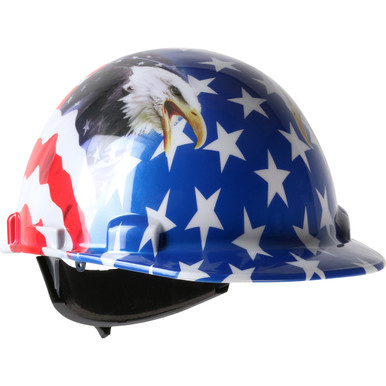 PIP Dom 280-HP341R-USA Hard Hats, Type I Class E, HDPE ShellA hard hat with an adjustable suspension is the simplest case of PPE that fits each employee, which 1926.95(c) now requires on construction sites (OSHA; PIP product data)
Why the question has an answer this year. OSHA’s standards change slowly, and most years the honest answer to "what are the OSHA updates" is nothing in the PPE rules. 2025 and 2026 are different because two rulemakings that ran for years reached their dates together: the construction PPE fit requirement, which closed a gap between the construction standard and the general industry one that had stood since 1994, and the hazard communication update, whose first compliance date fell in January 2026. The third, the heat rule, is the one most people are asking about and the one that has not happened: it is a proposal with a completed hearing and no final text, and the enforcement that exists for heat comes from the general duty clause and from the state plans that wrote their own rules. The product band below is the equipment the fit rule touches most directly: PPE sold in size runs and with adjusters, each with the rating its manufacturer publishes.
The changes, one by one, with the dates and the sources
Each card states what the rule says and where it is published; nothing here is a prediction.
What the most-cited list adds to the picture
From the OSHA page named in the byline:
- OSHA’s preliminary top 10 for fiscal year 2026 (October 1, 2025 to August 31, 2026, posted October 5, 2026) is fall protection (1926.501), hazard communication (1910.1200), lockout/tagout (1910.147), scaffolding (1926.451), ladders (1926.1053), respiratory protection (1910.134), powered industrial trucks (1910.178), fall protection training (1926.503), eye and face protection (1926.102) and machine guarding (1910.212); the same ten standards have held the list, in a shifting order, for more than a decade.
- Two of the three changes on this page land on that list: hazard communication is second every year, and its 2026 and 2027 compliance dates are what an inspector will now read an SDS against; the PPE fit rule applies to the eye and face protection and the fall protection harnesses that are ninth and first.
- The companion guide on this site, What are the most common OSHA violations?, takes the list standard by standard and the PPE behind four of them; this page stays with what changed.
The 2024 to 2027 dates in one place
| Date | What happened or happens | Rule | Source |
|---|---|---|---|
| May 20, 2024 | Hazard communication final rule published (GHS Revision 7) | 29 CFR 1910.1200 | OSHA Hazard Communication final rule, 89 FR 44144 (May 20, 2024) |
| July 19, 2024 | HazCom final rule effective | 1910.1200 | OSHA Hazard Communication final rule, 89 FR 44144 (May 20, 2024) |
| Aug 30, 2024 | Heat injury and illness prevention proposed rule published | proposed 29 CFR 1910.148 and parallel parts | OSHA, Heat Injury and Illness Prevention in Outdoor and Indoor Work Settings rulemaking page (osha.gov/heat-exposure/rulemaking, fetched Nov 9 2026) |
| Dec 12, 2024 | Construction PPE fit final rule published (89 FR 100346) | 29 CFR 1926.95(c) | 29 CFR 1926.95(c) as amended at 89 FR 100346 (Dec. 12, 2024), effective Jan. 13, 2025 (current text fetched from osha.gov Nov 9 2026) |
| Jan 13, 2025 | PPE fit rule effective | 1926.95(c) | 29 CFR 1926.95(c) as amended at 89 FR 100346 (Dec. 12, 2024), effective Jan. 13, 2025 (current text fetched from osha.gov Nov 9 2026) |
| Jan 14, 2025 | Heat rule comment period closed | proposed rule | OSHA, Heat Injury and Illness Prevention in Outdoor and Indoor Work Settings rulemaking page (osha.gov/heat-exposure/rulemaking, fetched Nov 9 2026) |
| June 16 to July 2, 2025 | Heat rule informal public hearing | proposed rule | OSHA, Heat Injury and Illness Prevention in Outdoor and Indoor Work Settings rulemaking page (osha.gov/heat-exposure/rulemaking, fetched Nov 9 2026) |
| Oct 30, 2025 | Heat rule post-hearing comment period closed | proposed rule | OSHA, Heat Injury and Illness Prevention in Outdoor and Indoor Work Settings rulemaking page (osha.gov/heat-exposure/rulemaking, fetched Nov 9 2026) |
| Jan 19, 2026 | HazCom compliance date for substances (updated labels and SDSs) | 1910.1200 | OSHA Hazard Communication final rule, 89 FR 44144 (May 20, 2024) |
| July 19, 2027 | HazCom compliance date for mixtures | 1910.1200 | OSHA Hazard Communication final rule, 89 FR 44144 (May 20, 2024) |
The heat rule has no further date until OSHA publishes a final rule or withdraws the proposal; the rulemaking page is the place that will say which.
Source: 29 CFR 1926.95(c) as amended at 89 FR 100346 (Dec. 12, 2024), effective Jan. 13, 2025 (current text fetched from osha.gov Nov 9 2026); OSHA Hazard Communication final rule, 89 FR 44144 (May 20, 2024); OSHA, Heat Injury and Illness Prevention in Outdoor and Indoor Work Settings rulemaking page (osha.gov/heat-exposure/rulemaking, fetched Nov 9 2026).
Questions people ask
What are the OSHA compliance updates for 2026?
The hazard communication compliance date for substances, January 19, 2026 (mixtures follow July 19, 2027), under the May 2024 GHS Revision 7 final rule, and the construction PPE fit requirement in 1926.95(c), in force since January 13, 2025. The heat rule is not an update: OSHA’s rulemaking page shows the 2025 hearing and the post-hearing comment period that closed October 30, 2025, and no final rule as of November 2026.
What are the hottest safety topics for 2026?
By the rule calendar: hazard communication (new labels and SDSs arriving under the 2026 and 2027 dates), PPE fit on construction sites (1926.95(c)), heat (a proposal with a finished hearing and state rules in force meanwhile), and head protection (the 2023 safety helmet bulletin and the Z89.1-2026 edition). None of the last two is a federal rule change; this page states which is which.
Is the OSHA heat rule in effect?
Not federally. The proposal of August 30, 2024 went through a public hearing in June and July 2025 and a post-hearing comment period that closed October 30, 2025; OSHA’s rulemaking page shows no final rule as of November 9, 2026. Heat is enforced under the general duty clause and under state rules such as Cal/OSHA section 3395.
What does the PPE fit rule require?
That the employer select PPE that properly fits each affected employee: 1926.95(c)(2) in construction since January 13, 2025, and 1910.132(d)(1)(iii) in general industry since 1994. In practice, size runs for gloves, harnesses and hi-vis, adjustable suspensions on hard hats, more than one frame size in glasses, and a hazard assessment that records the fit, with the PPE provided at no cost under the payment rule.
Did OSHA change the hard hat rule?
No. 1910.135 and 1926.100 still require head protection meeting ANSI Z89.1. OSHA’s November 2023 Safety and Health Information Bulletin on safety helmets is guidance, and ANSI/ISEA Z89.1-2026 adds optional Type I+ and Type II+ marks; neither is a rule change. The safety helmet guide on this site covers both.
What changed in the hazard communication standard?
The May 20, 2024 final rule aligned 1910.1200 with GHS Revision 7: revised hazard classes and categories, new label and SDS content, relief for small containers, and a six-month deadline to update shipped-container labels after new hazard information. Chemical manufacturers and importers had to comply for substances by January 19, 2026 and must for mixtures by July 19, 2027; employers update programs and training as the new SDSs arrive.
What are OSHA’s most cited violations?
Fall protection (1926.501), hazard communication (1910.1200) and lockout/tagout (1910.147) lead the FY 2026 preliminary list, followed by scaffolding, ladders, respiratory protection, powered industrial trucks, fall protection training, eye and face protection and machine guarding. The companion guide on this site goes through the ten.
Did OSHA raise its penalties for 2026?
OSHA adjusts its maximum penalties for inflation each January under the 2015 Inflation Adjustment Act; the current figures are published on osha.gov/penalties each year. This page does not reproduce them because they change annually; the rules on this page do not.
Where do I read the rules themselves?
The current text of every OSHA standard is on osha.gov under Laws and Regulations and on ecfr.gov; the heat rulemaking docket is OSHA-2021-0009 on regulations.gov; the Federal Register notices for the fit rule (89 FR 100346) and the HazCom rule (89 FR 44144) are on federalregister.gov.
Related guides
What are the most common OSHA violations?The FY 2026 top 10 and the PPE behind four of themWho pays for PPE?The OSHA employer payment ruleWhat is a PPE hazard assessment?What 1910.132(d) requiresPPE trainingWhat 1910.132(f) requiresOSHA safety glasses requirementsWhat 1910.133 saysOSHA hard hat requirementsWhat 1910.135 and 1926.100 sayThe ratings, test results and standards shown here are the manufacturers' published values, reproduced as published. Nothing on this page is a recommendation by Bayshore Safety that any product is suitable for a particular task, hazard or workplace. Selecting safety products and protective equipment is the responsibility of the end user and the employer, based on their own hazard assessment and the regulations that apply to their work. Confirm every value on the manufacturer's own documentation before use.