
Bayshore Safety & Industrial Supplies Guide
What changed in the OSHA fall protection rules? The dates in force in 2026 and the deadlines still coming
The construction fall protection standard, 29 CFR 1926 Subpart M, has not been rewritten since it took effect in 1995; what has changed around it are dated provisions that bind today and one proposal that does not yet. In force: the body belt prohibition for fall arrest (January 1, 1998); the residential construction directive that ended the interim policy (STD 03-11-002, June 16, 2011); the general industry walking-working surfaces rule (effective January 17, 2017) with its fixed-ladder dates, November 19, 2018 for new and replaced ladders and November 18, 2036 for every fixed ladder over 24 feet (1910.28(b)(9)); ANSI/ASSP Z359.14-2021 for self-retracting lifelines, in effect August 1, 2023, with its Class 1 and Class 2 marking; the PPE fit rule for construction, effective January 13, 2025, which makes proper fit of every piece of PPE, harnesses included, an explicit duty (1926.95(c)(2)); and in California, Cal/OSHA’s move of the residential trigger to 6 feet on July 1, 2025. Proposed, not final: on April 6, 2026 OSHA published a proposed rule (91 FR 17165, Docket OSHA-2025-0072) to remove the November 18, 2036 fixed-ladder deadline while keeping the requirement for new and replacement ladders, and asked for comment on allowing cages and wells to continue; comments closed June 5, 2026 and no final rule has been published as of this writing. The deadline stands until a final rule says otherwise. There is no 2026 change to 1926.501, 1926.502 or 1926.503.
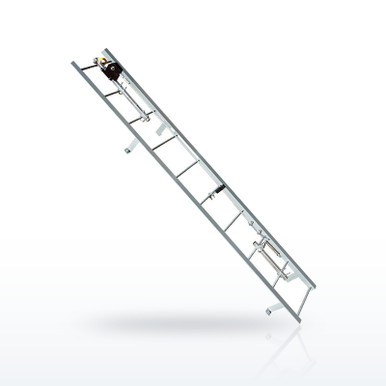 Safewaze 019-12009 Ladder Safety Systems, 100 ft, Complete KitLadder climb system: the equipment the 2018 and 2036 fixed-ladder dates point to (Safewaze data)
Why the question gets asked every year. “What are the OSHA compliance updates for 2026?” is searched because so much around fall protection carries a date: a standard edition on an SRL label, a phase-in paragraph in the ladder rule, a state change on a roofing crew’s jobsite, a proposal in the Federal Register. Most of the dates belong to rules that are already in force and are only now reaching the equipment on site, the way a Class 2 marking replaced Class B on SRL housings through 2023 and the way fit on a harness became a citable paragraph in January 2025. One date is moving in the other direction: the 2036 fixed-ladder deadline, which OSHA has proposed to remove. The honest answer for 2026 is that nothing in Subpart M itself has changed, that two dated rules from 2017 and 2025 now bind, and that one proposal is open. The table below keeps the dates in one place.
The dates in force, and the one proposal
What binds today, and what does not yet.
Fall protection dates, in order
| Date | What | Status, November 2026 |
|---|---|---|
| February 6, 1995 | 29 CFR 1926 Subpart M (1926.500 to 503) in effect | In force, unchanged in substance |
| January 1, 1998 | Body belts prohibited in personal fall arrest systems (note to 1926.502(d)) | In force |
| June 16, 2011 | STD 03-11-002: residential construction follows 1926.501(b)(13) | In force |
| January 17, 2017 | 1910 Subpart D and 1910.140 final rule effective | In force |
| May 17, 2017 | General industry walking-working surfaces training due (1910.30) | In force |
| November 19, 2018 | New and replaced fixed ladders over 24 ft: personal fall arrest or ladder safety system | In force |
| August 1, 2023 | ANSI/ASSP Z359.14-2021 in effect (Class 1 and Class 2) | In force (consensus standard; OSHA’s rule is 1926.502(d)(12)) |
| January 13, 2025 | PPE fit rule for construction, 1926.95(c)(2) | In force |
| July 1, 2025 | Cal/OSHA residential fall protection trigger 6 ft | In force in California |
| April 6, 2026 | Proposed rule to remove the 2036 fixed-ladder deadline (91 FR 17165) | Proposed; comments closed June 5, 2026; no final rule published |
| November 18, 2036 | All fixed ladders over 24 ft equipped with personal fall arrest or ladder safety system (1910.28(b)(9)(i)(D)) | In force unless the proposal is finalized |
Source: Sources as listed in the byline.
What did not change
A reader checking for a 2026 change to Subpart M will not find one.
- The trigger heights: 6 feet in construction (1926.501(b)), 4 feet in general industry (1910.28(b)(1)), 10 feet on scaffolds (1926.451(g)), 15 feet in steel erection (1926.760), 24 feet on fixed ladders.
- The system criteria in 1926.502: 5,000 lb anchorages, 1,800 lb maximum arresting force, 6 ft free fall, 3.5 ft deceleration, 42-inch guardrails, the warning line and control line figures.
- The training rule, 1926.503: before exposure, by a competent person, written certification, retraining on change; no annual refresher was added.
- The rescue duty, 1926.502(d)(20), and the inspection and removal rules, (d)(19) and (d)(21).
- OSHA’s most-cited list: 1926.501 is first on the preliminary FY2026 list, as it has been since 2011, with scaffolding, ladders and fall protection training also in the top ten.
What the dates mean on the equipment
An SRL bought today carries a Class 1 or Class 2 marking and the 2021 edition on its label; one marked Class A or B to the 2014 edition and made before August 2023 may stay in service, per Safewaze’s statement. A harness has to fit the worker it is issued to, which puts the manufacturer’s sizing chart (Safewaze’s runs from S/M through 2XL/3XL by chest, waist and thigh) and the 310 lb ANSI and 420 lb OSHA capacities on the employer’s side of the record. A fixed ladder over 24 feet that is installed or has a section replaced today needs a ladder safety system or an SRL anchored at the top regardless of what happens to the 2036 date; Safewaze’s cable system is listed to ANSI A14.3 for 2 or 4 users. The rows below carry the figures.
Safewaze Q&A on ANSI Z359.14-2021; Safewaze harness sizing chart and Technical Bulletin 00312 as cited on the capacity guide; Safewaze Ladder System Manual 220-00023 as cited on the fixed ladder guide; 29 CFR 1910.28(b)(9)(i)(B) and (C).Questions people ask
What are the OSHA compliance updates for 2026 in fall protection?
None to Subpart M itself. The dated rules that bind in 2026 are the construction PPE fit rule (1926.95(c)(2), effective January 13, 2025), the general industry fixed-ladder dates (2018 and 2036, 1910.28(b)(9)), ANSI/ASSP Z359.14-2021 for SRLs (August 1, 2023) and, in California, the 6-foot residential trigger (July 1, 2025). The one 2026 item is a proposal, published April 6, 2026, to remove the 2036 ladder deadline; it is not final.
What are the new OSHA fall protection rules?
The newest rule that touches fall protection equipment is the PPE fit requirement for construction, 1926.95(c)(2), effective January 13, 2025 (89 FR 100346). The newest fall protection rule as such is the 2016 general industry walking-working surfaces rule, effective January 17, 2017, which added personal fall protection systems to 1910.28 and 1910.140 and set the fixed-ladder phase-in. Construction’s Subpart M dates from 1995.
Is the November 2036 fixed ladder deadline still in effect?
Yes. 1910.28(b)(9)(i)(D) reads that on and after November 18, 2036 all fixed ladders over 24 feet are equipped with a personal fall arrest system or a ladder safety system. OSHA proposed removing the paragraph on April 6, 2026 (91 FR 17165, Docket OSHA-2025-0072); comments closed June 5, 2026 and no final rule has been published as of this writing. The requirement for new and replacement ladders (2018) is not part of the proposal and stays either way.
Did OSHA change the fall protection height in 2025 or 2026?
Federal OSHA did not: 6 feet in construction and 4 feet in general industry are unchanged. California did: Cal/OSHA moved residential framing and roofing to 6 feet on July 1, 2025, as FallTech’s note and the Cal/OSHA residential guide record.
Does OSHA now require a harness to fit?
In construction, explicitly, since January 13, 2025: employers must ensure all PPE is selected to ensure that it properly fits each affected employee (1926.95(c)(2)). OSHA had treated fit as part of 1926.95 before the rule and cited it; the 2024 rule put the words in the paragraph. General industry has had the fit wording in 1910.132(d)(1)(iii) since 1994.
What changed in ANSI Z359.14-2021 for SRLs?
Class A and Class B were replaced by Class 1 and Class 2, defined by anchorage location rather than arrest distance: Class 1 for anchorage at or above the dorsal D-ring, Class 2 for anchorage above or below it including over an edge. Safewaze states there is no longer a separate leading-edge category, that a leading-edge situation calls for Class 2, that its SRLs were all transitioned by August 2023, and that 2014-edition units made before then remain usable per its specifications.
Are body belts still allowed?
Not for fall arrest: the note to 1926.502(d) prohibited them as part of a personal fall arrest system from January 1, 1998. They remain permitted for positioning and travel restraint (1926.502(e); 1910.140(c)), and the aerial lift rule’s “body belt” wording in 1926.453(b)(2)(v) is read with the 1998 note.
When did the residential fall protection rule change?
June 16, 2011, when OSHA Directive STD 03-11-002 took effect and ended the interim residential policy; since then 1926.501(b)(13) applies to residential construction in full, with a written fall protection plan under 1926.502(k) as the only alternative where the employer shows conventional systems are infeasible.
Is OSHA phasing out ladder cages?
As the rule stands, yes: a cage counts as fall protection only on fixed ladders installed before November 19, 2018 and only until the ladder or section is replaced, with the 2036 date closing the window (1910.28(b)(9)). The April 2026 proposal would remove the 2036 date and asks whether cages and wells should be allowed to continue; it is not final, and new and replacement ladders need a ladder safety system or personal fall arrest system either way.
Where do I check whether a proposed rule became final?
The Federal Register entry for the proposal (91 FR 17165, April 6, 2026) and the docket (OSHA-2025-0072) list any final rule when one is published, and the e-CFR text of 1910.28(b)(9) shows the paragraph as it stands; this guide’s byline gives the date its text was checked.
Related guides
Fixed ladder fall protectionThe 2018 and 2036 dates in 1910.28(b)(9)SRL vs PFL, Class 1 vs Class 2What changed in Z359.14-2021Cal/OSHA residential fall protection heightThe July 1, 2025 changeHarness weight capacity and sizingThe fit the 2025 rule points toOSHA fall protection requirements, section by sectionSubpart M as it standsThe ratings, test results and standards shown here are the manufacturers' published values, reproduced as published. Nothing on this page is a recommendation by Bayshore Safety that any product is suitable for a particular task, hazard or workplace. Selecting safety products and protective equipment is the responsibility of the end user and the employer, based on their own hazard assessment and the regulations that apply to their work. Confirm every value on the manufacturer's own documentation before use.
© 2026 Bayshore Safety & Industrial Supplies, Inc. All rights reserved. This guide may not be copied or republished without written permission.