
What is a clean agent fire extinguisher, how does it work, and when does NFPA 10 (2026) point to one?
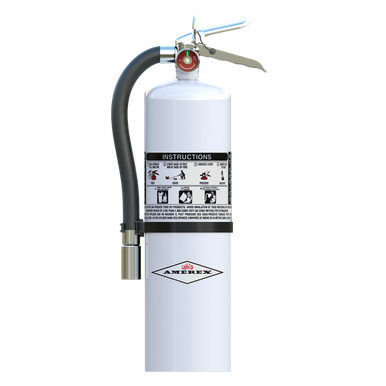
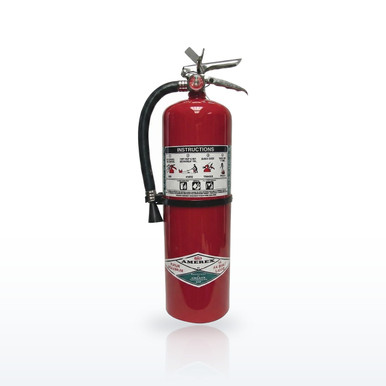
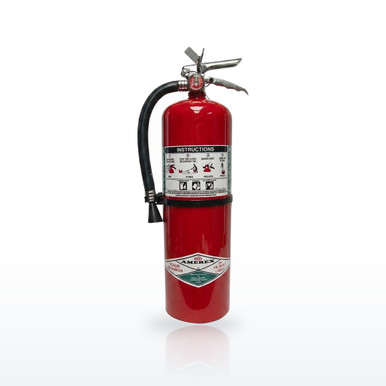
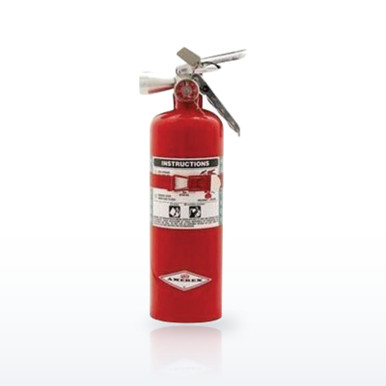
NFPA 10 (2026) 3.3.5 defines a clean agent as an electrically non-conducting, volatile or gaseous fire extinguishant that does not leave a residue upon evaporation. In portable extinguishers that means the halogenated (clean) agents of 3.3.18, halocarbons such as Halotron BrX (2-BTP) and Halotron I (HCFC-123) and the legacy halons, plus carbon dioxide, and water mist is grouped with them in practice because it is listed for Class C and leaves only water. They work by interrupting the fire chemically, cooling it, or displacing oxygen at the flame, and then evaporate, so the equipment they protected is not buried in powder. That is why the standard points to them: 5.5.4.6.1 selects extinguishers for delicate electronic equipment from Class C-listed types, and 5.5.4.6.2 keeps dry chemical out of that job. The trade-offs are a nameplate minimum room volume for halogenated units (5.3.2.6.1), B:C-only ratings on the small units, and service intervals that differ by agent: rechargeable halogenated units carry a 6-year internal examination and 12-year hydrostatic test, nonrechargeable units none with a 12-year life, CO2 5 years for both.
Why "clean" is the whole point. An ABC dry chemical unit saves the room and ruins the rack: ammonium phosphate powder is corrosive, gets into every connector and fan, and the cleanup is often the larger loss. A clean agent leaves nothing to clean, so the server, the switchgear or the lab instrument goes back into service. The standard writes that logic into 5.5.4.6.
Clean agents in portables, side by side
As the manufacturers and NFPA 10 (2026) describe them.
Clean agents compared on the things that decide a purchase
| Item | Halotron BrX | Halotron I | Carbon dioxide | Water mist |
|---|---|---|---|---|
| Classes | A, B, C (551); B, C (small) | A, B, C (11 lb+); B, C (small) | B, C | A, C |
| Residue | None | None | None | Water |
| Minimum room volume on nameplate | Yes (551: 2,988 cu ft) | Yes | Confined-space caution | No |
| Rechargeable | No (Amerex HT Series) | Yes | Yes | Yes |
| Internal examination / hydro (NFPA 10 2026) | None; 12-year life | 6 yr / 12 yr | 5 yr / 5 yr | 5 yr / 5 yr |
| Weight class | Light to medium | Medium to heavy | Heavy | Medium |
| Listing | UL 2129, UL 711 | UL 2129, UL 711 | UL 154, UL 711 | UL 626, UL 711 |
Source: NFPA 10 (2026) 4.1.1, Tables 7.3.3.1 and 8.3.1, 7.3.6.3; manufacturer product data as linked on each product page.
Clean agent extinguishers
9 items · prices liveEvery clean agent unit we carry. Ratings as published by the manufacturer. Prices are live.
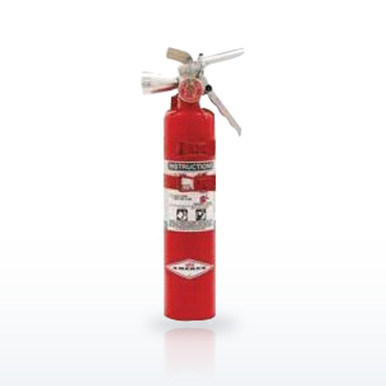
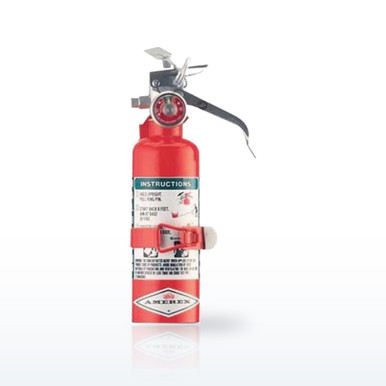
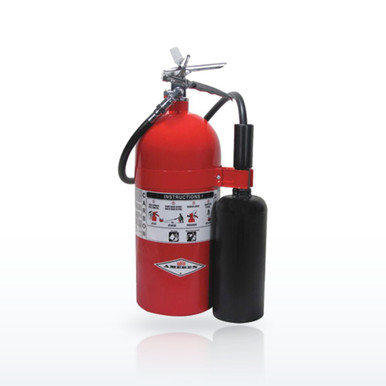

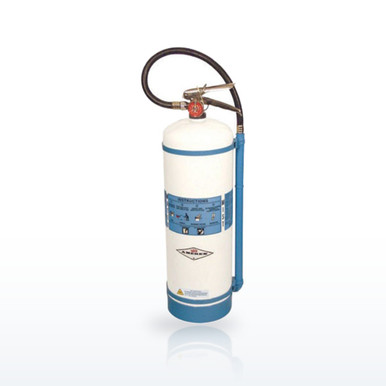
Cabinets, brackets and signs are in Fire protection accessories.
Questions people ask
What is a clean agent?
NFPA 10 (2026) 3.3.5: an electrically non-conducting, volatile or gaseous extinguishant that leaves no residue on evaporation.
What is a clean agent fire extinguisher used for?
Fires near delicate electronic equipment, where NFPA 10 (2026) 5.5.4.6 points to Class C-listed types and away from dry chemical; also museums, labs, clean rooms and healthcare where residue is the larger loss.
Is CO2 a clean agent?
It is non-conductive and leaves no residue (3.3.3); NFPA 10 lists halogenated agents separately (3.3.18) but CO2 is sold and used as a clean agent portable.
Is a clean agent extinguisher safe to use in a small room?
Halogenated units carry a nameplate minimum room volume, and 5.3.2.6.1 requires placement to follow it. Evacuate and ventilate after any discharge, per the manufacturer's manual.
How long does a clean agent extinguisher last?
Rechargeable halogenated units: serviced on the 6-year and 12-year intervals. Nonrechargeable Amerex Halotron BrX units: 12 years from manufacture (7.3.6.3).
Is a clean agent system the same as a clean agent extinguisher?
No. Fixed total-flooding systems are designed under NFPA 2001; portable extinguishers under NFPA 10. A room with a system still needs portables, and a placard says to actuate the system first (5.5.4.5.3).
Related guides
Clean agent fire extinguishersEvery clean agent unit, the agents compared, the codeHalotron I vs Halotron BrXWhat is different and which to buyWhat replaced halonHalon, the phaseout, and the clean agents that followedClass C fire extinguishersWhat Class C means and which agents carry itThe ratings, test results and standards shown here are the manufacturers' published values, reproduced as published. Nothing on this page is a recommendation by Bayshore Safety that any product is suitable for a particular task, hazard or workplace. Selecting safety products and protective equipment is the responsibility of the end user and the employer, based on their own hazard assessment and the regulations that apply to their work. Confirm every value on the manufacturer's own documentation before use.