
What replaced Halon 1211 and 1301 fire extinguishers, and can you still use a halon extinguisher?
Halon 1211 (bromochlorodifluoromethane) and Halon 1301 (bromotrifluoromethane) are ozone-depleting agents whose production ended under the Montreal Protocol; new halon has not been made in the United States since the mid-1990s, and the halon in service today is recycled. In portable extinguishers the replacements are halocarbon clean agents: Halotron I (HCFC-123), Halotron BrX (2-BTP), HFC-236fa and similar, along with carbon dioxide and water mist for Class C. NFPA 10 (2026) still allows existing halon extinguishers: 4.1.2.2 lets units listed to the withdrawn UL 1093 standard stay in service if maintained, 5.3.2.6 limits halon units to places where a clean agent is necessary, and 7.2.3.3, 7.3.6.2 and 8.4.1.3 require that halon be recovered with a closed recovery system, never discharged for service, and that a deficient nonrechargeable halon unit go back to the manufacturer or a distributor. New installations use the replacement agents.
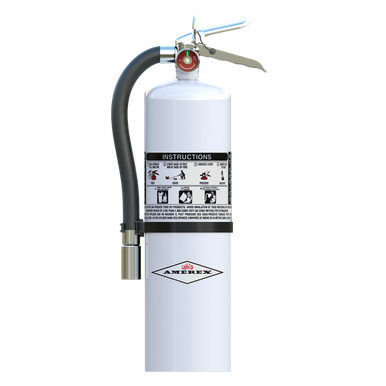 Amerex 28084 Model 551 Halotron BrX Clean Agent Fire Extinguisher, 12.5 lbHalotron BrX, the halon-replacement chemistry Amerex builds the HT Series on
Why did halon need replacing at all? Halon was close to the perfect portable agent: non-conductive, no residue, light, long range. Its bromine is also what breaks ozone. The Montreal Protocol ended production of Halon 1211 and 1301, and NFPA 10 now treats halon as an agent to be conserved and recovered, which is why every halon maintenance step in Chapter 7 runs through a listed closed recovery system (3.3.6.2, 7.3.6.2).
What to do with the halon extinguishers you have
NFPA 10 (2026) answers each case.
Halon and its replacements in portables
| Agent | Type | Still manufactured | Listed classes (typical) | NFPA 10 (2026) notes |
|---|---|---|---|---|
| Halon 1211 | Halon (3.3.18.2) | No; recycled stock only | A, B, C | Closed recovery for all service (7.3.6.2); return nonrechargeable units for recovery (8.4.1.3) |
| Halon 1301 | Halon | No; recycled stock | Systems mainly | Same recovery rules |
| Halotron I | Halocarbon, HCFC-123 | Yes | A, B, C or B, C by size | 6-year internal, 12-year hydro (Tables 7.3.3.1, 8.3.1) |
| Halotron BrX | Halocarbon, 2-BTP | Yes | A, B, C (551) or B, C | Nonrechargeable Amerex units: no internal exam or hydro, 12-year life (7.3.6.3) |
| HFC-236fa and other HFCs | Halocarbon, HFC | Subject to the AIM Act HFC phasedown; check the EPA | A, B, C or B, C | As halogenated agents |
| Carbon dioxide | Inert gas | Yes | B, C | 5-year internal and hydro |
| Water mist | Water | Yes | A, C | 5-year hydro |
Source: NFPA 10 (2026) 3.3.18, Tables 7.3.3.1 and 8.3.1, 7.3.6.2, 7.3.6.3, 8.4.1.3; manufacturer data as linked on each product page.
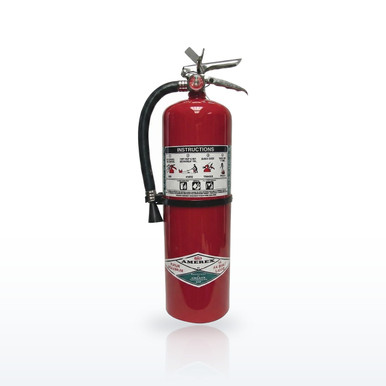
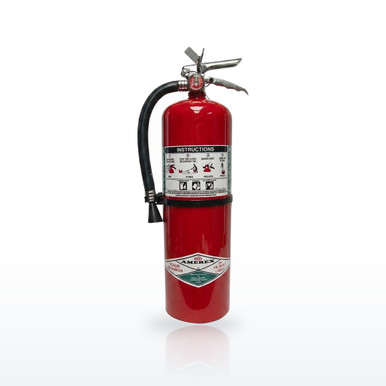
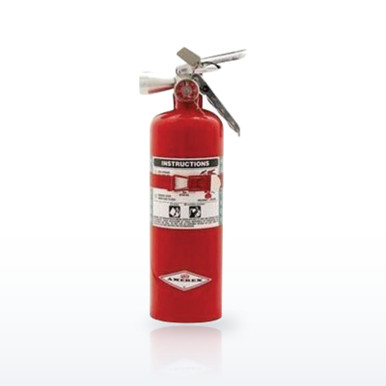
Clean agent units that replace halon
9 items · prices liveListed under the agent; ratings as published by the manufacturer. Prices are live.
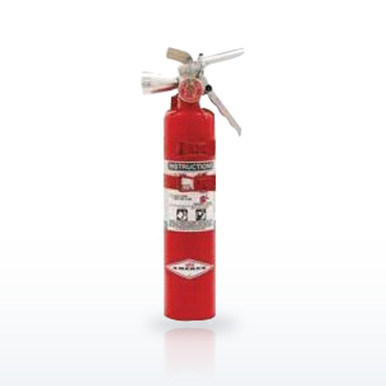
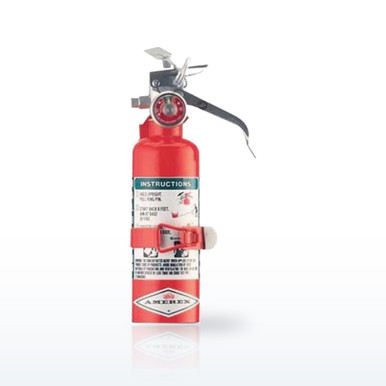
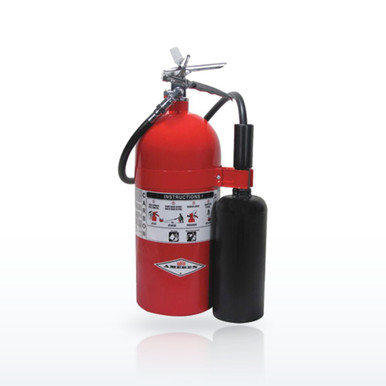

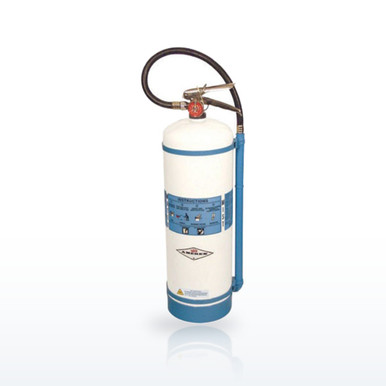
Cabinets, brackets and signs are in Fire protection accessories.
Questions people ask
Can you still buy a halon fire extinguisher?
New halon is not manufactured; what is sold is recycled halon in recharged units, mostly for aviation. For buildings the replacements are halocarbon clean agents, CO2 and water mist.
Is it illegal to have a halon extinguisher?
NFPA 10 (2026) 4.1.2.2 allows halon units listed to UL 1093 to stay in service when maintained per the standard. Discharging halon for service or testing is what the standard prohibits (7.3.6.2).
What is the closest replacement for a Halon 1211 extinguisher?
A halocarbon clean agent unit: Halotron I or Halotron BrX. Both are non-conductive, leave no residue and are listed for Class C; check the nameplate minimum room volume (5.3.2.6.1).
Why was halon banned?
Its bromine depletes stratospheric ozone; the Montreal Protocol ended production. Check the EPA's current rules for the details.
Does halotron replace halon one for one?
By rating, a 12.5 lb Halotron BrX or 15.5 lb Halotron I unit carries 2A:10B:C. Agent weights differ; select by rating and room volume, not by pound.
Related guides
Halotron I vs Halotron BrXWhat is different and which to buyClean agent fire extinguishersEvery clean agent unit, the agents compared, the codeClean agent fire extinguishers for data centersWhat NFPA 10 asks for in a data hallNFPA 10 for nonrechargeable extinguishersInspection, maintenance and the 12-year ruleThe ratings, test results and standards shown here are the manufacturers' published values, reproduced as published. Nothing on this page is a recommendation by Bayshore Safety that any product is suitable for a particular task, hazard or workplace. Selecting safety products and protective equipment is the responsibility of the end user and the employer, based on their own hazard assessment and the regulations that apply to their work. Confirm every value on the manufacturer's own documentation before use.