
Work Gloves for Demolition and Heavy Construction
144 gloves from 8 brands that a manufacturer names for this work or whose published rating falls in the band the ISEA Key or the manufacturer's own chart names for it, with current prices. Ratings as published by each manufacturer. We sell nationwide; ships in 1–2 business days.
What the rule says
Each entry is condensed from the paragraph cited; the paragraph itself is the rule and the link opens it.
29 CFR 1910.138(b): Selection: employers base the selection of hand protection on an evaluation of its performance characteristics relative to the tasks to be performed, the conditions present, the duration of use, and the hazards and potential hazards identified.
29 CFR 1910.138(a): General requirements: employers select and require the use of appropriate hand protection when hands are exposed to hazards such as skin absorption of harmful substances, severe cuts or lacerations, severe abrasions, punctures, chemical burns, thermal burns, and harmful temperature extremes.
29 CFR 1910.132(d)(1): Hazard assessment: the employer assesses the workplace to determine whether hazards are present, or likely to be present, that necessitate the use of personal protective equipment, and selects PPE that will protect the affected employee from the hazards identified.
Cal/OSHA Title 8 §3384(a): Hand protection: employers select, provide and require employees to use appropriate hand protection when hands are exposed to hazards such as skin absorption of harmful substances, cuts or lacerations, abrasions, punctures, chemical burns, thermal burns, radioactive materials, and harmful temperature extremes; §3384(b): hand protection is not worn where it could be caught in moving machinery or materials.
Cal/OSHA Title 8 §1514 (Construction Safety Orders): Personal protective devices on construction work: the employer requires employees to use the required personal protective equipment, used in accordance with the manufacturer's instructions, including protective equipment for the hands.
Source: 29 CFR, Occupational Safety and Health Standards, as published by OSHA (ecfr.gov), and California Code of Regulations, Title 8, as published by Cal/OSHA (dir.ca.gov), read Nov 6 2026.
What the standards body and the manufacturers publish for this work
Puncture level 5: oil and gas, mining, heavy construction, demolition, manufacturing, fabrication.
On this page: 67 gloves that a manufacturer names for this work in its own documents and 65 whose published rating falls in the band the standards body or the manufacturer names. Each row says which document or which published band put it here.
Documents read: PIP Product Information workbook, October 2026 (APPLICATIONS column, written onto the product pages Nov 6 2026 as "Manufacturer Stated Applications") (read Nov 6 2026); Liberty Safety 2022 Full Products Catalog (APPLICATIONS line per style), read Nov 6 2026 (read Nov 6 2026); The "Manufacturer Stated Applications" field on each product page (the manufacturer's own application words; the value names the document when it is not the product page) (read Nov 6 2026); ISEA, Key to Hand Protection Classifications (ANSI/ISEA 105-2024), November 2024 (read Oct 26 2026).
Source: PIP Product Information workbook, October 2026; Liberty Safety 2022 Full Products Catalog; ISEA, Key to Hand Protection Classifications (ANSI/ISEA 105-2024), November 2024. The products listed are the styles the manufacturer names for the task or whose published rating falls in the band the standards body or the manufacturer names, not a selection by Bayshore Safety.
Narrow the list by what the job is like, cut level, coating, glove type, brand or size. Prices shown are current.
144 gloves
Ratings, coatings, gauges and sizes are as published by each manufacturer. The first group is the gloves a manufacturer names for this work; each row says why it is listed. Tap a group to open it.
 Named by the manufacturer for this work67 gloves
- Caiman 1353 Cold Weather Gloves, Heatrac Lined — Caiman · Pack
- Caiman 1354 Cold Weather Gloves, Heatrac Lined — Caiman · Pack
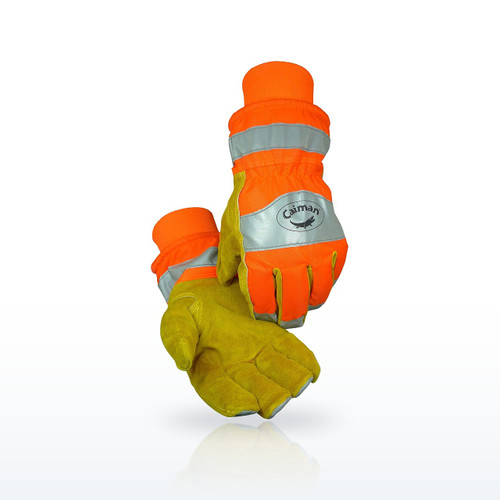
- Caiman 1398 Cold Weather Gloves, Polapile Lined — Caiman · Pack
- Caiman 2390 Cold Weather Gloves, Heatrac Lined — Caiman · Pack
- Caiman 2396 Cold Weather Gloves, Uncoated, Heatrac Lined — Caiman · Uncoated · Pack
- Caiman 2900 High Dexterity Gloves, Top Grain Pigskin, Leather Palm — Caiman · Dozen
- Caiman 2908 Cold Weather Gloves, Foam Lined — Caiman · Pack
- Caiman 2911 Cold Weather Gloves, Silicone Coated, Heatrac Lined — Caiman · Silicone · Pack
- Caiman MAG 2915 Cold Weather Gloves, Heatrac Lined — Caiman · Pack
- Caiman MAG 2919 Cold Weather Gloves, Heatrac Lined — Caiman · Pack
- Caiman MAG 2950 High Dexterity Leather Palm Gloves, Synthetic Leather Padded — Caiman · Pair
- Caiman MAG 2951 High Dexterity Gloves, Silicon Grip Gloves, Large — Caiman · Pair
- Caiman MAG 2955 High Dexterity Gloves, White Goat Grain Leather Palm Gloves — Caiman · Pair
- Caiman MAG 2956 High Dexterity Gloves, Gold Grain Leather Palm Gloves, X-Large — Caiman · Pair
- Caiman MAG 2960 Cold Weather Gloves, Heatrac Lined — Caiman · Pack
- Caiman MAG 2970 High Dexterity Leather Palm Gloves, Deerskin Padded Palm Knuckle — Caiman · Pair
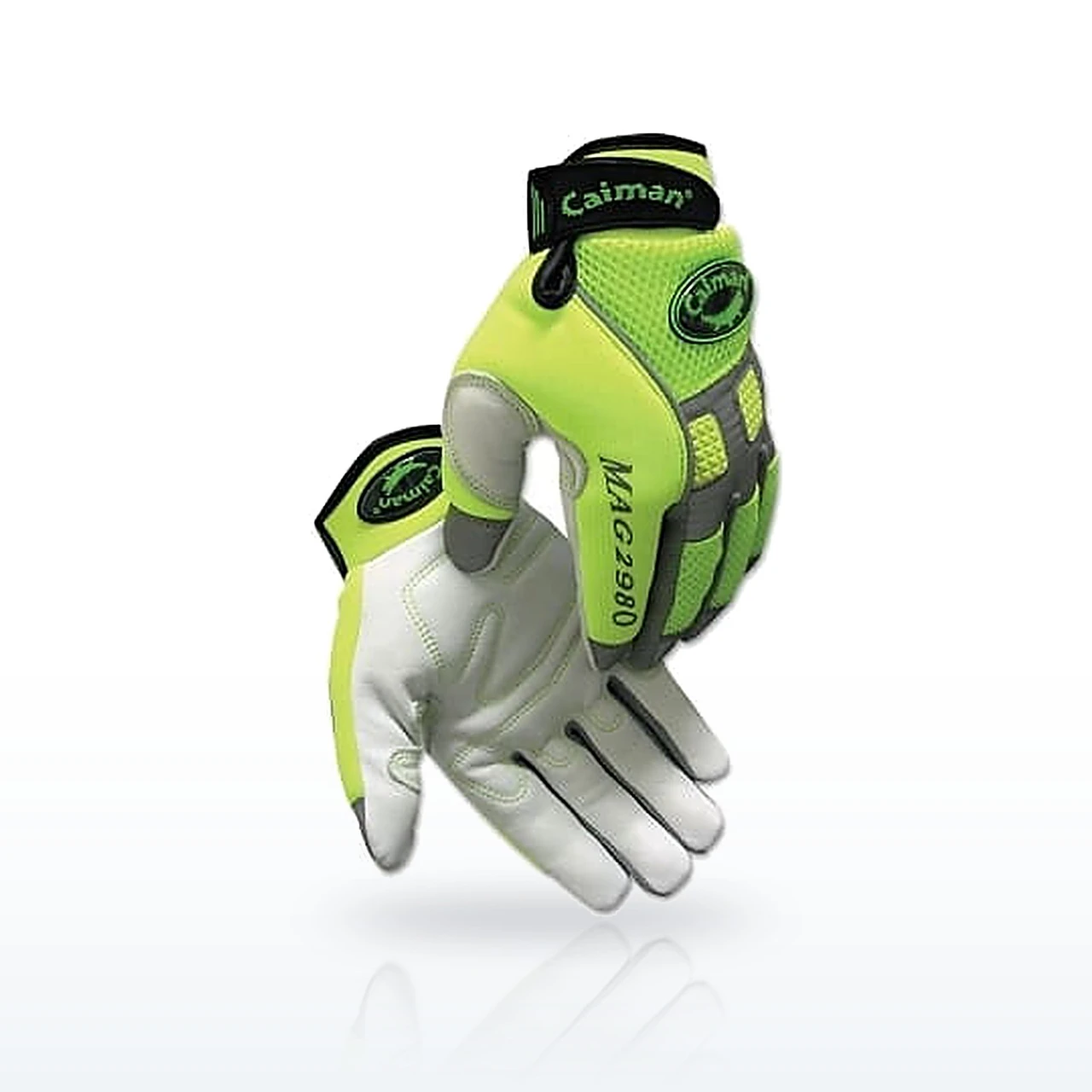
- Caiman MAG 2980 Leather Palm Gloves, Goat Grain Hi-Vis Reflective Back Knuckle — Caiman · Pair
- G-Tek 39-C1300 Latex Coated Gloves, ANSI A1 — G-Tek · ANSI A1 (721 g) · abrasion 3 · puncture 3 · EN 388 2142X · Latex · 10-gauge · Dozen
- G-Tek 39-C1305 Latex Coated Gloves, ANSI A1 — G-Tek · ANSI A1 (333 g) · abrasion 3 · puncture 3 · EN 388 2142X · Latex · 10-gauge · Dozen
- G-Tek 713BLDD Latex Coated Gloves, Polyester — G-Tek · abrasion 3 · puncture 2 · EN 388 2131 · Latex · 13-gauge · Dozen
- G-Tek 713SLC Latex Coated Gloves, Nylon — G-Tek · abrasion 3 · puncture 2 · EN 388 3121X · Latex · 13-gauge · Dozen
- G-Tek ECO Series 19-D313 Cut Resistant Gloves, ANSI A4, Latex Coated — G-Tek · ANSI A4 (2003 g) · abrasion 4 · puncture 3 · EN 388 4X43D · Latex · 13-gauge · Dozen
- G-Tek KEV 09-K1310 Cut Resistant Gloves, ANSI A3, Latex Coated — G-Tek · ANSI A3 (1262 g) · abrasion 3 · puncture 5 · EN 388 2444C · Latex · 10-gauge · Dozen
- G-Tek PolyKor 09-K1320 Cut Resistant Gloves, ANSI A3, Latex Coated — G-Tek · ANSI A3 (1211 g) · abrasion 3 · puncture 4 · EN 388 3X43C · Latex · 10-gauge · Dozen
- G-Tek PolyKor 16-813 Cut Resistant Gloves, ANSI A2, Latex Coated — G-Tek · ANSI A2 (688 g) · abrasion 4 · puncture 4 · EN 388 3343B · Latex · 13-gauge · Dozen
- G-Tek PolyKor 41-8014 Cold Weather Gloves, Latex Coated, ANSI A4 — G-Tek · ANSI A4 (2150 g) · EN 388 3X42DX · Latex · 10-gauge · Dozen
- G-Tek PolyKor 41-8035 Cold Weather Gloves, Latex Coated, ANSI A5 — G-Tek · ANSI A5 (2950 g) · EN 388 3X42EX · Latex · 10-gauge · Dozen
- G-Tek PosiGrip 715SLC Latex Coated Gloves, Nylon — G-Tek · abrasion 3 · puncture 2 · EN 388 3131X · Latex · 15-gauge · Dozen
- G-Tek PosiGrip HVG700SLC Latex Coated Gloves, ANSI A1 — G-Tek · ANSI A1 (333 g) · abrasion 4 · puncture 3 · EN 388 2142X · Latex · 10-gauge · Dozen
- Liberty Safety 3280Q Coated Gloves, Reinforced Palm Patch Gloves — Liberty Safety · Dozen
- Liberty Safety 6817 Premium Goatskin Driver, Keystone Thumb Gloves — Liberty Safety · Dozen
- Liberty Safety 6827 Quality Goatskin Driver, Keystone Thumb Gloves — Liberty Safety · Dozen
- Liberty Safety DayBreaker 0920 High Dexterity Gloves, ANSI A2 — Liberty Safety · ANSI A2 · EN 388 4221 · Pair
- MCR Safety Predalite 9780 Nitrile Coated Work Gloves — MCR Safety · abrasion 4 · Nitrile · Dozen
- PIP 120-4100 Leather Palm Gloves, ANSI A4, Top Grain Goatskin — PIP · ANSI A4 (1617 g) · abrasion 3 · puncture 4 · EN 388 3X33DX · Dozen
- PIP 120-4150 Leather Palm Gloves, ANSI A4, Top Grain Goatskin — PIP · ANSI A4 (1617 g) · abrasion 3 · puncture 4 · EN 388 3X33DX · Dozen
- PIP 1555 Cold Weather Gloves, Thermal Lined — PIP · Dozen
- PIP 1JL6133 Cold Weather Gloves, White Thermal Lined — PIP · Dozen
- PIP 39-C120 Latex Coated Gloves, Cotton/Polyester — PIP · abrasion 2 · puncture 2 · EN 388 2111X · Latex · 10-gauge · Dozen
- PIP 39-C122 Latex Coated Gloves, Cotton/Polyester — PIP · abrasion 2 · puncture 2 · EN 388 2111X · Latex · 10-gauge · Dozen
- PIP 5000 Leather Palm Gloves, Top Grain Cowhide, Premium Grade — PIP · Dozen
- PIP 5555 Cold Weather Gloves, Thermal Lined — PIP · Dozen
- PIP 558F Cold Weather Gloves, Fleece Lined — PIP · Dozen
- PIP 77-265 Cold Weather Gloves, Thermal Lined — PIP · Dozen
- PIP 77-269 Cold Weather Gloves, 3M Thinsulate Lined — PIP · Dozen
- PIP 77-469 Cold Weather Gloves, 3M Thinsulate Lined — PIP · Dozen
- PIP 78-3927 Cold Weather Gloves, 3M Thinsulate Lined — PIP · Dozen
- PIP 78-7863B Cold Weather Gloves, Fleece Lined — PIP · Dozen
- PIP 87-1563 Leather Palm Gloves, Top Grain Cowhide, Regular Grade — PIP · Dozen
- PIP 87-1563P Leather Palm Gloves, Top Grain Cowhide, Economy Grade — PIP · Dozen
- PIP 87-1663 Leather Palm Gloves, Top Grain Cowhide, Regular Grade — PIP · Dozen
- PIP 87-1944 Leather Palm Gloves, Top Grain Goatskin, Premium Grade — PIP · Dozen
- PIP 87-3563 Leather Palm Gloves, Top Grain Pigskin, Economy Grade — PIP · Dozen
- PIP 9920KT Cold Weather Gloves, 3M Thinsulate Lined — PIP · Dozen
- PIP 994KOTP Cold Weather Gloves, Thermal Lined — PIP · Dozen
- PIP 994KP Cold Weather Gloves, Thermal Lined — PIP · Dozen
- PIP Armor 55-3243 Chemical Resistant Gloves, Latex — PIP · Latex · Dozen
- PIP Armor 55-3271 Chemical Resistant Gloves, Latex, Jersey Lined — PIP · Latex · Dozen
- PIP Armor 55-3273 Chemical Resistant Gloves, Latex, Jersey Lined — PIP · Latex · Dozen
- PIP HVY1555 Cold Weather Gloves, 3M Thinsulate Lined — PIP · Dozen
And 7 more in this group; use the selector or the group's own page.
 ANSI A1 — 200 to 499 grams (0.4 to 1.1 lb)1 glove
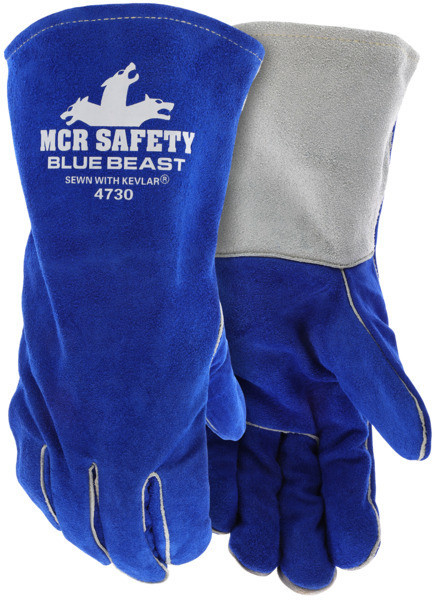
- MCR Safety Blue Beast 4730 Welding Gloves, Cowhide, ANSI A1, Foam Lined — MCR Safety · ANSI A1 · puncture 5 · Dozen
 ANSI A2 — 500 to 999 grams (1.1 to 2.2 lb)10 gloves
- G-Tek 120-5130 High Dexterity Gloves, ANSI A2, ANSI 138 Level 2 — G-Tek · ANSI A2 (594 g) · abrasion 6 · puncture 5 · EN 388 4X43BP · Nitrile · 13-gauge · Dozen
- G-Tek PolyKor 16-343LG Cut Resistant Gloves, ANSI A2, Nitrile Coated — G-Tek · ANSI A2 (753 g) · abrasion 5 · puncture 5 · EN 388 4344BX · Nitrile · 13-gauge · Dozen
- MCR Safety 1500K Leather Palm Work Gloves, ANSI A2, Cowhide, Premium A Grade — MCR Safety · ANSI A2 · abrasion 4 · puncture 5 · Dozen
- MCR Safety Big Jake 1745 Leather Palm Work Gloves, ANSI A2, Cowhide — MCR Safety · ANSI A2 · abrasion 6 · puncture 5 · Dozen
- MCR Safety Big Jake 1746 Welding Gloves, Cowhide, ANSI A2, Premium A+ Grade — MCR Safety · ANSI A2 · abrasion 6 · puncture 5 · Dozen
- MCR Safety Mustang 4620 Welding Gloves, Cowhide, ANSI A2, Jersey Lined — MCR Safety · ANSI A2 · abrasion 4 · puncture 5 · Dozen
- MCR Safety Red Ram 4921 Welding Gloves, Cowhide, ANSI A2, Select B+ Grade — MCR Safety · ANSI A2 · abrasion 3 · puncture 5 · Dozen
- MCR Safety Red Ram 4921 Welding Gloves, Cowhide, ANSI A2, Select B+ Grade — MCR Safety · ANSI A2 · abrasion 3 · puncture 5 · Dozen
- MCR Safety Red Ram 4921 Welding Gloves, Cowhide, ANSI A2, Select B+ Grade — MCR Safety · ANSI A2 · abrasion 3 · puncture 5 · pack size
- Radians Radwear Silver Series RWG531 Cut Resistant Gloves, ANSI A2 — Radians · ANSI A2 (960 g) · abrasion 2 · puncture 5 · EN 388 4344X · Polyurethane · 13-gauge · Dozen
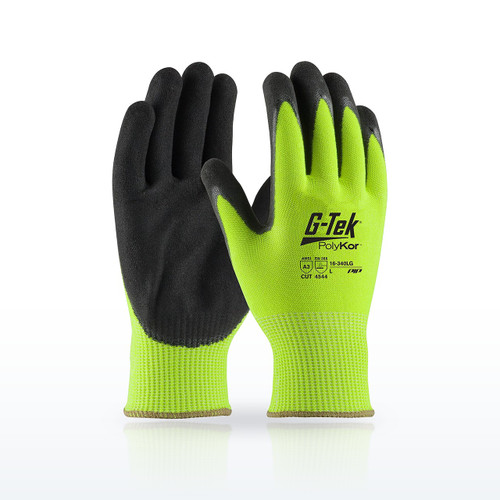 ANSI A3 — 1,000 to 1,499 grams (2.2 to 3.3 lb)6 gloves
- G-Tek PolyKor 16-340LG Cut Resistant Gloves, ANSI A3, Nitrile Coated — G-Tek · ANSI A3 (1208 g) · abrasion 4 · puncture 5 · EN 388 4544CX · Nitrile · 13-gauge · Dozen
- MCR Safety Big Jake 1702 Winter Work Gloves, ANSI A3, Cowhide, Premium A+ Grade — MCR Safety · ANSI A3 · abrasion 5 · puncture 5 · Dozen
- MCR Safety Cut Pro 1400K Leather Palm Work Gloves, ANSI A3, Cowhide — MCR Safety · ANSI A3 · abrasion 4 · puncture 5 · Dozen
- MCR Safety Cut Pro 9687 Cut Resistant Gloves, ANSI A3, Latex Coated — MCR Safety · ANSI A3 · abrasion 4 · puncture 5 · Latex · 10-gauge · Dozen
- MCR Safety Cut Pro 9687 Cut Resistant Gloves, ANSI A3, Latex Coated — MCR Safety · ANSI A3 · abrasion 4 · puncture 5 · Latex · 10-gauge · Dozen
- Portwest A718 Impact Gloves, ANSI A3, ANSI 138 Level 2, Nitrile Foam Coated — Portwest · ANSI A3 · abrasion 6 · puncture 5 · EN 388 4X43CP · Nitrile · 13-gauge
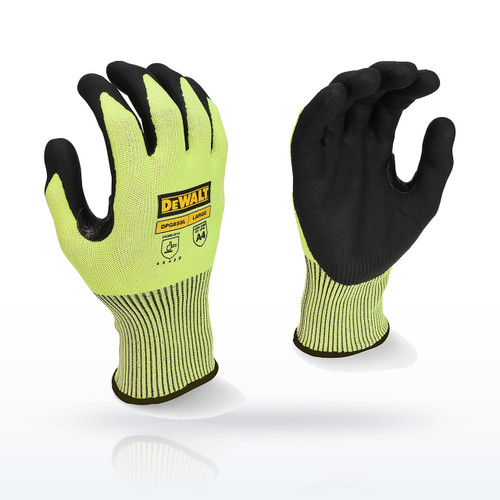 ANSI A4 — 1,500 to 2,199 grams (3.3 to 4.8 lb)13 gloves
- DEWALT DPG855 Cut Resistant Gloves, ANSI A4, Foam Nitrile Coated — DEWALT · ANSI A4 · abrasion 4 · puncture 5 · EN 388 4X42D · Foam Nitrile · 13-gauge · Pack
- DEWALT DPG855T Cut Resistant Gloves, ANSI A4, Foam Nitrile Coated — DEWALT · ANSI A4 · puncture 5 · Foam Nitrile · 13-gauge · Pack
- G-Tek 120-5150 High Dexterity Gloves, ANSI A4, ANSI 138 Level 2 — G-Tek · ANSI A4 (1812 g) · abrasion 6 · puncture 5 · EN 388 4X44DP · Nitrile · 13-gauge · Dozen
- G-Tek KEV 09-K1300 Cut Resistant Gloves, ANSI A4, Latex Coated — G-Tek · ANSI A4 (1550 g) · abrasion 3 · puncture 5 · EN 388 3544D · Latex · 7-gauge · Dozen
- G-Tek PolyKor 15-210 Cut Resistant Gloves, ANSI A4, Nitrile Coated — G-Tek · ANSI A4 (1766 g) · abrasion 3 · puncture 5 · EN 388 4X44D · Nitrile · 13-gauge · Dozen
- G-Tek PolyKor 15-215 Cut Resistant Gloves, ANSI A4, Nitrile Coated — G-Tek · ANSI A4 (1865 g) · abrasion 3 · puncture 5 · EN 388 4X44D · Nitrile · 13-gauge · Dozen
- G-Tek PolyKor 16-349 Cut Resistant Gloves, ANSI A4, Nitrile Coated — G-Tek · ANSI A4 (2087 g) · abrasion 6 · puncture 5 · EN 388 4X43D · Nitrile · 13-gauge · Dozen
- G-Tek PolyKor 16-CUT229MS Cut Resistant Gloves, ANSI A4, Nitrile Coated — G-Tek · ANSI A4 (1766 g) · abrasion 3 · puncture 5 · EN 388 4X43D · Nitrile · 13-gauge · Dozen
- MCR Safety UltraTech UT1951 Impact Gloves, ANSI A4, ANSI 138 Level 1 — MCR Safety · ANSI A4 · abrasion 4 · puncture 5 · Latex · 13-gauge · Dozen
- Portwest CS A647 Cut Resistant Gloves, ANSI A4, Polyurethane Foam Coated — Portwest · ANSI A4 · abrasion 6 · puncture 5 · EN 388 4X43D · Polyurethane · 15-gauge
- Radians AXIS D2 RWGD110 Cut Resistant Gloves, ANSI A4, ANSI 138 Level 1 — Radians · ANSI A4 (1534 g) · abrasion 6 · puncture 5 · EN 388 4544X · Foam Nitrile · 13-gauge · Pack
- Radians AXIS RWG560 Cut Resistant Gloves, ANSI A4, Polyurethane Coated — Radians · ANSI A4 (1826 g) · abrasion 6 · puncture 5 · EN 388 4X42D · Polyurethane · 13-gauge · Dozen
- Radians RWG604 Winter Work Gloves, ANSI A4, ANSI 138 Level 1 — Radians · ANSI A4 (1785 g) · abrasion 5 · puncture 5 · EN 388 4X44EP · Foam Nitrile · 13-gauge · Pack
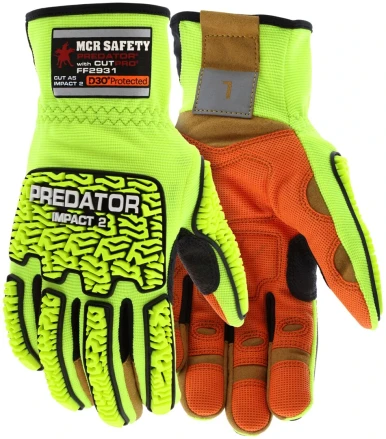 ANSI A5 — 2,200 to 2,999 grams (4.9 to 6.6 lb)5 gloves
- MCR Safety Predator FF2931 Impact Gloves, ANSI A5, ANSI 138 Level 2 — MCR Safety · ANSI A5 · abrasion 4 · puncture 5 · Polyurethane · Pair
- MCR Safety Predator PD2911 Impact Gloves, ANSI A5, ANSI 138 Level 1 — MCR Safety · ANSI A5 · abrasion 4 · puncture 5 · Polyurethane · Pair
- Portwest A650 Cut Resistant Gloves, ANSI A5, Nitrile Foam Coated, 15 Gauge — Portwest · ANSI A5 · abrasion 6 · puncture 5 · EN 388 4X44E · Nitrile · 15-gauge
- Radians RWG603 Cut Resistant Gloves, ANSI A5, ANSI 138 Level 2 — Radians · ANSI A5 (2837 g) · abrasion 5 · puncture 5 · EN 388 4X44EP · Sandy Foam Nitrile · 13-gauge · Pack
- Radians RWG603R Cut Resistant Gloves, ANSI A5, ANSI 138 Level 2 — Radians · ANSI A5 (2837 g) · abrasion 5 · puncture 5 · EN 388 4X44EP · Sandy Foam Nitrile · 15-gauge · Pack
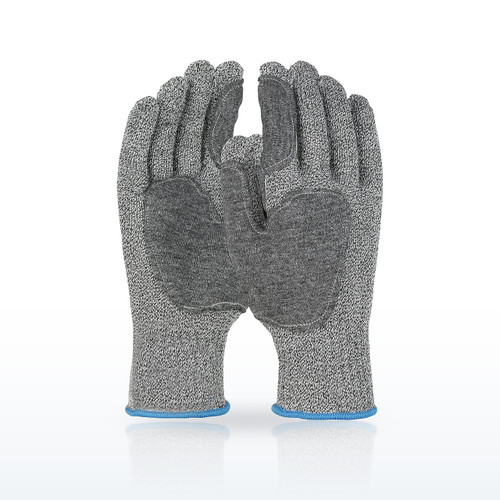
 ANSI A6 — 3,000 to 3,999 grams (6.6 to 8.8 lb)3 gloves
- G-Tek PolyKor 16-363 Cut Resistant Gloves, ANSI A6, Nitrile Coated — G-Tek · ANSI A6 (4220 g) · abrasion 4 · puncture 5 · EN 388 4X44F · Nitrile · 13-gauge · Dozen
- MCR Safety Mechanics 982 Mechanics Gloves, ANSI A6, Polyurethane Coated — MCR Safety · ANSI A6 · abrasion 3 · puncture 5 · Polyurethane · Pair
- PIP MJVATA Leather Palm Gloves, ANSI A6, Split Cowhide — PIP · ANSI A6 (3000 g) · puncture 5 · Dozen
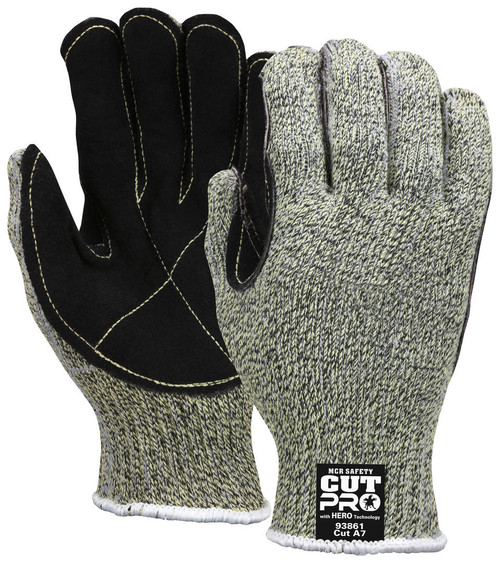 ANSI A7 — 4,000 to 4,999 grams (8.8 to 11.0 lb)2 gloves
- MCR Safety Hero 93861 Leather Palm Work Gloves, ANSI A7, Cowhide — MCR Safety · ANSI A7 · abrasion 5 · puncture 5 · 7-gauge · Dozen
- MCR Safety Sidekick 16012K Leather Palm Work Gloves, ANSI A7, Cowhide — MCR Safety · ANSI A7 · abrasion 6 · puncture 5 · Dozen
 ANSI A9 — 6,000 grams and above (13.2 lb and above)4 gloves
- Claw Cover CC-D3 Cut Resistant Gloves, ANSI A9, Uncoated — Claw Cover · ANSI A9 (7087 g) · abrasion 4 · puncture 5 · Uncoated · 7-gauge · Dozen
- MCR Safety Predator PD4900 Impact Gloves, ANSI A9, ANSI 138 Level 1 — MCR Safety · ANSI A9 · abrasion 4 · puncture 5 · Polyurethane · Pair
- Portwest A792 Needle Resistant Gloves, ANSI A9, Polyurethane Coated — Portwest · ANSI A9 · puncture 5 · EN 388 2X24F · Polyurethane
- Portwest A793 Needle Resistant Gloves, ANSI A9, Latex Crinkle Coated, 10 Gauge — Portwest · ANSI A9 · abrasion 3 · puncture 5 · EN 388 3X44F · Latex · 10-gauge
 Not rated by manufacturer33 gloves
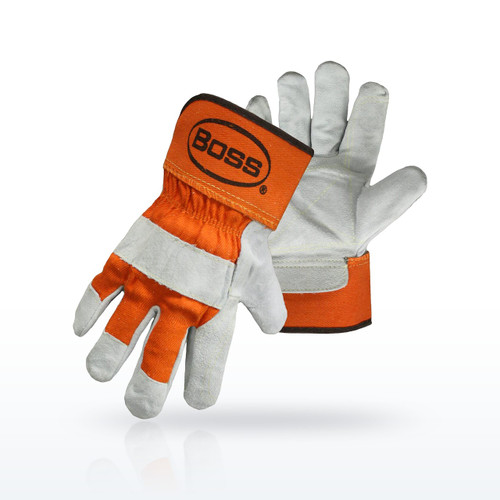
- Boss 1JL2393 Leather Palm Gloves, Split Cowhide, Superior Grade — Boss · puncture 5 · Dozen
- Boss 1JL2394 Leather Palm Gloves, Split Cowhide, Superior Grade — Boss · puncture 5 · Dozen
- Boss 1JL2396 Leather Palm Gloves, Split Cowhide, Superior Grade — Boss · puncture 5 · Dozen
- MCR Safety 1211 Leather Palm Work Gloves, Cowhide, Competitive Value C+ Grade — MCR Safety · abrasion 4 · puncture 5 · Dozen
- MCR Safety 1300 Leather Palm Work Gloves, Cowhide, Select B Grade — MCR Safety · abrasion 4 · puncture 5 · Dozen
- MCR Safety 1300 Leather Palm Work Gloves, Cowhide, Select B Grade — MCR Safety · abrasion 4 · puncture 5 · Dozen
- MCR Safety 1300 Leather Palm Work Gloves, Cowhide, Select B Grade — MCR Safety · abrasion 4 · puncture 5 · Dozen
- MCR Safety 1310 Leather Palm Work Gloves, Cowhide, Select B Grade — MCR Safety · abrasion 4 · puncture 5 · Dozen
- MCR Safety 1311 Leather Palm Work Gloves, Cowhide, Select B Grade — MCR Safety · abrasion 6 · puncture 5 · Dozen
- MCR Safety 1311 Leather Palm Work Gloves, Cowhide, Select B Grade — MCR Safety · abrasion 6 · puncture 5 · Dozen
- MCR Safety 1312 Leather Palm Work Gloves, Cowhide, Select B Grade — MCR Safety · abrasion 6 · puncture 5 · Dozen
- MCR Safety 1411A Leather Palm Work Gloves, Cowhide, Select B+ Grade — MCR Safety · abrasion 4 · puncture 5 · Dozen
- MCR Safety 1412A Leather Palm Work Gloves, Cowhide, Select B+ Grade — MCR Safety · abrasion 4 · puncture 5 · Dozen
- MCR Safety 4300N Welding Gloves, Cowhide, Fleece Lined, Select B+ Grade — MCR Safety · abrasion 4 · puncture 5 · Dozen
- MCR Safety 4320 Welding Gloves, Cowhide, Fleece Lined, Select B+ Grade — MCR Safety · abrasion 4 · puncture 5 · Dozen
- MCR Safety 4320 Welding Gloves, Cowhide, Fleece Lined, Select B+ Grade — MCR Safety · abrasion 4 · puncture 5 · Pack
- MCR Safety 4550 Welding Gloves, Cowhide, Select B+ Grade — MCR Safety · puncture 5 · Dozen
- MCR Safety 4750 Welding Gloves, Cowhide, Wool Lined, Premium A Grade — MCR Safety · abrasion 5 · puncture 5 · Dozen
- MCR Safety 49750 Welding Gloves, Elkskin, Premium A Grade — MCR Safety · abrasion 4 · puncture 5 · Dozen
- MCR Safety Big Jake 1700 Leather Palm Work Gloves, Cowhide, Premium A+ Grade — MCR Safety · abrasion 4 · puncture 5 · Dozen
- MCR Safety Big Jake 1700 Leather Palm Work Gloves, Cowhide, Premium A+ Grade — MCR Safety · abrasion 4 · puncture 5 · Dozen
- MCR Safety Big Jake 1710 Leather Palm Work Gloves, Cowhide, Premium A+ Grade — MCR Safety · abrasion 4 · puncture 5 · Dozen
- MCR Safety Blue Beast 4600 Welding Gloves, Cowhide, Jersey Lined — MCR Safety · abrasion 4 · puncture 5 · Dozen
- MCR Safety Blue Beast 4600 Welding Gloves, Cowhide, Jersey Lined — MCR Safety · abrasion 4 · puncture 5 · pack size
- MCR Safety Blue Beast 4602 Welding Gloves, Cowhide, Foam Lined, Premium A Grade — MCR Safety · abrasion 5 · puncture 5 · Dozen
- MCR Safety Mechanics 906DP Mechanics Gloves, Goatskin Palm — MCR Safety · abrasion 4 · puncture 5 · Pair
- MCR Safety Mechanics 906DPO Mechanics Gloves, Goatskin Palm — MCR Safety · abrasion 4 · puncture 5 · Pair
- MCR Safety Red Ram 4300 Welding Gloves, Cowhide, Fleece Lined, Select B+ Grade — MCR Safety · abrasion 4 · puncture 5 · Dozen
- MCR Safety Sidekick 16012 Leather Palm Work Gloves, Cowhide, Premium A Grade — MCR Safety · puncture 5 · Dozen
- MCR Safety Sidekick 16012 Leather Palm Work Gloves, Cowhide, Premium A Grade — MCR Safety · puncture 5 · Dozen
- MCR Safety Sidekick 16012 Leather Palm Work Gloves, Cowhide, Premium A Grade — MCR Safety · puncture 5 · Dozen
- MCR Safety Sidekick 16025 Leather Palm Work Gloves, Cowhide, Premium A Grade — MCR Safety · puncture 5 · Dozen
- PIP 80-8800 Leather Palm Gloves, Split Cowhide, Premium Grade — PIP · puncture 5 · Dozen
Not listed here: gloves with no published rating and no manufacturer application for this work. Browse all gloves, open a glove type page, or call (925) 215-7337.
Questions people ask about gloves for demolition and heavy construction
What are the levels of puncture resistant gloves? ANSI/ISEA 105 puncture levels 0 to 5 come from the EN 388 probe test, by the force in newtons needed to push the probe through the material as the ISEA Key prints them: level 1 at 10 N and above, level 2 at 20 N, level 3 at 60 N, level 4 at 100 N, with level 5 printed as 100 N and above in the Key. The Key's example applications run from paper and light material handling at level 0 to oil and gas, mining, heavy construction and demolition at level 5. Each glove's puncture level is on its row as the manufacturer publishes it.
Do puncture resistant gloves work? Within the published level: ANSI/ISEA 105 puncture levels 1 to 5 state the newtons of force a blunt probe needed to pass through the material in the EN 388 test. A level 5 glove resisted at least the force the Key prints for level 5; a hypodermic needle is a separate test (ASTM F2878, needlestick levels 0 to 5) and a glove rated for one is not rated for the other unless the manufacturer says so.
What gloves do you need for construction? 29 CFR 1910.138(b) answers it with a method, not a glove: the employer bases the selection on the tasks, the conditions, the duration of use and the hazards identified in the 1910.132(d) hazard assessment. The ISEA Key lists construction and general purpose work at cut level A1 and construction at puncture levels 1 to 5 depending on the task, and the manufacturers name specific styles for construction in their own documents; the construction and general labor page lists both sets, with the reason each glove is there on its row.
What are impact gloves used for? ANSI/ISEA 138 is the impact standard: it rates the back-of-hand padding (knuckles and fingers) at level 1, 2 or 3 by the mean force transmitted through the pad in the drop test, level 1 at 9 kN or less, level 2 at 6.5 kN or less, level 3 at 4 kN or less. The manufacturers' documents name the work where hands take blows from tools, pipe and parts: oil and gas, mining, demolition, heavy equipment. Pick the Impact chip here to list the gloves with a published impact level.
What are the different cut resistance levels for gloves? ANSI/ISEA 105 rates cut resistance A1 to A9 by the grams of force it took a straight blade to cut through the material at 20 mm of travel in the ASTM F2992 test: A1 200 to 499 g, A2 500 to 999 g, A3 1,000 to 1,499 g, A4 1,500 to 2,199 g, A5 2,200 to 2,999 g, A6 3,000 to 3,999 g, A7 4,000 to 4,999 g, A8 5,000 to 5,999 g, A9 6,000 g and above. The level on each glove is the manufacturer's published test result; the cut-level pick-list on this page groups the gloves by it.
Related: Cut Resistant Gloves · Leather Palm Gloves · Impact-rated gloves: what ANSI/ISEA 138 levels 1, 2 and 3 mean · What do ANSI cut levels A1 to A9 mean? · OSHA hand protection requirements: what 1910.138 says · Respirators for Silica Dust · Respirators for Asbestos · every glove by job, cut level and coating.
Other jobs: Construction, general labor · Drywall, carpentry, framing · Concrete, masonry, tile · Roofing · Electrical, utility · HVAC, sheet metal · Metal fabrication, machine shops · Glass handling · Food processing, prep · Warehouse, packaging · Mechanics, automotive · Landscaping, farm, grounds · Oil and gas, mining · Driving, equipment · Assembly, small parts · Welding · Chemicals, cleaning · Hot work, foundry · Cold, freezer.
The ratings, test results and standards shown here are the manufacturers' published values, reproduced as published. Nothing on this page is a recommendation by Bayshore Safety that any product is suitable for a particular task, hazard or workplace. Selecting safety products and protective equipment is the responsibility of the end user and the employer, based on their own hazard assessment and the regulations that apply to their work. Confirm every value on the manufacturer's own documentation before use.