
ATEX vs explosion-proof vs intrinsically safe: what the marks on a gas monitor mean, Zone 0, 1 and 2 against Division 1 and 2, and is ATEX accepted in the United States?
They answer three different questions. Explosion-proof and intrinsically safe are protection methods: an explosion-proof housing contains an explosion that happens inside it, while an intrinsically safe circuit cannot release enough energy or heat to ignite the gas around it, which is the method RKI Instruments says almost all portable instruments use. ATEX is not a method but a European certification scheme (the EU directive on equipment for explosive atmospheres), IECEx is the international scheme run on the IEC 60079 standards, and CSA, UL and QPS are North American certification bodies that list equipment to the US and Canadian codes. Zones and Divisions are two ways of classifying the location: OSHA’s 1910.307 lets an employer classify Class I locations by Division (1 or 2) or by Zone (0, 1 or 2), and 1910.399 defines each. An ATEX mark alone is a European conformity mark; what OSHA requires under 1910.307 is equipment approved for the class of location and the gas group, which in practice means a North American listing. RKI’s GX-Force carries both: ATEX II1G Ex da ia IIC T4 Ga and IECEx on one side, and C QPS US Class I, Division 1, Groups A, B, C, D and Class I, Zone 0 AEx da ia IIC T4 Ga on the other.
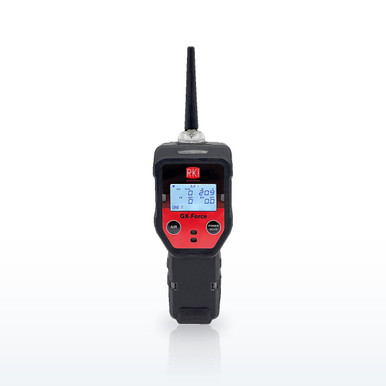 RKI Instruments 72-FI-C-A10 GX-Force 2-Gas Sample-Draw Monitor, LEL/COPumped monitor RKI lists with ATEX, IECEx, QPS Class I Division 1 and Class I Zone 0 marks (RKI data)
Why the three words get mixed up. A gas monitor label carries a crowd of marks, and buyers read them as grades of the same thing. They are not. The hazardous location is classified by the employer (Division or Zone); the protection method is chosen by the manufacturer (intrinsic safety, flameproof enclosure, and others 1910.307(c) lists such as purged and pressurized and nonincendive circuits); and the certification body is whoever tested the equipment against a standard and marks it: CSA, UL, QPS and ETL in North America, ATEX notified bodies in Europe, IECEx certificate bodies internationally, TIIS in Japan. RKI’s FAQ describes the two methods in detail and notes that OSHA approves no certification body for intrinsic safety but looks for third-party verification. What the OSHA rule actually says is in 1910.307(c)(2): equipment shall be approved not only for the class of location but for the ignitable properties of the specific gas, and marked with class, group and operating temperature. The Zone system entered the US rule as an alternative in (g); equipment used under it is marked for zones (the AEx prefix in the North American zone marking), and equipment approved for Division 1 may also be used in Zone 1 or 2 under the conditions (g) sets.
Reading the code on an RKI GX-Force: Ex da ia IIC T4 Ga
Each element of an IEC 60079 marking, with what RKI prints.
Zones against Divisions, in OSHA’s words
From 1910.307, 1910.399 and RKI's FAQ:
- Class I, Division 1 (1910.399): a location in which ignitable concentrations of flammable gases or vapors may exist under normal operating conditions, may exist frequently because of repair, maintenance or leakage, or might be released by breakdown or faulty operation that also disables electrical equipment.
- Class I, Division 2: flammable liquids, gases or vapors are handled but normally confined in closed containers or systems and escape only on accidental rupture, breakdown or abnormal operation; or ignitable concentrations are normally prevented by positive mechanical ventilation; or the location is adjacent to a Division 1 location.
- Class I, Zone 0: ignitable concentrations are present continuously or for long periods. Zone 1: likely under normal operation, frequently because of repair, maintenance or leakage, or adjacent to Zone 0. Zone 2: not likely in normal operation and only briefly if they occur, or confined in closed systems, or prevented by ventilation, or adjacent to Zone 1.
- So Zone 0 is the continuous part of what Division 1 covers, Zone 1 the rest of Division 1, and Zone 2 is Division 2. 1910.307(g) allows the zone system as an alternative for Class I locations; equipment and wiring are then chosen for the zone.
- Explosion-proof apparatus (1910.399): apparatus enclosed in a case capable of withstanding an explosion of a specified gas or vapor inside it and of preventing ignition of the gas outside by sparks, flashes or the explosion within, operating at an external temperature that will not ignite the surrounding atmosphere. Intrinsically safe equipment (1910.307(c)(1)) is permitted in any hazardous location for which it is approved.
- RKI's FAQ: an explosion-proof housing (cast aluminum or stainless steel) is the usual method for fixed detector heads where voltages are higher; an intrinsically safe circuit cannot spark, store enough energy or get hot enough to ignite, is not explosion proof and does not need to be, and is the method almost all portables use.
Approvals RKI Instruments prints, by model
| Model | Approvals as printed | What the marks are |
|---|---|---|
| GX-Force | Intrinsically safe construction; IECEx Ex da ia IIC T4 Ga / Ex ia IIC T4 Ga; ATEX II1G Ex da ia IIC T4 Ga / II1G Ex ia IIC T4 Ga; C QPS US Class I, Division 1, Groups A, B, C, D; Class I, Zone 0 AEx da ia IIC T4 Ga | International (IECEx), European (ATEX) and North American division and zone listings by QPS |
| 04 Series | ATEX/IECEx approved; QPS classified C/US as intrinsically safe, Class I, Division 1, Groups A, B, C, D | International, European and North American division listing by QPS |
| GX-3R Pro | ATEX, CSA, IECEx, MED | European, North American (CSA), international, and the EU Marine Equipment Directive wheel mark |
| GX-3R | ATEX, CSA, IECEx, MED (TIIS version available; RKI states it is identical apart from the label and passes the same IEC standards) | As above; TIIS is the Japanese certification |
Source: RKI Instruments GX-Force product page and specification table (rkiinstruments.com/product/gx-force-portable-4-gas-monitor, rkiinstruments.com, fetched Nov 8 2026); RKI Instruments 04 Series product page and specification table (rkiinstruments.com/product/04-series-single-gas-detectors, rkiinstruments.com, fetched Nov 8 2026); RKI Instruments GX-3R Pro product page and specification table (rkiinstruments.com/product/gx-3r-pro-gas-detector, rkiinstruments.com, fetched Nov 8 2026); RKI Instruments GX-3R product page and specification table (rkiinstruments.com/product/gx-3r-gas-detector, rkiinstruments.com, fetched Nov 8 2026); RKI Instruments FAQ page (rkiinstruments.com/resources/faqs, rkiinstruments.com, fetched Nov 8 2026) (TIIS questions). Reproduced as printed; the full certificates are on RKI's product pages.
More questions people ask
What are the hazardous area zones under the IEC standard, and what is IEC 60079?
IEC 60079 is the international series of standards for electrical equipment in explosive atmospheres; its parts set the protection types (flameproof d, intrinsic safety i, increased safety e and the rest), the gas groups (IIA, IIB, IIC), the temperature classes (T1 to T6) and the equipment protection levels (Ga, Gb, Gc) that appear in the marking on a monitor, and IECEx is the certification scheme that tests to it. The zones are the location side: Zone 0, an explosive gas atmosphere present continuously or for long periods; Zone 1, likely in normal operation; Zone 2, not likely and only briefly if it occurs; dust zones 20, 21 and 22 follow the same pattern. OSHA’s 1910.307(g) allows an employer to classify Class I locations by these zones as an alternative to Divisions, with Zone 0 the continuous part of Division 1, Zone 1 the rest of it and Zone 2 equal to Division 2, and equipment for a zone marked AEx under the North American zone system. RKI’s GX-Force marking, Ex da ia IIC T4 Ga, is read piece by piece in the cards above.
Answers from the sources named above and in the byline.Honeywell BW and MSA markings beside the RKI ones
The BW Clip is marked for both systems on one label (cULus Class I Div 1 Groups A, B, C, D and Class I Zone 0 Group IIC on the North American side, II 1G Ex ia IIC T4 Ga under ATEX and IECEx); the MSA ALTAIR 4XR prints Ex ia da IIC T3 Ga, two protection concepts on one instrument.
Hazardous-location approvals as printed by Honeywell BW and MSA (read the label on the unit you buy)
| Model | North America | ATEX | IECEx |
|---|---|---|---|
| Honeywell BW Clip | cULus: Class I, Div. 1, Gr. A, B, C, D; Class I, Zone 0, Gr. IIC | II 1G Ex ia IIC T4 Ga | Ex ia IIC T4 Ga |
| Honeywell BW Clip4 | Class I, Div 1, Group A, B, C, D; Class I, Zone 0, Group IIC | II 1G Ex ia IIC T4 Ga | Ex ia IIC T4 Ga |
| Honeywell BW Solo | Class I, Division 1, Groups A, B, C, D T4; Class II, Division 1, Groups E, F, G T4; Class I, Zone 0, AEx/Ex ia IIC T4 Ga | II 1G Ex ia IIC T4 Ga (Sira 18ATEX2243) | Ex ia IIC T4 Ga / Ex ia I Ma |
| Honeywell BW MicroClip XL / X3 | CSA: Class I, Div. 1, Gr. A, B, C, D | II 1 G Ex ia IIC T4 Ga | Ex ia IIC T4 Ga |
| Honeywell BW MAX XT II | UL: Class I, Div 1, Group A, B, C, D | II 1 G Ga Ex ia IIC T4 | Ga Ex ia IIC T4 |
| MSA ALTAIR 4XR | USA: Class I, Division 1, Groups A, B, C and D; Class II, Division I, Groups E, F and G; Class III, Division I; Canada CSA C22.2 No. 152 and No. 157 | II 1G Ex ia da IIC T3 Ga, −40 °C to +60 °C, IP68 | Ex ia da IIC T3 Ga |
| MSA ALTAIR io 4 | Class I, Division 1, Groups A, B, C and D T4; Class I, Zone 0, AEx da ia IIC Ga T4 | As listed on the product page | As listed on the product page |
| MSA ALTAIR 2X | CSA Class I Div 1 Groups A, B, C, D | As listed on the product page | As listed on the product page |
The markings are the manufacturers’ words; this page adds nothing to them. "Ex ia" is the intrinsic-safety protection concept and "Ex da" the flameproof concept in the IEC 60079 scheme; T3 and T4 are temperature classes.
Source: Honeywell BW Clip, Clip4, Solo and MicroClip data sheets, BW MaxXT II product page; MSA ALTAIR 4XR bulletin (0816-102-MC) and ALTAIR io 4 specification sheet; MSA ALTAIR 2X product page. Fetched Nov 10 2026.
Questions people ask
Is ATEX intrinsically safe?
ATEX is a certification scheme, intrinsically safe is a protection method; an ATEX-marked instrument may be intrinsically safe (Ex ia or ib in its code) or protected another way (Ex d, flameproof). RKI Instruments’ GX-Force carries ATEX with the code Ex da ia IIC T4 Ga, which names both methods.
What is the difference between ATEX and intrinsically safe?
ATEX is the European Union directive and marking for equipment in explosive atmospheres; intrinsically safe is one of the protection techniques the marking can declare. In the United States, OSHA 1910.307(c) accepts equipment approved as intrinsically safe by a nationally recognized testing laboratory; the ATEX mark alone is not a US approval.
What is the difference between ATEX and explosion-proof?
Explosion-proof (1910.399) is a housing that contains an internal explosion and keeps the surrounding gas from igniting; ATEX is a certification scheme that can cover explosion-proof (flameproof, Ex d), intrinsically safe (Ex i) and other techniques. RKI’s FAQ: explosion-proof housings are the usual method for fixed detector heads, intrinsic safety for portables.
What are non-intrinsically safe devices?
Ordinary electrical equipment, phones and lights not certified for a hazardous location; they may be used only where the employer can show they are not a source of ignition under normal conditions in a Division 2 location (1910.307(e)), and not in Division 1 or Zone 0 and 1.
What is zone 1 and zone 2?
In 1910.399, Class I, Zone 1 is a location where ignitable concentrations are likely under normal operation, or frequently because of repair, maintenance or leakage; Zone 2 is where they are not likely under normal operation and, if they occur, exist only for a short period. Zone 0 is where they are present continuously or for long periods. Zone 0 plus Zone 1 is roughly Division 1 and Zone 2 is Division 2.
What does ATEX certification mean?
That the equipment was assessed to the EU ATEX directive and marked with the Ex symbol, an equipment group and category (II 1G for gases, highest category) and an IEC 60079 code giving the protection type, gas group, temperature class and equipment protection level.
Is ATEX certification accepted in the USA?
Not on its own. OSHA’s 1910.307 requires equipment approved for the location by a nationally recognized testing laboratory to the US codes, and 1910.307(g) allows the zone system with AEx marking; manufacturers obtain a North American listing (CSA, UL, ETL or QPS) alongside ATEX, which is what RKI prints for its GX-3R, GX-3R Pro, GX-Force and 04 Series.
What devices are ATEX approved for?
For use in the explosive atmosphere named in the mark: the G in II 1G is gas and vapor, D is dust, and the gas group (IIA, IIB, IIC) and temperature class (T1 to T6) say which gases. RKI’s GX-Force code IIC T4 Ga covers the hydrogen and acetylene group at a 135 °C surface temperature limit in Zone 0.
What is ex-certification?
Certification of equipment for explosive atmospheres under the IEC 60079 series: the Ex mark followed by the protection type (d, ia, ib, e, n), gas group, temperature class and equipment protection level. IECEx is the international scheme, ATEX the European one; the North American equivalent is the Class/Division or AEx zone listing.
How do you tell if a device is intrinsically safe?
By the label: a Class I, Division 1 listing from CSA, UL, ETL or QPS, or an Ex ia or Ex ib code in an IECEx or ATEX mark. RKI’s FAQ adds that OSHA approves no certification body itself and looks for the third-party verification on the label.
What are the different categories of hazardous area zones?
Gas: Zone 0 (continuous or long periods), Zone 1 (likely in normal operation), Zone 2 (not likely, brief); dust: Zones 20, 21 and 22 on the same pattern. OSHA’s 1910.399 definitions of Class I Zones 0, 1 and 2 match the IEC wording.
What are the classifications of hazardous areas according to the IEC standard?
By zone (0, 1, 2 for gas; 20, 21, 22 for dust), with equipment matched by protection type, gas group (IIA, IIB, IIC) and temperature class (T1 to T6) under IEC 60079; equipment protection level Ga, Gb or Gc matches Zone 0, 1 or 2.
What is the IEC 60079 standard?
The international series of standards for electrical equipment in explosive atmospheres: protection types, gas groups, temperature classes and markings. IECEx certifies to it; ATEX is the European directive built on the same standards.
Are iPhones considered intrinsically safe?
No. A standard phone carries no hazardous-location listing; intrinsically safe phones are specially built and listed models. A gas monitor’s Bluetooth link to a phone (RKI’s GX-3R Pro) does not make the phone safe to carry into a classified area.
What is intrinsically safe wiring?
Wiring of a circuit whose energy is limited, by a barrier or isolator in the safe area, below what can ignite the gas, so a spark or hot spot in the hazardous area cannot cause ignition; it is kept separate from other wiring and identified (NEC Article 504, 1910.307).
What is classified as Zone 2, and what are Zones 0, 1 and 2?
Zone 2: ignitable concentrations not likely in normal operation and present only briefly if they occur, or confined in closed systems, or prevented by ventilation, or adjacent to Zone 1 (1910.399). Zone 0 is continuous presence and Zone 1 is likely presence.
What is the difference between IEC and IECEx, and between ATEX and IECEx?
IEC writes the 60079 standards; IECEx is the international scheme that certifies equipment to them. ATEX is the European Union directive, a legal conformity requirement for the EU market, built on the same standards; IECEx certificates are used worldwide and ATEX marks within Europe.
Is IECEx accepted in the USA?
Not on its own. OSHA’s 1910.307 requires equipment approved for the location, which in the US means a listing by a nationally recognized testing laboratory (UL, CSA, QPS and the like) to the US codes; RKI prints its CSA C/US or QPS listing beside its ATEX and IECEx marks for that reason.
What does ATEX stand for?
ATmosphères EXplosibles, the French name of the European directive on equipment for explosive atmospheres (2014/34/EU).
Is Class 1 Div 2 the same as explosion-proof?
No. Class I Division 2 is a location classification; explosion-proof is one protection method, a housing that contains an internal explosion (1910.399). Division 2 locations accept several methods, and most portable monitors are intrinsically safe rather than explosion-proof.
What are the three intrinsic safety concepts?
The levels ia (safe with two faults, for Zone 0), ib (safe with one fault, Zone 1) and ic (safe in normal operation, Zone 2), set by IEC 60079-11; RKI’s GX-Force is marked ia.
Does NEMA 4X meet Class 1 Div 2?
No. NEMA 4X is an enclosure rating for water, dust and corrosion resistance, not a hazardous-location listing; a Class I Division 2 enclosure needs a hazardous-location approval under 1910.307 as well.
What is the difference between ATEX and CompEx, and how much does ATEX certification cost?
ATEX certifies equipment; CompEx certifies people, the UK scheme for the competence of technicians who install and maintain equipment in explosive atmospheres. Certification cost is set by the notified body and the product and is not a published figure.
What is the ATEX equivalent in the US?
There is no single US "ATEX": the United States classifies hazardous locations under the NEC (Articles 500 and 505, which OSHA’s 1910.307 refers to) and equipment is listed by an NRTL to Class and Division or to the Zone system (UL 913 for intrinsic safety). A Honeywell BW or MSA detector sold here carries both marks; the ATEX equivalent guide linked below reads a label side by side.
What are the different types of explosion protection?
The letter after "Ex" names the concept: ia/ib/ic intrinsic safety, d flameproof (the "explosion-proof" of the Division system), e increased safety, p pressurized, n non-sparking, m encapsulation, o oil immersion, q powder filling. Portable detectors use Ex ia, and the ALTAIR 4XR prints Ex ia da.
Related guides
Intrinsically safe gas detectorsClass I, Div 1 and Div 2Single-gas vs multi-gas detectorsWhich the job needsWhat is a confined space?The OSHA definition and what makes one permit-requiredWhat does a 4-gas monitor measure?And why those fourGas detector sensor lifeWhen to replace sensorsWhat is the ATEX equivalent in the US?ATEX vs IECEx, Class I Division 2 and the types of explosion protectionThe ratings, test results and standards shown here are the manufacturers' published values, reproduced as published. Nothing on this page is a recommendation by Bayshore Safety that any product is suitable for a particular task, hazard or workplace. Selecting safety products and protective equipment is the responsibility of the end user and the employer, based on their own hazard assessment and the regulations that apply to their work. Confirm every value on the manufacturer's own documentation before use.