
What is the ATEX equivalent in the US? ATEX vs IECEx, Class I Division 2 (Groups C and D), ATEX Category 2 and Zone 2, the types of explosion protection, and how to read the approval line on a Honeywell BW or MSA gas detector
There is no single US "ATEX". ATEX is a European Union directive; in the United States, OSHA’s 29 CFR 1910.307 requires equipment in a hazardous (classified) location to be intrinsically safe, approved for the location, or safe for it, and it points to NFPA 70 (the National Electrical Code) for the Class, Division and Group system and the alternative Class I Zone system. Approval comes from a nationally recognized testing laboratory listing (UL, CSA, ETL and the like), not from a directive. A gas detector sold here is marked for the US system (for example Class I, Division 1, Groups A, B, C, D) and usually for ATEX and IECEx as well, which is why one Honeywell BW Clip label carries all three.
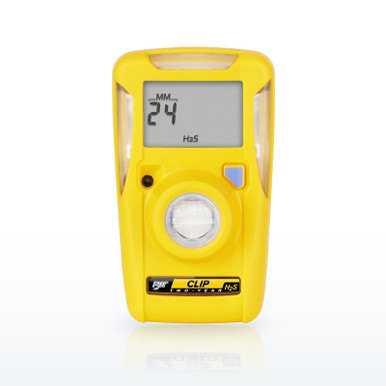 BW Technologies BWC2-H Clip H2S Monitor, 10/15 ppm Alarms, 2-yearHoneywell BW prints cULus Class I, Div. 1, Gr. A, B, C, D; Class I, Zone 0, Gr. IIC; ATEX II 1G Ex ia IIC T4 Ga; IECEx Ex ia IIC T4 Ga on the BW Clip datasheet
Why this question has no one-word answer. ATEX is the name of two EU directives (2014/34/EU for equipment and 1999/92/EC for workplaces); IECEx is an international certification scheme run under the IEC 60079 standards; and the United States has neither. What the United States has is a rule, 29 CFR 1910.307, that says what electrical equipment in a hazardous (classified) location must be, and a code it names, NFPA 70, that classifies the locations by Class, Division and Group (or Class and Zone) and lists the protection techniques. Equipment is then listed by a testing laboratory to the standard that fits (UL 913 for intrinsic safety, UL 1203 for explosion-proof, and others). So the honest answer to "what is the ATEX equivalent in the US" is: the NEC classification system plus an NRTL listing, and on a gas detector that shows up as the Class I, Division 1 line printed beside the ATEX and IECEx lines. This page goes through the questions people ask about the three systems, with the markings Honeywell BW and MSA print on the instruments in the band as the worked examples, and sends you to the live guides on zones and divisions and on intrinsically safe detectors for the parts they already cover.
The questions, one by one
The rule text is 29 CFR 1910.307 as current on the eCFR; the markings are quoted from the manufacturers’ data sheets and bulletins.
The three systems in plain words
- United States: OSHA 1910.307 plus the NEC. Locations are Class I, II or III and Division 1 or 2 (or Class I Zone 0, 1, 2); equipment is listed by a laboratory and marked with class, group and temperature.
- European Union: the ATEX directive. Equipment is marked CE, the notified body number, the group and category (II 1G, II 2G, II 3G) and the Ex code.
- International: IECEx, a certification scheme to IEC 60079, with a certificate of conformity and the same Ex code without the ATEX group and category.
- Division 1 equipment may be used in Division 2 of the same class and group; Zone 0 equipment may be used in Zone 1 and 2 of the same gas (1910.307(e) and (g)(5)(i)).
- Ex ia is intrinsic safety at the highest level (Zone 0); Ex d is flameproof, the Zone-system name for explosion-proof; e, p, n, m, o and q are the other techniques 1910.307(g)(3) lists.
- IIC is the gas group that covers hydrogen and acetylene and therefore every lower group; T4 means a 135 °C surface limit, T3 200 °C.
- A detector sold in the US carries the US listing beside its ATEX and IECEx marks; read the label on the unit you buy, because markings differ by configuration.
Questions people ask
What is the ATEX equivalent in the USA?
OSHA’s 29 CFR 1910.307 with the NEC Class, Division and Group (or Class I Zone) system and an NRTL listing such as UL or CSA; there is no US directive, so an instrument sold here carries the US listing beside its ATEX and IECEx marks.
Is ATEX the same as IECEx?
No. ATEX is EU law with a CE mark and category; IECEx is a voluntary international certificate to the IEC 60079 standards. The Ex codes read nearly the same because both use IEC 60079.
What is class 1 div 2 group C and D?
A Class I (gas) location where the gas is present only under abnormal conditions, for Group C (ethylene-type) and Group D (hydrocarbon) gases; Division 1 equipment of the same class and group may be used there under 1910.307(e).
Is C1D2 explosion-proof?
Not necessarily: Division 2 accepts explosion-proof but also nonincendive, hermetically sealed and oil-immersed designs that Division 1 does not; a portable detector is intrinsically safe, a different technique again.
What are the different types of explosion protection?
Under 1910.307: explosionproof, dust ignitionproof, dust-tight, purged and pressurized, nonincendive, oil immersion and hermetically sealed for the Division system; flameproof d, pressurized p, intrinsic safety i, type n, oil o, increased safety e, encapsulation m and powder filling q for the Zone system.
What is the definition of ATEX Category 2?
Equipment for Zone 1, where an explosive gas atmosphere is likely in normal operation; Category 1 is for Zone 0 and Category 3 for Zone 2. The Honeywell BW and MSA portables in the band are Category 1 (II 1G).
What is the full name of ATEX?
From the French "ATmosphères EXplosibles": the EU directives 2014/34/EU (equipment) and 1999/92/EC (workplace protection).
What does the acronym IECEx stand for?
The International Electrotechnical Commission System for Certification to Standards Relating to Equipment for Use in Explosive Atmospheres.
Is ATEX certification mandatory?
In the European Union, yes, for equipment placed on the market for use in potentially explosive atmospheres; it has no legal standing in the United States.
What is a Zone 2 hazardous area?
A Class I area where a flammable gas atmosphere is not likely in normal operation and, if it occurs, exists only briefly; 1910.307(g) allows the zone system as an alternative to divisions, and Zone 2 may abut but not overlap Division 2.
What are the NEC codes for hazardous locations?
NFPA 70 Articles 500 to 506: 500 for classes, divisions and groups, 504 for intrinsically safe systems, 505 for Class I zones, 506 for dust zones.
What is intrinsic safe wiring?
The field wiring of a fixed intrinsically safe system through a barrier, per NEC Article 504 and the barrier’s control drawing; a battery-powered portable detector has none.
What are intrinsically safe devices?
Equipment whose circuits cannot release enough energy to ignite the listed gas even under fault; 1910.307(c)(1) permits them in any hazardous location for which they are approved. The gas detectors in the band are examples.
What is the difference between C1D1 and C1D2?
Division 1: the gas is present under normal operation or frequently; Division 2: only under abnormal conditions. Division 1 equipment is accepted in Division 2 of the same class and group.
Does an ATEX mark make a detector legal in a US refinery?
Not on its own; the site’s electrical classification is under 1910.307 and the NEC, which look for an NRTL listing. Honeywell BW and MSA print the UL or CSA listing beside the ATEX mark for that reason.
What is the American equivalent of the ATEX "II 1G" category?
The closest is Class I, Division 1 (or Class I, Zone 0 under the US zone marking "AEx"); the Honeywell BW Clip prints Class I, Division 1 and Class I, Zone 0 Group IIC beside its II 1G ATEX line.
Related guides
ATEX vs explosion-proof vs intrinsically safeZones, divisions and the marks on a gas detectorWhat is a hazardous (classified) location?Class, division, group and intrinsic safetyIntrinsically safe gas detectorsWhat Class I Div 1 and Div 2 mean on the labelHow to calibrate, bump test and reset an MSA ALTAIR 4XRButtons, zero and span, the LEDs and the 4X differencesHow to bump test, zero and turn off a Honeywell BW ClipActivation, hibernation and the end-of-life countdownWho owns BW Technologies, Honeywell Analytics and MSA?What each company makes, in its own wordsThe ratings, test results and standards shown here are the manufacturers' published values, reproduced as published. Nothing on this page is a recommendation by Bayshore Safety that any product is suitable for a particular task, hazard or workplace. Selecting safety products and protective equipment is the responsibility of the end user and the employer, based on their own hazard assessment and the regulations that apply to their work. Confirm every value on the manufacturer's own documentation before use.