
Bayshore Safety & Industrial Supplies Guide
OSHA 10 vs OSHA 30: what the difference is, who takes which, whether OSHA requires either, how to get the card, and what OSHA 500, 510, 501 and 511 are
OSHA 10 and OSHA 30 are the two course lengths in OSHA’s Outreach Training Program, taught by OSHA-authorized trainers (who are independent, not OSHA employees) in a construction, general industry or maritime version. OSHA’s own description: the 10-hour class is intended to provide workers with awareness of common job-related safety and health hazards, while the 30-hour class is more appropriate for supervisors or workers with some safety responsibility, with a greater depth and variety of topics. At the end the trainer issues a Department of Labor course completion card, within 90 days; the cards do not expire. OSHA does not require either course: the program is voluntary, and the card is not a certification or license and does not satisfy any of the training that OSHA’s standards themselves require of employers. Some states, cities, owners, unions and general contractors do require a 10-hour or 30-hour card, which is where the demand comes from. OSHA 500, 510, 501 and 511 are different things: 510 and 511 are week-long courses on the construction and general industry standards, and 500 and 501 are the trainer courses that, with five years of experience, authorize a person to teach the 10- and 30-hour classes.
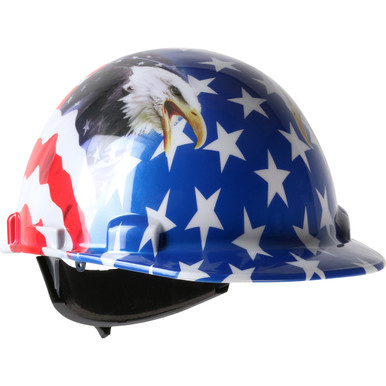 PIP Dom 280-HP341R-USA Hard Hats, Type I Class E, HDPE ShellA 10-hour card is an orientation; the hard hat, glasses and gloves the course describes are the employer’s to provide under 1910.132 (OSHA Outreach FAQ)
Why the card matters even though OSHA does not require it. The Outreach Training Program is, in OSHA’s words, intended as an orientation to occupational safety and health; workers must receive additional training on the specific hazards of their job from their employer, which is what 1910.132(f), 1926.21 and the other training paragraphs require and what the card does not cover. The reason a worker needs one anyway is the people who do require it: several states write a 10-hour card into their public-works laws (New York, Nevada, Connecticut, Massachusetts, Missouri, New Hampshire, Rhode Island and Pennsylvania are the ones most often named), New York City requires site safety training hours under Local Law 196, and many general contractors, owners and unions require a 10 for every worker and a 30 for every foreman and superintendent as a condition of entry. OSHA’s FAQ says it plainly: any determination on what will be accepted in order to meet mandatory training requirements must be made by the organization mandating the training.
OSHA 10 and OSHA 30 side by side
Figures and wording from OSHA’s Outreach Training Program FAQ and program requirements.
OSHA 500, 510, 501 and 511: the trainer courses
From OSHA’s Outreach Training Program FAQ:
- OSHA 510 is the one-week course in OSHA standards for the construction industry; OSHA 511 is the general industry equivalent. They are taught only at OSHA Training Institute Education Centers and are the prerequisite for the trainer courses.
- OSHA 500 is the Trainer Course in Occupational Safety and Health Standards for Construction. Prerequisites: completion of OSHA 510 and five years of construction safety experience (a degree in occupational safety and health, a CSP or a CIH in the applicable area may substitute for two years). OSHA 501 is the general industry trainer course, with OSHA 511 and five years of general industry safety experience as prerequisites.
- Completing 500 or 501 makes a person an authorized Outreach trainer for four years, able to teach 10- and 30-hour classes and request cards for students; an update course (502 or 503) every four years keeps the authorization, and a lapsed trainer retakes the full course.
- OSHA issues no waivers of the prerequisites: experience does not substitute for the 510 or 511, and the training does not substitute for the years.
- The maritime trainer course is 5400 and the disaster site worker trainer course is 5600, each with its own prerequisites listed on OSHA’s FAQ.
The questions people type, answered from OSHA’s FAQ
| Question | What OSHA says |
|---|---|
| Is OSHA 10 required? | No. Voluntary; OSHA describes it as an orientation to occupational safety and health. Some states, cities, employers, unions and owners require it, and they decide what satisfies their rule. |
| Is the OSHA card a certification? | No. OSHA states the card is not considered a certification or license. |
| Does OSHA 10 or 30 count toward OSHA’s training requirements? | No. Employers must still train on the specific hazards of the job under the standards (OSHA Publication 2254 lists them). |
| Is OSHA training free? | OSHA hosts no classes and does not set fees; authorized trainers and online providers are independent and charge their own. A course advertised as free from OSHA is not OSHA’s. |
| Is an OSHA training school legitimate? | Ask to see the trainer’s current authorized trainer card (name, expiration date, authorizing OTI Education Center), or check that an online provider is on OSHA’s list of authorized providers. OSHA takes fraud reports at outreach@dol.gov. |
| Do OSHA cards expire? | No. Construction, general industry, maritime and disaster site cards carry no expiration date (maritime cards stopped expiring April 1, 2019). Employers and owners may set their own refresher rules. |
| How long does it take? | At least 10 or 30 contact hours, at most 7½ hours a day: two days for a 10, four for a 30. Online courses are paced the same way. |
| How do I get an OSHA card? | Attend and complete the entire class, every required topic and the minimum hours, with an authorized trainer; the trainer issues the card within 90 days. |
| Can OSHA verify my card? | No; OSHA keeps no records of Outreach classes. The trainer who issued it keeps records for five years, and a plastic card’s QR code reaches the OTI Education Center that processed it. |
Source: OSHA Outreach Training Program page and FAQ (osha.gov/training/outreach and /training/outreach/faq)
Questions people ask
What is the difference between OSHA 10 and OSHA 30?
Length and audience. The 10-hour class gives workers awareness of common job-related safety and health hazards; the 30-hour class is for supervisors or workers with some safety responsibility and covers more topics in more depth. Both are taught by OSHA-authorized trainers in a construction, general industry or maritime version and end in a Department of Labor course completion card.
Does OSHA require OSHA 10 or OSHA 30?
No. OSHA’s FAQ says the Outreach Training Program is voluntary and that OSHA does not require it; some states, municipalities, employers, unions and other organizations do, and they decide what counts. The card also does not satisfy the hazard-specific training OSHA’s standards require of employers.
What is the difference between OSHA 500 and 510?
OSHA 510 is the week-long course in the construction standards; OSHA 500 is the trainer course that follows it. Completing 500, with 510 and five years of construction safety experience behind it, authorizes a person to teach 10- and 30-hour construction classes for four years. 511 and 501 are the general industry pair.
Where can I find free online OSHA courses with certificates?
OSHA offers none. Its FAQ says OSHA does not host or offer online Outreach classes on a federal website; online 10- and 30-hour classes come only from the authorized providers on OSHA’s list, and each sets its own price. OSHA’s free material is its training library and publications, which carry no card.
What are the different levels of OSHA training?
In the Outreach program, 10-hour (workers), 30-hour (supervisors) and the 15-hour disaster site worker course; above them, the OTI Education Center courses (510, 511 and the numbered specialty courses) and the trainer courses (500, 501, 5400, 5600). Separate from all of these is the training the standards themselves require, such as PPE training under 1910.132(f), fall protection training under 1926.503 and forklift operator training under 1910.178.
Is the OSHA 10-hour training worth it?
That depends on who is asking for it: where a state law, a city rule, an owner or a general contractor requires the card, it is the price of admission to the site; where nobody requires it, OSHA describes it as an orientation that does not replace the employer’s own hazard training. The guide states what the course is; the decision is the worker’s and employer’s.
How long does it take to get an OSHA card?
Two days of class for a 10 and four for a 30 (7½ contact hours a day at most), then up to 90 days for the trainer to issue the card; online providers run the same hours. There is no OSHA certification exam.
Is OSHA 30 difficult to pass?
OSHA requires no test; trainers may give one at their discretion and decide whether a student has completed the class. The requirement is attendance through every required topic for the full contact hours.
How do you get an OSHA card?
Complete an entire 10- or 30-hour Outreach class with an OSHA-authorized trainer or authorized online provider, including all requisite topics and the minimum contact hours; the trainer issues the DOL card within 90 days. Check the trainer’s authorized trainer card first.
Who makes the OSHA 10 required on a jobsite?
A state or city law (several states require it on public works), the project owner, the general contractor or a union agreement. OSHA’s position is that the organization mandating the training decides what will be accepted.
Related guides
PPE trainingWhat 1910.132(f) requiresWhat PPE does OSHA require on a construction site?Subpart E, piece by pieceOSHA 1910 vs 1926General industry vs constructionWho pays for PPE?The OSHA employer payment ruleWhat is a PPE hazard assessment?What 1910.132(d) requiresWhat is NIOSH, and how is it different from OSHA?Research against enforcementThe ratings, test results and standards shown here are the manufacturers' published values, reproduced as published. Nothing on this page is a recommendation by Bayshore Safety that any product is suitable for a particular task, hazard or workplace. Selecting safety products and protective equipment is the responsibility of the end user and the employer, based on their own hazard assessment and the regulations that apply to their work. Confirm every value on the manufacturer's own documentation before use.
© 2026 Bayshore Safety & Industrial Supplies, Inc. All rights reserved. This guide may not be copied or republished without written permission.