
Bayshore Safety & Industrial Supplies Guide
What PPE is worn when handling hazardous chemicals? Gloves, splash goggles, face shields, aprons and the safety data sheet, under 29 CFR 1910.132, 1910.133, 1910.138 and 1910.1200
The PPE for a hazardous chemical is the set the employer’s hazard assessment selects for that chemical and that task, and the rules name the pieces: chemical-resistant gloves where hands are exposed to skin absorption of harmful substances or chemical burns (1910.138(a)); eye and face protection where there is exposure to liquid chemicals, acids or caustic liquids, or chemical gases or vapors (1910.133(a)(1)), which for a splash hazard means goggles marked D3 under ANSI/ISEA Z87.1, with a face shield over them when the face is exposed as well; protective clothing (aprons, sleeves, coveralls, boots) wherever the chemical can injure the body through absorption or physical contact (1910.132(a)); and a respirator only where the air hazard calls for one under 1910.134. The starting point is not a list but the safety data sheet: 29 CFR 1910.1200(g)(2) puts exposure controls and personal protection in Section 8 of every SDS, and the chemical’s own manufacturer names there the glove material, the eye protection and the clothing it tested. The glove manufacturer’s permeation table then says how long its glove holds that chemical. In a laboratory the same steps run under the chemical hygiene plan 1910.1450(e) requires, and wherever the eyes or body may be exposed to injurious corrosive materials, 1910.151(c) requires a quick drenching or flushing facility within the work area. Ordinary safety glasses are not splash protection, textile work gloves are not chemical gloves, and a face shield alone does not meet the eye protection rule; those three answers settle most of the quiz questions below.
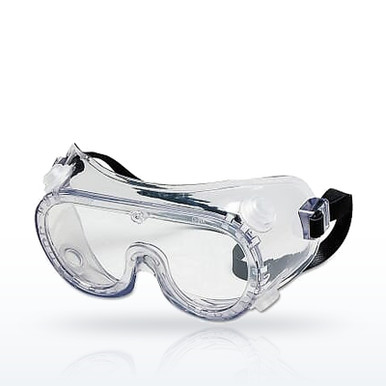 MCR Safety 22 Safety Goggles, Protective GogglesMCR Safety lists this goggle to ANSI/ISEA Z87.1 with the D3 splash mark, the rating 1910.133 points to for liquid chemicals
Why the safety data sheet comes before the catalog. OSHA’s hazard communication standard requires the manufacturer or importer of every hazardous chemical to supply a safety data sheet in sixteen numbered sections, and 1910.1200(g)(2)(viii) fixes the eighth as “Exposure controls/personal protection.” Appendix D makes the content mandatory: the sheet must state the exposure limits, the engineering controls and the individual protection measures for that chemical. That is where the words “wear nitrile gloves and chemical splash goggles” or “butyl rubber, face shield, apron” come from, written by the people who tested the chemical. The employer’s hazard assessment under 1910.132(d) takes the SDS, the task (splash, immersion, spraying, mixing) and the duration, and selects the PPE; 1910.132(d)(2) requires a written certification that the assessment was done. The glove then has to match the SDS at the level of the chemical: the glove manufacturer’s permeation table (breakthrough time for that glove against that chemical) is the figure 1910.138(b) calls a performance characteristic. For eyes, the ANSI/ISEA Z87.1 marking on the goggle does the same work: D3 means the goggle passed the droplet and splash test, and 1910.133(b) is where OSHA adopts Z87.1. Training closes the loop: 1910.132(f) requires each worker to be trained in when the PPE is necessary, what PPE, how to put it on and take it off, its limitations and its care, and chemical gloves have a limitation the training has to cover, which is that they stop a chemical for a measured time and no longer. The laboratory standard runs the same logic through a chemical hygiene plan: 1910.1450(e)(3)(ii) requires the plan to state the criteria the employer uses to determine and implement control measures to reduce exposure, including engineering controls, the use of personal protective equipment and hygiene practices, with particular attention to chemicals known to be extremely hazardous.
The PPE, piece by piece, and the rule that names it
What each item is for, the OSHA paragraph behind it and the mark or figure to read on the label.
The quiz questions, answered from the rules
The questions the bank asks in training-course wording, each answered from the paragraph that applies.
- Which PPE can protect you from liquid chemicals: safety glasses, goggles, textile gloves, protective sleeves or face shields? Goggles (with the D3 splash mark) and face shields over them for the eyes and face; chemical-resistant gloves, not textile gloves, for the hands; chemical-resistant sleeves and aprons for the arms and body. Textile gloves absorb liquid and hold it against the skin.
- Should you always wear safety goggles when working with chemicals? Where 1910.133(a)(1) applies (liquid chemicals, acids or caustic liquids, gases or vapors), eye protection is required, and for a liquid the protection that fits the hazard is a splash goggle, not spectacles. The hazard assessment decides for each task; the rule does not exempt a quick pour.
- What type of eye protection should be worn when working with chemicals that may splash or vaporize? Indirect-vented or non-vented chemical splash goggles marked D3; where the face is exposed, a face shield over the goggles. Vapors that irritate the eyes call for a non-vented goggle; vapors that are inhaled call for a respirator assessment.
- Why wear eye protection underneath a face shield? Because a face shield is open at the edges and a splash, a spark or a particle can come up under it. ANSI/ISEA Z87.1 treats face shields as secondary protectors worn over spectacles or goggles, and 1910.133(a)(2) requires side protection against flying objects for the same reason.
- What are the types of gloves supplied in a laboratory? The chemical hygiene plan (1910.1450(e)(3)) sets the criteria, and the usual set is disposable nitrile for incidental contact, a chemical-weight glove (nitrile, neoprene, butyl or laminate, as the SDS and the permeation table indicate) for immersion or extended contact, insulated gloves for cryogens and hot glassware, and cut-resistant gloves for glassware handling. The lab standard does not list glove types; it requires the plan to say how they are chosen.
- What are the categories of hazardous chemicals? Under 1910.1200, a hazardous chemical is one classified as a physical hazard (flammable, oxidizer, corrosive to metal, and so on) or a health hazard (acute toxicity, skin corrosion or irritation, serious eye damage or irritation, sensitization, carcinogenicity and the rest), a simple asphyxiant, combustible dust, pyrophoric gas or a hazard not otherwise classified. The classification in SDS Section 2 is what drives the PPE in Section 8.
- Which affords the greatest protection against workplace chemicals? Not PPE: Appendix B to Subpart I says PPE alone should not be relied on but used with engineering controls and sound practices, and 1910.1450 lists engineering controls (fume hoods) before PPE. Among PPE, the greatest protection for a given chemical is the item the manufacturer tested for it with the longest breakthrough time.
- Under what circumstances should chemical protective clothing be avoided? When it has not been tested against the chemical in use, when it is damaged (1910.132(e) forbids defective or damaged PPE), when it is contaminated inside, and when the hazard is heat or flame rather than liquid: OSHA’s booklet notes that synthetic materials do not stand up against alkalis and solvents in every case and that rubber and plastic clothing is for certain chemicals and physical hazards, checked with the manufacturer.
- Which PPE material can protect against chemicals and electricity? Rubber: 1910.137 rubber insulating gloves are natural rubber or synthetic rubber tested to a voltage class, and rubber chemical gloves are a different product tested to permeation. One glove is not sold for both; the electrical glove guides explain the voltage classes.
- What does biosafety level 3 mean? A laboratory containment level for agents that can cause serious disease through inhalation, defined by CDC and NIH in Biosafety in Microbiological and Biomedical Laboratories, not by OSHA; PPE for infectious agents in the workplace is governed by 1910.1030 (bloodborne pathogens) and the laboratory’s own biosafety manual.
Chemical PPE by hazard route, with the paragraph and the mark to read
| Route | PPE | Paragraph | What to read |
|---|---|---|---|
| Skin contact, hands | Chemical-resistant gloves: nitrile, neoprene, butyl, PVC, latex, laminate | 1910.138(a), (b) | Breakthrough time or EN ISO 374-1 letters for the chemical on the SDS |
| Skin contact, arms and body | Chemical sleeves, aprons, coveralls, boots | 1910.132(a) | Material and the manufacturer’s chart; ASTM F739 or EN 16523 permeation where published |
| Eyes, splash | Indirect-vented or non-vented goggles | 1910.133(a)(1), (b) | ANSI/ISEA Z87.1 with D3 (droplet and splash) |
| Eyes and face, splash | Face shield over the goggles | 1910.133(a)(1) | Z87.1 (Z87+ for high impact); worn over primary eye protection |
| Eyes, vapor irritation | Non-vented goggles | 1910.133(a)(1) | D3; no vents |
| Inhalation | Respirator with the cartridge for the chemical | 1910.134 | NIOSH approval and cartridge color code; a written program and fit test |
| After exposure | Eyewash and drench within the work area | 1910.151(c) | ANSI/ISEA Z358.1 (15 minutes, 10 seconds from the hazard) |
The SDS Section 8 for the chemical in use names the materials its manufacturer tested; the PPE manufacturer’s own data gives the figure for its product.
Source: 29 CFR 1910.132, 1910.133, 1910.134, 1910.138, 1910.151(c); ANSI/ISEA Z87.1 markings as MCR Safety, Radians and PIP print them; the manufacturers’ chemical data as published on their product pages.
Questions people ask
What PPE is worn when dealing with hazardous chemicals?
The set the hazard assessment selects from the safety data sheet and the task: chemical-resistant gloves (1910.138), splash goggles marked D3 and a face shield where the face is exposed (1910.133), aprons, sleeves or coveralls where the body is exposed (1910.132), and a respirator only where the air hazard requires one (1910.134). An eyewash or drench within the work area where corrosives are handled (1910.151(c)).
What PPE is required for handling chemicals under OSHA?
OSHA does not publish a chemical-by-chemical list. 1910.132(d) requires the employer to assess the hazards and select the PPE; 1910.138 and 1910.133 name the hand and eye conditions; the SDS Section 8 for the chemical names the materials its manufacturer tested. The written certification of the assessment is the record.
Which PPE can protect you from liquid chemicals?
Chemical splash goggles and face shields for the eyes and face, chemical-resistant gloves for the hands, and chemical-resistant sleeves, aprons and suits for the body. Safety glasses, textile gloves and ordinary work clothes are not liquid-chemical PPE.
Should you always wear safety goggles when working with chemicals?
Where liquid chemicals, acids, caustics, gases or vapors can reach the eyes, 1910.133(a)(1) requires eye protection, and a splash goggle is the protection that fits a liquid hazard. The hazard assessment decides task by task; it does not have an exemption for small quantities.
What type of eye protection is worn when chemicals may splash or vaporize?
Indirect-vented or non-vented goggles marked D3 under ANSI/ISEA Z87.1, with a face shield over them when the face is exposed too. The chemical splash goggle guide explains the D3 test.
Why wear eye protection under a face shield?
A face shield is open at the sides and bottom and is a secondary protector under Z87.1; a splash can come up under it. Goggles stay on underneath.
What PPE is required when handling hazardous chemicals in a laboratory?
What the chemical hygiene plan calls for: 1910.1450(e)(3)(ii) requires the plan to state the criteria the employer uses to determine and implement control measures, including the use of personal protective equipment, and 1910.132 requires the employer to provide and pay for the PPE selected. The usual set is splash goggles, a lab coat, closed shoes and the glove the SDS and permeation table indicate for the chemical.
What are the types of gloves supplied in the lab?
Disposable nitrile for incidental contact, chemical-weight nitrile, neoprene, butyl or laminate gloves for immersion and extended contact, cryogenic and heat-resistant gloves for cold and hot work, and cut-resistant gloves for glassware; the plan, not the standard, sets the list.
Under what circumstances should chemical protective clothing be avoided?
When it has not been tested for the chemical, when it is damaged or contaminated inside (1910.132(e)), and when the hazard is flame or heat rather than liquid. OSHA’s booklet says to check the material with the manufacturer for the specific hazard.
Which PPE material protects against chemicals and electricity?
Rubber, but not the same glove: rubber insulating gloves are tested to a voltage class under 1910.137, and rubber chemical gloves are tested to permeation. Each is worn for its own hazard.
What is in Section 8 of a safety data sheet?
Exposure controls and personal protection: the exposure limits, the engineering controls and the individual protection measures for the chemical, by 1910.1200(g)(2)(viii) and Appendix D. It is where the glove material and eye protection are named by the chemical’s manufacturer.
Which affords the greatest level of protection against exposure to workplace chemicals?
Engineering controls that keep the chemical away from the worker, which the rules place ahead of PPE; among PPE, the item the manufacturer tested against that chemical with the longest breakthrough time, worn with the goggles and clothing the SDS names.
What does biosafety level 3 mean?
A CDC and NIH laboratory containment level for agents that cause serious or potentially lethal disease by inhalation; it is not an OSHA PPE category. Workplace exposure to blood and infectious materials falls under 1910.1030.
Related guides
Which gloves protect against chemicals?How to read a chemical resistance chartWhat do chemical splash goggles protect against?The D3 rating explainedChemical aprons and sleevesWhat to look forHow to clean up a chemical spillThe steps and the PPEWhat is a PPE hazard assessment?What 1910.132(d) requiresOSHA eyewash station requirements1910.151(c) and ANSI Z358.1The ratings, test results and standards shown here are the manufacturers' published values, reproduced as published. Nothing on this page is a recommendation by Bayshore Safety that any product is suitable for a particular task, hazard or workplace. Selecting safety products and protective equipment is the responsibility of the end user and the employer, based on their own hazard assessment and the regulations that apply to their work. Confirm every value on the manufacturer's own documentation before use.
© 2026 Bayshore Safety & Industrial Supplies, Inc. All rights reserved. This guide may not be copied or republished without written permission.