
When should PPE be worn, and does it protect employees from all exposure? Where PPE sits in the hierarchy of controls
PPE is worn when the employer’s hazard assessment finds a hazard that is present or likely to be present and that engineering, work practice and administrative controls have not removed or reduced enough: that is the sequence OSHA’s PPE topic page states, and 29 CFR 1910.132(d) is the rule that makes the assessment the trigger. In construction, 1926.28(a) puts it the other way round but to the same effect: the employer is responsible for requiring appropriate PPE in all operations where there is an exposure to hazardous conditions or where Part 1926 indicates the need for it. The statement that PPE will protect employees from all exposure incidents is false, and OSHA says so in its own guidance: the non-mandatory appendix to Subpart I says PPE devices alone should not be relied on to provide protection against hazards, but should be used in conjunction with guards, engineering controls and sound manufacturing practices. The reasons are built into the equipment: a rating covers one hazard and one test (a Z87+ lens is tested for impact, not for a chemical splash unless it also carries D3; an NRR is a laboratory figure OSHA derates by 7 dB and then by half), PPE does nothing when it is not worn, fits badly or is damaged, which is why 1910.132(e) forbids using defective or damaged equipment and (d)(1)(iii) requires a proper fit, and the hazard is still there behind it. The hearing rules show the order plainly: 1910.95(b)(1) and 1926.52(b) require feasible administrative or engineering controls first, and PPE only if those fail to bring the noise within the table. The specific OSHA paragraphs then say when each type is worn: eye protection when exposed to flying particles, molten metal, chemicals, gases or vapors or injurious light (1910.133(a)(1)); a helmet where there is a possible danger of head injury from impact, falling or flying objects, or electrical shock and burns (1926.100(a)); hearing protectors at 85 dBA offered and at 90 dBA worn (1910.95(b) and (i)); gloves where hands are exposed to harmful substances, severe cuts or abrasions, punctures, chemical or thermal burns or harmful temperature extremes (1910.138(a)).
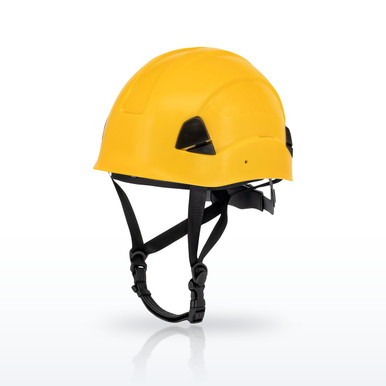 DEWALT DPG22 Safety Helmets, Type II Class E, 11 ColorsHard hat Radians lists to ANSI/ISEA Z89.1 Type I, Class E and G; worn where 1926.100(a) finds a head hazard (Radians data)
Why “PPE protects from everything” is the wrong answer on the test and on the job. The question appears in training quizzes because OSHA’s whole PPE scheme is built on the opposite idea. The rules put the hazard assessment first (1910.132(d)), then the selection of equipment that protects against the hazards actually found, then communication of the selection to each worker, then fit, then training in the equipment’s limitations as one of the five required topics (1910.132(f)(1)(iv)). The appendix sets PPE in its place among the controls: behind guards and engineering controls, used with them, never alone. The noise standards write the same order into law, requiring feasible engineering and administrative controls before protectors; OSHA’s March 2023 letter calls engineering controls the first defense and the most effective, and lists short shifts, breaks in quiet areas and limited access to noisy places as the administrative controls that come next. What PPE adds is the last layer for the exposure that remains, and it is only as good as its rating, its fit and the discipline of wearing it. That is why the same rules require the equipment to be in a sanitary and reliable condition, forbid defective or damaged equipment, require the employer to assure the adequacy of anything employee-owned, and require retraining when a worker shows he has not kept the skill. A worker who has been trained to those five topics can answer the quiz question from the training itself: PPE reduces exposure to the hazard it is rated for, when it is worn and fits; it does not remove the hazard and it does not cover exposures it was not tested for.
When each type is worn, in the words of the rule
The trigger paragraph for the common types. Each is a condition found by the hazard assessment, not a blanket requirement.
What PPE does not do, from the rules and the ratings
What the rules say about the limits of PPE, and where the limits come from on the label.
- It does not replace the control that removes the hazard. Appendix B: PPE alone should not be relied on, but used in conjunction with guards, engineering controls and sound manufacturing practices. The noise and respirator standards require feasible engineering and administrative controls first.
- It does not protect against a hazard it was not tested for. A Z87+ mark is an impact rating; splash protection is the separate D3 mark on a goggle. An NRR is a continuous-noise laboratory figure; OSHA subtracts 7 dB and, for the engineering-control decision, halves the rest. A cut level is a straight-blade test; puncture and impact are separate levels. The Radians, DEWALT and Crossfire product pages on this site print each rating separately for that reason.
- It does not work when it is not worn, does not fit or is damaged. 1910.132(d)(1)(iii) requires PPE that properly fits each affected employee (1926.95(c)(2) in construction); 1910.132(e) forbids using defective or damaged PPE; 1910.132(b) makes the employer responsible for the adequacy of employee-owned equipment.
- It does not relieve the employer of the assessment, the selection, the communication of the selection, the training in the five topics, or the written certification of the assessment (1910.132(d)(2) and (f)).
- It does not have to be paid for by the worker, with the listed exceptions (1910.132(h)); see the who-pays guide.
The hierarchy of controls as OSHA’s rules apply it, with PPE last
| Order | Control | Where the rules say it | Example |
|---|---|---|---|
| First | Engineering controls: remove or enclose the hazard | 1910.95(b)(1), 1926.52(b), 1910.134(a)(1); the March 6, 2023 letter calls them the most effective and feasible for most noise sources | Enclosing or isolating the noise source with sound-absorbing barriers; local exhaust ventilation |
| Second | Administrative and work practice controls | 1910.95(b)(1), 1926.52(b); OSHA’s PPE topic page | Short shifts, frequent breaks in quiet areas, limited access to noisy places |
| Last | Personal protective equipment | 1910.132(a) and (d); Appendix B section 1; OSHA’s PPE topic page: when engineering, work practice and administrative controls are not feasible or do not provide sufficient protection | Ear plugs and muffs, safety glasses, hard hats, gloves, hi-vis, FR clothing |
OSHA’s current policy, stated in the 2023 letter, lets an employer rely on hearing protectors and an effective hearing conservation program rather than engineering or administrative controls when the protectors will effectively attenuate the noise; the order of preference stands, the enforcement is case by case.
Source: 29 CFR 1910.95(b)(1), 1926.52(b), 1910.134(a)(1), 1910.132; 1910 Subpart I Appendix B; OSHA PPE topic page and the March 6, 2023 letter of interpretation.
Questions people ask
Is it true or false that PPE will protect employees from all exposure incidents?
False. OSHA’s Appendix B to Subpart I says PPE devices alone should not be relied on to provide protection against hazards, but should be used in conjunction with guards, engineering controls and sound manufacturing practices. A rating covers one tested hazard, and PPE protects nothing when it is not worn, does not fit or is damaged.
When should PPE be worn?
When the employer’s hazard assessment under 1910.132(d) finds a hazard present or likely to be present, and engineering, work practice and administrative controls are not feasible or do not provide sufficient protection. The specific paragraphs then name the condition: flying particles for eye protection, possible head injury for helmets, 85 and 90 dBA for hearing protectors, cut, chemical and thermal hazards for gloves.
In what situations would personal protective equipment be used?
The situations Appendix B tells the assessment to look for: sources of motion, high temperatures, chemical exposures, harmful dust, light radiation from welding and cutting, falling or dropped objects, sharp objects that can cut the hands or pierce the feet, rolling or pinching objects, electrical hazards, and the layout of the workplace and location of co-workers.
Where is PPE in the hierarchy of controls?
Last. The noise and respirator standards require feasible engineering and administrative controls first and PPE when those fail to bring exposure within limits; OSHA’s PPE topic page states the same order for all PPE.
Why is PPE the last line of defense?
Because it leaves the hazard in place and depends on the rating, the fit and the wearer: a derated NRR, a lens tested for impact and not splash, a glove at the wrong cut level, or any item not worn gives no protection. Engineering controls remove or enclose the hazard for everyone.
What PPE should be worn?
The PPE the hazard assessment selects for the hazards found, communicated to each affected employee and fitted to each (1910.132(d)(1)). The table above lists the type for each hazard; the rating on the label (Z87+, Z89.1 type and class, NRR, ANSI/ISEA 105 level, ANSI/ISEA 107 class, cal/cm²) selects the item.
Does the employer have to train workers on when to wear PPE?
Yes. 1910.132(f)(1) requires training in when PPE is necessary, what PPE is necessary, how to don, doff, adjust and wear it, its limitations, and its care, maintenance, useful life and disposal, and (f)(2) requires each employee to demonstrate understanding before doing work that requires it.
Can PPE be employee-owned?
Yes, but 1910.132(b) makes the employer responsible for assuring its adequacy, maintenance and sanitation, and 1910.132(h)(6) says the employer may not require an employee to provide or pay for his own PPE except for the listed exceptions.
Related guides
What is a PPE hazard assessment?What 1910.132(d) requiresPPE training requirementsThe five topics in 1910.132(f)Who pays for PPE?The OSHA employer payment ruleOSHA construction PPE requirements1926 Subpart E, hazard by hazardOSHA safety glasses requirements1910.133 and Z87.1OSHA hearing protection requirements1910.95The ratings, test results and standards shown here are the manufacturers' published values, reproduced as published. Nothing on this page is a recommendation by Bayshore Safety that any product is suitable for a particular task, hazard or workplace. Selecting safety products and protective equipment is the responsibility of the end user and the employer, based on their own hazard assessment and the regulations that apply to their work. Confirm every value on the manufacturer's own documentation before use.