
OSHA 1910.136 Foot Protection: what it requires and the equipment it names
29 CFR 1910.136 is the general industry foot protection rule: protective footwear where there is a danger of falling or rolling objects, objects piercing the sole, or an electrical hazard that remains after other controls, built to ASTM F2412 and F2413 or ANSI Z41. We sell nationwide; ships in 1–2 business days; most orders arrive in 3–7 business days.
The plain answer
29 CFR 1910.136 requires each affected employee to use protective footwear where there is a danger of foot injury from falling or rolling objects or objects piercing the sole, or where protective footwear will protect against an electrical hazard such as static discharge or electric shock that remains after other protective measures.
It applies to general industry employers; the construction rule, 1926.96, points to the older ANSI Z41.1-1967 safety-toe standard, and 1926.95(d)(2) lets an employer not pay for non-specialty safety-toe footwear worn off the job.
The footwear it names is anything built to ASTM F2412-2005 and F2413-2005, or ANSI Z41-1999 or Z41-1991, or footwear the employer demonstrates is at least as effective. The F2413 label sewn into the boot states the impact and compression rating and any metatarsal, electrical hazard, static dissipative or puncture-resistant designation.
What the rule says
Each entry is condensed from the paragraph cited; the paragraph itself is the rule and the link opens it.
29 CFR 1910.136(a): The employer must ensure each affected employee uses protective footwear when working where there is a danger of foot injuries from falling or rolling objects or objects piercing the sole, or when protective footwear will protect against an electrical hazard, such as static discharge or electric shock, that remains after the employer takes other necessary protective measures.
29 CFR 1910.136(b)(1): Protective footwear must comply with ASTM F-2412-2005 (test methods) and ASTM F-2413-2005 (performance requirements), ANSI Z41-1999, or ANSI Z41-1991, each incorporated by reference in 1910.6.
29 CFR 1910.136(b)(2): Footwear the employer demonstrates is at least as effective as footwear built to one of those standards is deemed in compliance.
29 CFR 1910.132(h)(2): The employer is not required to pay for non-specialty safety-toe protective footwear, including steel-toe shoes or boots, if the employer permits the footwear to be worn off the job site.
Source: 29 CFR, Occupational Safety and Health Standards, as published by OSHA (ecfr.gov), read Nov 9 2026.
California (Cal/OSHA)
Each entry is condensed from the paragraph cited; the paragraph itself is the rule and the link opens it.
Title 8 §3385(a)-(b): Appropriate foot protection is required for employees exposed to foot injuries from electrical hazards, hot, corrosive or poisonous substances, falling objects, crushing or penetrating actions, or who work in abnormally wet locations; defective or inappropriate footwear must not be worn.
Title 8 §3385(c): Protective footwear purchased after January 26, 2007 must meet ASTM F2412-05 and F2413-05.
Source: California Code of Regulations, Title 8, as published by Cal/OSHA (dir.ca.gov), read Nov 9 2026.
Equipment the rule names
| Equipment or condition | What the rule requires | Paragraph |
|---|---|---|
| Protective footwear | Built to ASTM F2412-2005 and F2413-2005, or ANSI Z41-1999 or Z41-1991 | 29 CFR 1910.136(b)(1) |
| Falling or rolling objects | Impact and compression rated toe (F2413 I/75 and C/75, per the manufacturer's label) | 29 CFR 1910.136(a) |
| Objects piercing the sole | Puncture-resistant footwear (F2413 PR designation) | 29 CFR 1910.136(a) |
| Electrical hazard remaining after other controls | Electrical hazard (EH) or static dissipative (SD) footwear per the F2413 label | 29 CFR 1910.136(a) |
| Payment | Employer need not pay for non-specialty safety-toe footwear worn off the job | 29 CFR 1910.132(h)(2) |
Source: 29 CFR, Occupational Safety and Health Standards, as published by OSHA (ecfr.gov), read Nov 9 2026.
What we carry for it
Each table lists products whose manufacturer data states the rating or the standard the rule names, every brand we carry that does, with the current price. Sizes and versions are chosen on the product page. The selector linked under each table holds every item of that type.
Safety-toe boots and shoes whose manufacturers state a steel, composite or alloy toe
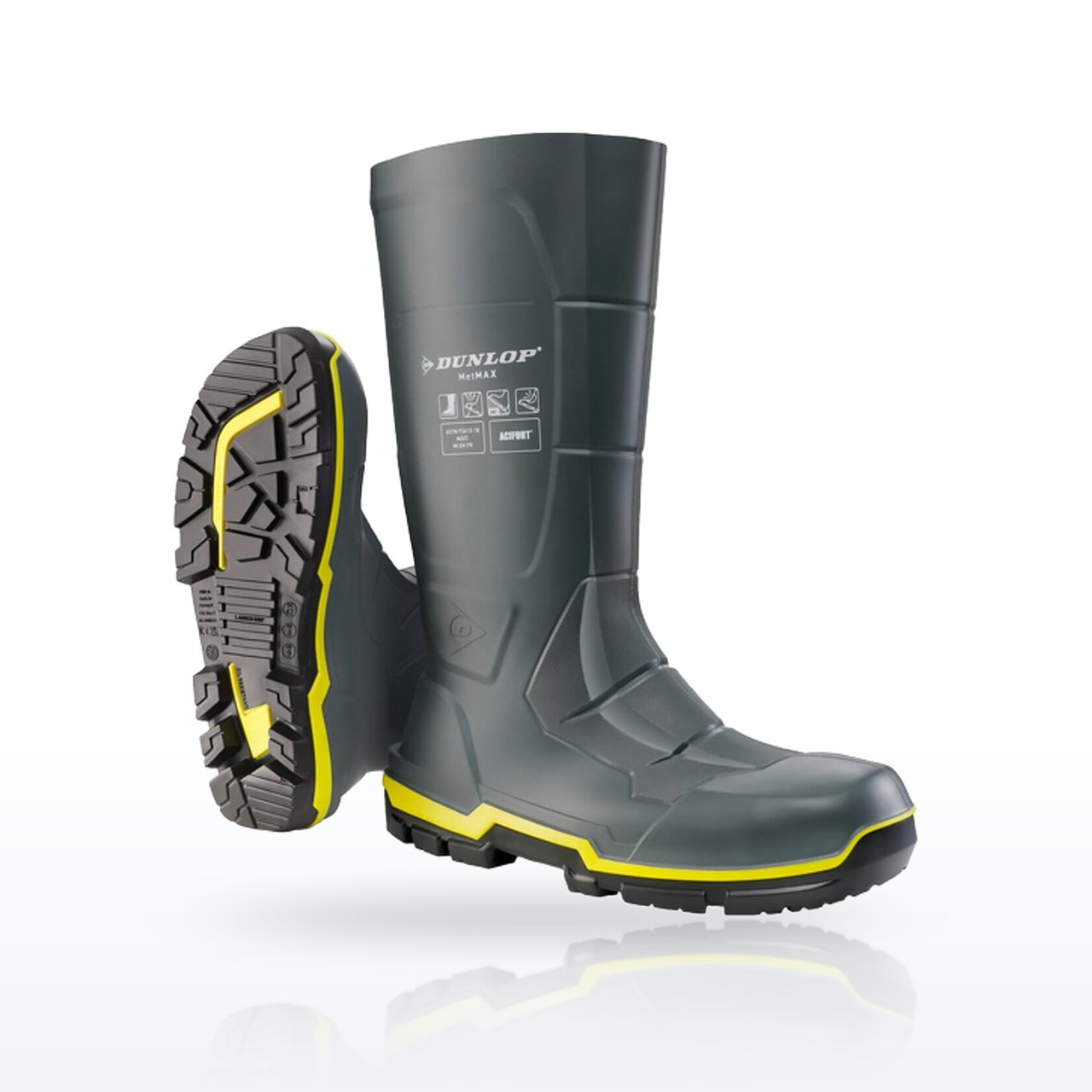

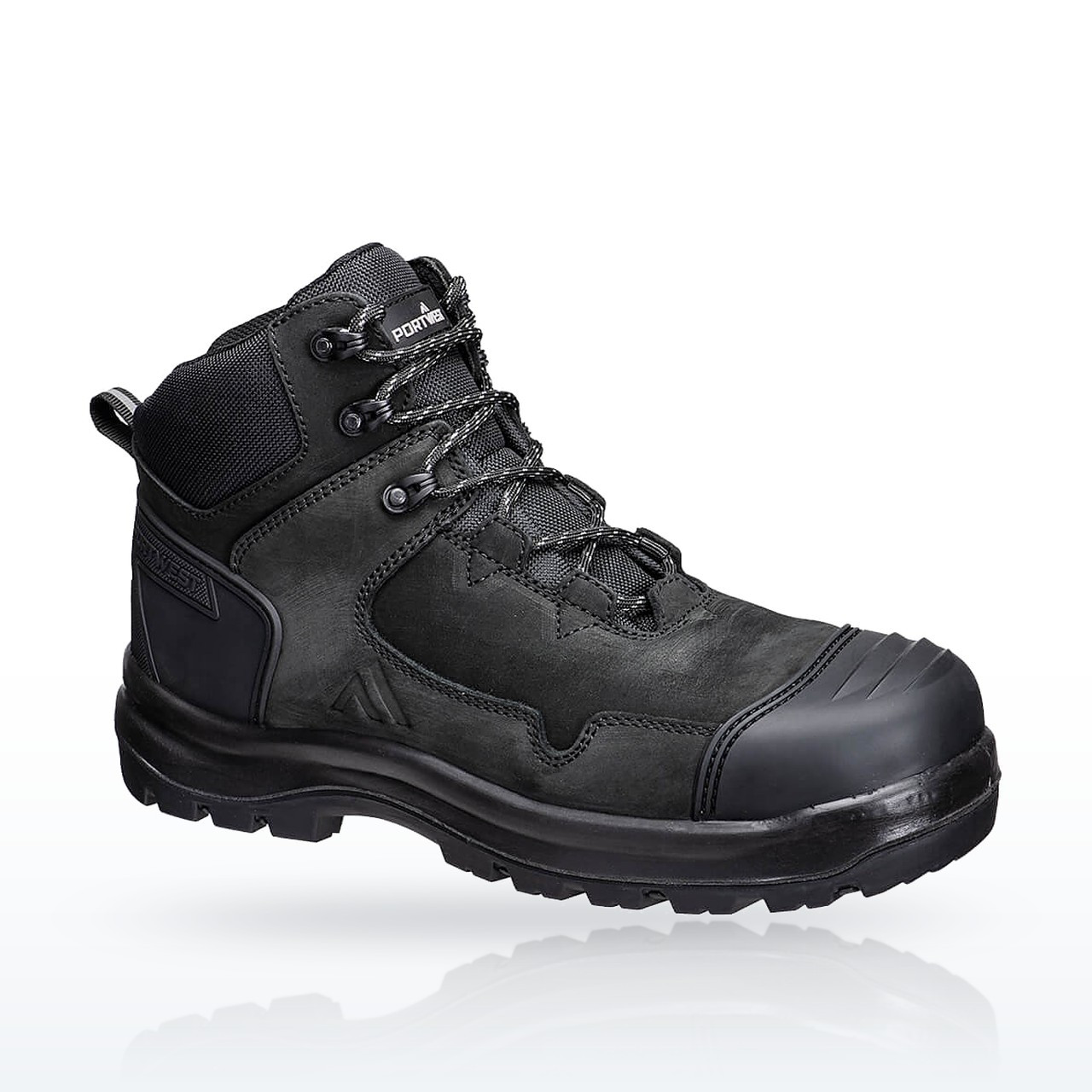
More: every boot and shoe we carry.
Source: the manufacturers' product pages, specification sheets and catalogs as reproduced on each product page; the ratings and standards shown are the manufacturers' own statements, and the products listed are those whose published data names the rating or the standard, not a selection by Bayshore Safety.
Steel-toe overboots and metatarsal guards worn over work shoes
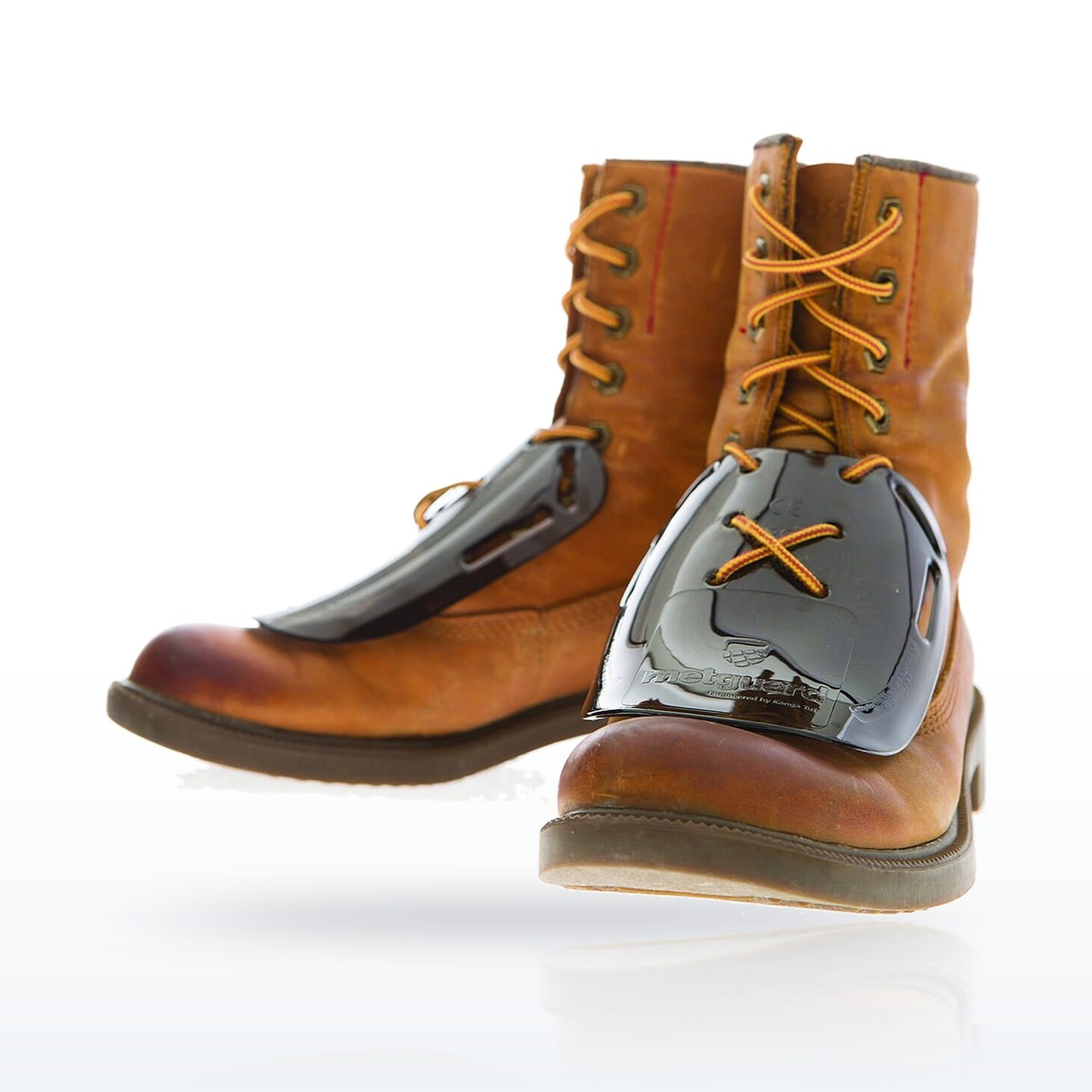

More: every overboot and footwear accessory.
Source: the manufacturers' product pages, specification sheets and catalogs as reproduced on each product page; the ratings and standards shown are the manufacturers' own statements, and the products listed are those whose published data names the rating or the standard, not a selection by Bayshore Safety.
Guides that go further
Does OSHA require safety-toe shoes · What do S1, S1P, S3, S3S and S7 mean on safety boots · Who pays for PPE · What PPE does OSHA require on a construction site · ASTM F2413 explained.
OSHA 1910.136 Foot Protection questions
Does OSHA require safety toe shoes? Only where 1910.136(a) applies: a danger of falling or rolling objects, objects piercing the sole, or a remaining electrical hazard, as found in the employer's hazard assessment under 1910.132(d). Where it applies, the footwear must meet ASTM F2412/F2413 or ANSI Z41 (1910.136(b)).
Does OSHA accept composite toe shoes? The rule names the standard, not the toe material. 1910.136(b)(1) accepts footwear built to ASTM F2413, and F2413 rates the toe cap by the impact and compression test it passes, whether steel, composite or alloy; the manufacturer's label states the rating.
What is the OSHA standard for steel toe boots? 29 CFR 1910.136 in general industry, which incorporates ASTM F2412-05 and F2413-05 and ANSI Z41-1999 and Z41-1991; in construction, 1926.96 names ANSI Z41.1-1967. Cal/OSHA §3385(c) requires ASTM F2412-05 and F2413-05 for footwear bought after January 26, 2007.
Does OSHA require slip-resistant shoes? No paragraph of 1910.136 names slip resistance; the rule covers falling and rolling objects, sole puncture and electrical hazards. Slip resistance is a general walking-working surface matter under 1910.22, and manufacturers state any slip-resistance test on the product page.
Is it an OSHA violation to wear open-toed shoes? Not by itself. The violation would be failing to use protective footwear where 1910.136(a) requires it, or wearing footwear the hazard assessment ruled out. Cal/OSHA §3385(b) adds that footwear whose ordinary use creates the possibility of foot injury must not be worn.
Does my employer have to pay for my steel toe boots? Not necessarily. 1910.132(h)(2) lets the employer decline to pay for non-specialty safety-toe footwear, including steel-toe shoes or boots, as long as the employee may wear them off the job site. Specialty footwear, such as metatarsal or electrical hazard boots required for the job, is paid for by the employer.
The ratings, test results and standards shown here are the manufacturers' published values, reproduced as published. Nothing on this page is a recommendation by Bayshore Safety that any product is suitable for a particular task, hazard or workplace. Selecting safety products and protective equipment is the responsibility of the end user and the employer, based on their own hazard assessment and the regulations that apply to their work. Confirm every value on the manufacturer's own documentation before use.